Skip to content

Category: Miscellany

Something for the Weekend

Ways of Designing — Steven Heller chats with British graphic designer Richard Hollis, who designed the original cover for the classic Ways of Seeing by John Berger (among other things), at Imprint:

My generation went from hot-metal to photosetting to digital. Computers have changed everything, bringing total control to the designer. But they haven’t changed the way I design. Perhaps they should have. But the way people read hasn’t changed, the sequence, letter –words–sentences–paragraphs– columns of text. Fifty years ago the printer made the corrections and changes were expensive. Now clients know that changes can be made, and designers pay with their time. The alphabet hasn’t changed, while the range of type designs available is astonishingly increased. Two or three are plenty for me.

Fringe Behaviour — Richard King, author of How Soon is Now?, on the indie record labels that changed the British music industry at The Guardian:

The improvisatory space in which the indies thrived has shrunk for several reasons. One is the ever-prevalent and finely tuned ability for corporate culture to absorb fringe behaviour and repackage it and market it as cutting edge. Another is the formalising of Britain’s creative industries, a process that has seen the development of college degrees in music business, music journalism and, indeed, being in a band, lead to industry standardisation. The independent sector’s greatest attributes – its ability to ad-lib, to trust its instincts and to hang the consequences are both impracticable and unteachable in such rigid frameworks. The sort of behaviour that allowed Wilson, McGee, Watts-Russell and their contemporaries to conceive some of their more extreme and fanciful ideas would also be something of a stretch for a human resources department to manage.

Also in The Guardian, a profile of author of author Peter Carey.

Value the Medium — Mark Thwaite interviews Benjamin Eastham and Jacques Testard, editors of literary journal The White Review, at ReadySteadyBook:

[We] believe in the value of the book as a physical object. Neither do we consider this to be an old-fashioned attitude. Publishing will go down two different routes: there’s no point knocking out a cheap, poorly bound paperback on crap paper any more because you’re as well to read the content on an electronic reader. The book as a medium has to justify itself now, it’s no longer the default option, and this is to its benefit. We’ve witnessed an upsurge in beautifully produced books, with enormous amounts of time and creativity invested in them – check out Visual Editions, for just one example, and the work of artists and independent galleries exploring the possibilities offered by the book form. The design of The White Review is important to us – the quality of the images we reproduce, the balance of the colours, the alignment and legibility of the text. We value the content, so we value the medium in which it is reproduced.

The White Review is beautifully designed by Ray O’Meara in case you were wondering.

And finally…

Robert Lane Greene on the origins of the term “dude” for More Intelligent Life:

Though the term seems distinctly American, it had an interesting birth: one of its first written appearances came in 1883, in the American magazine, which referred to “the social ‘dude’ who affects English dress and the English drawl”. The teenage American republic was already a growing power, with the economy booming and the conquest of the West well under way. But Americans in cities often aped the dress and ways of Europe, especially Britain. Hence dude as a dismissive term: a dandy, someone so insecure in his Americanness that he felt the need to act British. It’s not clear where the word’s origins lay. Perhaps its mouth-feel was enough to make it sound dismissive.


Comments closed

Midweek Miscellany

The Forger — Tom McCarthy (whose novel Men in Space has finally been published by Vintage in the US) at Interview Magazine.

People in Business — An interview with Dennis Johnson, publisher of Melville House, at The Economist:

I think it’s very obvious to people that we care about the packaging of our books. I think people know that if we care about the outside of our books then we probably care about the inside of them, too. I recently read a survey that said 39% or 40% of people who bought books on Amazon looked at them in a bookstore first. They could know everything about the book online short of having seen it, but still the physical object had enough meaning to them to want to see it first. That resonates, happily, with the fact that Valerie [Merians] and I came into this not as publishers but as artists. The object means a lot to us.

Parallels — Authors Geoff Dyer (Zona) and John Jeremiah Sullivan (Pulphead) in conversation at Work in Progress.

And finally…

Britain’s Original Information Revolution — Adam Nicolson, author of The Gentry, on a collection of English books dating back to the 17th century:

 We may think we are in the middle of a communications revolution: Flickr, Twitter, Facebook, YouTube, Hulu, iTunes… But all of them are, in their ways, secondary phenomena. Some of them are image-based, post-literate, but none would work without the foundations of a much deeper communications revolution which swept across Europe 400 years ago.

The 17th century is when the Europeans started to write: letters, diaries, journals, notebooks, account books, commonplace books, business correspondence, pamphlets, posters, chapbooks, newspapers. It was the first communications revolution, which both spawned and reflected the most revolutionary century we have ever had.

Comments closed

Something for the Weekend

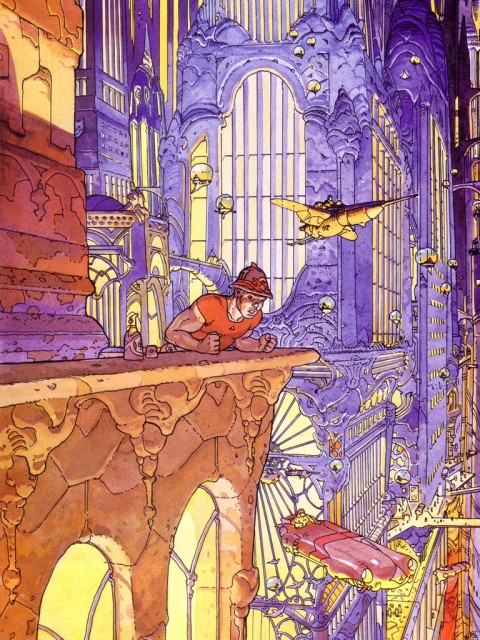
Tim Maughan on the influence of  the Jean Giraud on science fiction for Tor.com:

[The] combination of neon-lit noir streets, cramped towering city blocks, airborne traffic jams and scruffy characters seems almost a cliche today. But this was the first time anything like this had been drawn; and the first time science fiction had embraced the visual chaos of realistic urban environments. And the groundbreaking work is not just there in the architecture and mechanical designs; it’s apparent in the fashions and clothes of the city’s inhabitants. Although fantastic, exaggerated and other-worldy the city of The Long Tomorrow comes alive from the page because it feels so real, so layered and built — it is the urban paradise and nightmare of every industrial city from Tokyo to London.

The Catharsis of Exhaustion — Tim Parks on when to finish a book for the NYRB:

Other writers deploy what I would call a catharsis of exhaustion: their books present themselves as rich and extremely taxing experiences that simply come to an end at some point where writer, reader and indeed characters, all feel they’ve had enough… [These] writers it seems to me, by suggesting that beyond a certain point a book might end anywhere, legitimize the notion that the reader may choose for him or herself, without detracting anything from the experience, where to bow out.

Detachment — Edward St. Aubyn, Patrick Melrose Novels and At Last, profiled in the New York Times:

 “[There] is something morally condescending about forgiveness… Detachment is what interests me, seeing how people couldn’t have been any other way, how they were the product of forces that they had no control over… I was in the downstream of my father’s unhappiness, but it must have been hell to be him.”

And finally…

The Beat Hotel — A new documentary about the cheap no-name hotel at 9 rue Git le Coeur in Paris that harboured the likes of Allen Ginsberg and William Burroughs:

1 Comment

Midweek Miscellany

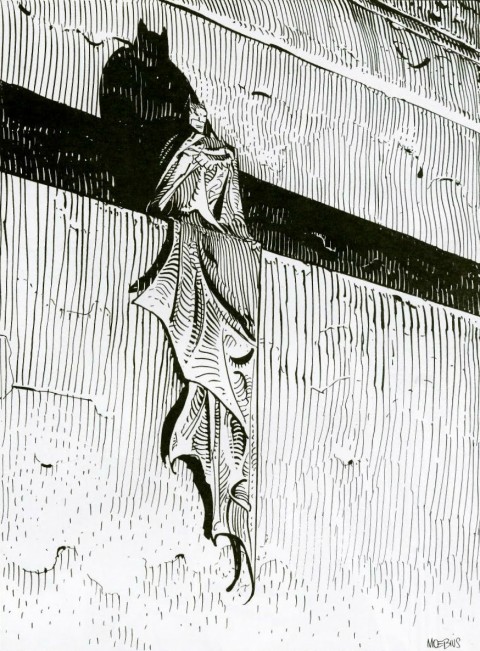
Obituary for artist Jean Giraud, AKA Moebius, in The Guardian:

Giraud… had an impact on the visual arts that went beyond comics. He was seen as a figurehead linking bandes dessinées with modernism and nouveau réalisme. As the co-creator of Métal Hurlant magazine, he took comics to an older, more literate audience. In cinema, his fans ranged from Federico Fellini to Hayao Miyazaki and his style influenced dozens of others, including Ridley Scott, George Lucas, James Cameron and Luc Besson.

Tom Spurgeon also has an in-depth obituary at The Comics Reporter:

Giraud would… describe the revolution driven by his work and others as one of creative choice rather than content, that the feeling of the artist inhabiting the work was more important than the kind of work being done. He drew a connection to the undergrounds and cartoonists like Robert Crumb, although he felt that the work of he and his peers existed in an entirely different cultural context.

See also: The comics industry remembers Moebius at Robot 6.

(I remember being very disappointed when I discovered that the drawing above was a standalone piece, and not a panel from a complete Batman story illustrated by Moebius. Heartbreak.)

Material Conversations — An interview with Jonathan Ive, Apple’s Senior Vice President of Industrial Design, in The Evening Standard:

What I love about the creative process, and this may sound naive, but it is this idea that one day there is no idea, and no solution, but then the next day there is an idea. I find that incredibly exciting and conceptually actually remarkable. The nature of having ideas and creativity is incredibly inspiring. There is an idea which is solitary, fragile and tentative and doesn’t have form. What we’ve found here is that it then becomes a conversation, although remains very fragile. When you see the most dramatic shift is when you transition from an abstract idea to a slightly more material conversation. But when you made a 3D model, however crude, you bring form to a nebulous idea, and everything changes – the entire process shifts. It galvanises and brings focus from a broad group of people. It’s a remarkable process.

And finally…

Boredom — Geoff Dyer, author Zona: A Book About a Film About a Journey to a Room, in conversation with Ethan Nosowsky at The Believer:

Boredom is often a side effect of something else. The apparent boredom inflicted by Stalker is actually the friction between the pace of the film and one’s expectations of how a film should proceed, so you just need to give yourself over to it. But then I think some so-called art films are irredeemably and inherently boring. As soon as I say that, though, I realize that the most boring films are the big, moronic action-blockbusters. They really bore the crap out of me. There’s an essential relationship between boring art films and moronic blockbusters because, as Ernst Fischer pointed out, any art form that glories in being understood only by a few—that worships at the altar of its own tedium, as it were—opens the floodgates for trash for the masses. At a certain point, as filmmakers got serious, they willingly took on a slowness that could easily become boring. But there was a long period before that when boredom was just inconceivable, not part of the equation.

Comments closed

Something for the Weekend

Imprint talks to John Bertram about his Recovering Lolita project:

For obvious reasons, of course, [Lolita] remains as controversial a novel as it was a half century ago, if not more so. And, probably helped along by Kubrick’s breezy film, and many very terrible covers, the term “Lolita” has come to popularly mean something quite the opposite of the novel’s namesake, so a designer has that to contend with as well. On the one hand, then, designers face the very real challenge of communicating some of that complexity in a cover, which can easily become overwhelming… On the other hand, I think there are also important ethical considerations that require careful negotiation since, whatever people may think, we are talking about a novel which has child rape at its core.

There is more about  the project here (pictured above: Lolita designed by Rachel Berger).

The Bare Specificities — A really lovely profile of Portland-based book-scout Wayne Pernu at The New Yorker:

On the job, Pernu keeps a few principles in mind—first and foremost, the importance of condition. For example, with its original dust jacket, the value of a first-edition “The Great Gatsby” can multiply from two thousand five hundred dollars to more than two hundred thousand. “That little piece of paper on the book is often worth thousands and thousands of dollars, much more than the book itself,” Pernu says. “Specificity is really crucial as well. A book called ‘World History’ isn’t going to do well, but a book called ‘Peruvian Shovel Makers in the Seventeenth Century,’ that’s going to be worth a lot of money to someone. You always get excited when you see something that specific, no matter what it is.”

Also really nice: An interview with English letter carver Fergus Wessel for I Love Typography:

Eric Gill is my hero! His lettering, in my opinion, remains unsurpassed, partly because of its honesty. We are all striving for perfection, but there really is no such thing of course. If we try to control it and attempt to be too artistic, we are in danger of losing that honesty. One has to let the letters flow a little.

There are certainly strict rules of good layout and lettering, but rules are there to be broken. But in order to bend the rules, one has to know them in the first place, and attain that initial discipline. This requires years of experience and practice; it is something that evolves and it is during this evolution that you develop your own individual style and form.

And finally…

Alexandra Harris, author of Romantic Moderns, on Modernism at The Browser:

To an extent, yes. But take [Nikolaus] Pevsner for example, who was one of the great exponents of the Bauhaus version of modernism in England. Because there’s such a strong German tradition of minimal, pared down, internationalist architecture, for him it was a kind of nostalgia. It wasn’t our English tradition but a German tradition, so it seemed to us very brutal and modernist. But to him it was laden with associations and emotions, as it was for the other émigré artists like [Laszlo] Maholy-Nagy and Naum Gabo.

Again, what seems very new is actually attached to a tradition, and is so much more interesting that an absolute break with the past. A lot of these buildings that seem very modern are deeply entangled with a tradition of classical architecture using the same classical symmetries and the sense of elegance and refinement that comes straight down from Greece and Rome, and it doesn’t get more traditional than that. So there’s always a traditionalism in the modern.

Comments closed

Midweek Miscellany

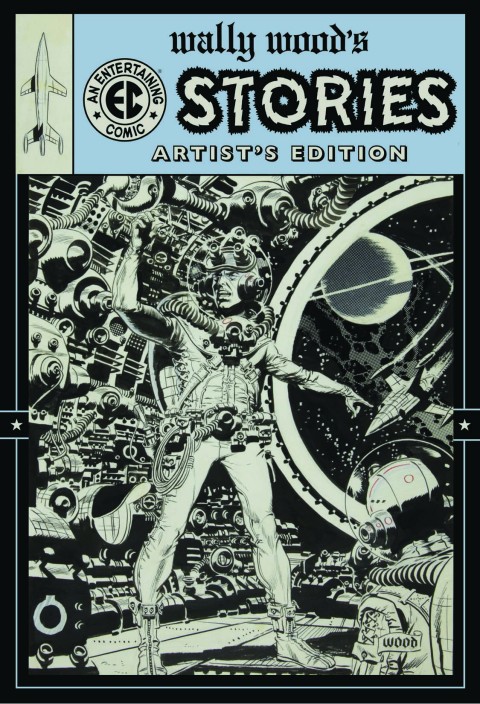
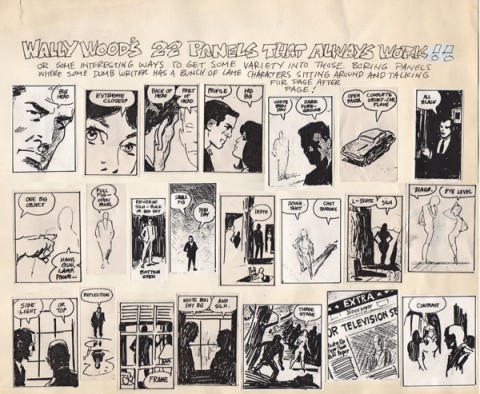
J. David Spurlock on the great Wally Wood at Imprint:

In nearly all of his work – no matter how overworked he was – even when he did risque material, there was always a charm, and he imbued the work with a purity of love for the medium.

And he was a master of every genre. That is one of the things that make him unique. Whether horror for EC, humor for Mad or Plop, war comics for DC or Gold Key, science fiction magazine illustrations, his Wizard King trilogy of fantasy graphic novels, superheroes for Marvel, cheesecake, romance, or westerns, whatever genre one picks, Wood’s contribution is among the finest ever.

Meditations — Dana Stevens on reading Zona, Geoff Dyer’s book about Andrei Tarkovsky’s 1979 film Stalker, while watching the movie:

[If] Zona goes off in a few too many directions, most of them are fascinating enough that we’re happy to zigzag along in the author’s wake. In addition to being a real-time explication of a single movie, Zona is a meditation on movies and time: the way movies change us, and change for us, as we return to them through our lives. Dyer reminisces about seeing Stalker in different decades, in different cities, with different girlfriends, as a young and then a middle-aged man… As he makes his way through Stalker scene by scene, Dyer’s account of what’s happening on screen is constantly being interrupted and informed by associations with the past as well as the present.

See also: Zona reviewed in the New York Times.

Also in the New York Times, author China Miéville on “Apocalyptic London“:

It used to be startling to see a fox in London — impossible not to feel that the city had slipped into a fable. Now you spot them on any late-night jog. In 2011, one of these agents of animal chaos infiltrated the Shard — at 32 London Bridge, the city’s unfinished tallest building — and climbed a thousand feet above the streets to live on builders’ scraps.

At dusk and dawn, green bolts shoot low, as flocks of feral parakeets set about bird business. Walking at dawn in the mud of Wormwood Scrubs, a rough, wild common next to the prison of the same name, we approach a screaming copse. Incredible flocks of these nonnatives preen and screechingly bicker, overlooking the glow of waking London.

And finally… A lovely piece the in The Daily Telegraph on Word on the Water, a Dutch barge selling second-hand books in London:

“We live in times where young people have Debussy moustaches, and listen to Sixties and Seventies music. They are interested in the past. I don’t remember there being a youth cult before where the past was so fascinating. There’s a hunger for authenticity … Younger people are becoming interested in things that machines can’t do: talent.”

1 Comment

Monday Miscellany

It is all hands to the pump at The Optimist HQ right now (meetings, deadlines, house maintenance, and vomit-propelled kids), but apologies for the missing links on Friday. Here’s a very quick Monday round-up to make up for it:

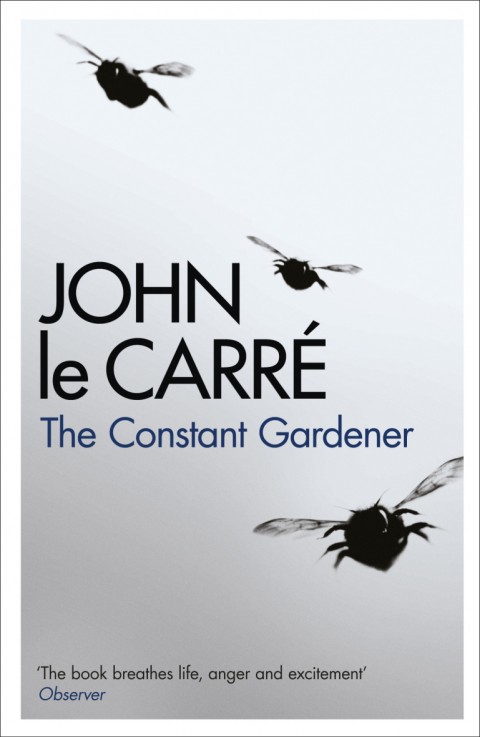
Designer Stuart Bache talks to Faceout Books about his John Le Carré covers.

I also talked to Stuart about his designs here.

Nicholas Carr, author of The Shallows, chooses five books on the impact of the information age at The Browser.

The Writer’s Job — Tim Parks on writing as a career choice:

Creative writing schools are frequently blamed for a growing standardization and flattening in contemporary narrative. This is unfair. It is the anxiety of the writers about being excluded from their chosen career, together with a shared belief that we know what literature is and can learn how to produce it that encourages people to write similar books. Nobody is actually expecting anything very new. Just new versions of the old. Again and again when reading for review, or doing jury service perhaps for a prize, I come across carefully written novels that “do literature” as it is known. Literary fiction has become a genre like any other, with a certain trajectory, a predictable pay off, and a fairly limited and well-charted body of liberal Western wisdom to purvey. Much rarer is the sort of book… where the writer appears, amazingly, to be working directly from experience and imagination, drawing on his knowledge of past literature only in so far as it offers tools for having life happen on the page.

1 Comment

Midweek Miscellany

Elegant Simplicity — A nice profile of book designer David Pearson at Spitalfields Life:

On the basis of “Penguin By Design,” David was given the job to design the covers for Penguin Great Ideas, an experimental series of low-budget books with two-colour covers. “I’m not an illustrator and I can’t take photographs, so I decided to do all the covers with type,” explained David, almost apologetically. Yet David’s famous landmark designs for these books, derived from his knowledge of the history of Penguin covers, were a model of elegant simplicity that stood out in bookshops and sold over three million copies. “I saw people picking them up and they didn’t want to put them down!” he confided to me, rolling his eyes in delight, “They were a phenomenon.” Then he placed a hand affectionately upon a stack of copies of this series for which he has now designed one hundred covers.

My interview with David is here.

Books MatteredDavid L. Ulin on the late Barney Rosset for The LA Times:

For Rosset, the mission was simple: Books mattered, they could be dangerous, they could change your life. Writers were heroes, “cosmonauts of inner space,” to borrow a phrase from “Cain’s Book” author Alexander Trocchi, their function less to reassure than to destabilize, to challenge the assumptions by which society was made.

This could happen in all sorts of ways — Beckett’s unflinching absurdism (“Ever tried. Ever failed. No matter. Try Again. Fail again. Fail better”), Burroughs’ scabrous cynicism (“A functioning police state needs no police”), Miller’s sense of living at the end of history, when all the so-called verities had collapsed beneath their own sanctimonious lies.

See also: Barney Rosset obituary in The Guardian.

Sprawling Tentacles — Alexandra Manglis reviews Alan Moore: Storyteller by Gary Spencer Millidge for the Oxonian:

The work and the man have morphed together resulting in a giant Moore myth that fans and comic creators alike have difficulty surmounting, its tentacles sprawled out far beyond his small Northamptonshire home. The infamous Guy Fawkes mask, for one, created in Moore’s anarchist comic V for Vendetta, has been worn by protesters from Tahrir Square to Occupy Wall Street, and Moore is indubitably proud of the anarchist symbol’s use in real civil unrest. Yet the symbol’s popularisation is largely due to the comic’s adaptation into a Hollywood blockbuster, from which Moore removed his name and refused to take royalties. Moore’s stories have become bigger than the man himself; the images he has authored have grown beyond him and often, as in the case of V for Vendetta, in spite of him.

See also: Paul Gravett’s review for The IndependentThe Guardian celebrates 35 years of British comic 2000AD

And finally…

Geoff Dyer, author of Zona, interviewed at Bookforum:

Failure is quite interesting, and it’s something I have a certain amount of experience with. I wasn’t a failure in the way lots of people are failures—I could always get published, that was pretty straightforward. Literary failure is funny because it’s not like you get this massive slap in the face and become a figure of ridicule. It’s more that you do this thing, you write this book, and then this big thing is poised to happen on publication. And nothing happens. It’s just a weird non-event. The literary Richter scale doesn’t register any kind of tremor. That was happening to me for a very long while, and then I managed to persuade myself that these serial failures were perhaps a kind of liberation in that it meant I was free from any kind of pressure from publishers. The stakes were so low that it didn’t really make any kind of difference to anybody that I went from writing a novel to writing a book about the First World War. So I’ve certainly known what it’s like for a book to simply, well, disappear.

Comments closed

Something for the Weekend

Blown Covers — The New Yorker art editor Françoise Mouly has a Tumblr (pictured above:  “Eustace at a Stoplight—Right?,” by David Urban)

Spanking — Charles McGrath remembers the late Barney Rosset in the New York Times:

Mr. Rosset was far from a highbrow. Sometimes he signed up books without having read them. He determined to publish “The Autobiography of Malcolm X,” for example, while riding in a cab and hearing on the radio that other publishers had turned it down. And he was proud of publishing a profitable line of Victorian spanking pornography. To a considerable extent the dirty books made the arty ones possible, and Mr. Rosset wasn’t the least abashed about it.

See also: WNYC has reposted two archive interviews with Rosset from 1995 and 2008, and John Gall has posted a collection of links to reminiscences about Rosset on his blog Spine Out.

Form and Fortune — A fascinating  review  of  Walter Isaacson’s biography of Steve Jobs by Evgeny Morozov, author of The Net Delusion, in The New Republic which discusses Apple’s relation to the Bauhaus and Braun:

The design philosophy of Dieter Rams, Braun’s legendary designer, has shaped the feel and the look of Apple’s latest products more than any other body of ideas. Since joining Braun in 1955, Rams—who likes to describe his approach to design as “less, but better”—began collaborating with the faculty at the Ulm School of Design, which tried to revive the creative spirit of Bauhaus with a modicum of cybernetics and systems theory. Eventually Rams produced his own manifesto for what good design should accomplish. His “ten principles of good design” encouraged budding designers to embrace innovation and make products that were useful but environmentally friendly, thorough but simple, easy to understand but long-lasting, honest but unobtrusive. Rams wanted his products to be like English butlers: always available, but invisible and discreet.

See also:  Maureen Tkacik’s on Steve Jobs and Isaacson’s biography at Reuters.

And lastly…

James Wood reviews Edward St. Aubyn’s Patrick Melrose novels for The New Yorker:

Patrick Melrose, the protagonist of what is now a quintet of novels devoted to the Melrose family, is the scion of a wealthy dynasty almost as monstrous as the dodgier Roman emperors; he has spent much of his adult life trying to kill himself with drugs and booze. St. Aubyn’s novels have an aristocratic atmosphere of tart horror, the hideousness of the material contained by a powerfully aphoristic, lucid prose style. In good and bad ways, his fiction offers a kind of deadly gossip, and feeds the reader’s curiosity like one of the mortal morsels offered up by Tacitus or Plutarch in their chatty histories.

Comments closed

TED Talks: Neil MacGregor

Neil MacGregor, Director of the British Museum and author of A History of the World in 100 Objects, traces 2600 years of Middle Eastern history through a single object:

Comments closed

Midweek Miscellany

Publisher, film distributor and rebel Barney Rosset has died aged 89. The Associated Press obituary is here:

As publisher of Grove Press, Rosset was a First Amendment crusader who helped overthrow 20th century censorship laws in the United States and profoundly expanded the American reading experience. Rosset had an FBI file that lasted for decades and he would seek out fellow rebels for much of his life.

Between Grove and the magazine Evergreen Review, which lasted from 1957 to 1973, Rosset published Samuel Beckett, Malcolm X, Che Guevara, Jean-Paul Sartre, Allen Ginsberg, Henry Miller, D.H. Lawrence and William Burroughs. He was equally daring as a film distributor, his credits including the groundbreaking erotic film “I Am Curious (Yellow),” and art-house releases by Jean-Luc Godard, Marguerite Duras and others.

Music and American History — Simon Reymolds profiles author and music critic Greil Marcus for The Guardian:

For Marcus, listening rapt at the cusp of the 60s and 70s, rock was growing up in the richest and most unexpected way. What’s more, his two great passions, music and American history, had converged. “Their music sounded like a new way to understand who you were, the fact that you weren’t just a product of your own willfulness but also a product of the past,” he says of the Band, the subject of Mystery Train‘s most compelling section (although the chapters on Sly Stone and Elvis Presley aren’t far behind). “There was this sense that they were opening a door to your own country and your own history.”

A Bunch of People in a Room — An interview with Chip Kidd at Smashing Magazine:

I very much try to downplay the jacket as a sales tool, because I think that publishers invest too much intellectually in this concept, and they can actually make my work much, much harder than it needs to be. And certainly with the advent of buying books on the Web, you’re not going to buy a book from Amazon because of the way it looks. It’s just not the nature of how that works. The problem arises when you get a bunch of people in a room looking at a jacket and determining the fate of the design based on preconceptions of how the book will sell, about how this design will help the book to sell.

And finally…

Flawed Monster Heroes — Legendary comic book artist Neal Adams on Marvel superhero Spider-Man:

A weakling kid is bitten by a radioactive spider and decides to become…a circus performer? Yes, that’s right, Peter Parker is more interested in using his “gift” to find a paycheck, not a damsel in distress. Until, with all his power, his weaknesses cause him to fail to save his Uncle Ben. Soft monsters as superheroes. Not sparkly-toothed-born heroes…but flawed monster heroes. Then came the incredible Steve Ditko… Marvel had found a… creator who got it, who totally understood the concept: Flawed monster heroes. It was a new idea, born out of a touch of coincidence, a touch of history, a massive amount of brilliance

Comments closed

Something for the Weekend

ZonaGeoff Dyer’s book about Andrei Tarkovsky’s 1979 film Stalker,  reviewed at The Daily Telegraph:

Zona’s subheading insists it’s “a book about a film about a journey to a room”. Literally speaking it is. Tarkovsky’s Stalker forms the foundations. Dyer retraces the cinematography faithfully and beautifully. So beautifully, in fact, that I found it difficult not to start falling again for Tarkovsky. But Zona is also about an author on the verge of a nervous breakdown. “I mean, do you think I would be spending my time summarising the action of a film almost devoid of action if I was capable of writing about anything else?” Dyer writes, as if about to explode.

See also: The Guardian. And in a lovely twist, Dyer, a nominee for Hatchet Job of the Year, reviewed by the eventual winner Adam Mars-Jones at The Spectator.

Meanwhile, an interview with the man himself at Guernica Magazine:

I’m most interested in the book which is completely un-sellable on the basis of a proposal or contract. One of the reasons so many nonfiction books are so boring is because what they’ve done, very diligently, is fulfill the terms of their proposals—they’ve written up their proposal, long-form, and often what this does is then set up a sort of serial deal, where the whole book can essentially be reduced back to the size of the original proposal! What I really like about this book is that the proposal would be turned down instantly: there’s nothing to propose. Nicholson Baker talks about the way in which the most successful nonfiction books are those that can be boiled down into an argument so that everybody can wade in with an opinion without having to undergo the inconvenience of having to read the book itself. The more you can condense it, the better. Malcolm Gladwell is the supreme exponent of this: Blink—oh yeah, I get it! “Blink.” That’s all you need to know.

(pictured above, the UK edition of Zona published by Canongate. Design: Rafaela Romaya / Canongate Art Dept. Photograph: Mosfilm. The book is published by Pantheon in the US)

And in non-Geoff Dyer related news…

A remarkable set of the Paris Review covers at social media site of the moment Pinterest.

And finally…

At The GuardianSukhdev Sandhu charts the rise of radical alternative publishers, and talks to some of the contributors to the Zero Books imprint, including Nina Power:

The book still retains a curiously weighty status in comparison to blogs. A book is a snapshot of whatever it was you felt was interesting at that moment, and it’s fixed in aspic, which can have its drawbacks.

There’s an appeal to physical books, particularly short books like most of the Zer0 catalogue, at the moment: the physical form provides some relief from the relentless pressure of the online environment. It’s very difficult to keep one’s attention on online content – the temptation to click away is always there. In conditions where your attention is besieged in that way, short essayistic books, which you can read in one afternoon, come into their own.

Comments closed