Skip to content

Category: Film

Auteurmatic for the People

At the New Yorker, film critic Richard Brody, author of Everything Is Cinema: The Working Life of Jean-Luc Godard (and a man with prodigious beard), offers some interesting thoughts on ‘Vulgar Auteurism’ (a new term to me, if not exactly a new idea) and the legacy of the New Wave:

In opposition to the constipated naturalism of the art-house consensus—whether the one that prevailed sixty years ago or that of today—crudeness has an intrinsic merit, and it’s easy to detect the same impulse behind [Vulgar Auteurism] and Godard’s decision to dedicate “Breathless” to the B-movie studio Monogram Pictures. Getting rid of prejudices—acknowledging that there’s no such thing as intrinsically good acting or cinematography or direction, but only the evidence of artistic inspiration—is as great a discovery for critics as for filmmakers. From the start, Godard repudiated the false merits of so-called production values, but he invested the film not with the elements of the usual Monogram movie but with a rich and complex collection of high-art references, intellectual divagations, and documentary-based techniques, all held together by an aesthetic philosophy that owed more to Sartre than to Hawks. His praise of cheapness and scruffiness wasn’t in the service of those qualities but of the virtues of the grandest, greatest art and ideas he knew. The hat tip to the gangster genre served to embody his most intimate emotions and personal experiences—and, for that matter, to suggest the way that those very intimacies had become tied up, for better or worse, with the experience of moviegoing.

New Yorker

Comments closed

Beauty in Danger


The rather lovely experimental animated short Beauty in Danger is collaboration between MK12 and New York-based artist Brian Alfred, with a score by Ian Williams from Battles. I don’t know what it means, but I’m not sure it matters…

And if liked that (and why wouldn’t you?) now would seem like a good time to remind you about MK12’s short experimental film TELEPHONEME from a couple of years ago.

Comments closed

Cartoon College


Following a group of aspiring indie cartoonists struggling through two gruelling years at the Center for Cartoon Studies in White River Junction, Vermont, and featuring candid interviews with the likes Chris Ware, Scott McCloud, Lynda Barry, Charles Burns, Françoise Mouly, Art Spiegelman and Jules Feiffer, Cartoon College looks like a fascinating documentary about “one of the world’s most tedious artistic disciplines:”

The film was released on iTunes this week, with the DVD available in July.

Comments closed

The Master Director: Paul Thomas Anderson


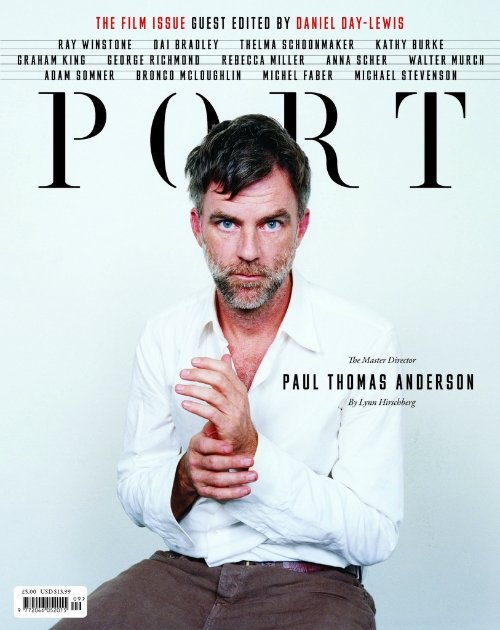
Port magazine has just made Lynn Hirschberg’s interview with filmmaker Paul Thomas Anderson from their Spring issue available on online:

The Master is not supposed to be a riddle,” he said, when I asked him if he intentionally made the film hard to embrace. “It’s not meant to be medicine. It’s not meant to be something that you have to work hard at deciphering. It’s a same old – same old story presented in a new way. It’s about Freddie and Dodd’s love for each other, what it means to be a master and a subject and vice versa. I don’t find it particularly difficult, but maybe it’s operator error.” Anderson paused and then smiled. “Meaning maybe it is my fault, but fuck it.”

Interestingly, Anderson’s next film is a Thomas Pynchon adaptation:

Anderson seems to move on faster now, although he may not be dwelling on the complex reaction to The Master because he is in the midst of pre-production on his next movie. It’s an adaptation of Thomas Pynchon’s 2009 novel Inherent Vice that is set to begin filming in late spring. This is the first screenplay of a Pynchon novel that the author, who is known for his literary pyrotechnics and his mysterious, reclusive nature, has authorised. The book, which is set in the late 60s and early 70s, centres on a counterculture detective that, reportedly, will be played by Joaquin Phoenix, but Anderson would not discuss any aspect of his new project. “I have always loved his work,” Anderson said, not even willing to voice Pynchon’s name. When I peppered him with questions, he shook his head no, with a stubborn half-smile.

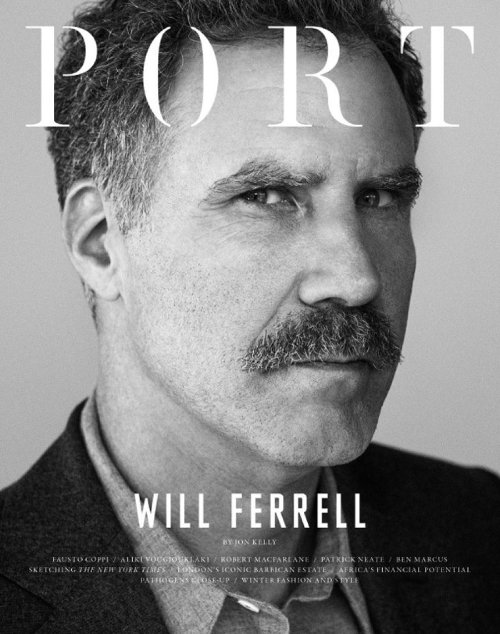
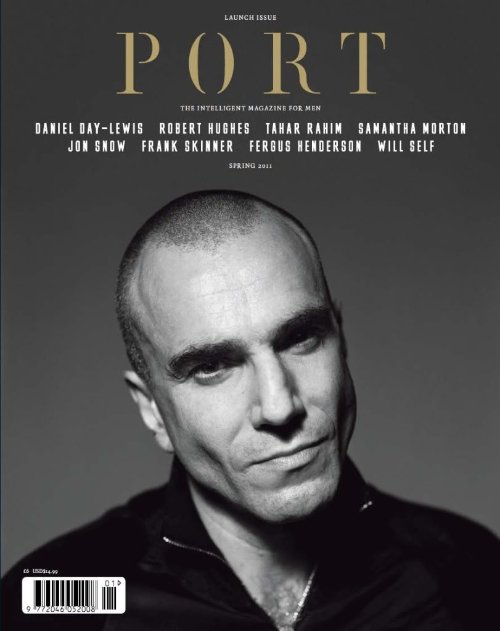
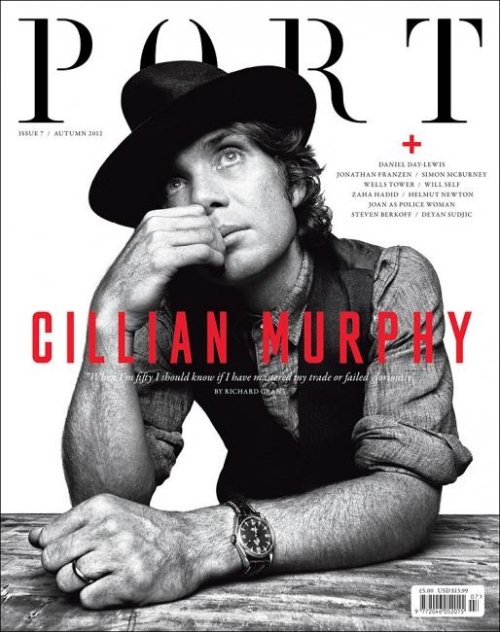
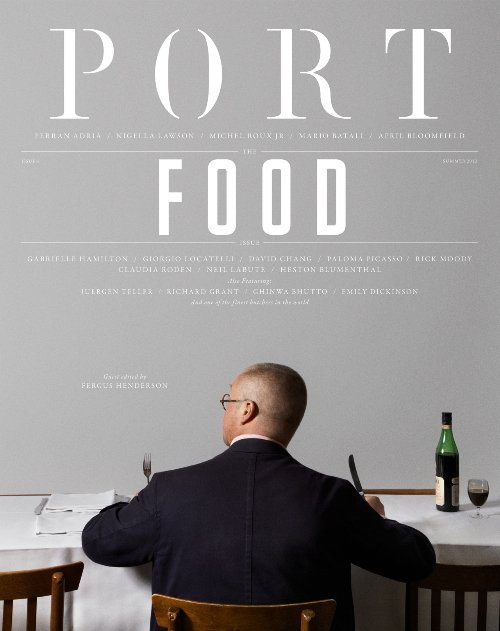
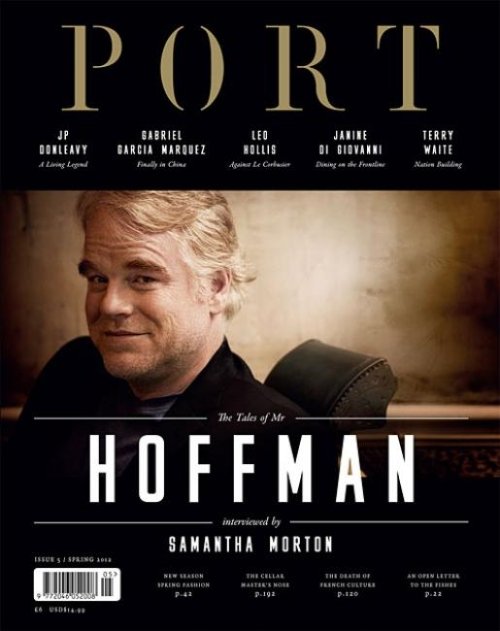
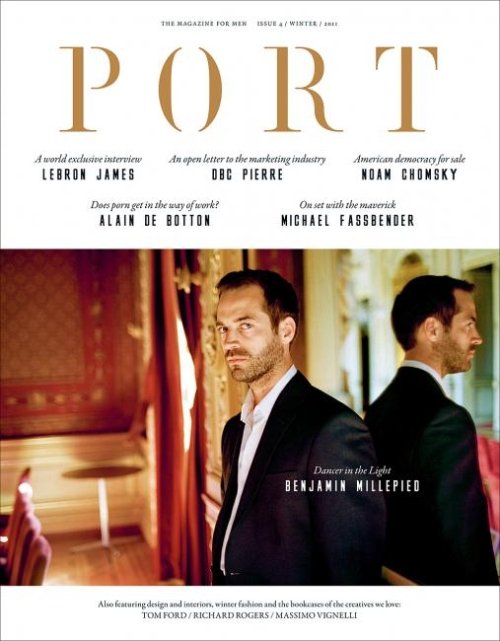
And if Stefan Ruiz’s photographs of Anderson haven’t convinced you that Port is beautifully looking magazine here are a few covers:

Long may it continue.

Comments closed

Dennis Hopper: 2% Brilliance, 98% Horseshit

“I am just a middle-class farm boy from Dodge City and my grandparents were wheat farmers. I thought painting, acting, directing, and photography were all part of being an artist. I have made my money that way. And I have had some fun. It’s not been a bad life.”–Dennis Hopper


Peter L. Winkler discusses his book Dennis Hopper: The Wild Ride of a Hollywood Rebel,  and the life  and work of the actor with John Wisniewski at the Los Angeles Review of Books:

Hopper was an aesthete, and his interest in films was for their visual values, not their narrative. I recently discovered a podcast with writer Ann Louise Bardach, who Hopper had commissioned to rewrite the screenplay for the film Backtrack (1990) (a.k.a.Catchfire), which he directed and starred in, and which costarred Jodie Foster as a Jenny Holzer­–like artist on the run from the mob. Bardach said that Hopper took her to Taos and Santa Fe, New Mexico to scout locations for the film where Foster’s character would hide out, and he would point out artistic landmarks like Georgia O’Keeffe’s former home or Mabel Dodge Luhan’s home, which Hopper once owned, and insist she incorporate them in the screenplay. That’s what he really cared about.

Los Angeles Review of Books

Comments closed

Google Doodle for Saul Bass’ 93rd Birthday

Google marks Saul Bass’ birthday with a neat animated short based on his work:


Comments closed

Out of Print

Out of Print, a documentary by Vivienne Roumani about “the turbulent and exciting journey from the book through the digital revolution,” will première at  the Tribeca Film Festival on April 25th:

[vimeo http://vimeo.com/54234607 w=480]

The film features interviews with Scott Turow, Ray Bradbury, and Amazon.com founder and CEO Jeff Bezos among others.

Comments closed

Bert Stern: The Original Mad Man

A new documentary about American photographer Bert Stern:   

The movie has been playing across the US and will open in New York next week. There are no Canadian dates that I could see.

(via Coudal)

2 Comments

The Film Before The Film

The Film Before The Film is a documentary short by the Berliner Technische Kunsthochschule about the history of opening titles. Although the narration is a little flat, the film itself is a visual treat:

Comments closed

Stanley Kubrick Filmography

A new Stanley Kubrick filmography, designed and animated by Hyejin June Hong:

You can watch Martin Woutisseth‘s animated Kubrick filmography from a couple of years ago here.

(via Coudal, source of all things Kubrick)

Comments closed

Something for the Weekend

Less Shit Please — A great article on British political cartoonists by Helen Lewis for The New Statesman:

[Martin] Rowson tells me that his fellow Guardian cartoonist Steve Bell always files as late as possible to make the staff grateful that the picture has arrived at all. “There’s a wonderful story about Georgina Henry, when she was deputy editor, going past the comment desk at about eight o’clock one evening and Steve’s cartoon had just come in,” he says. “It was a wonderful one of [George W] Bush as a monkey, squatting on the side of a broken toilet, wiping his arse with the UN Charter. And there’s all this shit splattered on the wall behind it, and she looks and says, ‘Oh God, no.’ [Alan] Rusbridger had put down this edict saying less shit in the cartoons, please – you know, the editor’s prerogative – and she and Steve had this eyeball-to-eyeball confrontation.” What happened? “He finally caved in. In one of the greatest betrayals of freedom of speech since Galileo, he tippexed out three of the turds.”

Holding On — An interview with Francis Ford Coppola at The Rumpus:

when I wanted to do Apocalypse Now, no one would do it. I couldn’t believe it. I was so disgruntled that I had played by their rules and won, yet they still didn’t want to make it. So I just went on myself, and took all the money and property I had, went to the bank, and made Apocalypse Nowmyself. When it came out it was very dicey. People didn’t know what to make of it; it got bad reviews. My films have always gotten a lot of bad reviews. I was very scared that I was going to be wiped out because the Chase Manhattan Bank had all my stuff. I decided I would make a movie that would be very commercial. Every time I’ve tried to do something commercial it’s always failed. So I made One From The Heart.

And what happened was that Apocalypse Now, little by little, started to be a big success and thought of as a classic, a great movie. But by then I was already making One From The Heart and that was a big flop and I lost everything. So from age forty to age fifty I just had to pay the Chase Manhattan Bank all that money, and I just barely ended up holding onto everything. So ironically, the thing I did to solve the problem ended up causing a problem.

Coming or Going? — Tim Parks on the unevenness of globalization for the NYRB Blog:

To what community does a writer belong today? The whole world, might seem to be the obvious answer in an era of globalization. Alas, it’s not that simple… I am known in England mainly for light, though hopefully thoughtful non-fiction; in Italy for polemical newspaper articles and a controversial book about soccer; in Germany, Holland, and France, for what I consider my “serious” novels Europa, Destiny, Cleaver; in the USA for literary criticism; and in a smattering of other countries, but also in various academic communities, for my translations and writing on translation. Occasionally I receive emails that ask, “But are you also the Tim Parks who…?,” Frequently readers get my nationality wrong. They don’t seem to know where I’m coming from or headed to.

And finally…

A new excerpt from Linotype: The Film, which will finally be released in mid-October apparently…

Comments closed

RDInsights: Alex McDowell, Designer of Worlds

Mike Dempsey interviews innovative and influential production designer Alex McDowell who started out screen-printing t-shirts for Vivienne Westwood before going on to work with film directors such as Terry Gilliam and David Fincher (and with Tim Pope on that wardrobe video for The Cure):

RSA Royal Designers: Alex McDowell Interview mp3

(It’s a fascinating conversation but it took me several attempts to download what is quite a long interview, so I hope it works better for you!)

Comments closed