Skip to content

Category: Publishing

On Toni Morrison’s Rejection Letters

Melina Moe, curator of literature at Columbia University’s Rare Book & Manuscript Library, has written a lovely piece for the Los Angeles Review Books on the rejection letters Toni Morrison wrote while an editor at Random House:

Morrison’s rejections tend to be long, generous in their suggestions, and direct in their criticism. The letters themselves—generally one, two at most, exchanged with a given writer—constitute an asymmetrical archive. On one end of each communiqué is the ghost of a submitted manuscript … On the other is a rejection from Morrison, sometimes brusque yet typically offering something more than an expression of disinterest—notes on craft, character development, the need for more (or less) drama. But also: Autopsies of a changing, and in many ways diminishing, publishing industry; frustrations with the tastes of a reading public; and sympathies for poets, short story writers, and other authors drawn to commercially hopeless genres.

The observations on publishing are fascinating and a reminder that some things never change:

Morrison’s letters are unexpectedly forthcoming. Often, she supplements her rejections with diagnoses of an ailing publishing business, growing frustrations with unimaginative taste, the industry’s aversion to risk-taking, and her own sense of creative constraint working at a commercial press (especially in the late 1970s and early ’80s; Morrison left editorial work to be a full-time novelist in the early 1980s). They sketch a “road not taken” in mainstream publishing, as experimental volumes, poetry, and short story collections were increasingly treated as suspect investments of editorial time and publishing house resources. Current market conditions made for “a losing proposition for the publisher and a hopeless one for short story writers,” Morrison informed one author, and unless they were penned by famous novelists, short story collections were “almost like the publication of poetry”—that is, “practically impossible to make a profit from.” In another, lengthy letter from 1977, Morrison outlined how the economics of a book project depended on the mechanisms of distribution. It wasn’t just that casual readers didn’t buy short story collections, but that the major institutions responsible for generating widespread enthusiasm and name recognition were also uninterested: “Book clubs do not make offers for collections of short stories; mass paperback houses do not make offers for collections of short stories by single authors and so we are left with the hope that ten or fifteen thousand people will go into a bookstore and ask for a particular author by name.” The rejection concludes with Morrison’s admission that “[t]here is no point in my being other than honest with you, you should continue to publish in magazines and if you ever decide to write a novel, I’d be delighted to look at it.”

Comments closed

Corrupting Souls

Tom Gauld‘s Midsummer’s Eve cartoon for The Guardian is from last month (obviously!), but I’m borrowing it to make a bit of boring and overdue social media housekeeping more interesting!

While I haven’t yet asked Wizard Toby to deactivate the Casual Optimist account like a some kind of despairing Baphomet, I have pretty much abandoned Twitter. It’s disappointing because I’ve met some great people through the app and it has always been a tremendous resource, but I can’t support it any more.

I’ve always hated Facebook and I haven’t posted to the Casual Optimist page there in at least a couple of years. I did, however, start an Instagram account which I’m trying to update at least once a month if you want to follow along there. I think it’s pretty unlikely that I will do anything with Threads.

I’m not on Bluesky, but I am trying out Mastodon. It promises a lot, I’m just not quite convinced by it yet (and I gather from more prolific posters than me that there is something of a sea lion problem there). I’ll post a link if/when there is a proper Casual Optimist account. In the meantime, you can find me here.

There is an RSS feed that you can subscribe to if you still use a reader (I use the Old Reader FWIW; I’m not sure what the cool kids are using), or you can get it as an email (it’s not perfect but it works).

Updates are also sent automatically to Tumblr if you’re still rattling around that haunted abandoned mansion.

Anyway, sorry for being very online and tedious. I’ll try to post some more interesting stuff soon (if I don’t quietly pack it in completely and put myself out to pasture…)

Comments closed

A Slight Change in Emphasis

A publisher’s helpful ‘suggestions’… A recent Tom Gauld cartoon for The Guardian.

Comments closed

The ‘Future Book’ is Here

I haven’t posted anything about books and technology here for a while, but I thought this recent Wired piece by Craig Mod on the “Future Book” was quite interesting: 

Physical books today look like physical books of last century. And digital books of today look, feel, and function almost identically to digital books of 10 years ago, when the Kindle launched… Yet here’s the surprise: We were looking for the Future Book in the wrong place. It’s not the form, necessarily, that needed to evolve—I think we can agree that, in an age of infinite distraction, one of the strongest assets of a “book” as a book is its singular, sustained, distraction-free, blissfully immutable voice. Instead, technology changed everything that enables a book, fomenting a quiet revolution. Funding, printing, fulfillment, community-building—everything leading up to and supporting a book has shifted meaningfully, even if the containers haven’t. Perhaps the form and interactivity of what we consider a “standard book” will change in the future, as screens become as cheap and durable as paper. But the books made today, held in our hands, digital or print, are Future Books, unfuturistic and inert may they seem.

Comments closed

Elda Rotor: The Woman Who Runs Penguin Classics

penguin classics elda rotor
Photo by JL Javier

CNN Philippines interviews Elda Rotor, vice president and publisher of Penguin Classics at the Penguin Random House in New York:

The main joy is bringing an audience to a work that would otherwise lead a quiet life, not having the chance to be brought into the light of a modern readership. A greater joy is hearing individual responses of how enlightening or enjoyable a book has been, and connecting that experience with the fact that the edition was a Penguin Classic. The challenges are working very hard to edit, produce, and publish a book and to see its reception to be very modest. So either you realize that the readership was small, or that for some reason we failed to reach a wider audience for a variety of factors… In the 10 years I’ve worked at Penguin Classics, it’s proven to be true that there is nothing that compares to a quality edition of a great work of literature. We are very much in the digital world, providing e-books for much of our list. But there’s something about the physical beauty of a book, finely executed inside and out, that readers find deeply satisfying. We bring much work and thought into the production of our books, from authoritative texts, interior design, to cutting-edge book design, and we have built a strong reputation for this distinction. Developing series such as the Penguin Drop Caps, Penguin Horror, Civic Classics, and soon the Penguin Orange Collection and Penguin Galaxy represents our dedication to our readers and curating special series for their interests that are beautiful objects unto themselves. Overall it reflects the deep respect we have for the reader’s experience and our focus on enriching that experience with a Penguin Classic.

Comments closed

Monocle on Books in Translation

chooser_crop-copy-574863ee3054a

On the latest Monocle 24 Culture show, host Robert Bound discusses the recent rise in translated fiction with Anne Meadows, commissioning editor at Portobello and Granta, and Lisette Verhagen, foreign-rights agent at David Godwin Associates, while Andrew Mueller talks to Deborah Smith, Man Booker International Prize-winning translator of The Vegetarian by Han Kang, and Lyndsay Knecht visits Deep Vellum in Dallas:1

Monocle Culture with Robert Bound Books in Translation mp3

Comments closed

A Publishing House of Her Own

LadyWiththeBorzoi.indd

Joanna Scutts reviews The Lady with the Borzoi, Laura Claridge’s new biography of Blanche Knopf, for the New Republic:

When the house of Knopf launched in 1915, publishing was a gentleman’s pursuit—amateur, clubbish, WASP, and above all, male. Blanche and Alfred navigated this casually anti-Semitic world, holding themselves aloof from their alcoholic, philandering competitor, the “pushy Jew” Horace Liveright, founder of the Modern Library and publisher of T. S. Eliot’s The Waste Land. Over the years there would be female secretaries, copywriters, reviewers, and editors at Knopf. There would be women in charge of little magazines and the children’s-book divisions of big publishers. But there would be no other woman in the publishing industry with the status of Blanche Knopf—either in the 1920s, when she signed Langston Hughes and Willa Cather, or in the 1950s, when she celebrated Albert Camus’s Nobel prize and oversaw the translation of Simone de Beauvoir’s The Second Sex. And despite it all, although her husband swore he’d put her name on the masthead, he never did…

…For the Knopfs, marriage proved much more difficult than publishing. In Claridge’s hands Alfred Knopf takes his place in twentieth-century literature’s crowded pantheon of assholes—his great loves were the American Southwest, expensive wine, and the ritual humiliations of his friends, his family, and most of all, his wife. One after another, acquaintances and co-workers attest to a relationship that today we’d call toxic; a stew of jealousy, incompatibility, violence, and—just when it couldn’t get worse—yearning affection.

Comments closed

From Thomas Mann to Amazon — The Art of Literary Publishing in New York

The Millions has a long, but very interesting (and, at times, surprisingly blunt) essay by veteran Doubleday editor Gerald Howard on editing and literary publishing in New York:

At the simplest, most basic level, I’ve been reading for a living for 37 years. I arrived at New American Library with a literary and intellectual sensibility formed by the unruly rebellions of the ’60s and the spiritual deflations of the ’70s, with a taste for the novelists and thinkers who had either helped to cause or best reflected and interpreted those rebellions and deflations. I’ve read thousands of books and proposals since then, and I believe I am a better reader than I was at age 27 — I know more because I’ve read more and my judgments are (I sure hope) better informed and more mature. But at the primal level where reader meets text and experiences emotions ranging from boredom and impatience to I-love-this-and-have-to-have-to-publish-it excitement, I think I am still that young man in the hunt and on the make, always searching for the big wow. This process takes place in the private arena of the mind and is entirely unrelated to the corporate arrangements of my employer. It is, quite literally, where I live, where I feel I am most myself.

As for the editing of those books that wow me when happy circumstances dictate that I get to acquire them, that process too takes place in a private arena. When I encounter a sentence that is inelegant or ungrammatical or inefficient or ambiguous in meaning, or a scene in a novel that is implausible or overdone or superfluous, or a plot that drags or goes off course or beggars credulity, or a line of exposition that falls short of the necessary clarity, or feel that some subject is missing and requires coverage, I point those things out to the author and with a carefully calculated mixture of firmness and solicitude suggest ways they might be remedied. I do this usually at nights and on weekends, sometimes on my bus ride to and from work, very occasionally in my office on slow days with my door closed (yes, I have an office with a door that closes), with a complete absence of business calculation beyond the largest context — that a book that is bad or just not good enough is a book that will embarrass me and my employer and be poorly received and will not sell.

But as I read those submissions and edit those manuscripts, on another cognitive plane I am reality testing what I am reading. What other books — the fabled and often tiresome “comp titles” — are like this one, and how did those books sell? (We are always fighting the last war.) Is it too similar to something we published recently or are publishing in the near future, or to a book some other house has or shortly will publish? Are there visual images in the book that might be utilized on the cover? What writers of note can I bug for prepublication blurbs? Is there something about the author, some intriguing or unusual backstory, some charisma radiating off the page (and maybe the author photo? Don’t act so shocked) that suggests that he or she will be a publicity asset? What might a reasonable advance be, given the amounts that have been paid recently for similar books, or might reason for some reason be thrown out the window? (A friend and colleague of mine refers to this feeling as “Let’s get stupid.” More on this matter shortly.) What colleagues in the company, in the editorial department, in marketing, publicity, and sales, could I ask to read the book to drum up support for it? What is my “handle” going to be — the phrases or brief sentences that briskly encapsulate a book’s subject matter and commercial appeal? These and all sorts of other questions will be popping up in my brain, and inevitably there is some crosstalk and bleed-through between the two cognitive spheres. If you want total purity in these matters, go join an Irish monastery and work on illuminated manuscripts, not a New York publishing house. Or at the very least a quiet and scholarly and well-endowed university press.

Well worth reading from beginning to end, the essay is an excerpt from the forthcoming Literary Publishing in the Twenty-First Century edited by Travis Kurowski, Wayne Miller, and Kevin Prufer (to be published by Milkweed Editions in April 2016), which on this evidence of this alone will be essential reading for publishing folks1.

Comments closed

New Directions Staying Small

Maria Bustillos visits New Directions and talks to publisher and president Barbara Epler about the business for The New Yorker:

Today’s visitor to New Directions’ elegantly shabby offices, in Chelsea, may stand on the nineteenth-floor balcony beside Epler, who is in her fifties and has a big, throaty laugh, under a pair of carved stone lions silently roaring high above, downtown and the Hudson River spread out beneath, and be forgiven for thinking that he has somehow stepped into a lovely and improbable alternate universe.

Inside, there are small, quiet, old-fashioned offices, one per person. On the walls, there are treasures: the firm’s original colophon, the unmistakable work of Rockwell Kent; an original Alvin Lustig mechanical with tissue overlay for the jacket of “Nightwood”; notes written on the famous prescription pad of WILLIAM C. WILLIAMS, M. D.; a photograph of Laughlin, who died in 1997, in silhouette. Epler, who joined the company as an editorial assistant fresh out of college, in 1984, and went on to become editor-in-chief in 1996, publisher in 2008, and president in 2011, seemed to be giving not an office tour so much as a museum one, especially when she opened the door to a small room containing one copy of each of nearly all of the more than thirteen hundred books published here so far. Céline, Nabokov, Tranströmer and Bolaño, Williams and Neruda and Sartre and Brecht and so many others: Laughlin believed in keeping the good stuff in print (or reprint). Many are bound in Lustig’s iconic, modernist covers.

“Andy Warhol used to design for us before he was famous,” she said. “Isn’t that a scream?”

Comments closed

Jeff Shotts: Artful and Enduring Experiences

citizen

At Literary Hub,  Jeff Shotts discusses his work an editor at Minneapolis-based publisher Graywolf Press with Kerri Arsenault:

At Graywolf, we choose what we choose because these books deal with uncomfortable issues. Sometimes we need comfort, but what comforts us as readers, when so much of the rest of the world is hard at work to comfort us? I am made more uncomfortable by passivity, invisibility, and perfection. And readers want books like Citizen, which directly confronts race, or’On Immunity, which takes on vaccination and cultural fear, or D. A. Powell’s exquisite, lyrical trilogy collected in Repast, on illness and HIV, or Solmaz Sharif’s upcoming Look, which describes the casualties of war, one of which is our language.

All of these books we choose because of the issues they confront, yes, and also because of how they confront them. The language, style, and form of the books Graywolf publishes are meant to challenge you, provoke you, keep you reading, immerse you in experiences that you can’t shake off after you look up from their pages. Not all these experiences are loud or ugly, and many of them are also subtle, internal, joyous, and beautiful. But we hope all these experiences are artful and enduring…

…It’s a risk in this climate to publish the kinds of books we do—poetry and translations, essays and short stories, works of social justice and artful language. But we continue to recognize that many, many people are excited by these kinds of books: they want to read them, share them, hand-sell them, download them, review them, teach them, study them, engage with them, maybe throw them across the room. As an independent, nonprofit, mission-driven publisher, Graywolf and our titles exist in the same marketplace as countless, more commercial publishers and their titles, and these books have to compete for attention, review coverage, bookstore placement, online positioning, distribution, sales, awards, event listings, and on and on and on. It’s a risk in most every way, but given the extraordinary success many titles have had in these last few years, I think more and more people inside and outside the industry are giving Graywolf books an extra look and an additional boost.

Comments closed

Chris Jackson: Building a Literary Movement

Chris Jackson Credit Shaniqwa Jarvis for The New York Times

New York Times Vinson Cunningham profiles Chris Jackson, executive editor at Spiegel & Grau and editor of award-winning author Ta-Nehisi Coates:

Jackson’s role… is to perform nothing less than a kind of magic. He stands between the largely white culture-making machinery and artists writing from the margins of society, as well as between the work of those writers and the largely white critical apparatus that dictates their success, in both cases saying: This, believe it or not, is something you need to hear.

The book that perhaps best encapsulates that ethos is one of Jackson’s first, ‘‘Step Into a World: A Global Anthology of the New Black Literature,’’ published in 2000. The collection, which he and the ‘‘Real World’’ star turned hip-hop journalist Kevin Powell compiled, brought together a cohort of writers — Junot Díaz, Edwidge Danticat, Paul Beatty, Hilton Als, Claudia Rankine and others — who have today come to form a loosely generational, unabashedly multicultural alternate literary establishment. ‘‘Step Into a World’’ marked a turning point for Jackson, who had until then been publishing reference works that were the stock in trade of John Wiley & Sons, where he worked at the time.

‘‘I’ll never forget a reading we did for that book,’’ he told me. ‘‘It was at the Schomburg’’ — the Harlem library that is a repository of black literature and history — ‘‘and there were so many people there, not just publishing people, as we usually think of them, but people from the neighborhood, and they were picking up this book.’’ He paused here, after uttering the word book, and his abiding wonder at the power of the object was almost tangible. ‘‘This book, containing all these ideas that were so important to me. They were picking it up and leaving with it, and it was such a wonderful literalization of the transmission of ideas.’’

Comments closed

Graywolf Press: Saying Yes When Others Say No

Writing at NY Magazine’s Vulture, Boris Kachka, whose book Hothouse on Farrar, Straus & Giroux was published in paperback last year, profiles nonprofit literary publisher Graywolf Press:

Publishing just over 30 books a year, Graywolf has had authors win four NBCC awards, a National Book Award, two Pulitzers, and a Nobel Prize — all in the last six years. This year, it will exceed $2 million in sales for the first time. No other independent press, never mind a 41-year-old nonprofit, has come so far so fast. It didn’t happen by accident.

“I think of success as being able to say yes to something that doesn’t necessarily look like a commercial winner,” says Fiona McCrae, Graywolf’s publisher since 1994, over yogurt and decaf on one of her monthly visits to New York. “Knowing something is good and having to say no, that seems to me the bigger failure.” An affably owlish Brit, McCrae started out in London’s legendary literary Faber & Faber before transferring to its small American spinoff in Boston. Three years later, she heard that Graywolf’s founder was resigning.

Scott Walker began hand-sewing poetry chapbooks in Port Townsend, Washington, in 1974. While picking up poets like Tess Gallagher and Jane Kenyon, Walker turned Graywolf Press into a nonprofit and relocated to the Twin Cities, home to a thriving philanthropic base (which also supports nonprofit presses Milkweed and Coffee House). But in the ’90s, a publishing slump hit Graywolf particularly hard; Walker resigned and his board eventually hired McCrae. At the time, she had zero experience in nonprofits — possibly to Graywolf’s benefit, because she chafed at the complacency to which nonprofits are prone. “There’s got to be a way in which you absolutely value Graywolf,” she says, “but like, come on, everybody! Other small presses are not the measure. Do you say, ‘For our size, we get more attention, so that’s it,’ or do you say, ‘Where can we go?’

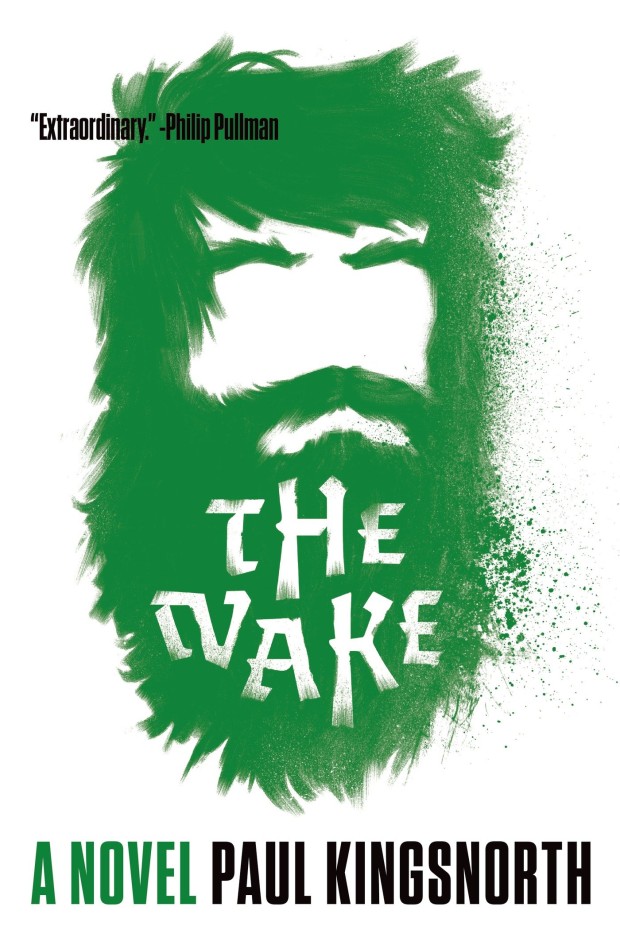
And speaking of Graywolf, I am looking forward to picking up a copy  The Wake by Paul Kingsnorth, which they are publishing in North America this month (can anyone tell me who designed the cover?)

the wake


2 Comments