Skip to content

Category: Books

Françoise Mouly and the One-Image Narrative

R. Fiore reviews In Love With Art, Jeet Heer’s shory book on Françoise Mouly, for The Comics Journal:

At this point is there any more important editor in periodical illustration than Françoise Mouly? With so many erstwhile venues for illustration being driven online, where any illustration is rendered into spot illustration, The New Yorker could be the big time all by itself. Unless Spiegelman comes into the office with her we have to assume this is an adventure without him. The New Yorker cover of the William Shawn era was essentially wallpaper, the perfect decoration for the better kind of dentist’s office. (Not least because it didn’t matter how old the magazine was.) The New Yorker cover of the Mouly era is not only more topical than it used to be, but is also frequently a one-image narrative. The ultimate Mouly-era narrative cover is Adrian Tomine’s November 8, 2004 cover: A young man and woman spot each other reading the same book in subway trains going in opposite directions, and not only have not encountered but will lose each other in a second’s time. (Though it would have been a hell of an advertisement for Chance Encounters classifieds if they had them.) The effect is to put the cartoonist at the center of the world of illustration.

Comments closed

Shadow Type and The Designers & Books Online Book Fair


Steven Heller and Louise Fili talk about their beautiful new book Shadow Type in a new video for Designers & Books:

The video is part of the Designers & Books Online Book Fair, a wonderful directory of design books that you can browse in all sorts of interesting ways.

(Shadow Type is published by Princeton Architectural Press in the United States, and distributed by my employer Raincoast Books in Canada)

1 Comment

Julian Barnes on Lucian Freud

Julian Barnes reviews two recent books about the painter Lucian Freud — Man with a Blue Scarf by Martin Gayford and Breakfast with Lucian by Geordie Greig — for The London Review of Books:

Freud was always a painter of the Great Indoors. Even his horses are painted at home in their stables; and though he curated a great Constable show in Paris in 2003, the greenery he depicted himself lived either in pots or was visible from a studio window. His subject matter was ‘entirely autobiographical’. Verdi once said that ‘to copy the truth can be a good thing, but to invent the truth is better, much better.’ Freud didn’t invent, nor did he do allegory; he was never generalising or generic; he painted the here and now. He thought of himself as a biologist – just as he thought of his grandfather Sigmund as an eminent zoologist, rather than a psychoanalyst. He disliked ‘art that looks too much like art’, paintings which were suave, or which ‘rhymed’, or sought to flatter either the subject or the viewer, or displayed ‘false feeling’. He ‘never wanted beautiful colours’ in his work, and cultivated an ‘aggressive anti-sentimentality’. When there is more than one figure in a picture, each is separate, isolated: whether one is reading Flaubert and the other is breastfeeding, or whether both are naked on a bed together. There is only contiguity, never interaction.

An interesting painter, but not a pleasant man, unfortunately.

1 Comment

Our Public Library

Earlier this week, someone I know (you know who are!) suggested that people who work in publishing like to pay lip-service libraries while not actually making use of the services they offer. I can’t speak for everyone else in the industry, but this couldn’t be further from the truth as far as I’m concerned. I spent a lot time in libraries as a kid, and I use my local library now more than ever. There are two pretty simple reasons for this: I’m curious about stuff, and I can’t afford all the books I (or my curious kids) want to read!

All of which is to say, I’m very grateful for public libraries and, like many people, I find our politicians attitude to them deeply depressing. My local library is always busy. It is full of people — of all ages — making use of the quiet, uncommercialized space to read, work, or just sit. The computers in particular are in constant demand. It is an important part of our community.

In the face of planned service reductions, advocacy group Our Public Library has commissioned this animated short film on the Toronto Public Library, narrated by author Vincent Lam:

The film was made by James Braithwaite and Josh Raskin, the creative team behind the award-winning animated short, I Met the Walrus:

A city hall forum on the future of Toronto’s Public Library will be held in the Council Chamber at City Hall on Sunday, November 24th.

(via Ron Nurwisah)

1 Comment

The Great War by Joe Sacco

Joe Sacco talks to The New Yorker about his new accordion book The Great War, which folds out to create a twenty-four-foot-long panorama of the Battle of the Somme:

When we first talked about my drawing a panorama of the Western front, the idea seemed static. But immediately I thought of the Bayeux Tapestry… which has a narrative. William the Conqueror in France is getting ready for the invasion; they’re building the boats; they’re crossing the English Channel; then there’s the Battle of Hastings, and you basically read it left to right. It just came to my mind that I could show soldiers marching up to the front, going to the trenches, going over the top, and then returning after they’ve been wounded, back through the lines to the casualty-clearing station behind the front. So it seemed like a very simple idea, and to be honest, I just wanted to draw. On a visceral level, it was just a pleasure to think only in terms of drawing.

It was a relief not to think about words, and to do a different kind of research. I did a lot of image research and I actually had to read a lot of books, because sometimes prose takes you where photography never went. I would read and get images in my head, and it was just a matter of putting them down. I’ve spent a lot of time doing journalism, and I still am interested in it, but I think the artist side of me wants to sort of come out now. And that’s what the Great War was to me, letting myself go in that direction.

Sacco talks more about the work in this video for publisher W. W. Norton:

1 Comment

Robert Macfarlane: Glimpsing Gormenghast

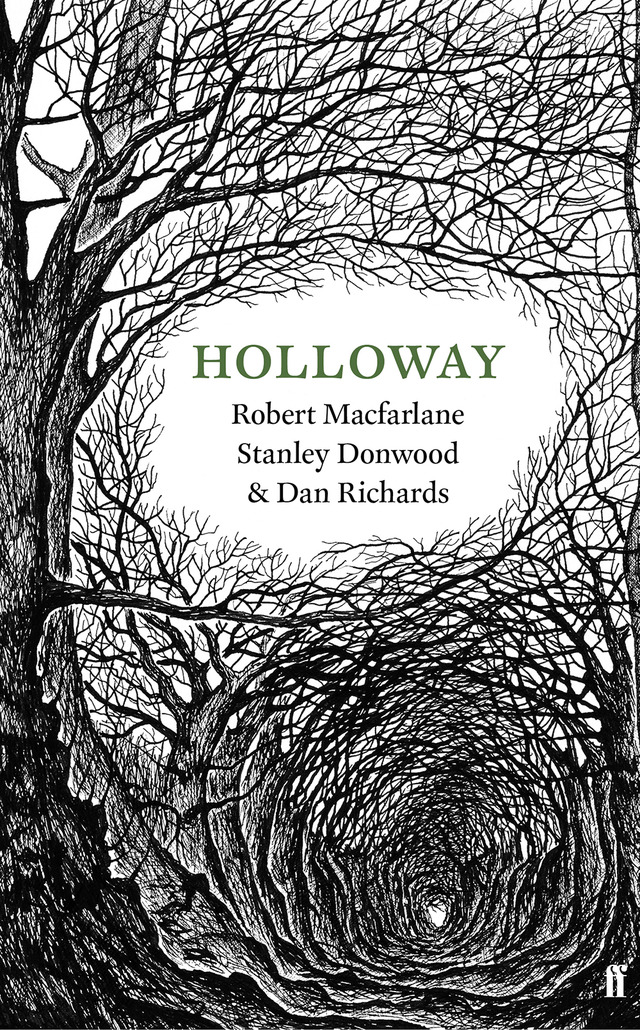
In the latest issue of Intelligent LifeRobert Macfarlane, author of The Old Ways: A Journey on Foot and co-author of Holloway, considers Mervyn Peake’s Gormenghast:

Gormenghast is a vast “labyrinth of stone”, in Peake’s phrase—except that it has no centre, for there is always another chamber to reach or further annex to access. In this respect it is less a castle, more a city—and an infinite city at that. I grew up at the end of a country lane in the English Midlands, and it was in Peake’s writing that I first sensed (fearfully, fascinatedly) what a city might feel like to inhabit.

Cities are, like Gormenghast, excessive and connective. They spawn, proliferate, self-generate: and they are sites of encounter and overlap. For every story you overhear in a city, every conversation you catch, myriad more are in the making at that moment. This is the affront that cities offer to reason, and the excitement they provoke in the mind: that they surpass all possible record. They are places of—to borrow again from Peake—intense “circumfusion”.

Comments closed

Steve Kroeter: Design Books Within Reach

In a video for Design Within Reach, Steve Kroeter, the president of Archetype Associates and founder and editor in chief of Designers and Books, talks about the books that inspired him:

1 Comment

Art Spiegelman: The Antibodies of Satire

Art Spiegelman talks to Tablet Magazine’s literary editor David Samuels about the retrospective currently at the Jewish Museum in New York, Mad magazine, and, inevitably, Maus.

While not exactly critical of Spiegelman, it’s one of the feistier interviews I’ve read with him recently:

Now, if you’re talking about nationalism, then you have to get to Duck Soup within a couple of seconds. And that impulse predates WWII, and it’s an outsider’s perspective on a culture, and there are still plenty of outsiders to this culture, and things will come from that still, I believe. That’s one point.

The other point, which is more to the point perhaps, is the impulse—I see it through Mad, because it’s the one that’s imprinted on me. Mad made the resistance to the Vietnam War even possible. And that seems really, deeply true, not just some kind of wise-crack true. Because the ’50s felt incredibly monolithic. The early ’50s was an incredibly oppressive place in America, very iconically represented by a decent-enough liberal chap named Norman Rockwell. It’s when we got this ‘In God We Trust’ on our money, it’s when we had our crazy McCarthy moments, we had all of these things happening, and yet there was room for a very effective antibody, which was this kind of self-reflexive, self-deprecating, angry response to the homogeneity from people who weren’t thoroughly homogenized in our culture, i.e., Jews. It led to something very fruitful, and we still have the aftermath of it, both positively and negatively.

Comments closed

Jonathan Meades: ‘I find everything fascinating and that is a gift’

English author, broadcaster and architecture critic Jonathan Meades, who apparently (and somewhat enviably!) lives in Le Corbusier’s Cité Radieuse in Marseille, interviewed by Rachel Cooke for The Observer:

“I love looking at buildings. I’ve never been able to get from A to B without diverting because I am extremely interested in architecture. But that came first of all from the need to alleviate boredom when I was out with my father as a boy [Meades’s father was a travelling biscuit salesman who used to leave his son to occupy himself in the towns in his “area”, while he went off to meet his grocer customers].  So much that I do is to alleviate boredom… Buildings are part of a much greater thing, that’s what fascinates me: the totality of things. I find everything fascinating and that is a gift. It’s that Flaubertian thing: everything looks fantastic if you look at it long enough. That chimes with me entirely.”

And if you haven’t read it previously, Owen Hatherley’s review in the London Review of Books of Museum Without Walls, Jonathan Meades most recent book, is well worth a visit:

Above all, Meades is a scourge of all forms of belief, faith and ideology, of everything that he regards as childish and credulous – yet the architecture that shakes him most is created by people crazed with dogmatism and righteous fervour. Whether or not he is aware of the contradiction, it charges his prose as he grapples with his own horror and fascination: at Victoriana, at the Arts and Crafts movement, at modernism, at Stalinist architecture – most of which he loves, and most of which are based on values, theories and opinions he finds either silly or repugnant.

Comments closed

Gene Luen Yang: The In-Between World of the Graphic Novelist

The New Yorker‘s book blog Page-Turner have posted a wonderful interview with cartoonist Gene Yang:

I grew up reading comics, and I just have this deep attachment to the medium. I think a lot of the things in my life that I become most passionate about, and most excited about, are all from comics…  In traditional Asian arts, the word and the picture always sit next to each other. I have an aunt, a Chinese brush painter, who told me that when you do a Chinese brush painting, you have to pair the image up with some poetry. A complete work is not masterful unless both of those elements are masterful. So maybe there’s some sort of attachment there—the idea of words and pictures working together is part of my family history.

You can read my interview with Gene, posted yesterday, here.

1 Comment

Q & A with Gene Luen Yang

I wouldn’t be surprised if you were feeling a little disillusioned with comics right now — frictionless superhero movies that deliver ever-diminishing emotional returns; ham-fisted editorial decisions; disputes over rights, compensation and artwork; violence; stupidity; institutional misogyny and racism; and generic blandness will do that.

Beyond the multiplexes and controversies, however, it is actually a quite an exciting time to be reading comics.

There are signs — Brian K. Vaughan and Fiona Staples‘ space opera Saga, Hawkeye by Matt Fraction, David Aja and Javier Pulido, and Scott Snyder and Greg Capullo‘s horror-driven Batman spring to mind — that genre comics may still have some life in them.

Classic series and newspaper strips are being properly curated and are more available than before. Under-appreciated artists are being rediscovered.

Alternative cartoonists such as Peter Bagge, Alison Bechdel, Chester Brown, Jaime and Gilbert Hernandez, Rutu Modan, and Chris Ware are producing some of the best work of their careers. The art of Daniel Clowes and Art Spiegelman is being recognised with gallery exhibitions.

And sitting somewhere between in the alt. auteurs and the superheroes, cartoonists like Emily Carroll, Becky Cloonan, Tom Gauld, Faith Erin Hicks, Hope Larson, Bryan Lee O’Malley, Luke Pearson, Noelle Stevenson — artists who have absorbed a diverse range of influences — are carving out niches for themselves, often combining and subverting genres and styles to produce uniquely personal visions.

It’s in this last, loose group of cartoonists1 — the one between the experimental and the mainstream — that I’d put artist and writer Gene Luen Yang.

Best known for his work on the Avatar: The Last Airbender graphic novels, and the critically acclaimed American Born Chinese, Gene’s most recent work is Boxers & Saints, an ambitious two-volume historical graphical novel telling parallel stories of two young on the opposite sides of the Boxer Rebellion. Already shortlisted for the National Book Award for Young People’s Literature and listed amongst Publishers Weekly‘s best books of the year — it is a remarkably mature, compassionate, and accomplished work that is at times funny, at times tragic, but always very human.

I recently met Gene while he was in Toronto to promote Boxers & Saints. I was impressed by his thoughts on being a cartoonist and on the medium itself, and we spent a good couple of hours talking books, comics, and movies. We have since corresponded by email for this Q & A.

American Born Chinese and Boxers & Saints are distributed in Canada by my employer Raincoast Books, and parts of this interview have appeared previously on the Raincoast blog.

  1. These are, admittedly, all very arbitrary, untidy and personal lists and categorizations — nobody who’s interesting fits exactly.
2 Comments

Nabokov’s 1964 Playboy Interview


Longform has posted a Playboy interview with Vladimir Nabokov from January 1964:

When I remember afterwards the force that made me jot down the correct names of things, or the inches and tints of things, even before I actually needed the information, I am inclined to assume that what I call, for want of a better term, inspiration, had been already at work, mutely pointing at this or that, having me accumulate the known materials for an unknown structure. After the first shock of recognition—a sudden sense of “this is what I’m going to write”—the novel starts to breed by itself; the process goes on solely in the mind, not on paper; and to be aware of the stage it has reached at any given moment, I do not have to be conscious of every exact phrase. I feel a kind of gentle development, an uncurling inside, and I know that the details are there already, that in fact I would see them plainly if I looked closer, if I stopped the machine and opened its inner compartment; but I prefer to wait until what is loosely called inspiration has completed the task for me.

(read the full interview)

Comments closed