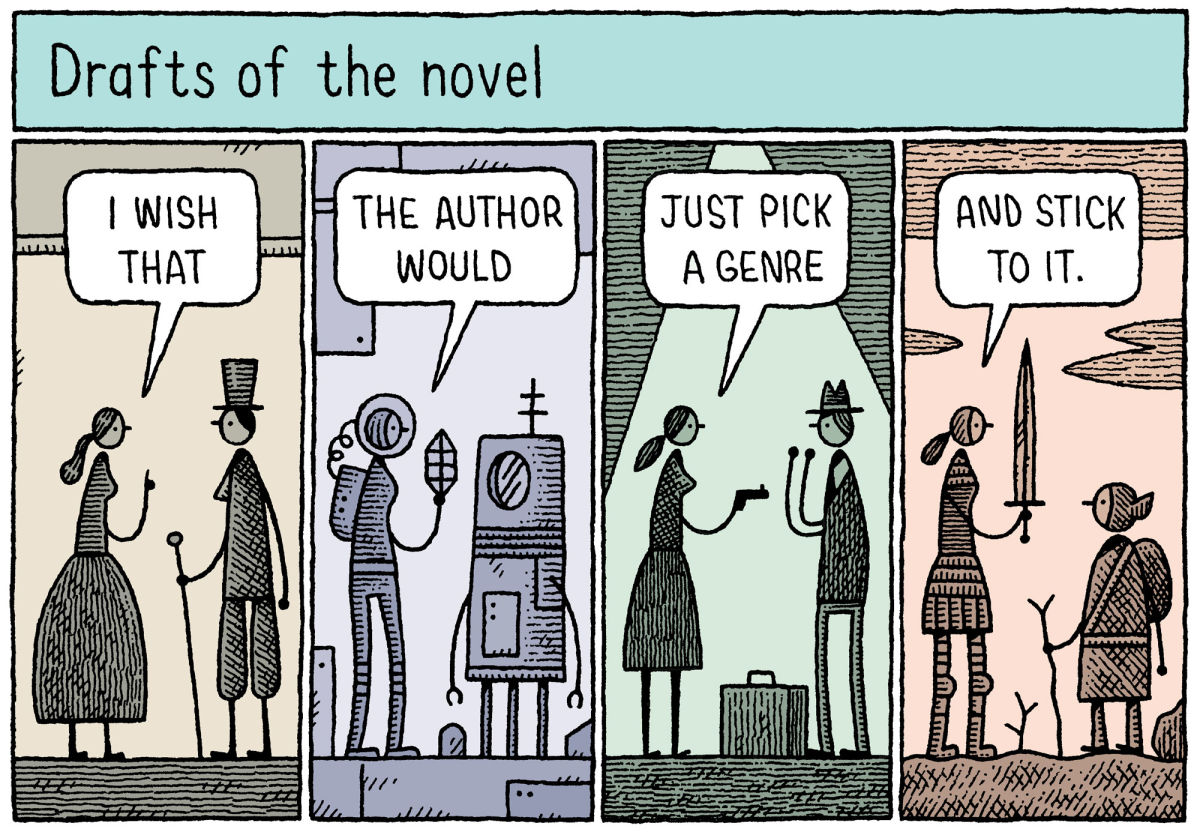
Tom Gauld for The New Yorker.
Tom’s new graphic novel Mooncop is out now.
Comments closedBooks, Design and Culture

Designers & Books, in collaboration with the Center for Italian Modern Art in New York and the Mart, the Museum of modern and contemporary art of Trento and Rovereto, Italy, is launching a Kickstarter campaign on October 18 to publish a new facsimile edition of Depero Futurista, the 1927 monograph of Italian Futurist Fortunato Depero. Famously bound by two industrial aluminum bolts, “The Bolted Book” is full of typographic experimentation and widely recognized as a masterpiece of avant-garde book-making.
At the project’s website you can see each of the book’s (amazing) 240 pages in detail, read translations from the original Italian and annotations of selected texts, and learn more about Depero’s life and work.


Comments closed
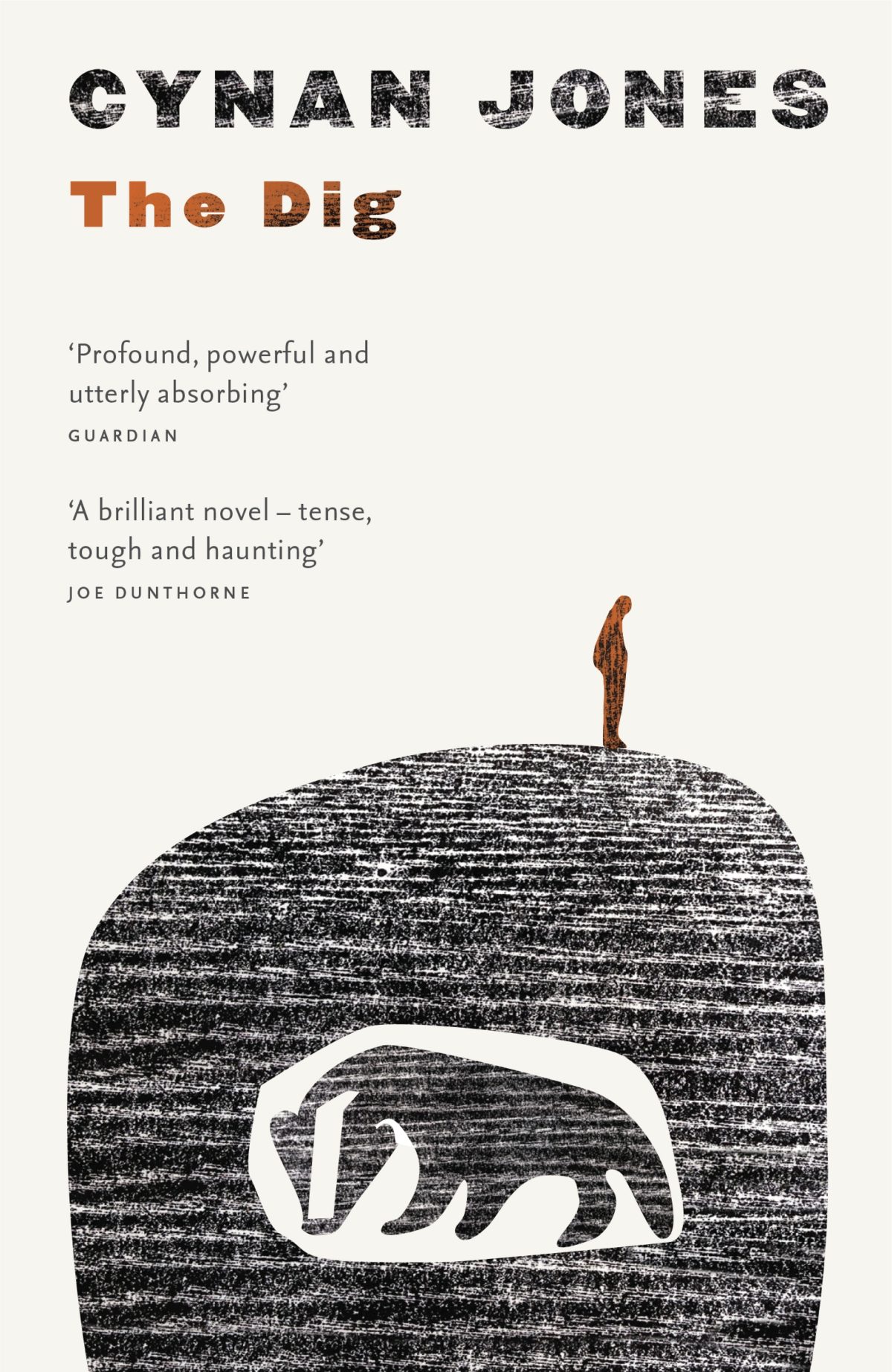
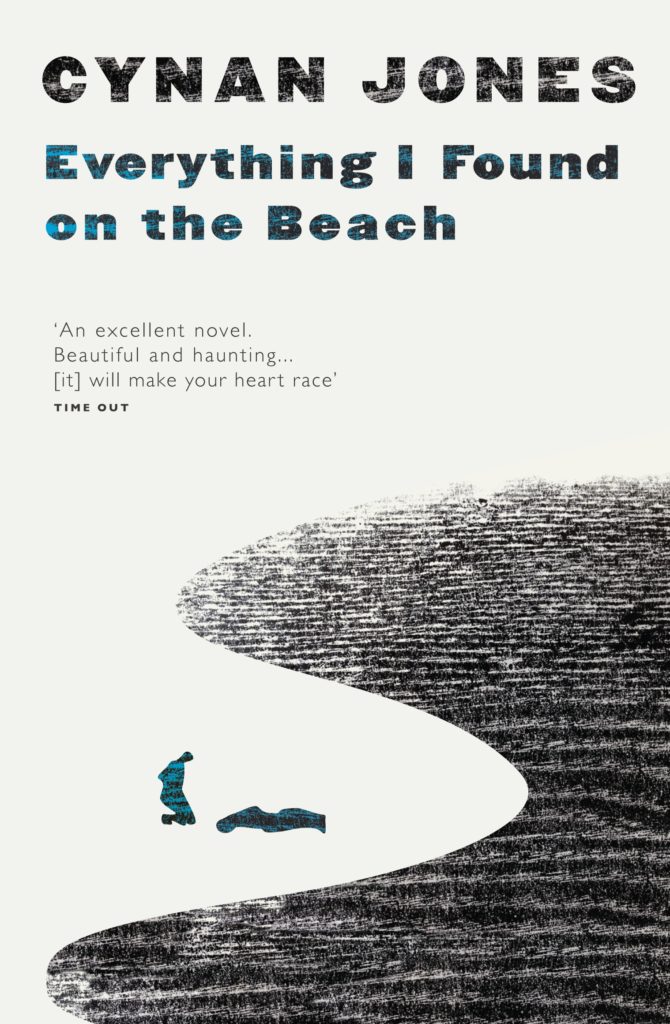
I’m a little late to work of Welsh novelist Cynan Jones, but I recently finished reading his award-winning 2014 novel The Dig, and it’s not hard to see what all the fuss is about. The writing is beautifully spare and intimate, and the story is devastating.1
The stark, illustrated cover of The Dig and Jones’s earlier books, recently republished by Granta, also caught my eye. The striking designs are, it turns out, by the brilliant Australian designer Jenny Grigg, which seems obvious once you know. Her previous covers for Peter Carey and Ernest Hemingway have similarly bold simplicity and tone.
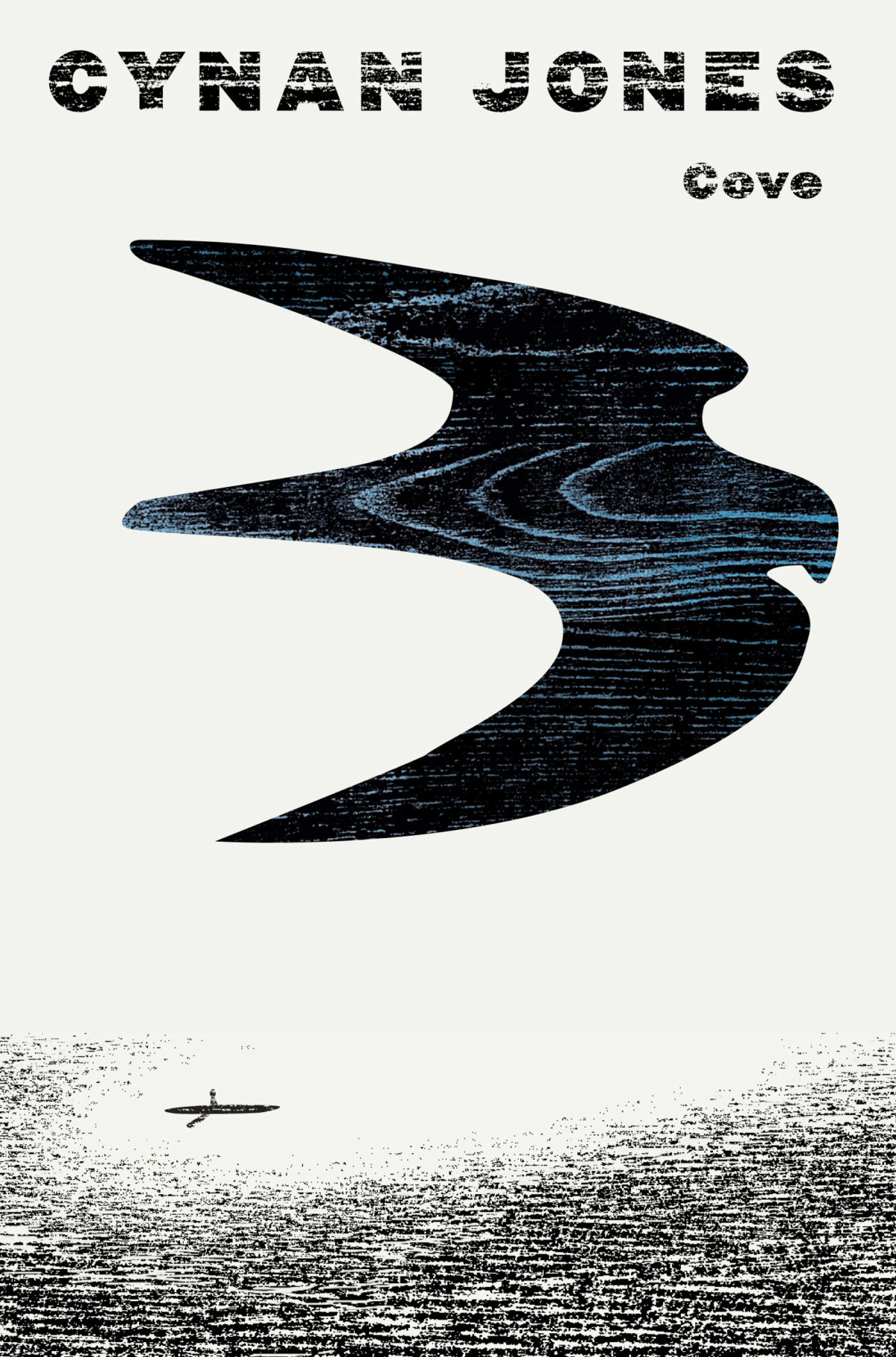
Grigg has also designed the cover of Jones’s new novel, The Cove, which will be published by Granta in November.



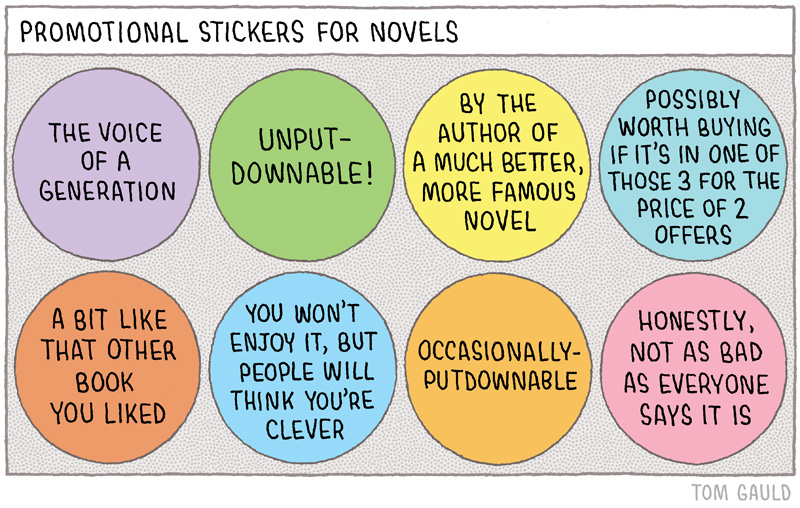
Tom Gauld‘s latest cartoon for The Guardian. It seems kind of appropriate for the day this year’s Man Booker Prize shortlist is announced…
Comments closedIt’s September. It’s busy.

All We Shall Know by Donal Ryan; design by James Paul Jones (Transworld / September 2016)

Art of Memoir by Mary Karr; design by Robin Bilardello (Harper Perennial / September 2016)

Before by Carmen Boullosa; design by Anna Zylicz (Deep Vellum / August 2016)
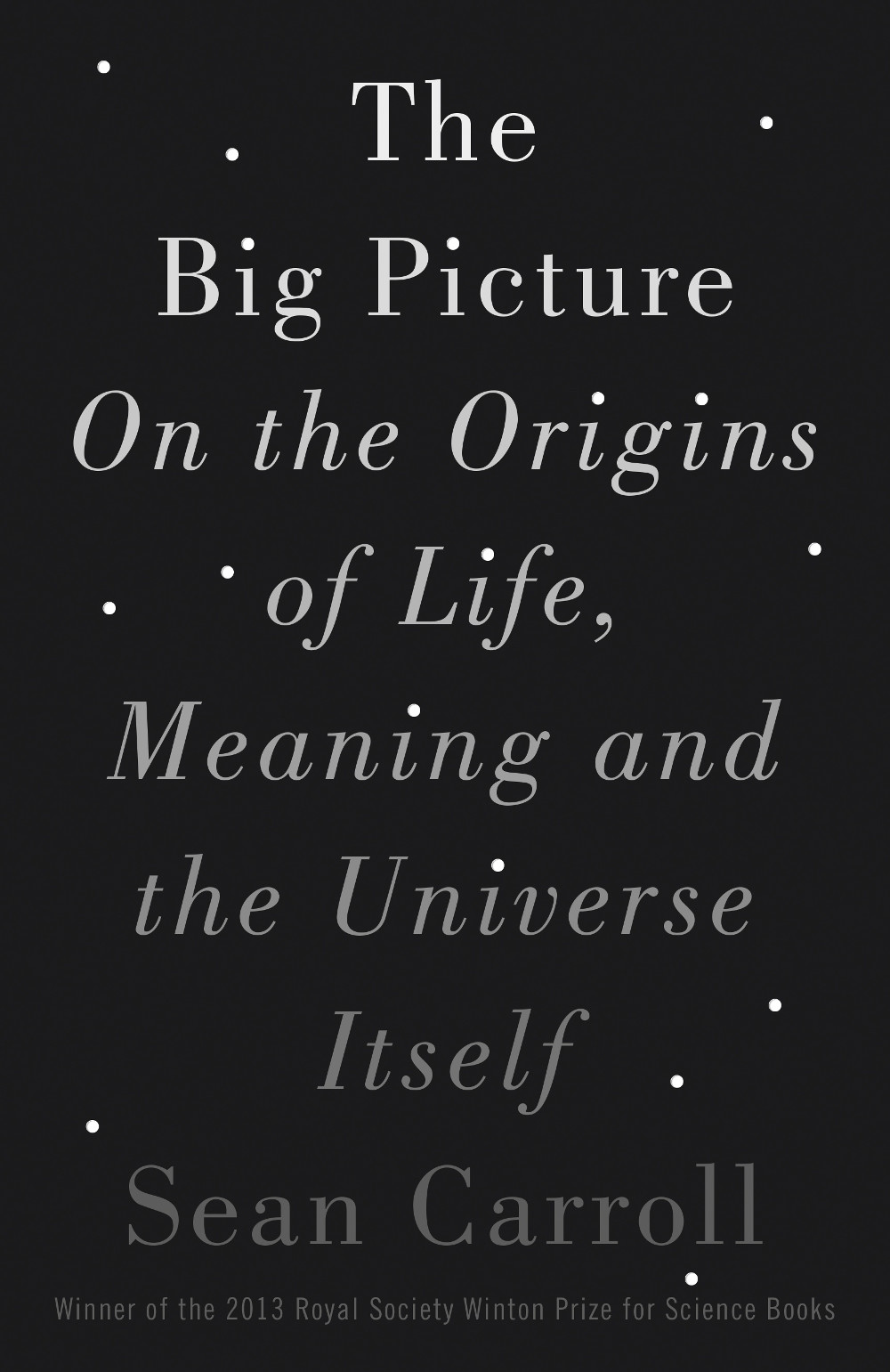
The Big Picture: On the Origins of Life, Meaning and the Universe Itself by Sean Carroll; design by Jamie Keenan (Oneworld / September 2016)

Cannibal by Safiya Sinclair; design by Nathan Putens; artwork by Wangechi Mutu (University of Nebraska Press / September 2016)

Cannibals in Love by Mike Roberts; design by Na Kim (FSG Original / September 2016)
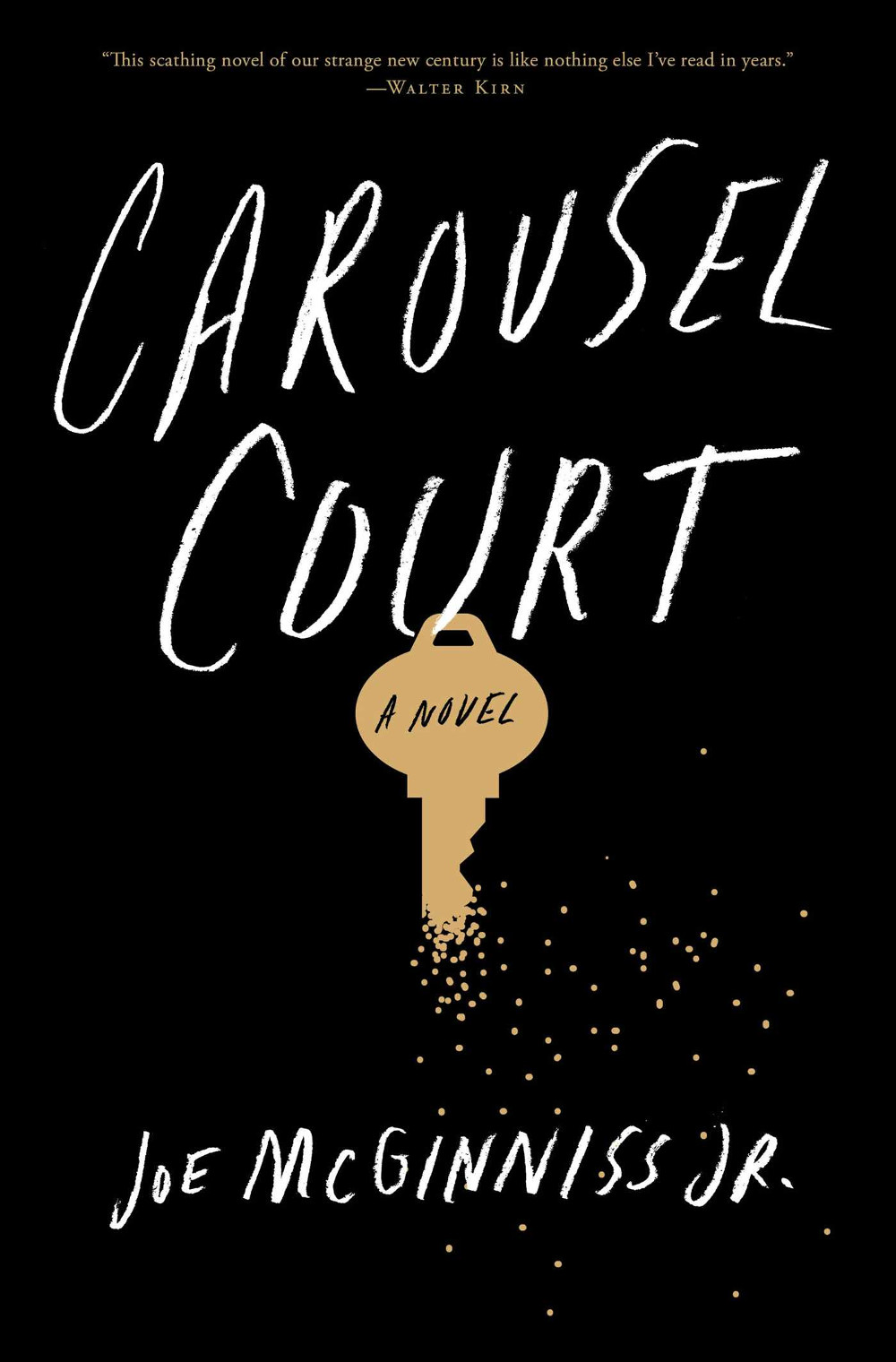
Carousel Court by Joe McGinniss Jr.; design by Ben Wiseman (Simon & Schuster / August 2016)

Drinks: A Users Guide by Adam McDowell; design by Danielle Deschenes (TarcherPerigee / September 2016)

Dr. Knox by Peter Spiegelman; design by Oliver Munday (Knopf / July 2016)

Gold from the Stone by Lemn Sissay; design by Pete Adlington (Canongate / August 2016)

The Good Immigrant edited by Nikesh Shukla; design by James Paul Jones (Unbound / September 2016)

Little Nothing by Marisa Silver; design by Rachel Willey (Blue Rider Press / September 2016)

Looking for the Stranger by Alice Kaplan; design by Isaac Tobin (University of Chicago Press / September 2016)

The Nix by Nathan Hill; design by Oliver Munday (Knopf / August 2016)

Notes from the Shadowed City by Jeffery Alan Love; cover art by Jeffrey Alan Love (Flesk / September 2016)

Phantom Limbs by Paula Garner; design by Matt Roeser (Candlewick / September 2016)
Raindrop covers could be a new thing…



Pour Me Life by A. A. Gill; design by Jason Booher (Blue Rider Press / September 2016)

Reputations by Juan Gabriel Vásquez; design by Alex Merto (Riverhead / September 2016)

Sex and Death edited by Sarah Hall and Peter Hobbs; design by Luke Bird (Faber & Faber / September 2016)

The Strange Case of Rachel K design by Paul Sahre (New Directions / September 2016)
This paperback cover is a nice contrast to last year’s hardcover, also designed by Mr. Sahre:


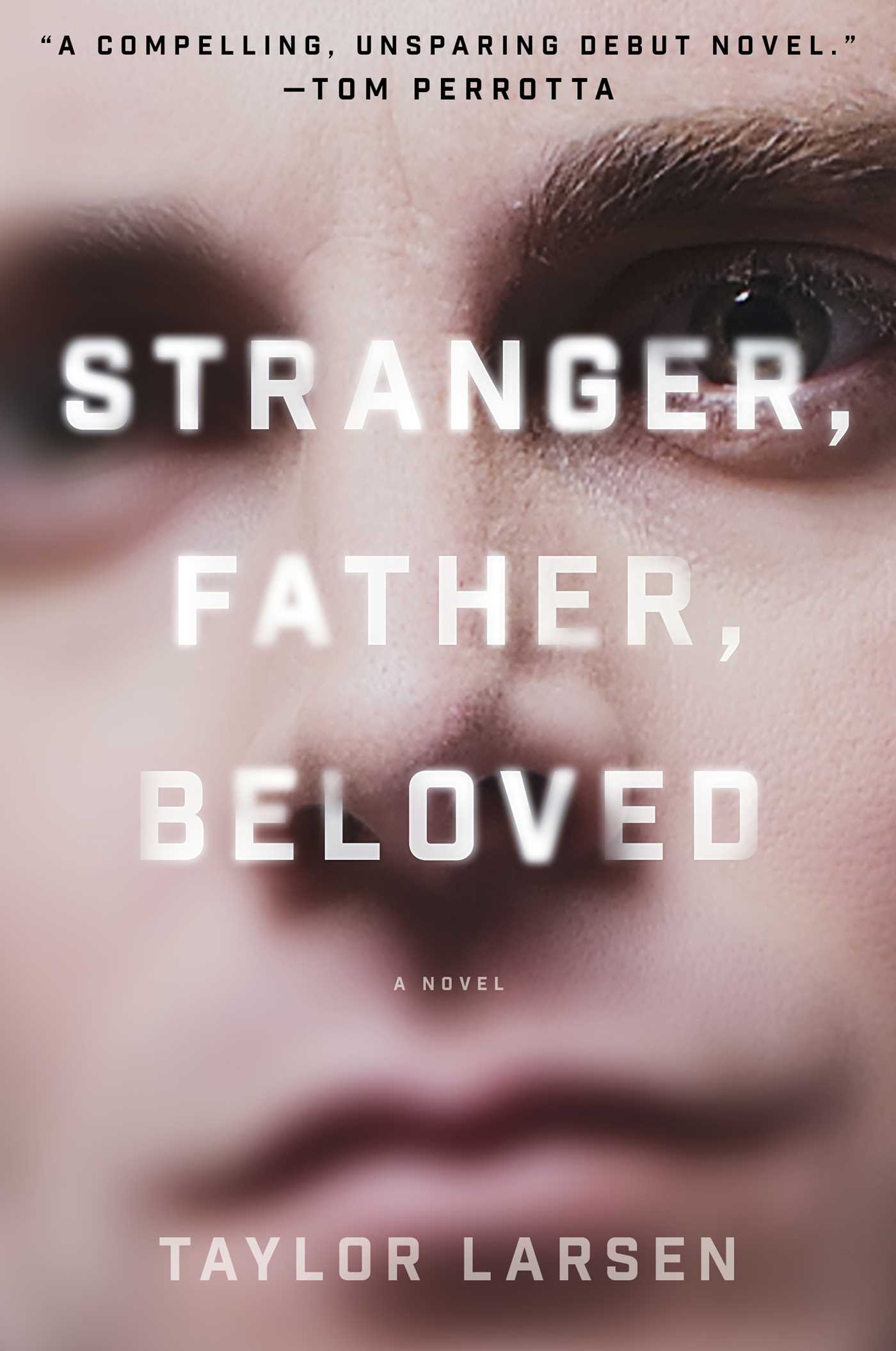
Stranger Father Beloved by Taylor Larsen; design by Anna Dorfman (Gallery Books / July 2016)

Substitute by Nicholson Baker; design by Spencer Kimble (Blue Rider Press / September 2016)

33 Artists in 3 Acts by Sarah Thornton; design by David Drummond (W.W. Norton / September 2016)

Timekeepers by Simon Garfield; design by Pete Adlington (Canongate / September 2016)
Concentric circles… still a thing (see here for more examples).

Time Travel by James Gleick; design by Peter Mendelsund (Pantheon / September 2016)

War and Turpentine by Stefan Hertmans; design by Oliver Munday (Pantheon /August 2016)

Welcome to the Universe by Neil Degrasse Tyson, Michael A. Strauss, J. Richard Gott; design by Chris Ferrante (Princeton University Press / September 2016)
Loving these minimal black and white covers for books about the universe…


Wolf Boys by Dan Slater; design by Grace Han (Simon & Schuster / September 2016)

The Wonder by Emma Donoghue design by Kimberly Glyder (Little, Brown & Co. / September 2016)

The Wonder by Emma Donoghue design by Jo Thompson (Picador / September 2016)
The UK and US covers actually make a lovely pair…


At Curbed, Alexandra Lange discusses the work of German-born industrial designer Richard Sapper, and a new book about his work published by Phaidon:
When Los Angeles-based designer Jonathan Olivares first met Richard Sapper in 2008 in Milan, Sapper’s adopted home, he put it more bluntly: Why black?
“I expected him to come back with a hardcore minimalist modernist objective,” says Olivares who, like Sapper, has designed for Knoll. But Sapper said something different. “Black looks good in all kinds of interiors: old interiors, messy interiors, a clean modern interior. It ages really well. It doesn’t look dirty. You don’t see the seams. He told me, Next time, look at a white car and look at a black car. On a white car you see all the joints.” Sapper told two different stories about the shape of the ThinkPad. One is that he was inspired by the cigar box, the other by the bento box. In either case, a deceptively dark, plain exterior opens to a world of flavor. The red nub is either a beautiful cigar wrapper or a nice piece of tuna. It’s such a practical explanation it takes a moment to sink in. It’s as if this product designer knew your life…
…Sapper lived with multitudes and made multitudes, and his idea of the future didn’t involve getting rid of everything past, whether personal or visual. Technology, in his world, could co-exist with sentiment and age. To the end, he was still trying to invent a lamp for people who couldn’t hardwire to the ceiling above their tables. It was based on a fishing rod. That was the kind of “perching” that was of interest to him.
Comments closed


The smart and talented Isabel Urbina Peña talks to Girlboss about YES, EQUAL and her work as a book cover designer:
you go to the editorial meeting and you hear the editors talk about the book. After that, you tell your art director which books you want to work on, and sometimes she would suggest stuff to us. You didn’t always get the book that you wanted, but you kind of had an idea. But sometimes it doesn’t go that way. Like for Dave Eggers. No one wanted to take his book! He has very specific taste. But I was like, “Fuck it! I’ll do it.” Because when am I going to be able to design for Dave Eggers again?! And it went really well, actually. One round and it was done, which never happens [laughs]… normally, it’s a battle. You want to try and see what will get through. So you’re like, “Well I’m only going to show three things, because if I show more…” Like for example, for All Our Names, we only showed one. I’d made a bunch of other options, but Peter Mendelsund, who was art directing was like, “Nope. Let’s just show this one”… Sometimes it works like that. But I mean, for another project, I came up with 20 different ideas, and nothing came of it. It was a paperback and they just ended up adapting the hard cover.
You can read my 2014 Q & A with Isabel here.
1 Comment
The Rumpus interviews Will Evans the founder and publisher of Deep Vellum, an independent small press focused on works in translation based in Dallas, TX:
I’m very new to this, and I’m most definitely an outsider. I don’t really know how other people do their editing process. I’ve never worked in a publishing house with an editing team that they have to run stuff by. I’m curious, editorially it has somehow happened that Deep Vellum books are quite different from Open Letter books and quite different from Archipelago books and I don’t really know how or why that happens. We all just love stories and want to bring them to different audiences, but at the end of the day, the books that we need to publish that fit our brand are all kind of different, and that’s amazing to me. I love independent publishers because you get that more personal aesthetic choice.


Deep Vellum’s distinctive book covers, designed by Anna Zylicz, have featured on the blog before. And here’s Evans talking about founding Deep Vellum back in 2014:
Comments closed

Author Tom McCarthy talks to Bookworm about his latest novel Satin Island:
KCRW Bookworm: Tom McCarthy on Satin Island mp3
The rather splendid cover for the US paperback edition published earlier this year by Vintage (pictured above) was designed by John Gall.
Comments closed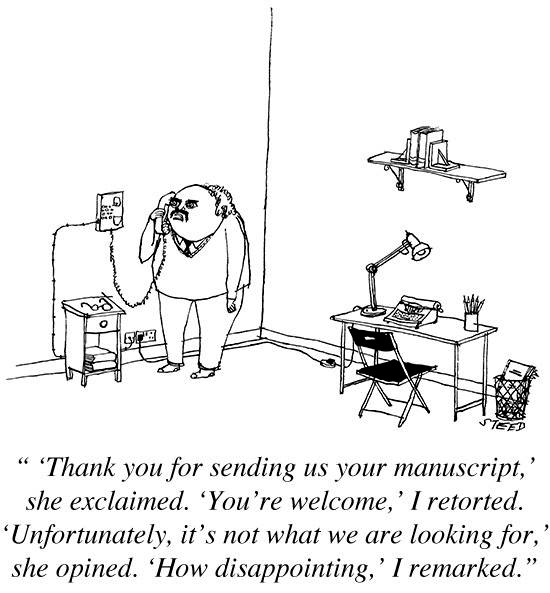
Edward Steed for The New Yorker.
Comments closedWelcome to The Last Bookstore is a short, inspiring documentary about Josh Spencer, owner and operator of The Last Bookstore in downtown Los Angeles:
Comments closed