Skip to content

Category: Authors

Robert Macfarlane: Glimpsing Gormenghast

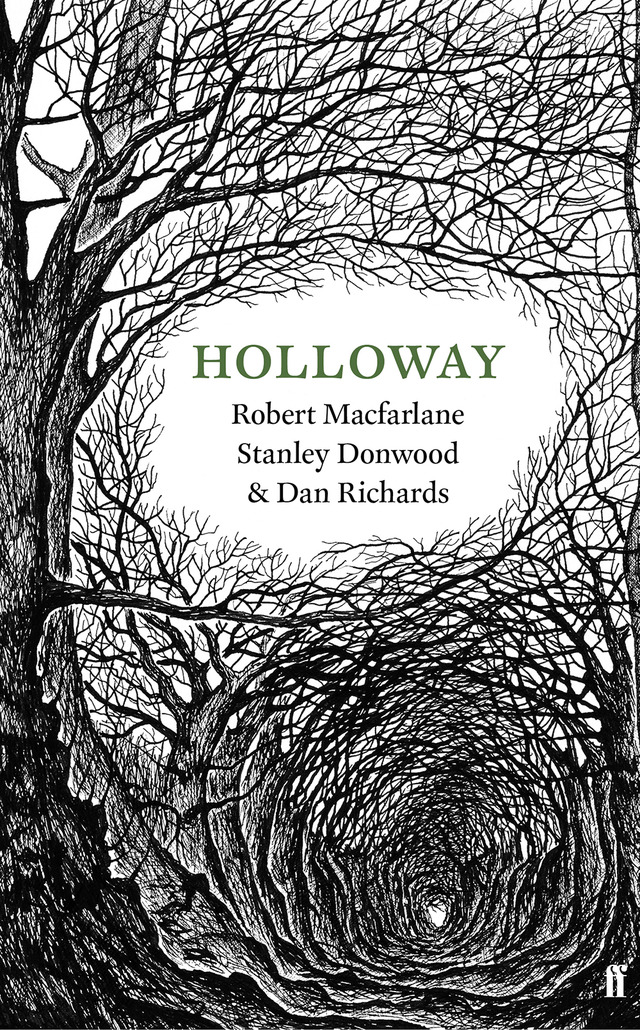
In the latest issue of Intelligent LifeRobert Macfarlane, author of The Old Ways: A Journey on Foot and co-author of Holloway, considers Mervyn Peake’s Gormenghast:

Gormenghast is a vast “labyrinth of stone”, in Peake’s phrase—except that it has no centre, for there is always another chamber to reach or further annex to access. In this respect it is less a castle, more a city—and an infinite city at that. I grew up at the end of a country lane in the English Midlands, and it was in Peake’s writing that I first sensed (fearfully, fascinatedly) what a city might feel like to inhabit.

Cities are, like Gormenghast, excessive and connective. They spawn, proliferate, self-generate: and they are sites of encounter and overlap. For every story you overhear in a city, every conversation you catch, myriad more are in the making at that moment. This is the affront that cities offer to reason, and the excitement they provoke in the mind: that they surpass all possible record. They are places of—to borrow again from Peake—intense “circumfusion”.

Comments closed

Art Spiegelman: The Antibodies of Satire

Art Spiegelman talks to Tablet Magazine’s literary editor David Samuels about the retrospective currently at the Jewish Museum in New York, Mad magazine, and, inevitably, Maus.

While not exactly critical of Spiegelman, it’s one of the feistier interviews I’ve read with him recently:

Now, if you’re talking about nationalism, then you have to get to Duck Soup within a couple of seconds. And that impulse predates WWII, and it’s an outsider’s perspective on a culture, and there are still plenty of outsiders to this culture, and things will come from that still, I believe. That’s one point.

The other point, which is more to the point perhaps, is the impulse—I see it through Mad, because it’s the one that’s imprinted on me. Mad made the resistance to the Vietnam War even possible. And that seems really, deeply true, not just some kind of wise-crack true. Because the ’50s felt incredibly monolithic. The early ’50s was an incredibly oppressive place in America, very iconically represented by a decent-enough liberal chap named Norman Rockwell. It’s when we got this ‘In God We Trust’ on our money, it’s when we had our crazy McCarthy moments, we had all of these things happening, and yet there was room for a very effective antibody, which was this kind of self-reflexive, self-deprecating, angry response to the homogeneity from people who weren’t thoroughly homogenized in our culture, i.e., Jews. It led to something very fruitful, and we still have the aftermath of it, both positively and negatively.

Comments closed

Jonathan Meades: ‘I find everything fascinating and that is a gift’

English author, broadcaster and architecture critic Jonathan Meades, who apparently (and somewhat enviably!) lives in Le Corbusier’s Cité Radieuse in Marseille, interviewed by Rachel Cooke for The Observer:

“I love looking at buildings. I’ve never been able to get from A to B without diverting because I am extremely interested in architecture. But that came first of all from the need to alleviate boredom when I was out with my father as a boy [Meades’s father was a travelling biscuit salesman who used to leave his son to occupy himself in the towns in his “area”, while he went off to meet his grocer customers].  So much that I do is to alleviate boredom… Buildings are part of a much greater thing, that’s what fascinates me: the totality of things. I find everything fascinating and that is a gift. It’s that Flaubertian thing: everything looks fantastic if you look at it long enough. That chimes with me entirely.”

And if you haven’t read it previously, Owen Hatherley’s review in the London Review of Books of Museum Without Walls, Jonathan Meades most recent book, is well worth a visit:

Above all, Meades is a scourge of all forms of belief, faith and ideology, of everything that he regards as childish and credulous – yet the architecture that shakes him most is created by people crazed with dogmatism and righteous fervour. Whether or not he is aware of the contradiction, it charges his prose as he grapples with his own horror and fascination: at Victoriana, at the Arts and Crafts movement, at modernism, at Stalinist architecture – most of which he loves, and most of which are based on values, theories and opinions he finds either silly or repugnant.

Comments closed

Gene Luen Yang: The In-Between World of the Graphic Novelist

The New Yorker‘s book blog Page-Turner have posted a wonderful interview with cartoonist Gene Yang:

I grew up reading comics, and I just have this deep attachment to the medium. I think a lot of the things in my life that I become most passionate about, and most excited about, are all from comics…  In traditional Asian arts, the word and the picture always sit next to each other. I have an aunt, a Chinese brush painter, who told me that when you do a Chinese brush painting, you have to pair the image up with some poetry. A complete work is not masterful unless both of those elements are masterful. So maybe there’s some sort of attachment there—the idea of words and pictures working together is part of my family history.

You can read my interview with Gene, posted yesterday, here.

1 Comment

Q & A with Gene Luen Yang

I wouldn’t be surprised if you were feeling a little disillusioned with comics right now — frictionless superhero movies that deliver ever-diminishing emotional returns; ham-fisted editorial decisions; disputes over rights, compensation and artwork; violence; stupidity; institutional misogyny and racism; and generic blandness will do that.

Beyond the multiplexes and controversies, however, it is actually a quite an exciting time to be reading comics.

There are signs — Brian K. Vaughan and Fiona Staples‘ space opera Saga, Hawkeye by Matt Fraction, David Aja and Javier Pulido, and Scott Snyder and Greg Capullo‘s horror-driven Batman spring to mind — that genre comics may still have some life in them.

Classic series and newspaper strips are being properly curated and are more available than before. Under-appreciated artists are being rediscovered.

Alternative cartoonists such as Peter Bagge, Alison Bechdel, Chester Brown, Jaime and Gilbert Hernandez, Rutu Modan, and Chris Ware are producing some of the best work of their careers. The art of Daniel Clowes and Art Spiegelman is being recognised with gallery exhibitions.

And sitting somewhere between in the alt. auteurs and the superheroes, cartoonists like Emily Carroll, Becky Cloonan, Tom Gauld, Faith Erin Hicks, Hope Larson, Bryan Lee O’Malley, Luke Pearson, Noelle Stevenson — artists who have absorbed a diverse range of influences — are carving out niches for themselves, often combining and subverting genres and styles to produce uniquely personal visions.

It’s in this last, loose group of cartoonists1 — the one between the experimental and the mainstream — that I’d put artist and writer Gene Luen Yang.

Best known for his work on the Avatar: The Last Airbender graphic novels, and the critically acclaimed American Born Chinese, Gene’s most recent work is Boxers & Saints, an ambitious two-volume historical graphical novel telling parallel stories of two young on the opposite sides of the Boxer Rebellion. Already shortlisted for the National Book Award for Young People’s Literature and listed amongst Publishers Weekly‘s best books of the year — it is a remarkably mature, compassionate, and accomplished work that is at times funny, at times tragic, but always very human.

I recently met Gene while he was in Toronto to promote Boxers & Saints. I was impressed by his thoughts on being a cartoonist and on the medium itself, and we spent a good couple of hours talking books, comics, and movies. We have since corresponded by email for this Q & A.

American Born Chinese and Boxers & Saints are distributed in Canada by my employer Raincoast Books, and parts of this interview have appeared previously on the Raincoast blog.

  1. These are, admittedly, all very arbitrary, untidy and personal lists and categorizations — nobody who’s interesting fits exactly.
2 Comments

Nabokov’s 1964 Playboy Interview


Longform has posted a Playboy interview with Vladimir Nabokov from January 1964:

When I remember afterwards the force that made me jot down the correct names of things, or the inches and tints of things, even before I actually needed the information, I am inclined to assume that what I call, for want of a better term, inspiration, had been already at work, mutely pointing at this or that, having me accumulate the known materials for an unknown structure. After the first shock of recognition—a sudden sense of “this is what I’m going to write”—the novel starts to breed by itself; the process goes on solely in the mind, not on paper; and to be aware of the stage it has reached at any given moment, I do not have to be conscious of every exact phrase. I feel a kind of gentle development, an uncurling inside, and I know that the details are there already, that in fact I would see them plainly if I looked closer, if I stopped the machine and opened its inner compartment; but I prefer to wait until what is loosely called inspiration has completed the task for me.

(read the full interview)

Comments closed

Jonathan Lethem: Nibbling Around the Edges of Culture

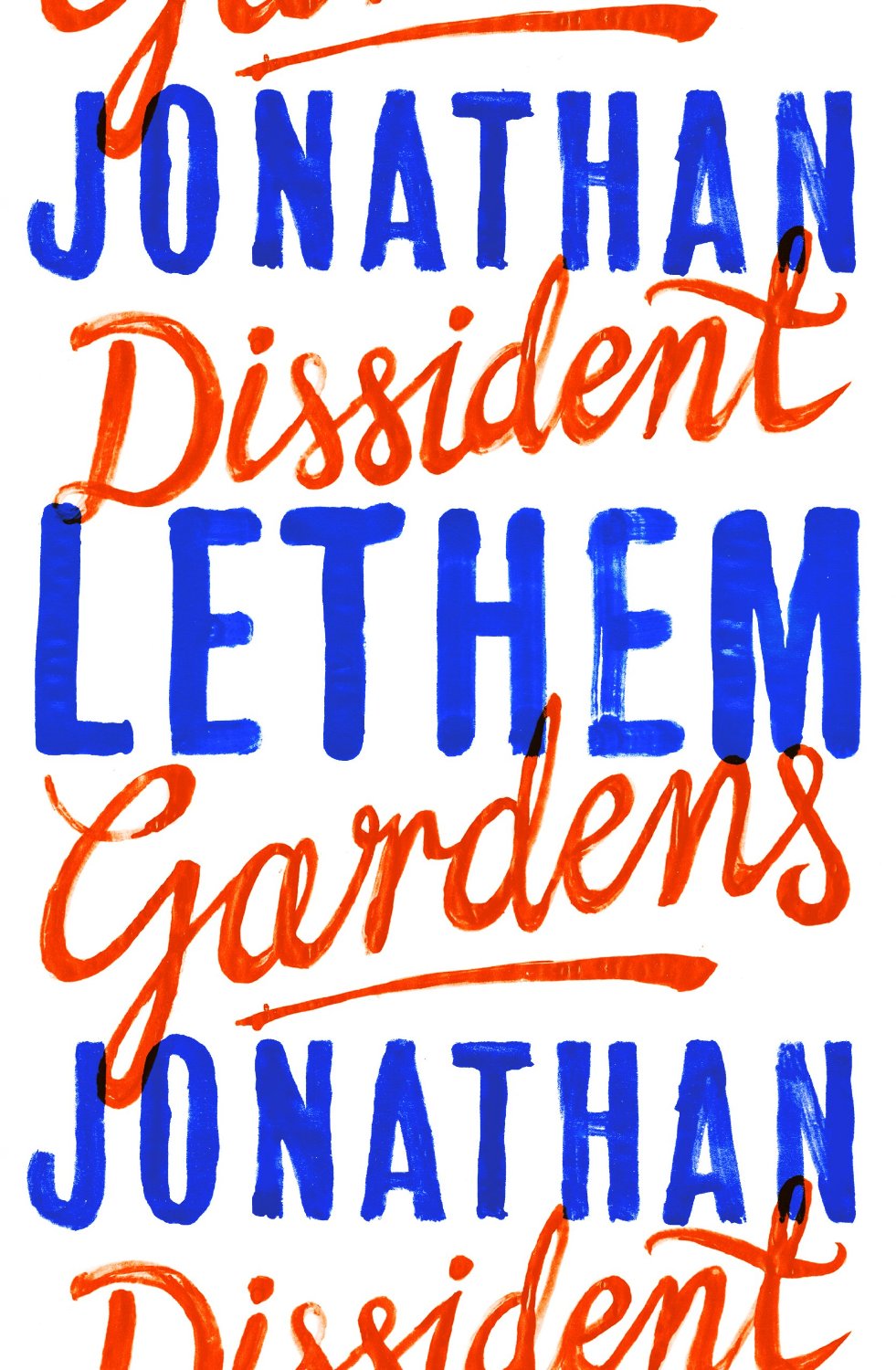
Jonathan Lethem discusses science fiction, comics and his new novel Dissident Gardens with Jesse Hicks at The Verge:

I like that Philip K. Dick and the science fiction writers that I fell in love with were intrinsically in this termite role, nibbling around the edges of the culture. I know it was uncomfortable for them, and it certainly didn’t pay as well as they might have liked, but it meant that their work had a relevance and vitality and disreputable energy that, for me as a younger reader, hands-down won over the official literary product of the same time period.

Though one of the things that’s wrong with marginal identities is that you tend to act as though the big hegemonic center is all one thing itself. “The mainstream” doesn’t agree with itself or make any kind of sense or have a coherent position, except in the very small matter of believing itself to be the only action. That’s the only thing it agrees about. [laughter] The rest of it, if you really pay any attention and care, and I started to care about all kinds of novels and all kinds of literary ventures, and possibilities — different kinds of lives that writers led — the rest of the mainstream is pretty much at one another’s throats over various matters of style and politics, minor grudges and so forth. But it looks like one big thing if you’re in exile from it.

Comments closed

Q & A with Luke Pearson

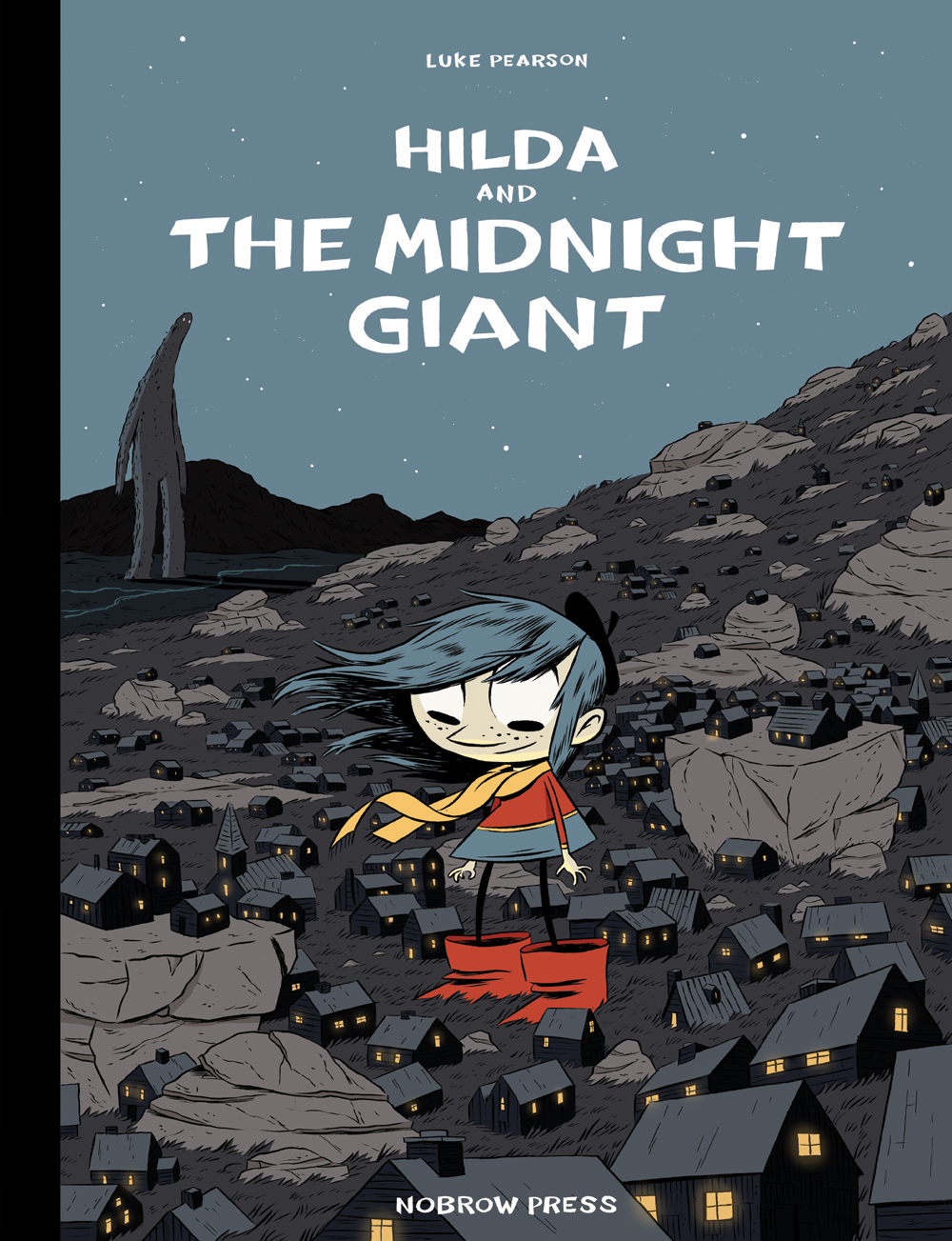
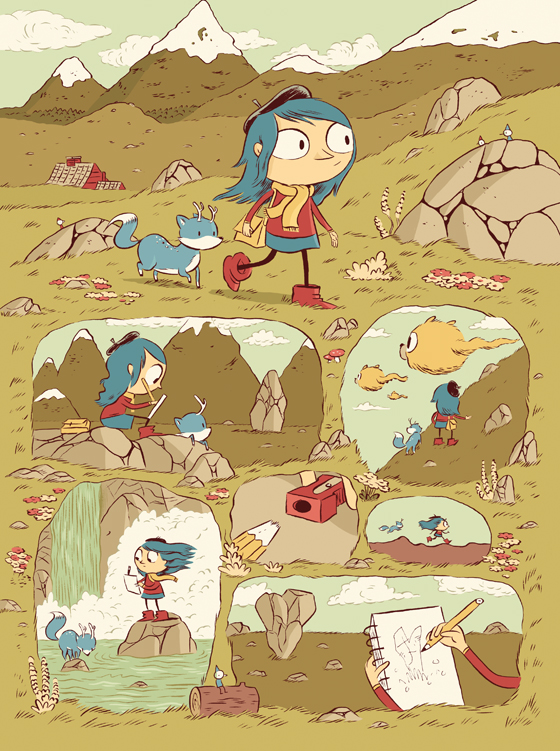
I’ve been a fan of Luke Pearson‘s work since picking up a copy of Hilda and the Midnight Giant from Nobrow Press a year or so ago. The beautiful illustrations, quality printing and oversize format gave it the exotic feel of the comics albums British school kids used to sneak back from vacations in France (and maybe still do?). Despite my immediate sense of nostalgia, the comic itself was fresh, different and delightfully free of cynicism. I read it over and over with my kids, and then savoured it on my own after they were asleep.

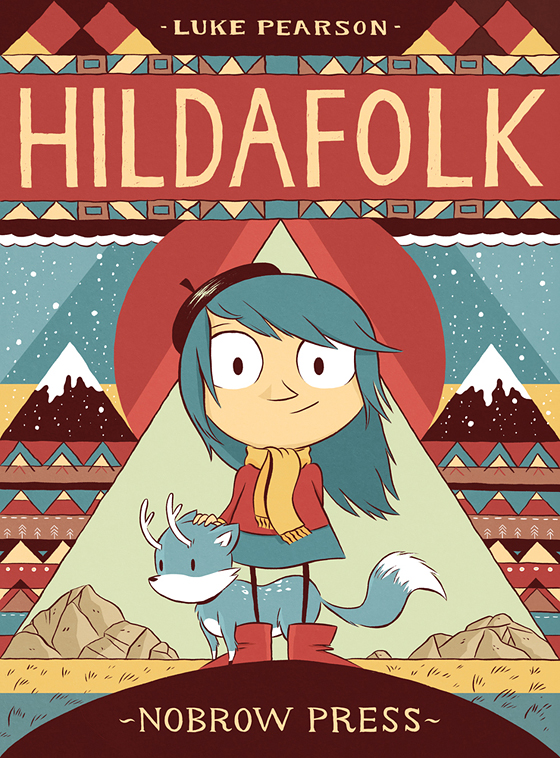
Happy to find a kids comic that adults could also love, I quickly went back and found a copy of Hildafolk (recently reissued in hardcover as Hilda and the Troll) and bought Hilda and the Bird Parade as soon as it was published. While seemingly drawing inspiration from Northern European stories and Tove Jansson’s magical Moomin books, Hilda’s world has it’s own, unique mythology — a strange wood man, truculent elves, troll rocks, sea spirits, salt lions, flying furballs, and lonely, ancient giants. The wide-eyed and blue-haired child and her mother are a curious and reassuring modern presence in this old and magical world. The fantastical is everyday to them — something to be fitted around work and school. Their problems are the problems of the real world — where to live, how to make friends with the neighbours, how to do the right thing…
This juxtaposition of the modern and the magical is also evident in Luke’s comics for adults. But where the Hilda comics are unabashedly bright and joyful, the adult comics are filled with melancholy and sadness. Like Kevin Huizenga‘s Glenn Ganges comics, the fantastical in Luke’s adult comics is shadowy, nightmarish, and all the more unsettling for its appearance in mundane, familiar settings. The monsters and ghosts in stories like like You Mustn’t Be Afraid (included in the anthology Nobrow 7: Brave New Worlds), and the full-length graphic novel Everything We Missare the personal demons (sometimes scary, sometimes familiar) of the world weary, not the new friends of a child in unexplored territory. But for all their apparent differences, at their heart the Hilda stories and Luke’s adult comics are fundamentally about the same things: people, relationships, and about understanding one’s place in the world.

I recently spoke to Luke for the Raincoast Blog about ‘The Boy Who Drew Cats,’ his wonderful contribution to the newly published kids anthology Fairy Tale Comics. Here, we talk about his influences, his comics and his book cover illustrations. We corresponded by email.
When did you first start drawing comics?

When I was very young. I think I probably started drawing speech bubbles as soon as I figured out how to draw people. I used to draw comics about a character called Super Rabbit and show it to my grandparents.

Did you always want to be a professional cartoonist?

I probably did at some point when I was a child. It was obviously something I always thought about, but I was only really familiar with the smallest selection of comics and was entirely ignorant to how the industry worked, so it seemed like a crazy, unachievable dream to ever expect to get to that point. I eventually wound up going to university to study illustration and going into that I was prepared to basically just try and be an illustrator and it was only through the process of that that I remembered that comics were something that I still liked doing and that it was actually weird that I wouldn’t be doing them.
What was the inspiration for the Hilda books?

I draw really heavily on Scandinavian folklore (particularly Icelandic and Norwegian) for the Hilda comics. I got hooked on that initially from researching Icelandic folktales for a map project we were set at university. I really liked how strange and low-key they were. Not much happens and then the weirdest thing will happen, but it’s described really plainly and matter-of-factly and then it will end really abruptly. I tried to fuse some of the stuff I’d read for that with memories from an earlier family holiday to Norway which had a big effect on me and set a bunch of ideas in motion that for a long time I had nothing to do with.
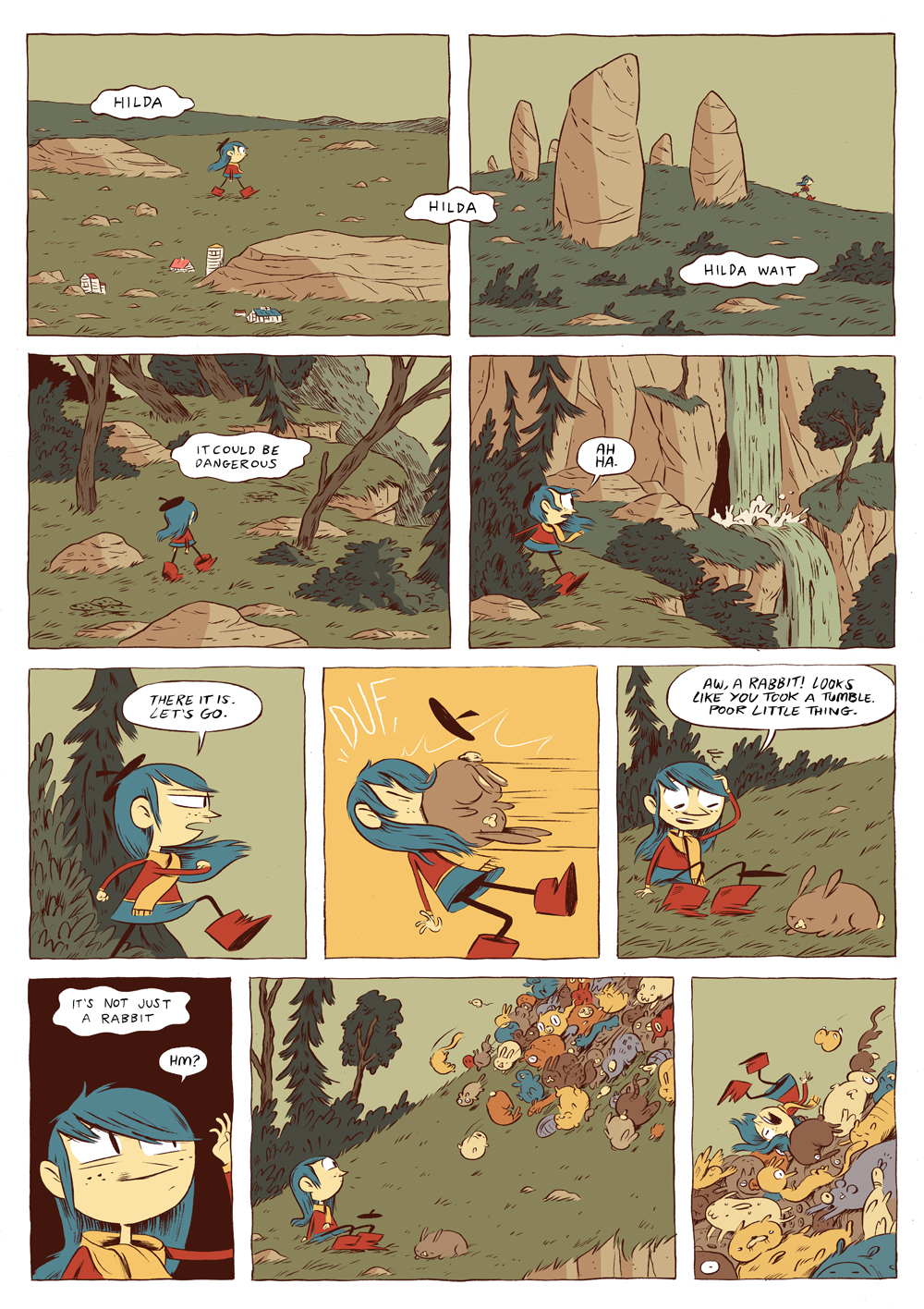
The series has drawn comparisons to Tove Jansson beloved Moomin stories. Has Jansson been an influence on your work?

The 1990 tv series was my first exposure and I always felt like it was key in the shaping of my psyche somehow. I came relatively late to discovering the full breadth of what she did. If I had to choose to have an idol, I guess she would be it, maybe. So obviously she is a big influence on me, as a cartoonist, illustrator and a writer. I always feel a bit weird about any comparison though, because I can’t tell if it’s meant kindly or if it’s more like ‘I can see where you steal your ideas’. Hilda was designed very self consciously, at least initially, to resemble a kinder Little My.
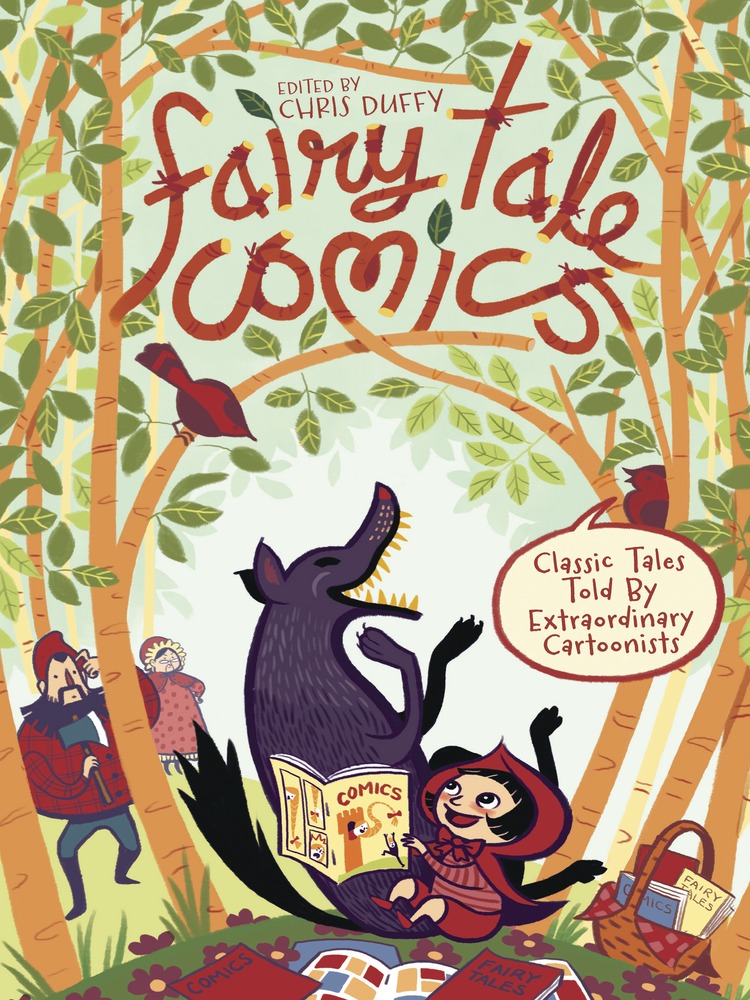
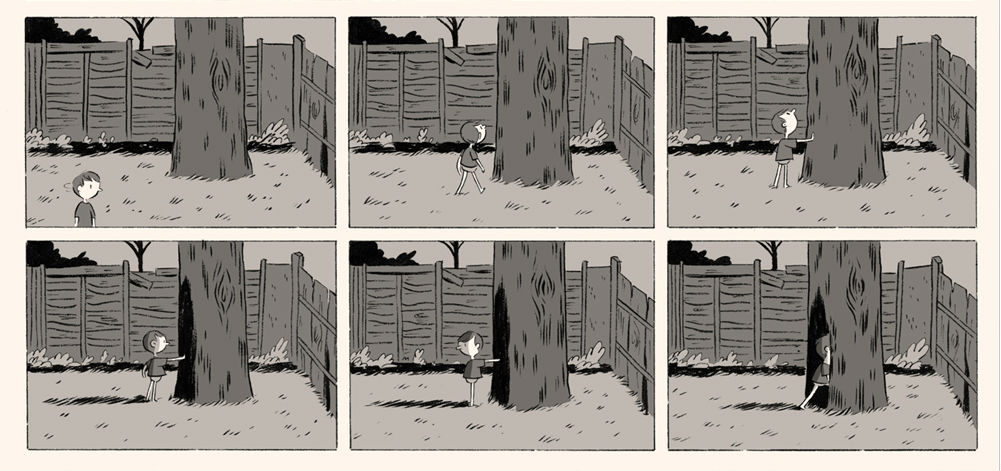
Your contribution to Fairy Tale Comics, ‘The Boy Who Drew Cats’, has a similar magical quality to Hilda. What attracted you to the story?

It was actually one of a couple of stories suggested to me by Chris Duffy, who edited the book. I liked how far removed it felt from the kind of Brothers Grimm stories that I generally think of when I think ‘fairytales’. It’s more like a horror story with a lot of weird details that seemed fun to me. I liked the Japanese setting. I was also completely unfamiliar with it so I didn’t have to feel the weight of past interpretations on me as I adapted it.
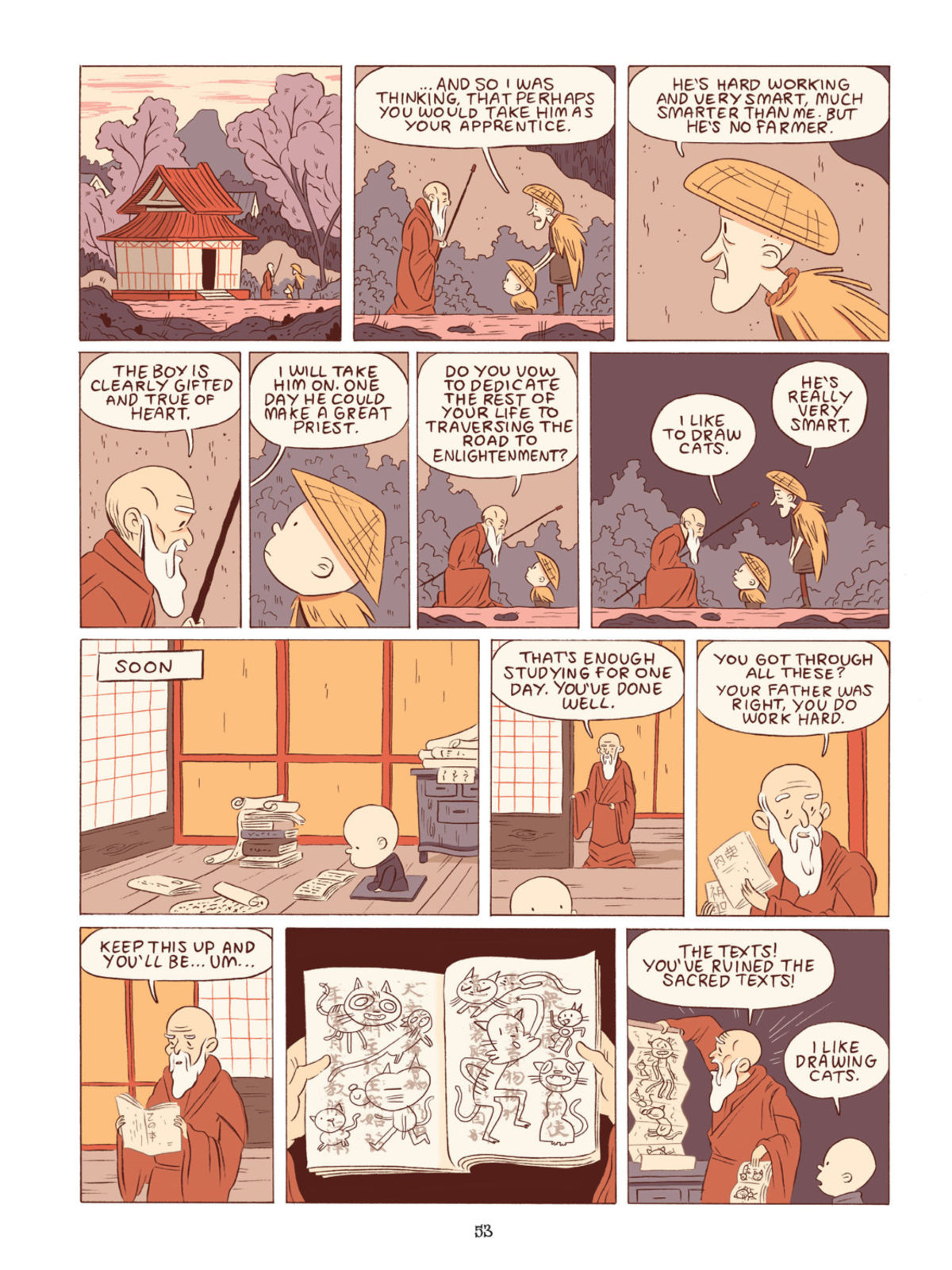
I love that the child at the centre of ‘The Boy Who Drew Cats’ looks a lot like Harold from ‘Harold and the Purple’ Crayon. Has Crockett Johnson been an influence on your work?

Actually no! I’m not super familiar with Crockett Johnson’s work at all. He actually started off as Charlie Brown and then I pulled his features around a bit.
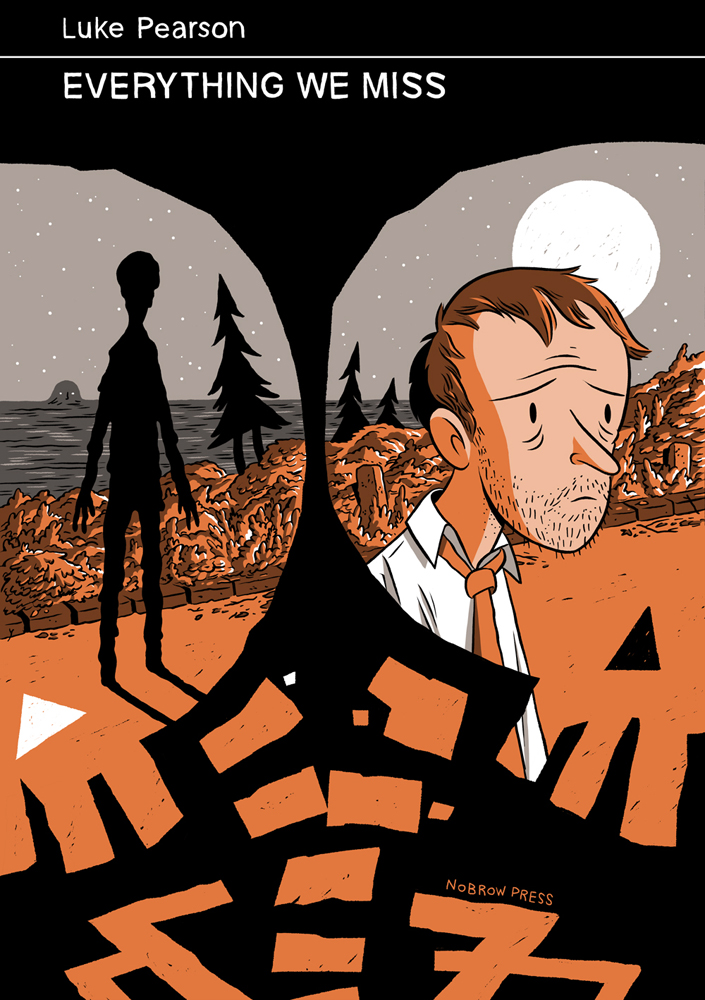
Do you approach your comics for kids differently from your adult comics?

I think this is the only kids comic I’ve done that isn’t a Hilda comic. Usually I’d point out that I draw my kids comics (Hilda) in a different style to how I tend to draw my adult stuff. I guess really I’m just talking eyes here. Hilda is full colour with big eyes and my other comics tend to be limited colour with dot eyes. This is full colour with dot eyes so I guess it sits in the middle. Less superficially, I’d say I try to be really clear in regards to storytelling and try and wrap things up neatly with my children’s work.

Briefly, could you describe your working process?

I generally draw and ink on paper, scan, colour in photoshop. I switch between brush pens, brushes, fineliners and dip pens. I don’t have any particular paper that I always use. I’m starting to enjoy occasionally inking in photoshop now, which I’m just using a wacom tablet for.
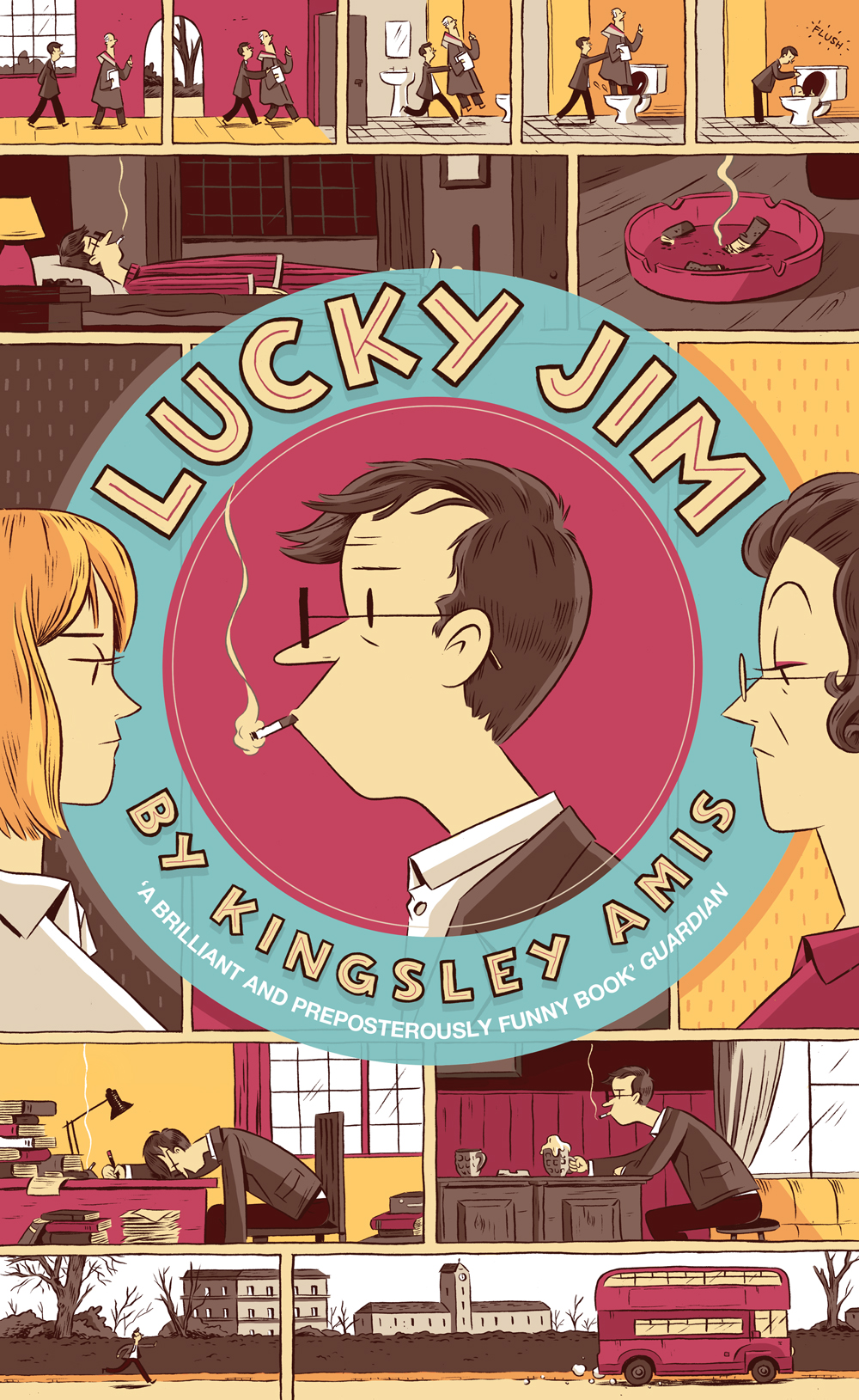
How is illustrating a book cover different from drawing comics?

Other than involving the same technical skills, it’s different in every way. I guess you are kind of trying to ‘tell a story’ with a cover, but really you just want to create an image that’s striking, intriguing, aesthetically pleasing and somehow captures the tone of the book. I’d say it feels a lot easier than a comics page, because you can just spend all your time fine tuning and perfecting this one thing until it’s ready, rather than having to worry about fifteen different images and making sure they all look good and all fit on the page and make sense when read one after the other. That said, it’s a totally different thing and requires different skills.

Are there any books you would love to illustrate?

Watership Down or something by Franz Kafka. I wouldn’t want to do them in the style I draw my comics though. My taste in book covers is not quite in sync with the ones I’ve actually drawn.

What have you read recently?

I just finished reading Tenth of December by George Saunders. I just bought a couple of collections of Michael Dougan comics which I really like.

How did you get involved with Adventure Time?

I got an email asking if I wanted to take a storyboard test, which I took and I guess they liked it. There’s no interesting story there really. I’ve boarded on two episodes so far, ‘Candy Streets’ and ‘Frost & Fire’ and should be doing some more some time soon.
Where do you look for inspiration, and who are some of your cartooning heroes?

I try to just pay attention to things and take everything in as inspiration in some way or another. But you know, I also just look at tumblr and stuff like every one else does. Some of my heroes are Tove Jansson, Chris Ware, Osamu Tezuka, Gene Deitch and Philippa Rice.

Who else do you think is doing interesting work right now?

Loads of people, but the more I list the more I feel like I’m missing out. My favourite cartoonist right now is Anatola Howard.

Have you thought about creating web-comics?

Yes, but I can’t see myself ever having a dedicated site for a specific regularly updated comic. I usually put my shorter comics online if I can and I wish I could do that more often. I can definitely see myself doing a regularly updated thing for a limited period of time at some point.

Do you worry about the future of books and print?

I can’t say it’s ever kept me up at night.

Thanks Luke!
2 Comments

Jonathan Franzen Says No

So good, Tom… So, so good.

4 Comments

Jonathan Lethem: The Author Looks Inward

Jonathan Lethem talks about writing his new novel, Dissident Gardens, with Brian Gresko at the Los Angeles Review of Books:

Of course, in the writing, Dissident Gardens couldn’t bear much of what I’d learned. Novels don’t want to be crammed with factual stuff. I mostly left it aside, including some astonishing truths, which when you first come across them, you think, holy shit, I’ve learned this crazy thing and now I’ll blow people away by revealing this knowledge in the book! But at the juncture where you’d insert such a thing, you flinch, seeing the cost is too high. The facts will intrude — either on the reader’s experience, or my own relationship to the page, to the dream. You’ve heard of killing your darlings? You’ve got to kill plenty of the world’s darling’s too

Dissident Gardens is out this week in the US & Canada (I believe you have a bit longer to wait in the UK). The book was reviewed in Sunday’s New York Times Book Review.

Comments closed

Robert Walser: The Monotony of Things

Colors fill up your mind too much with all sorts of muddled stuff. Colors are too sweet a muddle, nothing more. I love things in one color, monotonous things. Snow is such a monotonous song. Why shouldn’t a color be able to make the same impression as singing? White is like a murmuring, whispering, praying. Fiery colors, like for instance Autumn colors, are a shriek. Green in midsummer is a many-voiced song with all the highest notes. Is that true? I don’t know if that is right. Well, the teacher will surely be so kind as to correct it.

At The New Yorker, Ben Lerner considers the writing of Robert Walser:

There is the typically Walserian statement “I love things in one color, monotonous things.” Praise for the monotonous, the uniform, the mundane, the insignificant—such sentiments are everywhere in Walser’s work, and maintain a crucial ambiguity. On the one hand, they are expressions of poetic attunement to those aspects of the world we too readily overlook, and for which writers concerned with heroic exploits often have no time. On the other hand, Walser’s celebration of the monotonous or uniform returns us to his fascination with subservience, with relinquishing all personality to imposed order: “Modestly stepping aside can never be recommended as a continual practice in strong enough terms.”

The force of Walser’s writing derives from this simultaneous valorization of irreducible individuality and of sameness, smallness, interchangeability.

Lerner has written the introduction to a new NYRB collection of Walser short stories, A Schoolboy’s Diary and Other Stories, translated by Damion Searls.

Comments closed

Will Self on J.G. Ballard’s The Drowned World


Will Self on J.G. Ballard’s The Drowned World at The Telegraph:

To coincide with the 1962 publication of The Drowned World – his own post-apocalyptic novel in which men of the future also venture into a flooded London, intent on looting the city of its treasures – JG Ballard wrote an article for The Woman Journalist in which he explained the mise en scène thus: “On reflection it seems to me that the image of an immense half-submerged city overgrown by tropical vegetation, which forms the centrepiece of The Drowned World, is in some way a fusion of my childhood memories of Shanghai and those of my last 10 years in London.”

According to Ballard, “My own earliest memories are of Shanghai during the annual long summer of floods, when the streets of the city were two or three feet deep in brown silt-laden water, and where the surrounding countryside… was an almost continuous mirror of drowned paddy fields and irrigation canals stirring sluggishly in the hot sunlight.”

There seems no reason to doubt Ballard at his word on this question; one that he proposes himself rhetorically at the outset of the piece: “How far do the landscapes of one’s childhood, as much as its emotional experiences, provide an inescapable background to all one’s imaginative writing?”

The Drowned World by J.G. Ballard, with an introduction by Will Self and illustrations by James Boswell is published by the Folio Society.

A paperback edition of The Drowned World published by W.W. Norton, with a cover design by Darren Haggar (pictured above), is also available.

Comments closed