Skip to content

Category: Design

Q & A with Ferran López, Random House Mondadori (Spanish)

This is the Spanish language version of The Casual Optimist interview with Ferran López, designer at Random House Mondadori and curator of book cover blog The Jacket Museum.

¿Cómo llegaste a ser diseñador de libros?

Casi por casualidad. Mi formé como fotógrafo, aunque desde hace muchos años mi trabajo, por vocación, fue acercándose cada vez más al diseño gráfico. A finales de 2000 trabajaba como diseñador free-lance y en manipulación digital de fotografía. Fue entonces cuando conocí a Marta Borrell, la directora de arte de Random House en España (por aquel tiempo previo a la joint-venture con Mondadori) que estaba buscando un diseñador para la división de libros Trade. A pesar que nunca había trabajado con libros estaba entusiasmado con la idea, ¡me encantan los libros!. A Marta le gustó mi portfolio y mi entusiasmo.  Apostó por mi y creo que la cosa resultó bien. Llevamos ya una década trabajando juntos.

¿Puedes describir brevemente cómo es un día de trabajo en Random House Mondadori?

Se parece mucho a una secuencia de «Uno, Dos, Tres» de Billy Wilder. El ritmo es frenético, los procesos a menudo complicados pero, aunque suene a cliché, es imposible imaginar un equipo de mejores profesionales. Es una empresa joven (¡Hasta la Consejera Delegada es más joven que yo!) y creo que eso se traduce en entusiasmo.

En el departamento de diseño somos 13 personas, a veces parecemos una familia o incluso un clan. Sufrimos mucho, pero siempre juntos. Es broma; pero a veces cuando alguno de nosotros está bajo mucha presión o bloqueado siempre hay alguien con quien compartir el proceso, consultar o al menos con quien tomar un café.

¿Cuál es tu función allí?

Actualmente soy responsable de Diseño de las divisones Trade Comercial y Bolsillo. En la división de bolsillo mi función principalmente es estratégica y de apoyo. Como diseñador mi trabajo se centra en las cubiertas de los libros de Trade Comercial: best-seller, novelas y no ficción de carácter masivo, en los sellos Plaza & Janés y Grijalbo.

También, desde su fundación en 2004 me encargo de Caballo de Troya, casi un experimento: un pequeño sello independiente que vive dentro de un gran grupo editorial.

Aproximadamente, ¿En cuantas portadas trabajas en una temporada?

Unas cien novedades al año.

¿Podrías describir tu proceso al diseñar?

No sigo el mismo proceso con todos los libros. A veces, tal como leo el briefing, empiezo a visualizar la portada, el mensaje, la fotografía o la ilustración que a mi parecer encaja. Otras veces necesito leer, comentar, dibujar, escribir, navegar, mirar por la ventana y hacer varios viajes a la cafetera para conseguir saber lo que quiero que visualmente transmita. En algunas ocasiones ningún método parece funcionar y entonces para desbloquear empiezo a creando la imagen desde la aplicación tipográfica.

¿Que libros son tus favoritos para trabajar?

Aquellas novelas en los que me enamoro perdidamente de alguno de sus protagonistas (a veces es inevitable), los libros en los que se puede esconder una segunda lectura o un giro perverso en la portada y finalmente aquellos libros minoritarios con un corto tiraje que permiten utilizar imágenes más arriesgadas.

¿Cuales son los que plantean un reto mayor?

Los libros con tramas laberínticas o con múltiples mensajes y subtramas. Aquellos en los que las distintas partes implicadas en el proceso de aprobación tienen visiones muy distintas de lo que debe comunicar la portada. Y por supuesto aquellos en los que las expectativas de venta son muy altas: The pressure is on!

Cúando trabajas en libros extranjeros, ¿Miras la portada original o prefieres evitarla?

Siempre tenemos en cuenta la portada original. Cuando se presenta el libro valoramos en conjunto con edición y marketing si la portada puede funcionar o no en nuestro mercado. Con algunos autores, como Stephen King o Terry Pratchett ni siquiera nos planteamos el cambio, sus seguidores no nos lo perdonarían. En cualquier caso, utilicemos la portada original o no, siempre nos sirven de guía. Las ediciones alemanas e italianas también son dos buenos referentes.

Como caso curioso, para la edición española de «El mundo sin fin»  de Ken Follet compramos la portada estadounidense y la británica e hice una adaptación combinando lo mejor de ambas. ¡Ahora nuestra portada es la mejor!

¿Dónde buscas inspiración y cuales son tus «Héroes del diseño»?

En los libros, en el cine y en las series de televisión. En las estanterías del supermercado y en los mercadillos. En las tiendas de discos y libros de segunda mano. En Internet (¡es tan fácil!); además de los blogs de diseño editorial, Ffffound!, But Does it Float, Grain Edit y Some Random Dude son mis sitios favoritos.

El español Daniel Gil es quizás el principal responsable de que ahora mismo yo esté haciendo esto. En cuanto a los contemporáneos hay un buen grupo de excelentes diseñadores: Rodrigo Corral, Henry Sene Yee, David Wardle, John Gall, Juan Pablo Cambariere, Peter Mendelsund, Darren Haggar… Es imposible no dejarse alguno…

¿Qué crees que reserva el futuro para el diseño editorial?

Las cosas van a cambiar, de eso no me cabe duda, pero me cuesta imaginar como. Es imprevisible.

En cualquier caso creo que las portadas seguirán siendo un argumento excelente para vender libros, sea cual sea el soporte. Si esto es así habrá que ver como afectará a nuestra manera de trabajar, nuestras herramientas y nuestros procesos.

Thanks (gracias!) Ferran!

Comments closed
Q & A with Peter Mendelsund and Tom McCarthy

In the early days of The Casual Optimist I scribbled out a short list of book designers I wanted to interview. More designers have been added since then, but a few of the original list remain un-interviewed. At the top of the list has been the name I actually wrote down first: Peter Mendelsund.

As Senior Designer at Knopf, Mendelsund’s designs feature here regularly. Much as I love his covers, however, Peter has been interviewed extensively elsewhere. I just haven’t known how to approach his work in a way that he would find interesting.

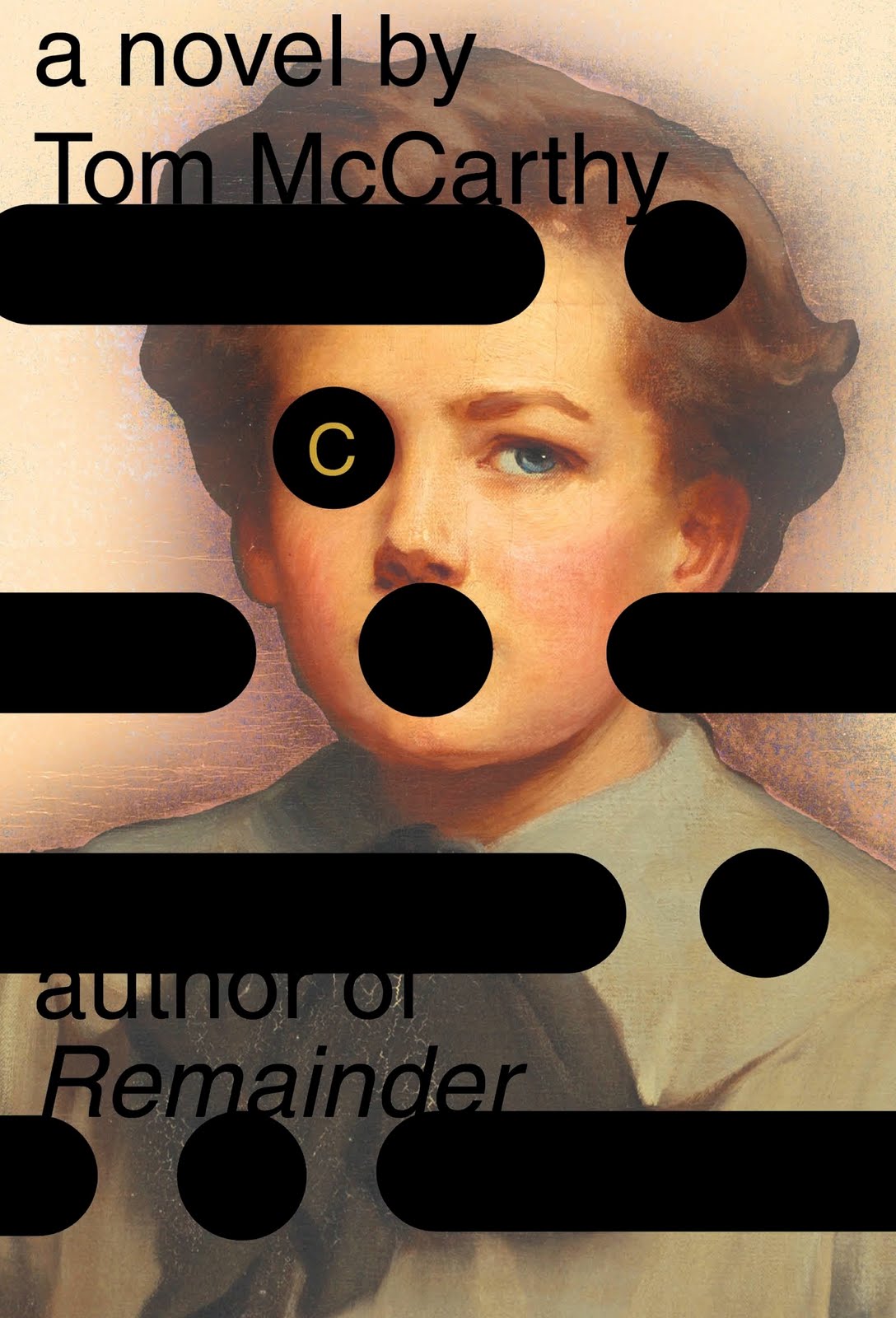
That was until I saw the shockingly subversive jacket design for Tom McCarthy‘s new novel “C”. The pairing of Mendelsund, the designer who is a musician, and McCarthy, the author who is an artist, was — it seemed to me — inspired.

A perfect opportunity…

What follows is primarily an interview with Peter about that design for “C”. But over the course of a few emails, Peter and I both decided to bring Tom into the conversation. I had met Tom shortly after the release of his debut novel Remainder and Peter had, it transpired, met Tom in New York after Knopf had signed “C”. It made sense to both of us.

It is a long, but absolutely fascinating exchange. Peter kindly answered my questions more fully than I had any right to expect and Tom, who was contributing from Stockholm, was more than gracious in less than ideal circumstances. I’m grateful to them both.

7 Comments

The Greatest

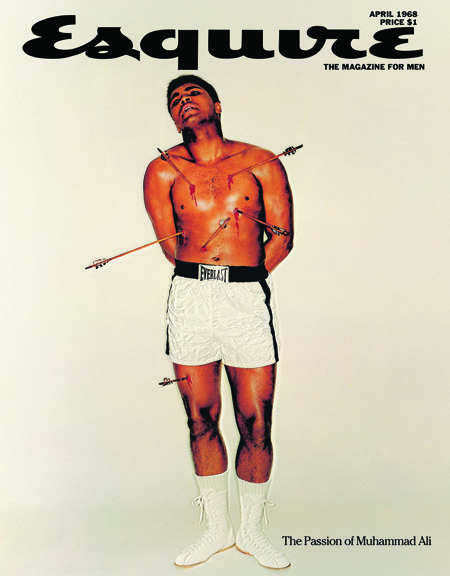
Like Dieter Rams, George Lois seems to be a recurrent theme here and I was wondering why that was. Sure, he has a new book out (published by Assouline), but why is he still relevant? Thinking about this, I kept coming back to his April 1968 Muhammad Ali cover for Esquire.

George Lois Esquire: Ali as St SebastianIn 1964 Muhammad Ali, the heavyweight champion of the world, had controversially joined The Nation of Islam and changed his name from Cassius Clay. Three years later he refused to be drafted into the U.S. army because of his religious beliefs and opposition to the Vietnam War. He was stripped of his world title and had his professional boxing license suspended.

At a time of racial tension in the US (there were race riots and civil rights protests across the country in 1967 as well as protests against the Vietnam war) Ali was a successful, outspoken, controversial and self-confident black man refusing to fight for his country. He was reviled and, one suspects, feared by white conservative America.

By 1968, Ali was on bail awaiting his appeal to the Supreme Court. He was still unable to fight and the magazine was planning a story on his exile from the ring.

Putting the boxer on the cover was certainly controversial. But Lois did not make the fighter ‘respectable’ (one doubts the thought even entered his head). Instead, in a photograph taken by Carl Fischer, he presented Ali bare-chested and pierced with arrows.

It is a striking, bloody, and shocking image — especially given the context.

Yet it is also witty, irreverent and surprising: a complex “big idea” rendered with beautiful simplicity.

Lois posed Ali as Saint Sebastian, a 3rd Century Christian soldier and martyr who was bound to a post and shot full of arrows for his beliefs (the arrows, incidentally, didn’t kill him — a subsequent beating took care of that).

The reference was a postcard of a 15th Century painting by attributed to Castagno in the Metropolitan Museum in New York (the Met have since re-attributed the painting to Francesco Botticini).

Like so many of Lois’ other covers for Esquire — this is unquestionably an attack on the establishment. But ‘Ali as St. Sebastian’ is also just about the most elegant and incisive “fuck you” imaginable. It is not the shocking irreverence that makes it resonate — it’s the lacerating wit.

From race to sex to Vietnam — this stuff mattered to Lois. And that never, ever gets old.

Links:
George Lois

George Lois AIGA Medalist
The Passion of George Lois, Design Observer
George Lois 12 Favourite Classic Esquire Covers, New York Magazine
George Lois, Wikipedia

Trailer for the documentary Art & Copy featuring a movie-stealing George Lois (just guess which one he is):

1 Comment

The Abolition of Built-In Obsolescence

A nice short video about Dieter Rams’ design philosophy and the recent exhibition of his work at the Design Museum London:

What has this got to do with books? Well, it’s a timely reminder to care about what we make…

(video via Coudal Partners’ Fresh Signals)

1 Comment

C

Tom McCarthy and Peter Mendelsund, together at last…

6 Comments

Tales of the Unread

Nova 1965-1975

To commemorate the first year of The Second Pass website, editor John Williams asked a few readers to recommend their favorite out-of-print book and he very kindly (some might say charitably) asked me to contribute.

I chose to write about Nova 1965-1975 by David Hillman and Harri Peccinotti, which I discovered in Jason Godfrey’s Bibliographic: 100 Classic Graphic Design Books (one of my favourite books of last year).

Nova Spread 1

Don’t worry, lots of actual smart people also contributed.

(images courtesy of Jason Godfrey, author of Bibliographic. Full disclosure: Bibliographic is distributed in Canada by my employer Raincoast Books).

1 Comment

How To Design A Cover in 1:55 Seconds

Lauren Panepinto, Creative Director at Orbit Books, recently posted this entertaining “Making of the Cover Video” for Gail Carriger‘s Blameless (released in the fall) to the Orbit blog:

Over 6 hours of my onscreen compositing, retouching, color correction, type obsessing, all condensed down to a slim sexy one minute 55 seconds of cover design. Trust me, no one wants to watch it in real-time…and even then I left out the not-as-riveting-onscreen stages of my cover design process, such as reading the manuscript, sifting through… photoshoot outtakes, background photo research, etc. And since this is a series look that has already been established… there weren’t the usual batches and rounds of versions of different designs that happen with standalone or first-in-a-new-series covers. That would be a weeklong video!

And if your interested in steampunk but don’t know where to start, you might want to check out Library Journal‘s list of 20 core steampunk titles (which includes Gail Carriger’s Soulless).

UPDATE:

There is more on Lauren Panepinto’s work on this series at FaceOut Books.

2 Comments

Nobody Knows Anything

Book Qupte by Brandon Schaefer

Anyone who has spent 5 minutes discussing publishing with me knows that William Goldman’s line “nobody knows anything” from Adventures in the Screen Trade is one on my mantras, so I was thrilled that designer Brandon Schaefer (whose awesome The Dark Knight illustration buzzed around the internet last summer) decided to use it for as part of his Book Quotes poster series.

You can see the rest of the series (and more of Brandon’s lovely design) on Flickr.

Comments closed

10+ Flickr Groups for Book Design and Inspiration

10 Websites for Vintage Books, Covers and Inspiration” is one of the most popular posts on The Casual Optimist, and here, at long last, is the promised follow-up: “10 Flickr Groups for Book Design and Inspiration.”

There are a lot of amazing photostreams with book sets — Covers etc, insect54, Kyle Katz, mjkghk, Montague, Paula Wirth, and Scott Lindberg to name just a few that I’ve come across — but I’ve decided to focus this post on my favourite group pools because they collate the best of these individual streams together.

I’ve also decided to highlight groups that are about specific subjects, genres, publishers, or designers, because I think these are more useful than the more general (but still interesting) book pools such as A+ Book Covers, Book Cover Club, and My Books

ABC Verlag Graphic Design books

1. ABC Verlag, Zurich — A collection of scans and images from Zurich-based ABC Verlag who specialized in graphic design and fine art books between 1962 to 1989.

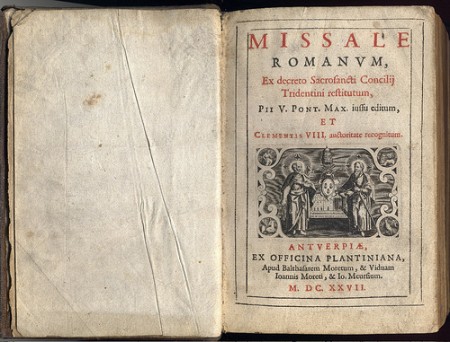
1627

2. Antique Books — images of books, covers and illustrations that are a hundred years old or more.

Design and Paper: Number 13: Spread

3. Designers’ Books — “what’s on the shelves of designers and other smart creatives.” Not to be confused with the also excellent designers-books.com pool or Book Design pool.

Literature in America

4. Alvin & Elaine Lustig Design — celebrates the work of Alvin and Elaine Lustig, both renowned for their incredible book cover designs.

They Shoot Horses Don't They

5. The Penguin Paperback Spotters’ Guild — An astonishing collection of vintage Penguins, Pelicans, Peregrines, and Puffins. Also of interest: The Great Pan! Illustrated Pan Book Covers and Vintage Fontana Books.

Playback by Raymond Chandler Cover art by William Rose

6. Pulp Fiction — As you would expect: detective novels, crime fiction, adventure comics, trashy romance, weird science, blaxploitation and more. See also: The Old-Timey Paperback Book Covers and The Crime & Mystery Book Covers.

Thoughts on Design by Paul Rand

7. The Paul Rand Modern Graphic Design Fan Club — Like the Lustig Design group, this is not just a book pool, but it does, however, include many of Paul Rand’s iconic book designs, making it essential to this list in my opinion.

I Know an Old Lady, by Rose Bonne. Pictures by Abner Graboff.
8. The Retro Kid A collection of cool illustrated children’s books from the mid-1940’s through the mid-1960’s, curated by The Ward-O-Matic illustrator Ward Jenkins.

metropolis thea v marbou

9. The SciFi Books Pool Vintage science fiction covers from the 1940s, 50s, 60s and 70s.

computers

10. Vintage Paperbacks — The place for amazing paperbacks that aren’t Penguins. Curated by graphic designer and art director Gregory Boerum, the focus is on quality stuff with design interest from the 1960’s and 70’s.

So there we have it: 10 of my favourites. What are yours?

10 Comments

Delivered in Beta

Delivered in Beta is a short documentary about design, products, social media, and creativity (amongst other things) created during the Open Design Workshop at the Betahaus as part of Social Media Week Berlin 2010:

Any thoughts how this applies to books?

(via SwissMiss)

1 Comment

Dan Mogford’s de Bonos

Earlier this week, London-based graphic designer Dan Mogford kindly alerted me to a series of fresh Edward de Bono covers he designed for the Penguin UK:

At the BPPA book cover panel last night, David Gee was lamenting publishers’ current predilection for blandly neutral Malcolm Gladwell-esque covers for certain kinds of popular nonfiction, and so I’m really glad that Dan (and Penguin) decided to go in the completely opposite direction.  I really like the slab serif (the rather lovely Stag by Christian Schwartz, Dan tells me), bold colours, and light-bulb motif they went with here.

Is it just me or do they have a certain Milton Glaser-like quality?

4 Comments

Under the Covers: Reviewing the Covers of 2009

Tonight is the BPPA‘s annual review of the best and worst book covers of the year.

Sadly Alan Jones, Senior Designer at HarperCollins Canada, had to drop out at the last minute and is being replaced by Boy Wonder David A. Gee (interviewed here) and umm… me. No, I’m not quite sure what they were thinking either (about asking me — David is obviously a great choice)…

The other panellists are freelance designer Ingrid Paulson (also interviewed here), Terri Nimmo Senior Designer at Random House Canada, and Steven Beattie Review Editor at The Quill & Quire.

Panel moderator David Ward of McClelland & Stewart has promised me Jaffa Cakes.

The event is 6:30-8:30 pm at The Arts and Letters Club (3rd Floor) in Toronto. It’s free for BPPA Members, $20.00 for non-members apparently.

There’s more information on the BPPA’s event page.

3 Comments