Skip to content

The Casual Optimist Posts

Inside The Daniel Clowes Reader


At The Comics Reporter, Tom Spurgeon talks to the editor of The Daniel Clowes Reader Kevin Parille about compiling the book. The interview will be too esoteric for some, but it’s great to see Parille draw attention to the work of the book ‘s designer Alvin Buenaventura, and place Clowes work in a wider cultural context than just comics:

[It] was crucial that the book alternate between comics and critical materials, and that within the essays, text and images would be carefully integrated — and Alvin’s design does that. I also wanted a diversity of secondary materials: full interviews; interview expects; a piece on Clowes’s children’s literature precursors; a short feature on Clowes’s revisions of character faces (how he changes them from comic to graphic novel); full lyrics to songs that Enid listens to and sings; excerpts from a zine mentioned in Ghost World; and more. When I couldn’t find an essay on a topic I thought should be included, I asked someone to write it. I also thought it would be helpful if Ghost World, a comic more visually and thematically dense than some might recognize, had an index; so I created one with entries for key themes, words, phrases, and objects.

Since Clowes’s comics come from so many different artistic and social perspectives, I include essays that employ distinct critical approaches: personal narrative, literary theory, close reading, historical context, psychoanalytic, etc. In order to addresses a wide readership, I selected writers who are smart and write accessible prose. In unexpected ways, many recurring issues tie the essays together: gender, adolescence, music, punk, grunge/gen x/the ’90s, Clowes’s aesthetics, urban environments, etc. . . . The essays present readers with an expanded sense of what Clowes is about and offer new ways to appreciate his work.

Comments closed

The Mounting Tide of a Mass Avant-Garde

Phil Ford, author of Dig: Sound and Music in Hip Culture, reviews Loren Glass’ new book on Grove Press, Counterculture Colophon: Grove Press, the Evergreen Review and the Incorporation of the Avant-Garde, for the LA Review Books (which is, by the way, probably the most consistently interesting place around to read about books right now):

Grove Press and its charismatic owner, Barney Rosset, sit right at the center of postwar intellectual history. Glass notes early that if Rosset made a lot of impulsive bad decisions, he was guided steadily by a shrewd understanding of where American culture was headed. In the 1950s, Americans were beginning to go to college en masse, and when they got there they would seek out whatever was chic, daring, avant-garde, experimental — in a word, hip. Counterculture, the notion of seceding from the mainstream and dwelling in an autonomously created realm of liberated culture, was perhaps the most potent dream of the postwar age. Everybody wanted in. Against the mounting tide of a mass avant-garde, the old censorship codes could not long endure.

But while it’s hard not to be inspired by the story Grove Press, it’s also important to note the less savoury side of it, and how it was overtaken by the cultural changes Rosset helped start:

Those who harkened to Evergreen Review’s call to “join the underground” constituted the higher-brow version of the man who read Playboy: a 1966 advertising survey discovered that he was “a 39-year-old male, married, two children, a college graduate who holds a managerial position in business or industry, and has a median family income of $12,875.” (That’s about $92,000 in 2013.) It turns out that “Chuck,” the everysquare in a 1965 Evergreen Review spoof of Charles Atlas ads, painted a pretty realistic portrait of the Grove readership. But with the emergence of a feminist critique made possible by the very cultural revolution Rosset served, the masculine literati no longer enjoyed the privilege of guiltless consumption, and modernist experimentalism no longer provided a dignified alibi for it. In the 1970s, the Evergreen Review image of the hip intellectual soured. We might imagine Chuck a decade later, up to his ears in alimony, parted hair modishly grown out though thinning and combed-over on top, paunch swelling under a safari suit coat, leering at younger women who wish he would drop dead.

Read the whole review.

Comments closed

The Laser Age


At Pitchfork’s new film site The Dissolve, Keith Phipps is writing a column about the science fiction movies of  The Laser Age — a period  “rich with idea-driven science fiction” that began in the late 1960s and ended in the mid-1980s with “the poor financial performance of films like Blade Runner, Tron, The Thing, and Dune.”

The first essay looks at the two films that ushered in The Laser Age, Planet Of The Apes and 2001: A Space Odyssey, while the second looks at four post-apocalyptic films of the early 1970sBeneath The Planet Of The Apes, Glen And Randa, Gas-s-s-s, and The Omega Man:

Planet Of The Apes arrived at the beginning of a period of turmoil and dark times that made it easy to think the end was near. There’s a reason the longhaired kook appearing in Mad magazine during this era carried a sign reading just that: “The End Is Near.” Apocalyptic cults, and cults of all kinds, developed a foothold in the counterculture. Millenarianism wasn’t confined to the fringes, either. As Christian fundamentalism became a more powerful force in the American mainstream, the notion of preparing for the End Times became more common. Early Christian-rock star Larry Norman, a man with one foot in the counterculture and the other in fundamentalism, released a 1969 song titled “I Wish We’d All Been Ready.” The message is right there in the title, but the song revels in the dark imagery of dead children and a period in which “a piece of bread could buy a bag of gold.” His mind was straining to imagine unthinkable horrors just around the corner, and to turn those horrors into entertainment carrying a warning.


I haven’t seen it for years, but I’ve meaning to revisit Beneath The Planet Of Apes for some time. There’s a bleak insanity to it that makes it strangely memorable. Certainly the mutant-humans worshiping the nuclear missile at the end of the film absolutely TERRIFIED me a kid (when death by nuclear war seemed quite a real possibility). Perhaps that’s why I haven’t quite got around to watching it again?

Comments closed

The Life and Times of Daniel Clowes

The NEA Arts Magazine has a really great interview with cartoonist Daniel Clowes:

I always had this senseand I was very confident about thisthat I knew something that other people didn’t. I knew that this form had great potential, and I knew that great things had been done that people were wilfully ignoring in their dismissal of the entire medium. So I felt like I had it all to myself. Or, you know, me and the ten other people that were thinking of it this way. It was exciting to know that people who were regarded as experts, [like] my teachers and people in the art world, were wrong and I was right. I knew that as well as I knew anything.

Comments closed

I am not dead; I am in Herne Bay


At the London Review of Books, Brian Dillon considers Marcel Duchamp’s vacation in English coastal town of Herne Bay (and other unlikely historical connections between Kent and Europe’s 20th-century experimentalists):

Details about Duchamp’s time in Kent are scarce. We know that he travelled as chaperon to his 17-year-old sister, Yvonne, and stayed for most of August at Lynton College while she learned English… During or soon after his holiday at Herne Bay, Duchamp made four drawings and a couple of notes that all relate to The Large Glass. The drawings are prototypes of enigmatic – animal, mechanical or anthropomorphic – elements in the achieved work: the ‘pendu femelle’ (an apparently female form that hangs at the top left) and the ‘sex cylinder’ or ‘wasp’ that attends it on the right. There is a colony of rare digger wasps at Reculver, which has excited some Duchampians, but the more obvious link to Herne Bay is in the notes. Duchamp tore out and kept a small photograph of the illuminated pier and wrote, apparently describing a potential backdrop for The Large Glass: ‘An electric fête recalling the decorative lighting of Magic city or Luna Park, or the Pier Pavilion at Herne Bay.’

Who would have thought it?

Comments closed

Joost Swarte: Tumult in the Book World


This wonderful illustration by Dutch cartoonist Joost Swarte accompanied a discussion on traditional bookstores in the digital marketplace in last Sunday’s New York Times.

4 Comments

Warren Ellis Has Arrived

“I’m a comic book writer. I still don’t think this is going to be run by The Paris Review.”


Warren Ellis, author of Gun Machine and Dead Pig Collector, in conversation with Molly Crabapple for The Paris Review:

I try not to get involved in the business of prediction. It’s a quick way to look like an idiot. There’s an expectation around writers of science fiction, which I sometimes am, that we’re predictors of the future, that that is the business of science fiction. Which we’re not, and never were.

Science fiction is social fiction. That’s the line from Mary Shelley through H. G. Wells and Aldous Huxley and George Orwell to the politically committed writers of the sixties and seventies. It’s about using speculation as a tool with which to examine the contemporary condition. The closest it comes to prediction is in the provision of long-range weather warnings.

Comments closed

Tom Gauld Totes


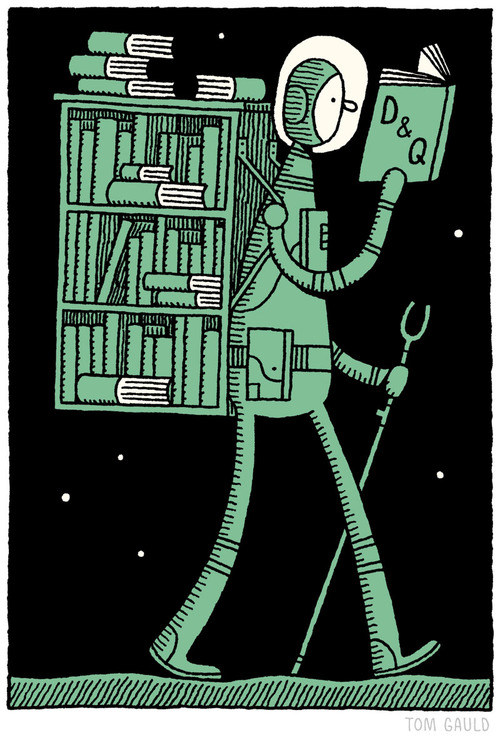
Tom Gauld drew this bookish astronaut to go on tote bags for his Canadian publisher Drawn & Quarterly. I’m reliably informed that the bags are available from D+Q at conventions and from their store in Montreal.

Comments closed

The Birdman


The Birdman is a wonderful — and an award-winning — documentary short by Jessie Auritt about Rainbow Music in New York’s East Village and it’s eccentric owner.  The store just has to be seen to be believed:

With CDs, VHSs and old cassette tapes stacked head high, Rainbow Music is a hoarder’s paradise. However, its quirky owner, known as ‘The Birdman’, knows exactly where everything is. Amidst the Starbucks and Subways popping up on every corner of the East Village, Rainbow Music maintains its mom and pop feel, and is a hidden gem to its patrons. Due to the weak economy, online music sales and pirating, and the changing neighborhood, this charismatic curmudgeon is struggling to sell what he has in his store. Despite these challenges, The Birdman carries on to his own tune.

Comments closed

Toytown: Architecture on the Carpet

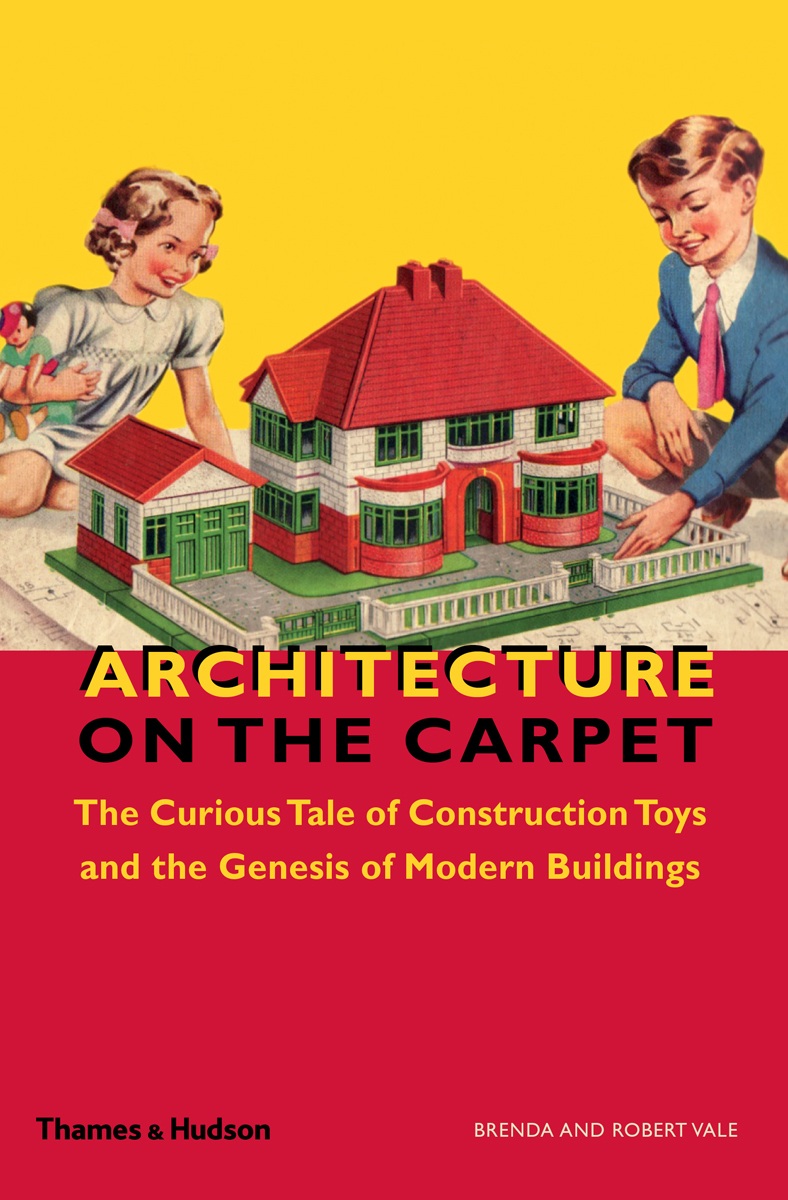
The Financial Times architecture correspondent Edwin Heath reviews Architecture on the Carpet: The Curious Tale of Construction Toys and the Genesis of Modern Buildings by Brenda and Robert Vale, which argues that construction toys such as Lego and Meccano not only reflect the architecture of the real world, but influence the way individual architects design:

Construction toys have always been about what adults would like to play with themselves. Or what they feel their children should be playing with. They are worthy. But somehow Lego has managed the difficult feat of appearing playful, of being versatile and not being overly didactic. If English construction toys reflect a residual, Pooterish suburbanism, Lego, whose first plastic bricks appeared in 1947, is liberated Danish pop art modernism, of the same world as Verner Panton’s fiercely colourful plastic chairs and Claes Oldenburg’s confusion of scales. It is the most urban of the toys, encouraging the building of whole cities.

The company recently brought out a series of kits to make modernist icons by Le Corbusier, Mies van der Rohe and, of course, Frank Lloyd Wright. They are clearly aimed at adults, the kind of gift which confers on the giver culture and playfulness. In their specificity (designed for only one possible outcome), they are exactly what Fröbel and Rudolf Steiner were set against, the latter, one of the most influential of play theorists, being convinced that only the vaguest sense of reality should be designed into a toy so that as much room is left for the imagination as possible. These are toys emulating an already built reality.

It’s a fascinating idea, but I wonder if the younger generation of architects are more influenced by video games than toys?

(Financial Times)

Comments closed

Nimona by Noelle Stevenson

I’m ever so late to this, but Noelle Stevenson‘s Harvey nominated webcomic Nimona really is terrific:

The series will be published by HarperCollins in 2015.

(via Waxy)

Comments closed

Books: A Documentary

Last year (as some of you may remember) Larry McMurty, author of The Last Picture Show, sold over 300,000 antiquarian books from his store Booked Up at auction. Now, filmmakers Mathew Provost and Sara Ossana of Studio Seven7 Films have started a Kickstarter campaign to help them complete a documentary about McMurty, the auction, and the antiquarian book trade in the US:

The campaign ends August 18th, and as of today they’re some way off their goal, so consider donating a couple of bucks if you want to see the finished film.

3 Comments