Skip to content

The Casual Optimist Posts

Nicolas Roeg: “Well, I’ll Be Damned”

Also at The Telegraph, film director Nicolas Roeg (PerformanceWalkabout, Don’t Look Now, The Man Who Fell to Earth)  talks to John Preston about his new memoir, The World Is Ever Changing:

Roeg insists that he had no idea what sort of films he wanted to make when he became a director. Instead he fell into directing when Donald Cammell, who’d written the original script for Performance, needed someone with visual flair to collaborate with.

Eventually, the film made legends of Roeg and Cammell, but at the time it almost finished them both. At an early screening, one Warner Bros executive was reportedly so appalled by the sight of Mick Jagger and James Fox exchanging sexual partners, clothes and identities that he threw up. On the film’s release, the critic of Life magazine described Performance as “the most completely worthless film I have ever seen since I began reviewing”.

… Now, of course, the wheel has come full circle and, as Roeg notes drily, he’s lost count of the people who claim to have played a critical role in Performance’s success. Is it a film you look back on with fondness and pride? I wonder. “I don’t look back on any film I’ve done with fondness or pride,” he says promptly. “I look back on my films, and on the past generally…” He shakes his head in a bewildered sort of way. “I can only use the phrase, ‘Well, I’m damned’.”

At the Financial Times, Peter Aspden reviews the book with new books about Orson Welles and Roman Polanski:

The greatest auteurs in cinema have traditionally had a habit of gorging on their favourite subjects, their leading ladies, their studios’ cash registers. Today’s directors are less monstrous, and altogether more respectful of the tiresome fact that cinema is a collaborative art form. Put it down to sharper accountants, blander movie stars, infernally complex technological demands. It is more difficult than ever to be a legend in your own lunchtime, and that’s a shame.

Interestingly, Aspden recommends the interactive iPad edition of Roeg’s memoir, which comes “complete with sequences from his films and grandfatherly accounts of their making, which ramble sweetly into occasional dead ends.” Nice.

Comments closed

Janet Malcolm: The Devil in the Detail


Gaby Wood interviews journalist Janet Malcolm for The Telegraph:

How Malcolm goes about her journalistic business is clear from her person. Her gaze is remarkably unflinching; unnervous, but not stern. She concentrates on looking at all times. She is difficult to interview, but for reasons much more prosaic than the dramatic ones I had conjured. She simply finds herself uninteresting, and so gives away little. You feel there is much more to know, and that the failure must lie in your ability to ask about it. Because when you listen back to the recording you find that she has not been especially evasive, merely – politely – private. ‘Have a macaroon,’ she says.

Malcolm’s most recent collection of essays, Forty-One False Starts, has just been published in the UK by Granta.  The US edition is available from FSG, (and is, for sake of disclosure etc., distributed in Canada by my employer Raincoast Books).

Comments closed

Interaction of Color Reimagined


Just in time for the 50th anniversary of Interaction of Color by Josef Albers, Yale University Press has partnered with the Josef and Anni Albers Foundation and Potion Design to create an interactive digital edition of the book for the iPad.

In this video,  Michelle Komie, senior editor of art and architecture at Yale University Press, discusses the project:

While this sampler for the app includes commentary by Knopf art director Peter Mendelsund:


On a recent episode of Design Matters Debbie Millman spoke to Brenda Danilowitz, Chief Curator at the Josef and Anni Albers Foundation, and Philip Tiongson, a principal at Potion, about Josef Alber’s book and the new digital edition:

And, of course, Interaction of Color is still available as a good old book.

Comments closed

Martin Scorsese: The Persisting Vision

The August issue of New York Review of Books has a wonderful essay by Martin Scorsese on the history and language of film, Vertigo, and cinema as a great American art form:

As in the case of many great films, maybe all of them, we don’t keep going back for the plot. Vertigo is a matter of mood as much as it’s a matter of storytelling—the special mood of San Francisco where the past is eerily alive and around you at all times, the mist in the air from the Pacific that refracts the light, the unease of the hero played by James Stewart, Bernard Herrmann’s haunting score. As the film critic B. Kite wrote, you haven’t really seen Vertigo until you’ve seen it again. For those of you who haven’t seen it even once, when you do, you’ll know what I mean.

Every decade, the British film magazine Sight and Sound conducts a poll of critics and filmmakers from around the world and asks them to list what they think are the ten greatest films of all time. Then they tally the results and publish them. In 1952, number one was Vittorio de Sica’s great Italian Neorealist picture Bicycle Thieves. Ten years later, Orson Welles’s Citizen Kane was at the top of the list. It stayed there for the next forty years. Last year, it was displaced by a movie that came and went in 1958, and that came very, very close to being lost to us forever:Vertigo. And by the way, so did Citizen Kane—the original negative was burned in a fire in the mid-1970s in Los Angeles.

So not only do we have to preserve everything, but most importantly, we can’t afford to let ourselves be guided by contemporary cultural standards—particularly now…We have to remember: we may think we know what’s going to last and what isn’t. We may feel absolutely sure of ourselves, but we really don’t know, we can’t know. We have to remember Vertigo…

(New York Review of Books)

Comments closed

Chip Kidd: What the Stories Look Like


Penn State alumnus Chip Kidd discusses his career at length in a recent interview conducted at the university by host Patty Satalia:

Kidd’s novel The Cheese Monkeys is  loosely based on his time at Penn State.

Comments closed

Semi-Outsiders

At Vulture, Jonathan Galassi, the current president of Farrar, Strauss & Giroux, reflects on Boris Kachka’s new book Hothouse, a history of the New York publishing house:

FSG came into its own at a moment when postwar America was opening up and out—when “semi-outsiders,” in the words of critic Irving Howe, were “starting to break into the central spaces of American culture.” What made FSG significant, though, was its ability to catch a long series of literary waves. Straus and Giroux and a whole series of talented younger editors made stars out of Southerners (and Catholics) like Flannery O’Connor and Walker Percy and Jews like Bernard Malamud, Philip Roth, and the émigré Isaac Bashevis Singer. There were the poets of the ­Lowell-Bishop-Berryman generation; Susan Sontag, an entire typhoon on her own, who clued Straus in to great, obscure European writers; and the late-sixties Latin American “boom” (Fuentes, Vargas Llosa, Neruda). There were the New Journalists (Tom Wolfe, Joan Didion) and New Yorker epigone John McPhee; the internationalist poets Derek Walcott, Seamus Heaney, and Joseph Brodsky; and great children’s writers like Maurice Sendak, Madeleine L’Engle, and Roald Dahl. All contributed to what Kachka calls “FSG culture,” which he ­describes as “high-minded and scrappy, aggressive and refined, quintessentially American but thoroughly international.”

Comments closed

St Franz of Prague


At the Financial Times, Ian Thomson, author of Primo Levi: A Life, reviews three new books about Franz Kafka:

In 1982, the Italian writer and Nazi concentration camp survivor Primo Levi embarked on a translation of Franz Kafka’s The Trial. At first he was enthusiastic, hoping to improve the German he had learnt so imperfectly at Auschwitz. Instead, Kafka involved him more terribly than he could have imagined. Levi found only bleakness in the hero Josef K, who is arrested and executed for a crime he probably did not commit.

The more Levi became immersed in Kafka, the more he began to see his own life mirrored in that of “St Franz of Prague”, as he called the Czech writer. Born in Prague in 1883 into a German-speaking Jewish family, Kafka lived a life of quite exemplary tedium as an insurance clerk, rarely travelling beyond his home or that of his parents. Levi saw similar constrictions in his own life as an assimilated Jew in bourgeois Turin. Moreover, Kafka’s three sisters had all perished in the Nazi gas chambers – victims of the grotesque bureaucracy foretold by their brother two decades earlier in The Trial. Kafka must have had a seer-like sensibility, Levi thought, to have looked so accurately into the future.

Pictured above: David Zane Mairowitz’s graphic novel adaptation of The Castle illustrated by Jaromír99, published by SelfMadeHero.

Comments closed

50 Canadian Book Cover Designs

Lists are always problematic, but CBC Books longlist of Canada’s Most Iconic Book Covers seems strangely underwhelming somehow. Setting aside what counts as ‘Canadian’ (some of the books on the list were not designed by Canadians for example), ‘iconic’ covers are inevitably those that have stuck around and we are most familiar with, not necessarily those that are well designed or particularly interesting to look at. Needless to say, the list says more about our fondness for certain books and authors than about the current state of Canadian book cover design. Perhaps it isn’t really fair to judge the CBC’s contest this way, but it makes the list less interesting than it might otherwise have been (to me, at least).

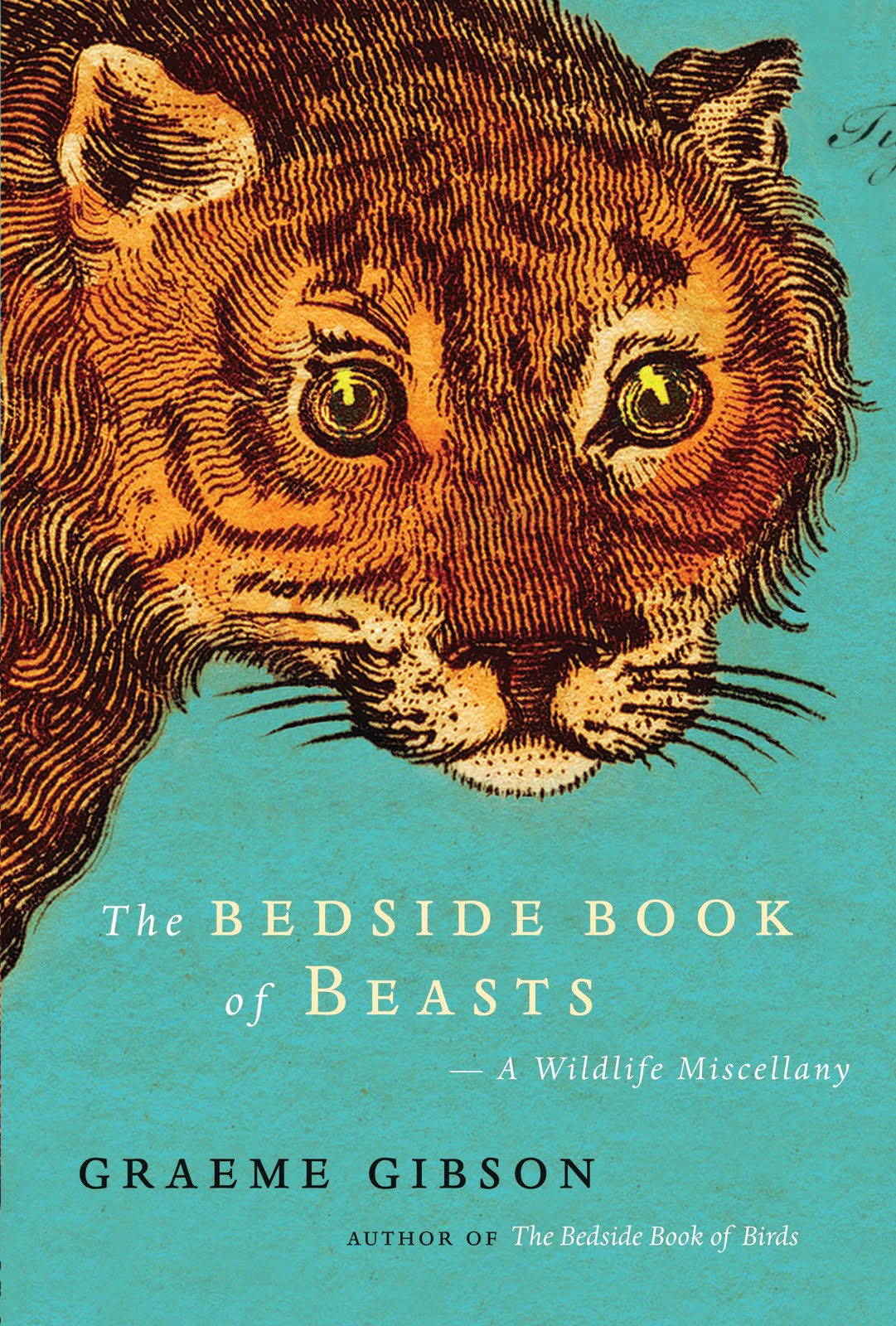
That said, I am terrible, no good Canadian. 10 years and one Canadian passport later, I still feel like the immigrant I am. It’s not that I feel particularly British any more (if I ever did), it’s more like I haven’t finished unpacking yet (which might literally be true come to think of it)! In nearly five years of blogging I haven’t dedicated a single post to Canadian book design. To remedy to that, below are 50 (FIFTY!) recent book covers designed in Canada. Some of them are well-known, some of them are award-winners, some of them were recommended, some I’ve posted before, and some are just personal favourites. I can’t say they’re ‘iconic’ but they are all great covers. Enjoy. (Pictured above: The Bedside Book of Beasts by Graeme Gibson; design by Scott Richardson; published by Doubleday Canada).

15 Comments

Trains, Punks, and Photographs


In 2002, 17-year-old Mike Brodie started hopping trains. Over the next five years he took photographs — first using a found Polaroid camera and then an old 35-mm Nikon — documenting his experiences. In the July/August edition of Book Forum, Geoff Dyer reviews A Period of Juvenile Prosperity, a book collecting Brodie’s photographs:

As with Nan Goldin’s Ballad of Sexual Dependency—and if ever a book of photographs deserved to be termed a ballad it’s this one—Brodie’s pictures are entirely from within the world depicted. Goldin always had a knack, according to Luc Sante, for finding beautiful colors and light in what was otherwise a complete dump. The light for Brodie and his fellow travelers is a given, filling their lives with lyric and radiant purpose. The land that blossomed once for Dutch sailors’ eyes whizzes and blurs past as they ride the rails; the light fades, and the dark fields of the Republic roll on under the night. But the book is less a record of sights and places seen than one of the people doing the seeing. Photographs by Helen Levitt don’t just show children playing in the street; they convey what it’s like to be a child. Same here. We share the optimism, recklessness, and manifest romance of these outlaws’ take on destiny.

Earlier this year, Brodie, who is now working as mechanic, talked about the book with All Things Considered on NPR:

NPR: All Things Considered: Trains, Punks, Pictures mp3

I’ve not seen any sign of the book in Canada, but apparently it is available from the publisher Twin Palms, and I’m sure there will be US independent bookstores who have it.

Comments closed

The Photo Man


Mark Kologi collects  found photos. In this weirdly fascinating short film he discusses buying and selling the personal pictures of complete strangers:

(Does he remind anyone of Steve Buscemi? Is that just me?)

Comments closed

The Story Coaster by Grant Snider


Another gem for the New York Times Book Review by Grant Snider. Love the Unreliable Narrator.

Comments closed

Ersnt Reichl: Wide Awake Typographer


Elizabeth Hawes, Fashion is Spinach (Random House, 1938; AIGA 50 Books 1939)

At Design Observer, design historian Martha Scotford discusses the work of German-American book designer Ernst Reichl:

Midway in his career, Reichl began to reflect on many of the books he designed in written comments; he spent more time on this during the period 1977-1978, shortly before his death in 1980. In the end, there were approximately 550 3 x 5 inch index cards on which he hand-wrote his thoughts about selected books he designed. In lively prose Reichl comments on myriad elements of book design and details of book production, several for each book. He covers typography, binding design and jackets, illustration, publishers, the publishing industry in New York, design colleagues (revered and annoying), production triumphs and problems, how well the book sold, his opinion of the book and his philosophy of book design as applied to that title. He also critiques his own work, sometimes in the moment, sometimes from the perspective of more time and experience. These comments, often sharp and humorous, are highly entertaining and informative. I know of no other book designer who has done this so extensively.

Reichl’s comments about book design have now been transcribed from the cards and accompany a selection of over 100 examples of his work in an exhibition curated by Scotford, ‘Ernst Reichl: Wide Awake Typographer,’ currently on display at Columbia University’s Rare Book and Manuscript Library in New York until September 13, 2013.

On a related note, Scotford has previously written about the US publication of James Joyce’s Ulysses and the role of Ernst Reichl, who designed the typographic cover for Random House.

Comments closed