Michael Salu, artistic director of Granta, talks to Crane TV about his work, influences and personal style:
Comments closed
Published February 17, 2012
Books, Design and Culture
Michael Salu, artistic director of Granta, talks to Crane TV about his work, influences and personal style:
Comments closed Tracing History — Alice Rawsthorn on the beauty of printed books for the New York Times:
Some things seem to designed to do their jobs perfectly, and the old-fashioned book is one. What else could be quite as efficient at packaging so many thousands of words in a form, which is sufficiently sturdy to protect them, yet so small and light that it can be carried around to be read whenever its owner wishes? The pages, type, binding and jacket of a traditional printed book do all of the above, as well as giving its designer just enough scope to make the result look beautiful, witty or intriguing.
(pictured above: Blaise Cendrars’s 1919 book ‘‘La fin du monde, filmée par l’ange,’’ designed and illustrated by Fernand Léger.)
Down bpNichol Lane — Founder and publisher of Coach House Books Stan Bevington talks to The Varsity about the history of the storied indie press:
Coach House purchased a photo-offset lithography machine, which allowed images to be transferred photographically to aluminum printing plates. Oil-based ink adhered to the images on the plates, which were then used to print the pages of a book… In the 1960s, this was cutting-edge technology. According to Stan, offset lithography was a tremendous step forward in the publishing industry because it “drastically liberated” the process of creating printing plates. But the text of a book still had to be typeset by hand, which left publishers relatively restricted in other areas of design. As Stan thumbs through additional books that were printed using offset lithography, he laughs and points out that they are all set in the Helvetica typeface.
Captain Crunch — Alan Moore on DC Comics planned Watchmen prequels at Fast Company:
“There’s been a growing dissatisfaction and distrust with the conventional publishing industry, in that you tend to have a lot of formerly reputable imprints now owned by big conglomerates… As a result, there’s a growing number of professional writers now going to small presses, self-publishing, or trying other kinds of [distribution] strategies.
“The same is true of music and cinema… It seems that every movie is a remake of something that was better when it was first released in a foreign language, as a 1960s TV show, or even as a comic book. Now you’ve got theme park rides as the source material of movies. The only things left are breakfast cereal mascots.”
See also: Tom Spurgeon’s ‘21 Not Exactly Original Notes On More Watchmen, Written At A Slight Remove‘:
Comments closedWatchmen is something of a perfect Internet-era story, and as such serves as a reminder of how much we’re driven by and limited to the nature and form of the way news stories develop now. You couldn’t build a story like this in a laboratory. The… Watchmen story is about a product; people like products. It’s about the hype for a product, which in many ways and for many fans has become the best part of any arts-product experience. Because the work itself doesn’t exist yet, arguments can be made on its behalf positing an ideal outcome or a disastrous one — your choice.
The New York Times has posted a short video interview with Earl Kallemeyn of Kallemeyn Press about the beauty of letterpress:
Comments closedAuthor Tim Parks has an interesting post on the virtues of e-books on the NYRB blog:
The e-book, by eliminating all variations in the appearance and weight of the material object we hold in our hand and by discouraging anything but our focus on where we are in the sequence of words (the page once read disappears, the page to come has yet to appear) would seem to bring us closer than the paper book to the essence of the literary experience. Certainly it offers a more austere, direct engagement with the words appearing before us and disappearing behind us than the traditional paper book offers, giving no fetishistic gratification as we cover our walls with famous names. It is as if one had been freed from everything extraneous and distracting surrounding the text to focus on the pleasure of the words themselves…Add to that the e-book’s ease of transport, its international vocation (could the Iron Curtain have kept out e-books?), its indestructibility (you can’t burn e-books), its promise that all books will be able to remain forever in print and what is more available at reasonable prices, and it becomes harder and harder to see why the literati are not giving the phenomenon a more generous welcome.
It is encouraging to see a writer at the venerable NYRB enthusing about e-books, but two things immediately spring to mind. First, that reading on the screen might present more, not fewer, distractions than reading an unconnected book. And, second, the idea that e-books — which can not only be monitored but endlessly rewritten and immediately deleted across an entire network without a reader’s permission — are some how less vulnerable than paper-ones seems, to put it politely, naive.
2 CommentsWhile looking for Charles and Ray Eames film Tops earlier this week, I came across this interesting TED talk from a few years ago by their grandson Eames Demetrios (who is also interviewed in the documentary EAMES: The Architect and The Painter):
Comments closed
James Victore shares his workspace with From The Desk Of.
Burn Unit — At the New York Times ‘Bits’ blog, David Streitfeld writes on Amazon’s recent image problems:
[Take] the cover of Bloomberg Businessweek two weeks ago. It shows a book in flames with the headline, “Amazon wants to burn the book business.” What was remarkable was not just the overt Nazi iconography but the fact that it did not cause any particular uproar. In the struggle over the future of intellectual commerce in the United States, apparently even evocations of Joseph Goebbels and the Brown Shirts are considered fair game.
Witheringly Obscure — Wired Magazine talks to William Gibson about Distrust That Particular Flavor and collecting antique watches:
[It] was really about pursuing a totally unnecessary and gratuitous body of really, really esoteric knowledge. It wasn’t about accumulating a bunch of objects. It was about getting into something utterly, witheringly obscure, but getting into it at the level of, like, an extreme sport. I met some extraordinarily weird people. I met guys who could say, “Well, I’ve got this really rare watch, and it’s missing this little piece. Where might I find one?” Then the guy would kind of stare into space for a while, and then he’d say this address in Cairo, and he’d say, “It’s in the back room. The guy’s name is Alif, and he won’t sell, but he would trade it to you if you had this or this.” And it wasn’t bullshit. It was kind of like a magical universe. It was very interesting. But once I’d gotten that far … I got to a certain point, and there was just nowhere else to go with it. The journey was complete.
Magic Journalism — Writer Geoff Dyer chooses five unusual histories for The Browser:
[T]ypically, I guess, you read history books for the content – that sounds an unbelievably stupid comment – and you’re drawn to certain works of history rather than others because you’re interested in the period. You read Stalingrad by Antony Beevor because you’re interested in the Second World War, or Russia or whatever. Whereas it seemed to me that the thing about these books was that you might be interested in the subject, but it’s the way that the subject is dealt with that is the distinguishing feature of each one.
And finally…
A long article for Intelligent Life on ceramicist Edmund de Waal and the double-edged success of his memoir The Hare with Amber Eyes:
Comments closedIn the 18 months since the book came out, de Waal has completed six overseas book tours, given dozens of talks, answered hundreds if not thousands of questions. He has also kept his porcelain-making studio busy and has plans for a subsequent book, about the history of porcelain around the world, which will take him from 18th-century Plymouth to the hillsides outside Jingdezhen where porcelain was first made in China, via Dresden, Marco Polo’s Venice, Istanbul and Yemen. “Porcelain”, he says, “is light when most things are heavy. It rings clear when you tap it. You can see the sunlight shine through. It is in the category of materials that turn objects into something else. It is alchemy. Porcelain starts elsewhere, takes you elsewhere. Who could not be obsessed?”


Beautiful children’s book and magazine covers from Korea in the 1950’s and 1960’s at the amazing 50 Watts.
Not a Pretty Scene — Tess Thackara on design and the future of printed books at Guernica magazine:
Amy Martin’s illustrations for Symphony City [published by McSweeney’s McMullens imprint 2011] create a layered multidimensional and richly textural world, which often appears like original paper collages. In some places the visual environment of an urban landscape full of music she creates is so absorbing that I wondered what an e-book or iPad app could offer that print couldn’t… McSweeney’s art director and editor Brian McMullen, who developed and gave his name to the imprint, offered a more practical reason for keeping to printed matter for kids: “Those of us who are parents aren’t convinced that kids need to be encouraged to spend more time than they already do in front of screens… Have you ever tried to tell a three-year-old it’s time to stop looking at one of these devices and hand it back to Daddy? It’s not a pretty scene. These devices are just not compatible with bedtime, in my experience, whereas a printed picture book, for whatever reason, is.”
See also: Designers on Book Covers of the Future at Publishing Perspectives.
Publishing’s Ecosystem on the Brink — An interesting summary by the Author’s Guild of recent articles in Bloomberg Business Week, The New York Times and Harpers about the perilous state of the book industry.
And finally…
Attention Deficit — Lars Mensel interviews Nicholas Carr, author of The Shallows, for The European:
There’s no question that the internet offers all sorts of benefits – that is the reason why we use it so much. It is an incredibly powerful and useful technology that makes all sorts of information immediately available to us. Things that used to be impossible, hard or expensive to find are now right there. And we all know how to improve our ability to make decisions with it. But accompanying that, incredibly, is the fact that we become so intent on gathering information that we never slow down and think deeply about the information we find. We gain the ability to harvest huge amounts of data but we lose the ability to engage in contemplation, reflexion and other modes of thinking that require a large amount of attentiveness and the ability to filter out distractions and disruptions.
Comments closed

I finally saw EAMES: The Architect and The Painter at the weekend. One of the many things that grabbed my attention watching it was a clip of mesmerizing short film called Tops made by the Eames studio in 1969. In the film, all manner of spinning tops and toys are wound and released. It is beautiful and hypnotic (thanks partially at least to the score by Elmer Bernstein). But there is also a moment about halfway through when a thumb tack is spun across an architectural drawing. It is a wonderfully understated metaphor for the creative process and it changes the whole tone of what you are watching. Lovely.
Here Tops in its entirety:
Comments closed
Debbie Millman talks with designer and self-confessed typomaniac Erik Spiekermann on the latest episode of Design Matters:
Design Matters with Debbie Millman: Erik Spiekermann mp3
Comments closed
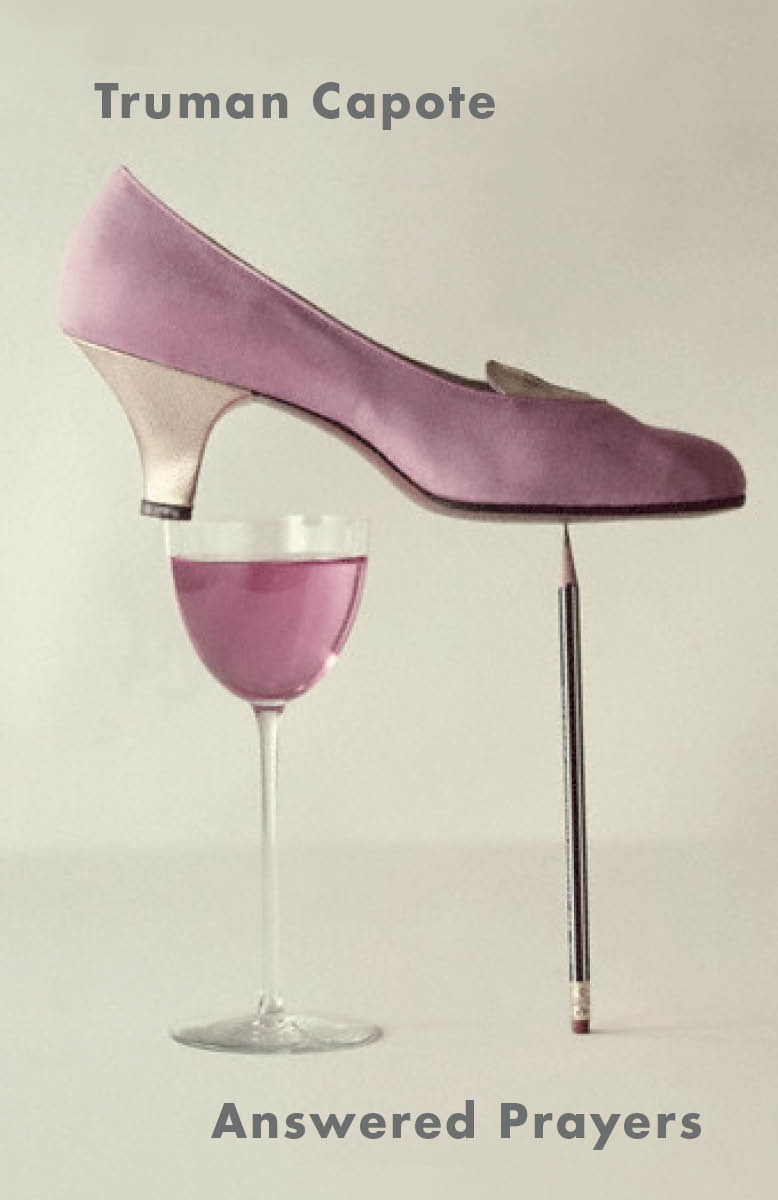
Megan Wilson has designed a striking new set of covers for the Vintage paperback editions of Truman Capote with some lovely bold type and photographs by Leombruno-Bodi, William Eggleston, Richard Rutledge and Olivia Parker.



I’m sorry — there won’t be a round-up of fascinating things from around the internet today. A lot of emails and late night with some of Canada’s most illustrious book designers is largely to blame. Take my advice, if a book designer offers to buy you a drink, the sensible thing is to say “no.” Pictured above are shots of Riga Black Balsam. The less you know about those the better. Trust me.
Comments closed
Vahram Muratyan’s playful illustrations comparing Paris and New York are now available in a beautiful new pocket-sized hardcover from Penguin.
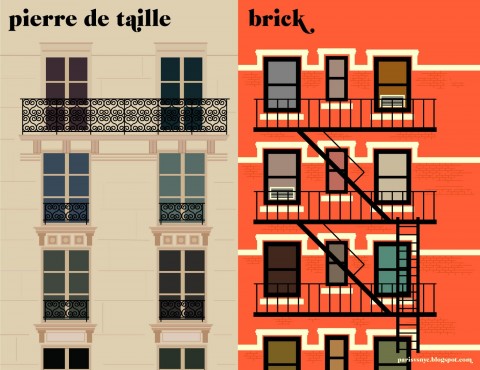

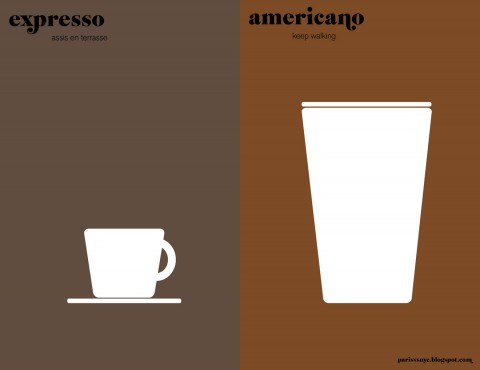
Prints are available to buy from the Paris versus New York blog.
Comments closed