Skip to content

The Casual Optimist Posts

AIGA Bright Lights Video: Hoefler and Frere-Jones

In this charmingly nerdy 5-minute video profile,  type designers Jonathan Hoefler and Tobias Frere-Jones talk about their careers,  designing typefaces, and why each project takes about a decade.

Hoefler and Frere-Jones were recently awarded a AIGA Medal for their “contributions to the typographic landscape through impeccable craftsmanship, skilled historical reference and insightful vernacular considerations.”

Just look at those bookshelves…

The video was created by dress code, and was supported in part by an award from the National Endowment for the Arts.

Comments closed

Let’s Design a Book Cover!

Tom Gauld’s collection of cartoons, You’re All Just Jealous of My Jetpackhas just been released in US and Canada.

* For the sake of full disclosure, Tom’s new book is published by Drawn & Quarterly and distributed by my employer Raincoast Books.

Comments closed

Something for the Weekend

Making Bird Noises — Dwight Garner profiles novelist John Le Carré, for the New York Times:

In his lesser books, le Carré’s prose can thin out perilously, but at his best, he’s among the finest writers alive. There’s a reason Philip Roth has called “A Perfect Spy,” le Carré’s 1986 autobiographical work of fiction, “the best English novel since the war.” The Times of London ranked him 22nd on a list of the 50 greatest writers since 1945. His books are less about espionage than they are about human frailty and desire; they’re about how we are, all of us, spies of a sort.

See also: Mark Lawson reviews Le Carré’s latest, A Delicate Truth, for The Guardian.

(Pictured above: the cover to the US edition, illustrated by Matt Taylor)

And while we’re at it… James Campbell reviews Kurt Vonnegut: Letters edited by Dan Wakefield, which has just been released in the UK:

[Anatole] Broyard was scarcely wrong to say that Vonnegut’s reputation suffered a blow with each new book; he is a classic example of a writer whose renown endures through the success of a single novel. Yet the tone was ever recognisable, and even lesser-known books – SlapstickDeadeye DickHocus Pocus – sold well. In response to a question from a reader in 1991 about the relationship of his style to “jazz and comedians”, he replied: “I don’t think about it much, but now that you’ve asked, it seems right to say that my writing is of a piece with nightclub exhibitionism … lower class, intuitive, moody, and anxious to hold the attention of a potentially hostile audience.”

New England — Alan Moore talks to Pádraig Ó Méalóid about League of Extraordinary Gentlemen, Nemo: Heart of Ice, his unfinished novel Jerusalem, and his Lovecraftian work-in-progress Providence:

with Providence, what I am doing is, I’m looking as much at American society in 1919 as I am looking at Lovecraft, in terms of my research, and I am connecting up Lovecraft’s themes, and Lovecraft’s personality, to a certain degree, with the tensions that were then incredibly evident in American society… It’s starting from – if Lovecraft’s characters, if Lovecraft’s monsters, if Lovecraft’s locales actually existed in A Real World, then what would they really be like, and what would the world be like?

In part two of the interview, Moore discusses his recent film projects and other work.

Who? — Steven Heller talks to Unit Editions Adrian Shaugnessy about Jurriaan Schrofer (1926-90): Restless Typographer at Imprint. It’s a rather short interview, but there are some lovely illustrations!

Any finally…

Still my favourite thing on the internet this week:

Phillip Marsden’s one-page comic strip ‘Hipster Hairdo’ for Off Life #4 (PDF).


Comments closed

Last Shop Standing

Saturday is Record Store Day and the 2012 documentary Last Shop Standing, the official film of the year’s celebration, will finally be available on DVD in the US and Canada.

Inspired by the book of the same name by Graham Jones, the film looks at the rise, fall and rebirth of independent record shops in the UK and features interviews with record shop owners, industry folks, and musicians including  Johnny Marr, Paul Weller, Billy Bragg, Nerina Pallot, Richard Hawley and Clint Boon:

1 Comment

Something for the Weekend

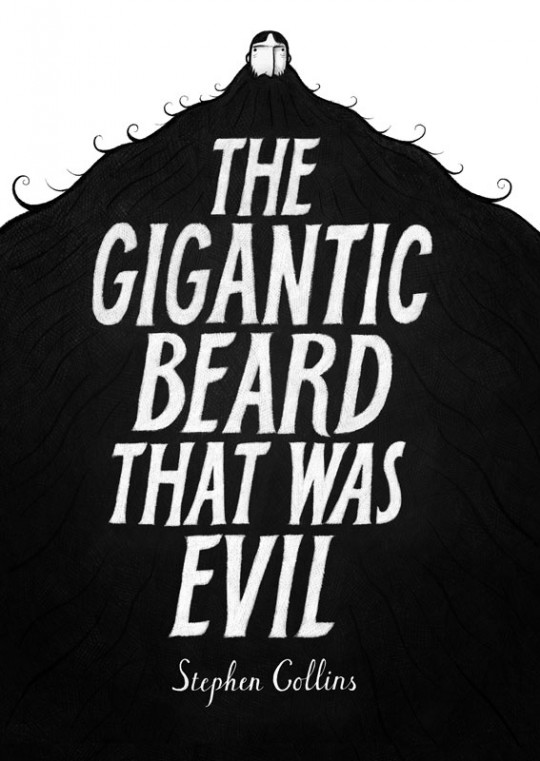
The Gigantic Beard That Was Evil by Stephen Collins is out next month. The launch party is at Gosh in London (but I just wanted to post the cover because it is fantastic).

Belief in the Writer — Mark Danner talks to Robert Silvers, founding editor of the New York Review of Books, at New York Magazine:

I believe in the writer—the writer, above all. That’s how we started off: admiring the writer. We organized the New York Review according to the writers we admired most: Edmund Wilson, Wystan Auden, Fred Dupee, Norman, Bill, Lizzie, Mary among them. Each of them had a confident sense of their own prose, and it meant a great deal to them—the matter of a comma, a semicolon, a word—and it does to our writers today. And so, when it comes to making a change, we should not do it without their permission. If a moment comes at some point where we see something should be improved, we don’t just scribble it in but call them up wherever they are. And that is, I think, crucial.

Consternation — Renata Adler, whose novels Speedboat and Pitch Dark have just been reissed by NYRB Classics, in conversation at The Believer:

it used to be one way a young writer made it in New York. He would attack, in a small obscure publication, someone very strong, highly regarded, whom a few people may already have hated. Then the young writer might gain a small following. When he looked for a job, an assignment, and an editor asked, “What have you published?” he could reply, “Well, this piece.” The editor might say, “Oh, yeah, that was met with a lot of consternation.” And a portfolio began. This isn’t the way it goes now. More like a race to join the herd of received ideas and agreement.

But, too mean versus too nice? I don’t know. Nice criticism is good when it tells you something. A lot of negative “criticism” isn’t criticism at all: it’s just nasty, “writerly” cliché and invective.

Isolation — Antonia Quirke reviews the movie Oblivion for the Financial Times. The movie itself sounds immediately forgettable, but this is spot on:

It’s the sense of isolation in good science fiction that we really dig. Studios refuse to get it into their skulls, but audiences have tremendous patience for the sci-fi blues – long lonely sequences with things feeling a bit lost or off, followed by a little bit of tension and action. We don’t really need much more.

And finally…

Who can resist academic hoaxes? When Dickens Met Dostoevsky:

It is not only that the apparent practice of submitting articles under fictitious names to scholarly journals might well have a chilling effect on the ability of really existing independent scholars to place their work. Nor is it just the embarrassment caused to editors who might in an ideal world have taken more pains to check the contributions of Stephanie Harvey or Trevor McGovern, but who accepted them in good faith, partly out of a wish to make their publications as inclusive as possible. The worst thing here, if they are fictitious, is a violation of the trust that remains a constitutive element of the humanities. There is, it seems to me, a fundamental difference between posting partisan, anonymous reviews on Amazon, where there is no assumption of proper evaluative standards or impartiality, and placing similar reviews or hoaxing articles in academic journals, which are still the most hallowed sites for the development and transmission of humanistic ideas. The former is a cheap act of virtual graffiti; the latter may be the closest a secular scholar can come to desecration.

The whole thing is bonkers.

(Next you’ll be telling me Sherlock Holmes didn’t meet Sigmund Freud).

1 Comment

Midweek Miscellany

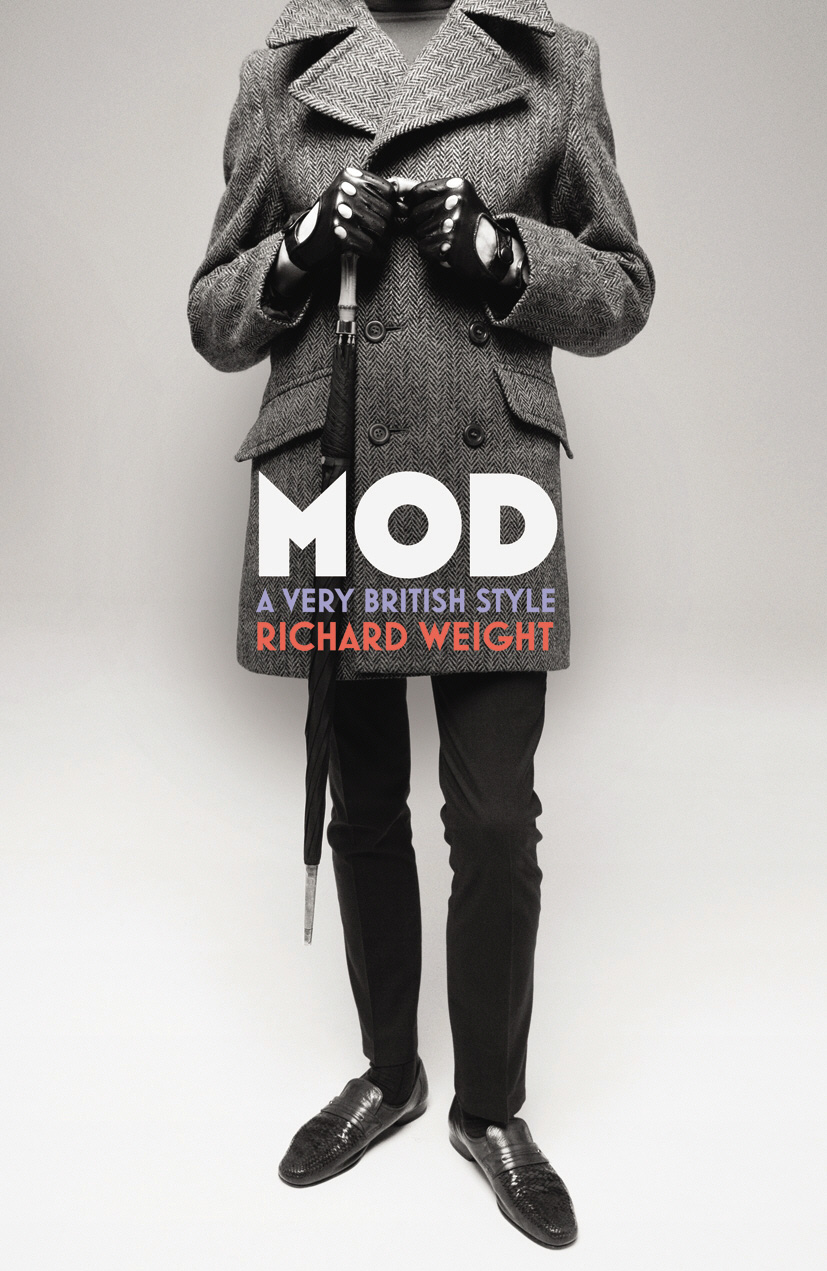
Ian Thompson reviews Mod: A Very British Style by Richard Weight for The Observer:

Mod’s first choice of music was jazz, Richard Weight reminds us. Miles Davis in particular became a fashion icon for blue-eyed soul brothers everywhere in Britain. The photograph of Davis on the cover of his celebrated 1958 Milestones album – Sta-Prest trousers, button-down Ivy League shirt – became a sort of mod pin-up. Mods (“modernists”) were among the first white Britons to embrace west-coast jazz, which had been galvanized by the Birth of the Cool sessions led by Davis in New York from 1949-50.

See also: Gavin James Bower’s review for The Independent.

It is What it is  — Five designers, Craig Mod, Rodrigo Corral, Michael Fusco, John Gall, and Jon Gray, on the books that inspire them, at the Virginia Quarterly Review.

Here’s Mr. Gall:

The clearest explanation of a good cover that I have ever heard came from Michael Beirut. I was a guest invited to critique a book-cover project he had given to his Yale students. As I was struggling to express some notion about why a particular concept may or may not be working, he got right to the point: “It has to look like what it is.” Indeed.


The Darkness — Sarah Weinman profiles Canadian author and illustrator Jon Klassen (I Want My Hat Back, This is Not My Hat, and The Dark) for Maclean’s:

Klassen’s style shies away from sentimentality. Instead it shows young children the consequences of bad behaviour through the prism of humour, a technique that hearkens back to books for children by the likes of Shel Silverstein and Roald Dahl.

And finally…

On the Exaggerated Reports of a Decline in British Fiction at the White Review:

Our peculiar creed is mortally suspicious of untrammelled aestheticism, endlessly asserting the primacy of content over form. In accounts of British writing, even now – long after such a thing could be anything other than a rather quaint anachronism of an old culture war – the avant-garde features as a kind of bogeyman. One whose dandified aestheticism belies a questionable politics, a moral compass gone awry; who must be beaten back by decency and common sense. Literary experiment still tends to be perceived as a pernicious form of French ‘flu: of course we should still be bloody grateful for the English Channel, separating, as it does, steady, dependable old Blighty from that kind of thing.

1 Comment

Something for the Weekend

The Man — An interview with the talented Seb Lester, typographer and artist, at The Raw Book:

People may associate me with flourished calligraphy and intricate formal script styles, but I don’t want to be known as a stylist because I feel I can do a wide variety of things. I want to try to constantly evolve and progress, with quality being the only theme running through my work. No one would guess most of the projects I’ve worked on have been done by me.

There is something quite wonderful about watching Lester at work:


The Beauty of Letterpress — An online resource and showcase created by Neenah Paper, featuring “the best and most innovative letterpress work in the industry today.”

And finally…

Heart-Shaped Box — Phil Bicker, a senior photo editor at TIME, interviews photographer Bert Stern at Time Lightbox:

1962… also saw the release of Lolita, directed by his old friend Stanley Kubrick. He asked Stern to take some publicity shots for the film. Stern took then 13-year-old actress Sue Lyon and her mother to a five-and- dime store in Sag Harbor, on eastern Long Island, to make the pictures. “I walked into the store and saw all these sun heart-shaped sunglasses and candy canes and other fun stuff that became the props for the shoot. I had not seen the movie but I underlined passages in Nabakov’s book that would make picture ideas. I always work with words that become pictures.”

See also: Stern discusses his work and Shannah Laumeister’s new documentary Bert Stern: Original Mad Man at the New York Times’ T Magazine.


Comments closed

Midweek Miscellany

Work / Life — An interview with the brilliant Louise Fili, designer and former art director of Pantheon Books, at The Great Discontent:

Everybody wanted to use standard fonts, but I just wasn’t satisfied doing that. I didn’t realize this until years later, but what I was really doing was developing type treatments for the title of the book and approaching it more like a logo. I wanted each book to have its own personality and that couldn’t be achieved with standard fonts. Again, I was lucky because it was appropriate to do that for the types of books I was working on. The other thing to note is that I was collaborating with a lot of really talented illustrators and made a concerted effort to combine the type and image together. I also tried to encourage illustrators to create their own type. I would sketch it out for them and then ask them to actually draw it so it would become part of the illustration, which makes for a stronger design, whether it’s a book cover or logo.

Colour and Intention — Claire Cameron interviews Sam Garrett about his translation of The Dinner by Herman Koch, for the LA Review of Books:

The words a writer uses not only have a dictionary definition, but also a color and an intention. To pin those down, the translator has to sniff around. From the first to the final word of a translation, you’re leading the reader along a path to a destination. The color is what keeps the reader hopping; the intention is the scent that keeps the translator on the right path.


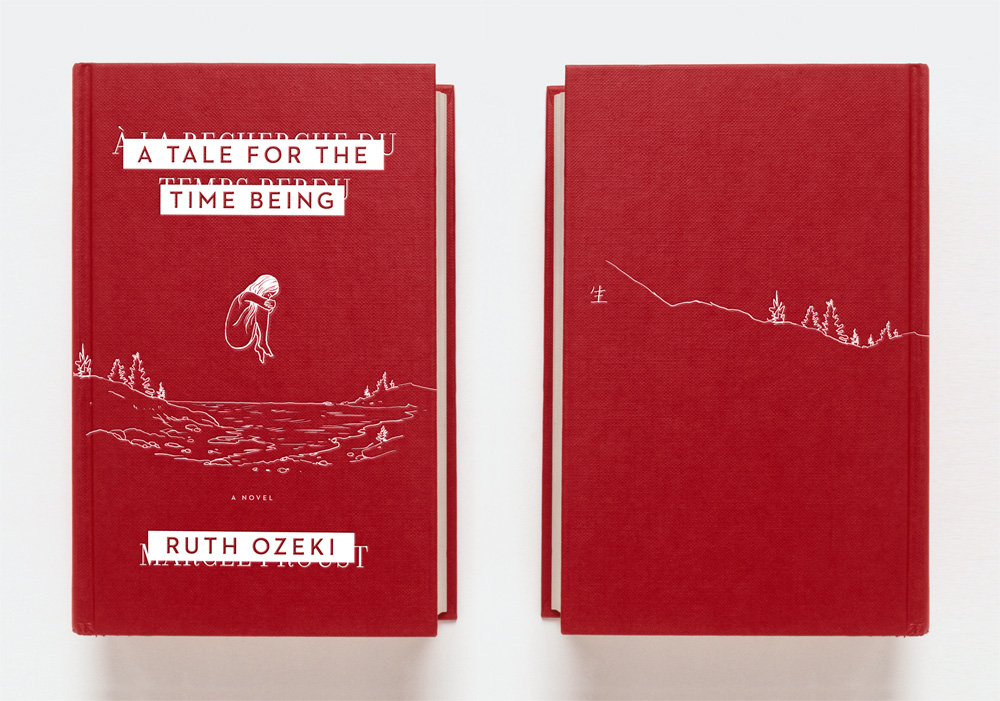
Negotiations — Jim Tierney explains his design process for the cover of Ruth Ozeki’s A Tale for the Time Being:

I decided to run with the first concept that popped into my head: a very simple and tactile facsimile of the red Proust notebook, embossed with an illustration of Nao, floating spectrally above the rocky coast of British Columbia. I think this design is all about questions: How did this book get here? Was it lost intentionally, or by accident? Is Nao alive or dead? Is she even real?

Minimal designs like this is always a hard sell in cover meetings, and it was immediately rejected as too quiet and precious-looking. Loud, colorful, and commercial are popular adjectives in modern book marketing, but it’s always fun to start off negotiations with something a little more obscure.

And finally…

Welcome back from near-death Dan Mogford. Please don’t do that again.

Comments closed

Out of Print

Out of Print, a documentary by Vivienne Roumani about “the turbulent and exciting journey from the book through the digital revolution,” will première at  the Tribeca Film Festival on April 25th:

[vimeo http://vimeo.com/54234607 w=480]

The film features interviews with Scott Turow, Ray Bradbury, and Amazon.com founder and CEO Jeff Bezos among others.

Comments closed

Bert Stern: The Original Mad Man

A new documentary about American photographer Bert Stern:   

The movie has been playing across the US and will open in New York next week. There are no Canadian dates that I could see.

(via Coudal)

2 Comments

Midweek Miscellany

The Creative Review interviews Richard Littler, the man behind the absolutely bloody terrifying Scarfolk:

For me, the desired effect can only be achieved if the images are visually authentic. The seriousness of presentation and form is absolutely crucial. It lulls the viewer into a false sense of security so that the gap between expectation and reality – the juxtaposition of staidness and absurdity – is as wide as it can be.

The fictional authors, designers and archivists of Scarfolk’s public information material must sincerely believe in the gravity of the message that the subject matter wants to convey and deserves, such as rabies. In addition, the whole concept of Scarfolk has to be internally consistent. There has to be a credible, believable identity.

Greatly Exaggerated — Salon’s Laura Miller on technology, self-publishing, and why publishers and bookstores are still matter:

If print could talk, it would surely be telling the world, Mark Twain-style, that reports of its demise have been greatly exaggerated… New self-publishing enterprises are a godsend for traditional publishers because they can take much of the uncertainty out of signing a new author. By the time a self-published author has made a success of his or her book, all the hard stuff is done, not just writing the manuscript but editing and the all-important marketing. Instead of investing their money in unknown authors, then collaborating to make their books better and find them an audience, publishers can swoop in and pluck the juiciest fruits at the moment of maximum ripeness…. [That’s] exactly what happened with erotica blockbuster E.L. James.

Epitaph — A smart take on the end of Google Reader by Paul Ford for The Financial Times:

This is the downside to apps: when everything is online your ability to labour along in familiar ways is contingent upon money coming to the app provider. This works when we remain consumers, for example of media objects such as paywalled newspapers, Netflix and Spotify. We lease access to the databases, own nothing, and the access makes it worthwhile. But when we work inside these systems we increase our levels of risk. When Google Reader goes away, it will not be like a television show being cancelled – much work is lost, and the ability to access that work is also lost.

The Exploded Mind — A big interview with artist, illustrator and picture book maker Oliver Jeffers at The Great Discontent:

Balancing integrity versus income is tricky; when I make decisions, sometimes I know that I might not be as well off the next year, but I’ll certainly be making the best work. I figured out early on that there are certain things I don’t want to do when it comes to how I’m perceived. I try to stay away from advertising, even though that’s where the big money is. In the visual arts, you are often only as good as your reputation and associations, so you have to think ahead and be smart. As far as commercial commissions, I’m not just a gun for hire; I actually have something I’m trying to accomplish and a way of making work that I want to continue and be known for. Although some lucrative offers came in for illustration work, I realized that taking them would be shortsighted and could possibly stunt other aspects of my practice.

See also: ‘Maurice Sendak’s Jumper and Me‘ by Jeffers at The Guardian:

Sendak was trying to satisfy himself. He was telling these stories, as much a way to make sense of the world around him as anything else. He was using them as a poet uses poetry and a painter uses paint. He was making art that ultimately transcended himself and neat classification. Perhaps as a result he was one of the first contemporary picture-book makers to discover the power of picture book as a way of storytelling for everyone. Perhaps this might go some way to explain why his books have won over so many, regardless of geography or decade – because he is putting himself, and the way he views the world on paper, darkness and all.

And finally…

Dr. Jazz — James Hughes on Stanley Kubrick’s unmade film about jazz in the Third Reich, at The Atlantic:

Kubrick’s interest in jazz-loving Nazis… represents his most fascinating unrealized war film. The book that Kubrick was handed, and one he considered adapting soon after wrapping Full Metal Jacket, was Swing Under the Nazis, published in 1985 and written by Mike Zwerin, a trombonist from Queens who had performed with Miles Davis and Eric Dolphy before turning to journalism. The officer in that Strangelovian snapshot was Dietrich Schulz-Koehn, a fanatic for “hot swing” and other variations of jazz outlawed as “jungle music” by his superiors. Schulz-Koehn published an illegal underground newsletter, euphemistically referred to as “travel letters,” which flaunted his unique ability to jaunt across Western Europe and report back on the jazz scenes in cities conquered by the Fatherland. Kubrick’s title for the project was derived from the pen name Schulz-Koehn published under: Dr. Jazz.

Comments closed

The Film Before The Film

The Film Before The Film is a documentary short by the Berliner Technische Kunsthochschule about the history of opening titles. Although the narration is a little flat, the film itself is a visual treat:

Comments closed