Skip to content

The Casual Optimist Posts

This Is Where We Live

This Is Where We Live is a wonderfully rich stop-animation video celebrating the 25th anniversary of HarperCollins imprint 4th Estate. The entire video is made from books–or parts of books–published by 4th Estate:


This Is Where We Live from 4th Estate on Vimeo.

A high-definition version of the film (recommended), production stills, and other behind the scenes footage, can be found at the special ’25th Estate’ website. Apt Studio’s Times Emit blog also has details about their involvement in the project.

Link

Comments closed

Book Design Links, Dec. 1st, 2008

It is very cold, wet and wintry in Toronto today, so here’s some book design related eye-candy to cheer you (me!) up…

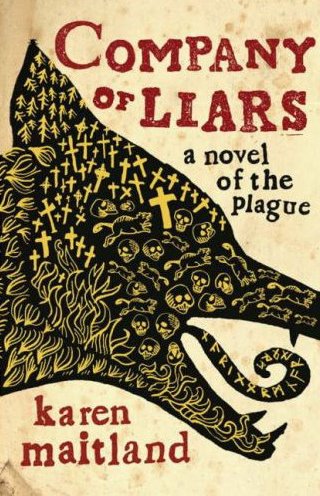
Company of Liars by Karen Maitland

Favourite Book Covers of 2008: Joseph Sullivan has published his annual list at the excellent The Book Design Review (BDR). If your new to the BDR make sure you also check out his archived favourites for 2007, 2006, and 2005!

Funnily enough, Fwis’ Covers website has just posted The Microscope and the Eye (pictured) designed by Isaac Tobin who also did the amazing cover for Obsession which is in the BDR list for 2008.

Jacket Mechanical: A nice design blog featuring great book cover designs. Lots of super-cool modernism if you like that sort of thing (which I do).

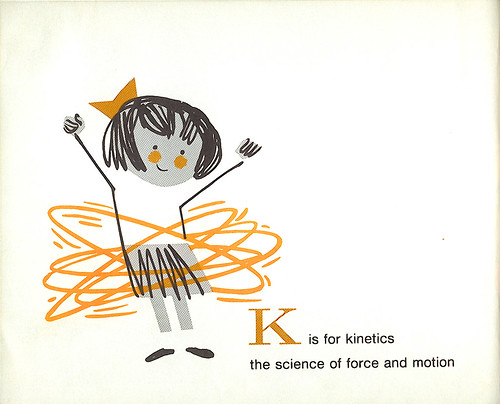
Speaking of modernism, take a look at Mid-Century Children’s Books a gorgeous retro Flickr set by The Ward-O-Matic (AKA Ward Jenkins).

1 Comment

Midweek Miscellany, Nov 26th, 2008

The Royal Mail British Design Classics: A set of first class stamps issued in January 2009 will commemorate ten icons of British design  including the Penguin paperback (pictured above).

“I wanted to put my money where my mouth is”booktwo’s James Bridle discusses Bookkake at 3:AM Magazine:

“I’m a huge fan of ebooks, and read this way regularly, but I don’t feel the reading experience they offer is yet on a sufficient par with traditional books to offer them at any great price, and I also don’t feel there’s much overlap between those looking for ebooks and those who’d pay for the paper edition.”

Risk has its rewards: Barney Rosset — US publisher of Beckett and Chekhov — discusses Grove Press and his struggles against censorship in a rebroadcast interview from 1991 on NPR’s Fresh Air. Rosset received the Literarian Award for his service to the literary community at the National Book Awards ceremony last week.

“The Best Business Books of 2008” — A slideshow of Fast Company‘s picks of the year:

“The titles that follow run the gamut of what Fast Company covers: Innovation, creativity, design, sustainability, technology, advertising and marketing, global business, and entertainment.”

It’s a cutely eclectic list for sure — including travel books and a novel (and mercifully there’s no Godin or Gladwell) — but it’s not, perhaps, quite as imaginative as they think it is…

30 Inspiring Flickr Groups on Typography: A wonderful list for type geeks compiled by designer David Airey (pictured: “Big Yellow Bookshop” by ultrasparky seen in the Typography and Lettering Flickr pool).

Comments closed

Midweek Miscellany, Nov 19th, 2008

“We’re from Kodak, Apple, Google, Yahoo”: The Guardian profiles Blurb — a publishing company with nobody from mainstream publishing — that specialises in high-quality, print-on-demand, photography books. Very, very, cool.

Good news and bad news for online retailers: Statcan found that more Canadians are shopping on the internet, placing almost $12.8 billion worth of orders in 2007, up 61% from 2005. ComScore, on the other hand, have just released their monthly retail e-commerce sales estimates, showing that online spending in October 2008 grew by only 1 percent over October 2007–the lowest monthly growth rate since they began tracking e-commerce in 2001.

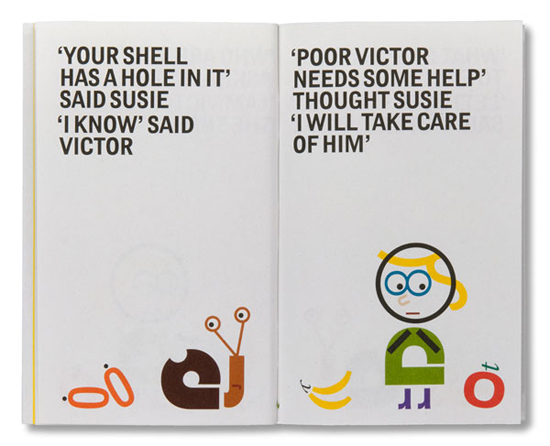
Victor & Susie: A brightly coloured “children’s book for adults” about Susie and Victor the snail, all drawn with letters and punctuation marks, published by Brighten The Corners (pictured). (via drawn)

“A kind of slow-motion suicide”: David Carr’s column for the New York Times looks at why firing their the most talented, experienced employees to cut costs backfired for Circuit City and will do the same for newspapers too:

“Right now, the consumer has all manner of text to choose from on platforms that range from a cellphone to broadsheet. The critical point of difference journalism offers is that it can reduce the signal-to-noise ratio and provide trusted, branded information. That will be a business into the future, perhaps less paper-bound and smaller, but a very real business.”

My take on this for book publishers (as it normally is): Publish less, publish better — quality matters. (via reveries)

Comments closed

Waterstone’s Hardback Classics

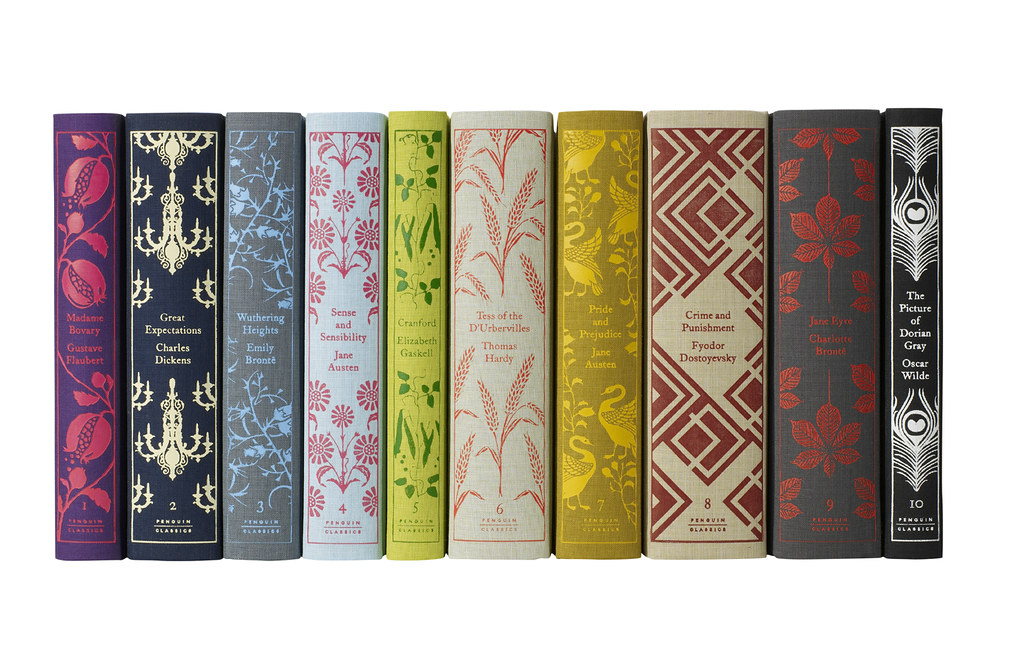
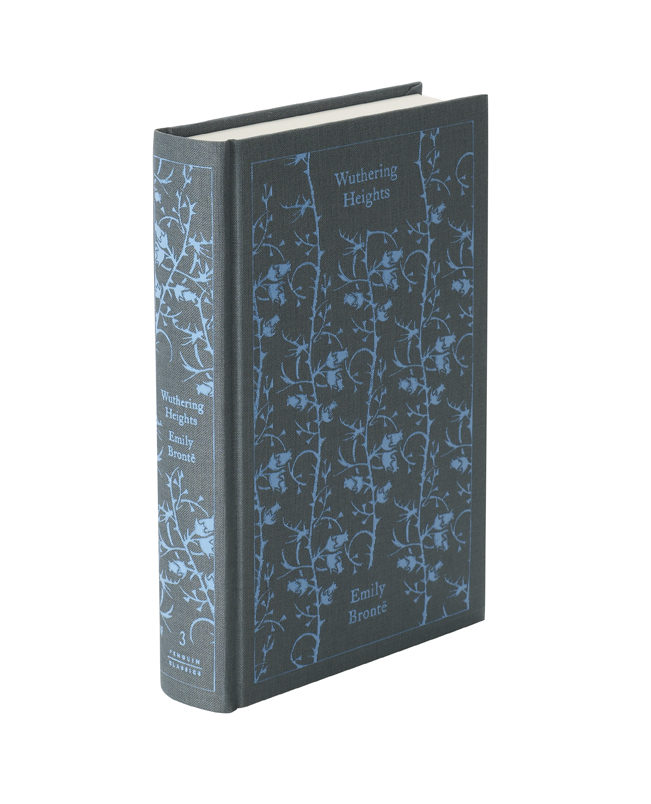
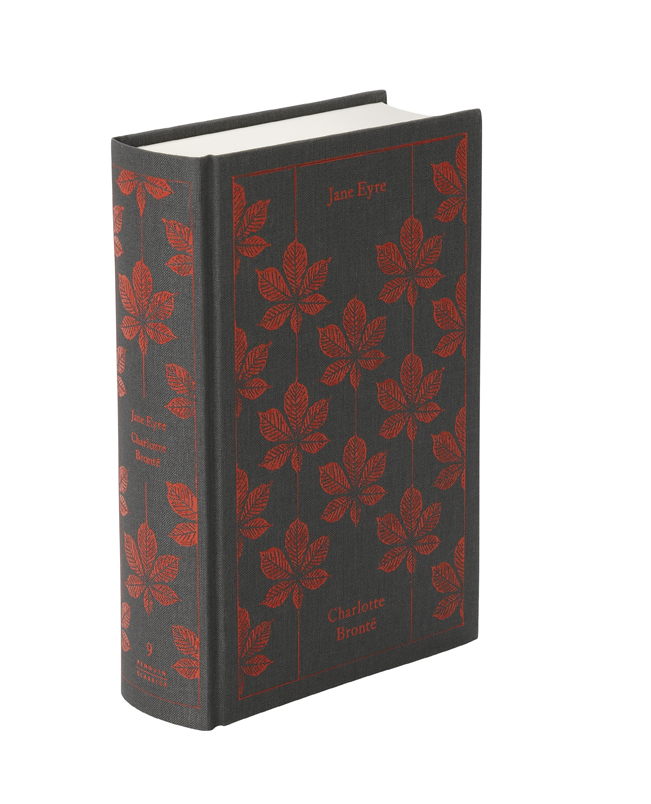
More lovely book designs by the very talented Coralie Bickford-Smith at Penguin UK (mentioned here previously for her work on the Gothic Reds series) for a collection of classics available at British book retailer,  Waterstone’s:

“All the books in this series have patterns that adhere to a strict grid… I have a real enthusiasm for pattern design so I was obsessed with this project. I wanted to create sumptuous books for people to enjoy, cherish and pass on.”


Penguin have very kindly put all of the covers for the Waterstone’s Hardback Classics on their Flickr photostream. It really is a beautiful set.

Coralie recently won an award for best ‘Brand or Series Identity’ at the British Book Design and Production Awards, for her work on the Classic Boys’ Adventures series, which is brilliant too.

Link

2 Comments

Penguin on Design

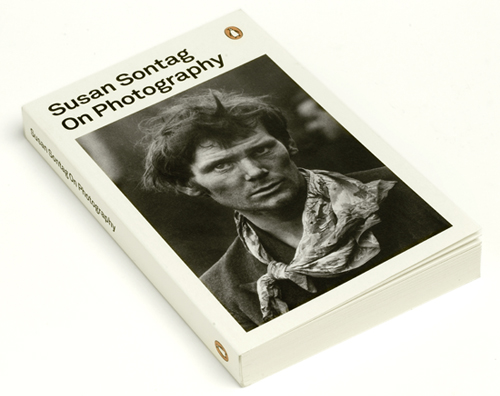
Refreshing classic creative texts: Creative Review talks to Penguin’s art director Jim Stoddart about the redesigned and reissued books in the ‘Penguin on Design’ series. The books include Bruno Munari’s 1965 book, Design As Art; Marshall McLuhan’s 1967 The Medium is the Massage; John Berger’s Ways Of Seeing from 1972; and Susan Sontag’s 1977 essay, On Photography.

I do like these covers — Susan Sontag’s On Photography (pictured) is particularly striking — but, again, what is with all the white? Surely someone at Penguin has  worked in a bookshop. I mean these are clearly meant to be looked at and not touched.

Link

Comments closed

Monday Miscellany

A bolt of electricity: PW polls publishers on the challenges and opportunities facing their digital publishing programs. It’s a fascinating glimpse of where the likes of Random House, Simon & Schuster, and Penguin are heading… A must read I would say…

Narrative medicine: Exposure to literature can influence how young doctors approach their clinical work according to the New York Times (via Guy Kawasaki):

“The idea of combining literature and medicine — or narrative medicine as it is sometimes called — has played a part in medical education for over 40 years. Studies have repeatedly shown that such literary training can strengthen and support the compassionate instincts of doctors.”

In need of a good editor: Book Lover Cynthia Crossen laments the decline of editorial rigour in the WSJ:

“Editors are the invisible heroes of the publishing industry, and as publishing companies cut corners, they cut editors… But without strong editors, writers are like cars with accelerators but no brakes”

Comments closed

Faber: Looking Back, Going Forward

Not some dusty, elbow-patched publisher: The Bookseller talks to CEO and publisher Stephen Page about Faber & Faber’s legacy and their plans for the future:

“We are in a moment of major, major change. Which from a brand like Faber is not threatening, only exciting, stimulating and interesting… The happy residue of the past 80 years is that we have this great history with six Booker winners and 11 Nobel laureates. Yet if we sit still and admire ourselves, this will only have a half-life and it will cool.”

Founded by Geoffrey Faber and T S Eliot, Faber published some of the defining books of the 20th Century including James Joyce’s Finnegans Wake, Sylvia Plath’s The Bell Jar, William Golding’s Lord of the Flies, and Samuel Beckett’s Waiting for Godot. They celebrate their 80th anniversary next year.

Link

Comments closed

Something for the Weekend

After a week of feeling gloomy about publishing, here are a few links to some less apocalyptic book-related stories that I’ve been reading:

“Your…fucking…book” : Author Michael Lewis, who just happened to chronicle Wall Street’s excess in the 80’s in his book Liar’s Poker, tries to figure out what the hell just happened for Portfolio magazine (via kottke):

“This was what they had been waiting for: total collapse… Lehman Brothers had vanished, Merrill had surrendered, and Goldman Sachs and Morgan Stanley were just a week away from ceasing to be investment banks. The investment banks were not just fucked; they were extinct.”

Did someone just say ‘Schadenfreude’? Well, I guess it is reassuring that there’s an industry more fucked than publishing… Anyway, Lewis is apparently writing a book about the whole financial crisis…

Contempt for the beautiful losers: Slate‘s Ron Rosenbaum goes to town on BuzzMachine’s Jeff Jarvis (author of the forthcoming book What Would Google Do?) taking in journalism, new media, publishing, the Frankfurt Book Fair, and “New Age boilerplate mysticism” of Paulo Coelho on the way:

“If Jarvis values books (and I can’t help think that despite all the digital bluster, he’s an intelligent guy who likes reading), do we just listen to the market and focus-group what we should print and give away, which is likely to result in all Coelho, all the time, with maybe a little bit of Jarvis thrown in?”

Inevitably you can already read Jarvis’ response on his blog. Despite all the overblown cattiness, it’s actually an interesting argument. (via fimoculous)

More Information Than You Require: Former literary agent turned author John Hodgman, best known for playing PC in those increasingly misfiring Apple commercials, interviewed by The Book Bench blog:

“I believe that by releasing ‘passing interest/low keepsake-value literature’ from the burden of physicality, you are actually releasing the words from their worst liability: the price and inconvenience of actual bookness.”

“Lord Death Man”: PowellsBooks.Blog previews  Chip Kidd’s latest pet project Bat-Manga! (pictured).

Comments closed

Not Quite A Crisis

According Carolyn Reidy, president and CEO of Simon & Schuster, a worse publishing environment may be on the way, reports Publishers Weekly:

Reidy said she hesitated to use the word “crisis” but “there is no question that we are currently dealing with a set of problems that will test us to our limits.” Critical issues facing publishers included: significant decrease in retail traffic, less consumer purchasing, a gloomy economic forecast, declining backlist sales, brand name authors continuing to sell but “everything else is far off normal levels,” and retail partners who demand more favorable terms and concessions “as if we are the answer to their problems,” she said. Other pre-existing problems she enumerated include retailers competing with publishers, low barriers to self-publishing, and the economics of digital publishing that appear to bring in less revenue.”

Tough times indeed, but it is not quite the end of the world apparently. Although publishers must adapt to new realities, and change business practices, the current situation is an opportunity rather than a threat:

“now we have the chance to actually find the reader where they are spending their time—in front of a screen—and cement a relationship with them through e-mail newsletters, viral marketing, mobile delivery and other tools.” Publishing survives, she noted, because readers have a fundamental need for information, inspiration, and entertainment, “and they get that in a book, directly from an author, in an unfiltered way that they cannot get from any other medium.”

Notably, Reidy urges publishers to make entire catalogues available as e-books and to create adopt print-on-demand when a title’s  sales begin to slow.

Link

Comments closed

Bracing for the Worst

“[E]veryone in publishing is bracing for a difficult holiday season while trying to remain optimistic about the enduring allure of books.”

Motoko Rich looks at the recent spate of publishing lay-offs, and what holiday season holds for the book industry, in today’s New York Times:

“I think that people have not been reading for the past year because they’ve been checking political blogs every 20 minutes,” said Larry Weissman, a literary agent. “At some point I think people are going to say, ‘You know what, this is not nourishing.’ I think and I hope — and maybe it’s just blind hope — I think there is a yearning for authenticity out there, and people are going to go back to the things that really matter, and one of those things, I hope, will be reading books.”

Link

Comments closed

Monday Miscellany, Nov 10th, 2008

Think, study, then post: David D. Perlmutter, author of Blogwars, discusses slow blogging on the Oxford University Press blog:

“many of the bloggers I interviewed talked about the need to feed the blog that is, if you don’t put up 2 to 3 new posts a day you lose your audience. But fast anything, unless you’re competing in the Olympics, is not necessarily the road either to author or audience fulfillment.”

I love this idea, I’m just not very good at it or, perhaps, just a bit too good judging by the number of posts in my ‘drafts’ folder! Must try harder… (via the excellent ReadySteadyBlog by the way)

The business elite still love print according to a Folio magazine survey:

“Top American business executives spend a lot of time worrying about the volatile economic climate—and a lot of time consuming media, with a vast majority of them clinging to print.”

Ghosts in the House! Written and illustrated by Kazuno Kohara.

The Best Illustrated Children’s Books 2008:  a slide show of the New York Times picks (pictured).  The NYT‘s Children’s Books Special Issue is here.

A bitter-sweet love: writer Ellen Jordan discusses her coffee addiction in a essay in The Age:

“I wonder whether I’m afraid to write without coffee, afraid that every good sentence I’ve ever written came out of some mysterious alchemy of coffee and my mind. If I write with nothing, or with some pallid juice or herbal tea or decaf, will I discover that alone I have no talent?”

Comments closed