Skip to content

The Casual Optimist Posts

Unproduct

More Ideas, Less Stuff — London-based graphic designer Ben Terrett of the Really Interesting Group and Noisy Decent Graphics is in The Guardian today talking about Things Our Friends Have Written On The Internet 2008, a limited-edition newspaper that collected together interesting stuff from the internet, and the idea of  ‘unproduct’, or creating more value but producing less stuff:

Originally coined by the designer Matt Jones and built upon by the strategist Russell Davies, among others, unproduct is basically maximum idea, minimum stuff… More than anything, unproduct is a new way of thinking about things. A new model. So is making something and giving it away. So are joint ventures. We’ve got people building stuff quickly, trying out new ideas, often for free. We have clients and agencies taking risks and more importantly sharing those risks. We’re creating maximum ideas and minimum stuff.

When people start talking to me about e-books, I have to confess there’s a small part of my brain that begins to shut down because I just don’t find them intrinsically interesting (inevitable and utilitarian yes, fun and interesting, no). But I love the idea of applying unproduct-type principles to publishing.

Sadly I don’t own a copy of Things Are Friends Have Written on the Internet 2008, but I gather that on the last page Russell Davies and Ben Terrett say: “2009 feels like a year for printing and making real stuff in the real world. Its going to be exciting”.

I hope so. I think this is fantastic.

Link

4 Comments

Always in Beta

I’ve been having a few nagging design problems with The Casual Optimist, and thanks to my friend Ehren, I’m hoping to address them over the next couple of days with a new wordpress theme.

I would like to apologise in advance if things temporarily go a bit wonky.

Always in beta right? Always in beta…

Comments closed

Something for the Weekend, Feb 21th, 2009

Corpoetics — The text from the websites of  “well-known brands and corporations” remixed and rearranged into strangely engaging and enigmatic poetry by Nick Asbury (photo above from Ace Jet 170). I rather like the one taken from Scottish Widows:

Here in an Edinburgh coffee house,
their futures became history.
Meet the latest widow.

Copies of Corpoetics available for £5 (plus p&p) from Nick Asbury’s website, and all proceeds go to the National Literacy Trust, an independent charity dedicated to changing lives through literacy.

A Q&A With Four Young Editors — Just a fantastic, fascinating conversation between Richard Nash (Soft Skull), Lee Boudreaux (Ecco), Alexis Gargagliano (Scribner), and Eric Chinski (FSG) in the latest issue of Poets & Writers. It’s long. Make some coffee, grab a snack and devote some time to it. Well worth it. Honestly.

In Defense of Readers — Mandy Brown, Creative Director at W. W. Norton & Company,  on designing websites for readers:

Despite the ubiquity of reading on the web, readers remain a neglected audience… Readers flourish when they have space—some distance from the hubbub of the crowds—and as web designers, there is yet much we can do to help them carve out that space.

And last, but by no means least… Coralie in ConversationThe Caustic Cover Critic interviews Penguin’s super-talented book designer Coralie Bickford-Smith.

1 Comment

Why don’t you take the comfortable chair?

Colin Robinson, former editor at Scribner (a division of  Simon & Schuster) and previously at The New Press and Verso,  has written an excellent diary piece for the London Review of Books on Publishing’s Demise.

It’s always interesting to read an experienced insider’s take on the state of the industry, and although it covers some very familiar ground, Robinson’s article is particularly  comprehensive and thoughtful (and, given he was fired by Scribner in December 2008, dignified).

It is also interesting that Robinson notes — as Allan Kornblum of Coffee House Press did in his recent interview with Scott Esposito at Conversational Reading (mentioned yesterday)  —  that electronic communication has made  “life easier for writers and harder for readers.”   As more and more stuff is published fewer of us are actually reading. We’re  becoming more concerned with being  heard than with listening, with being read rather than reading:

Books have become detached from meaningful readerships. Writing itself is the victim in this shift. If anyone can publish, and the number of critical readers is diminishing, is it any wonder that non-writers – pop stars, chefs, sports personalities – are increasingly dominating the bestseller lists?

And yet, Robinson doesn’t think the book is doomed. Publishers just have to change the way they do business:

A system that requires the trucking of vast quantities of paper to bookshops and then back to publishers’ warehouses for pulping is environmentally and commercially unsustainable. An industry that spends all its money on bookseller discounts and very little on finding an audience is getting things the wrong way round.

According to Robinson, the opportunity is in curating the mass of material that is out there and finding niche audiences:

The roles of editor and publicist, people who can guide the potential reader through the cacophony of background noise to words they’ll want to read, will become ever more important.

Sounds about right.

Link (via @sarahw)

Comments closed

Midweek Miscellany Feb 18th, 2009


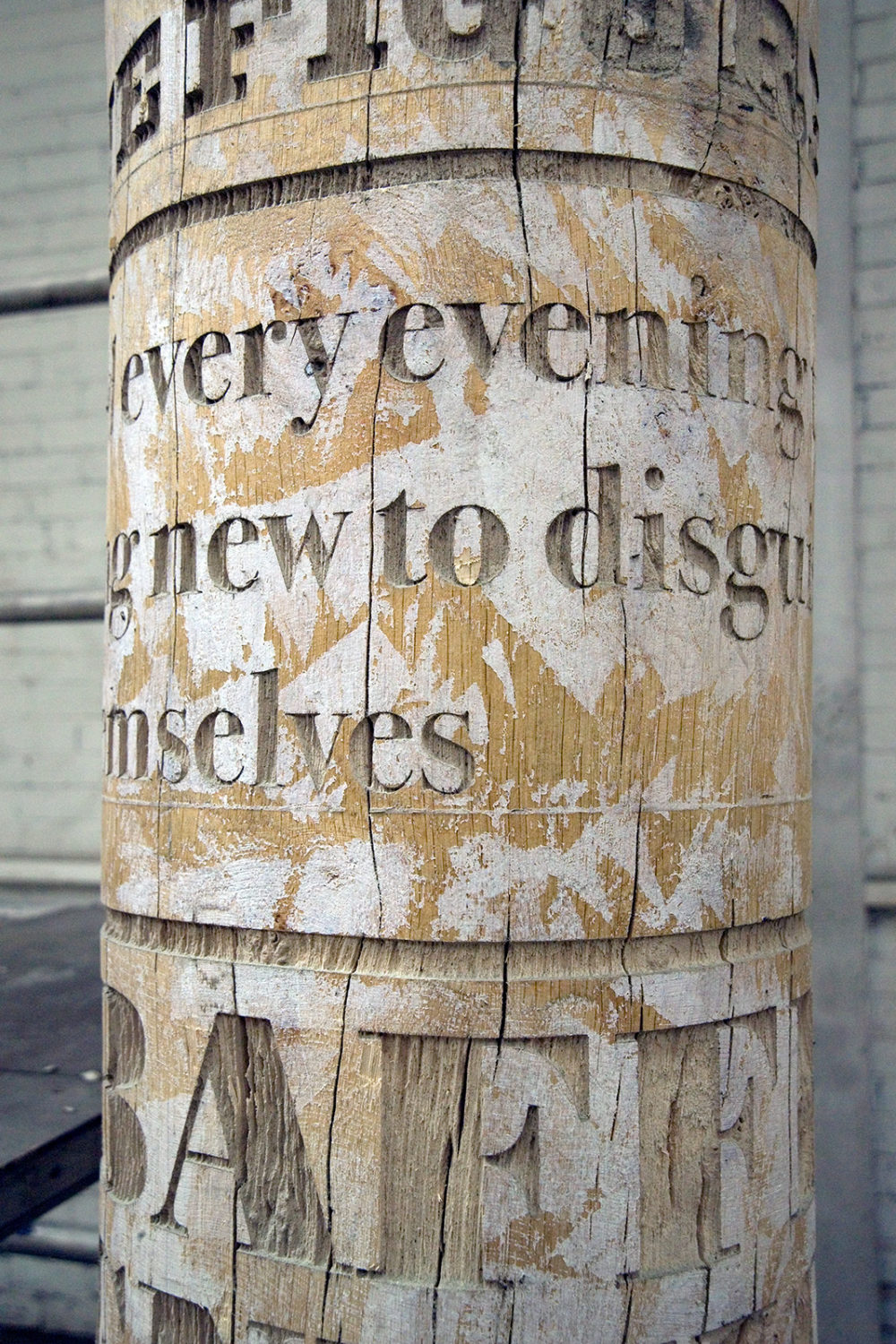
Typographic Trees — I saw pictures of the latest collaboration between artist Gordon Young and design studio why not associates a while back, but a mention in the latest issue of Creative Review is the perfect excuse to post a couple of images of these lovely sculptures for Crawley Library in West Sussex. It’s probably worth mentioning that (unsurprisingly) why not also do a nice line book design.

An interview with Allan Kornblum, publisher at nonprofit literary publisher Coffee House Press, is the latest installment in Scott Esposito’s How to Publish in a Recession series  at Conversational Reading:

Now with Borders on the brink, and former readers becoming would-be writers and self-publishing books instead of reading books, a major shake-up was inevitable… The recession isn’t the only factor driving changes in writing and publishing. Writers on the one hand, and book and magazine publishers on the other, are both trying to figure out what the changes in information technology will mean. Will books get shorter, so they can be read on a cell phone? Will nonfiction migrate to ebooks, while literature stays on the printed page? Will backlist titles become downloadable PDFs? Will future desktop printers include binding equipment?

Funeral in Berlin — Possibly the most badass cover ever (pictured above) and part of the amazing collection in the Penguin Paperback Spotters’ Guild Flickr pool (first seen at FFFFound). And funnily enough it is apparently Len Deighton’s 80th Birthday.

30 Novels Worth Buying for the Cover Alone — “A book must stand out on the bookstore bookshelf yet cover designers rarely receive the recognition that authors do.” And  in “appreciation of these unsung artists”, Beth Carswell chooses her 30 favourite fiction covers for AbeBooks.

MinuteMen — a retro-Nintendo-style-arcade-kung-fu-kick-punch-jump-game promoting the new Watchmen movie. Smartass viral marketing if you like that kind of thing. And if you listen closely, that sound you hear is Alan Moore’s teeth grinding away in Northampton. Buy the book.  (via GalleyCat).

How do you define good design? Gary Hustwit, director of Helvetica, interviewed about his new film Objectified at the Dwell Magazine blog:

If it didn’t exist, would anyone really miss it? Would it leave a hole in anyone’s life?

If we asked ourselves this question in publishing more often, how many books would actually get published? And would publishers be in the mess they’re in now? Answers on a postcard please.

And finally, Spy Vibe — a blog dedicated to 1960’s spy style! This is so cool I can’t even be bothered to find a tenuous link to books or publishing (although there surely is one)…

2 Comments

H.N. Werkman

Every day,  Eric Baker,  of Manhattan-based design firm Eric Baker Design Associates,  spends 30 minutes before work looking for “images that are beautiful, funny, absurd and inspiring”, and each Saturday he posts his selections to the Design Observer.

Eric’s selections for  14th February were all drawn from a great collection of images that Miguel Oks has posted to Flickr,  including  some amazing sets of 20th Century avant-garde books.

The covers pictured here are by the brilliant Hendrik Werkman (H.N. Werkman)  for the literary typographic journal Next Call , and are taken from the Dutch Books set.

Yale University Press published a lovely book by Alston W. Purvis on Werkman in 2004 as part of their Monographics series.

Comments closed

Something for the Weekend, Feb 13th, 2008

Apologies for the rant about the Globe and Mail this morning (note to self: don’t blog without coffee). Hopefully a highly-caffeinated design-heavy post for the weekend will make up for it…

First off, Jenny Griggs’ gorgeous typographic designs for Peter Carey’s backlist (pictured above) described by the great man himself as “A triumph!!!!!! Fucking fantastic!!” (Jenny talks about her more recent papercut designs at FaceOut Books)

M.S. Corley re-images the Lemony Snicket (pictured above) and Harry Potter series as Penguin Classics (via the BDR)

Metacovers — Joseph at the BDR looks at books on book covers (see above!).


The Way Through Doors — written by Jesse Ball; stunning minimal cover design by Helen Yentus for Vintage. Not quite a ‘metacover’ but I still love it (pictured above — seen at the Book Cover Archive of course)

Holey Font! – “How much of a letter can be removed while maintaining readability?” EcoFont has tiny holes and uses up to 20% less ink. Based on Verdana, and developed by SPRANQ in the Netherlands, it’s free to download, and free to use. And it seems to work.

And lastly, The Book Depository Live — Watch what books people buy from The Book Depository around the world in real time. Very cool. (via @paperbackjack)

1 Comment

Goodbye, Globe (no really)

I finally cancelled our subscription to the Globe & Mail yesterday. But not, as you might imagine, because I can read it for free online. No. I cancelled our subscription because they are unable to deliver it before we leave for work in the morning.

I am actually willing to pay for the convenience of having a newspaper delivered to my door by 6am (even if I am subsidizing that newspaper’s free website) — just like I’m willing to pay music and movies I like (and for books without ads inserted into them FYI) — because I think that service and quality have a value, and that journalists, artists, and writers should be able to make a living.

I’m less willing to pay for a newspaper that is delivered late and is out-of-date — and largely uninteresting — by the time I look it 12 hours later.

Now, I appreciate that losing one newspaper subscriber is not going to keep the CEO of CTVGlobalMedia awake at night. He’s too busy worrying about the internet. But, newspapers, and publishers for that matter, are mising the point. The internet, e-books, social media — they really are not your problem.  Taking your readers for granted – THAT is your problem.

Newspapers and publishers have been able to get away with being so utterly complacent about their consumers because, for years, readers had  no alternative. But now they do. And too often the newspapers that are printed and the books that are published — and way they are delivered — are not good enough for people to want to pay for them because there is more interesting and convenient stuff elsewhere.

Newspapers and publishers: If you want to survive, stop wringing your hands about digital content — That debate is over bar the shouting. Start respecting your readers. Provide them with something they’re willing to pay for. Delivering my newspaper on time would’ve been a start.

4 Comments

The Back of My Head

The Caustic Cover Critic has posted some amazing book covers by the legendary Saul Bass that are just too good not to share:

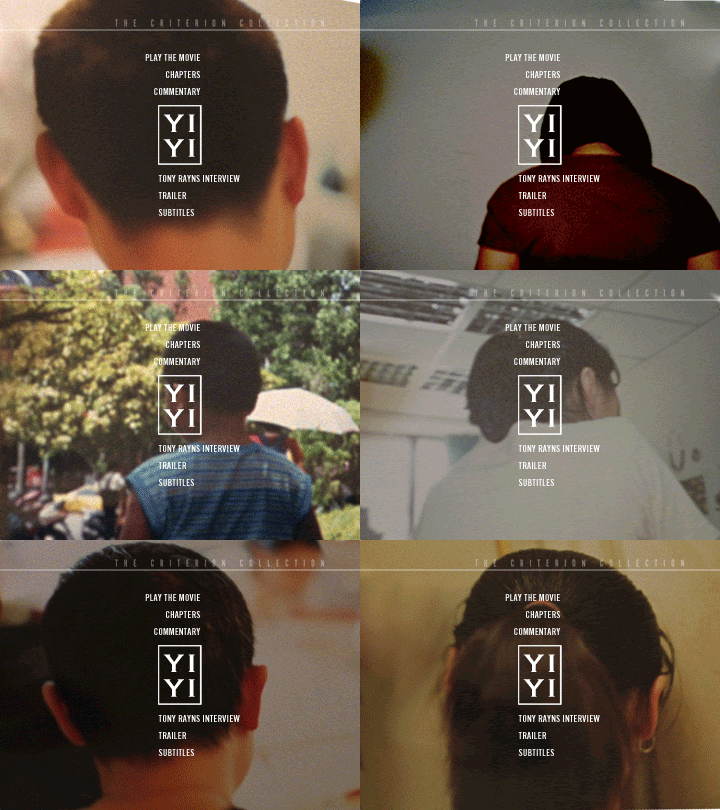
I love the covers adapted from Bass’ movie posters for the Penguin editions of Saint Joan and Anatomy of a Murder, but this cover of Preminger: An Autobiography (pictured) is less well known. And it was nice to be reminded of the movie Yi Yi in which 8-year-old Yang-Yang makes it his mission to lovingly photograph the back of people’s heads…

…And in looking an image for Yi Yi, I came across a rather lovely post by designer Eric Skillman about creating the DVD edition for Criterion Collection:

The actor who played Yang Yang was obviously no longer available, so we had find a back-of-head double. We found a photographer (the talented Andre Constantini), who led us to a young model named Brian, the back of whose head was a fine match for Yang Yang.

Eric also designs books as it turns out. His blog looks great! A day of nice finds.

3 Comments

Monday Miscellany, February 9th, 2009

“Books exist because we want and need them” — A slide show of pages from Robert Bringhurst’s new book The Surface of Meaning: Books And Book Design In Canada (pictured) published by CCSP Press in The Globe and Mail. (Disclosure: The Surface of Meaning is distributed by Raincoast in Canada).

A bookshop is a dynamite-shed — Bookride have posted a splendid John Cowper Powys rant about second-hand bookshops:

[A] bookshop — especially a second-hand bookshop — is an arsenal of explosives, an armoury of revolutions, an opium den of reactions. And just because books are the repository of all the redemptions and damnations, all the sanities and insanities, of the divine anarchy of the soul, they are still, as they have always been, an object of suspicion to every kind of ruling authority.

Pessimism Porn — Hugo Lindgren explains his addiction to nightmarish economic news  in New York Magazine:

“[E]cono-porn… feeds a powerful sense of intellectual vanity. You walk the streets feeling superior to all these heedless knaves who have no clue what’s coming down the pike. By making yourself miserable about the frightful hell that awaits us, you feel better. Pessimism can be bliss too.”

Publishing certainly has its fair share of addicts…

Visionary locations — Toby Litt on J.G. Ballard in the Guardian:

“Plenty of other writers now fictionally venture into multistorey carparks, airport hospital wards, decaying hotels, but they do so in the knowledge that they’re trespassing on Ballard’s territory. He was here first; he was the pioneer – back when these places were seen as totally unliterary. What could possibly happen on a motorway embankment that was of interest?”

Finding alternative best sellers — Toronto bookshop This Is Ain’t The Rosedale Library profiled by Brian Joseph Davis in the Globe and Mail.

Is CondéNet Dead? — Slate’s The Big Money examine how “a publishing giant failed to get the Web”. Lessons (if more were needed) for book publishers (via @jafurtado):

“To say that we’re just a magazine company in this day and age is like saying that we’re a buggy company.”

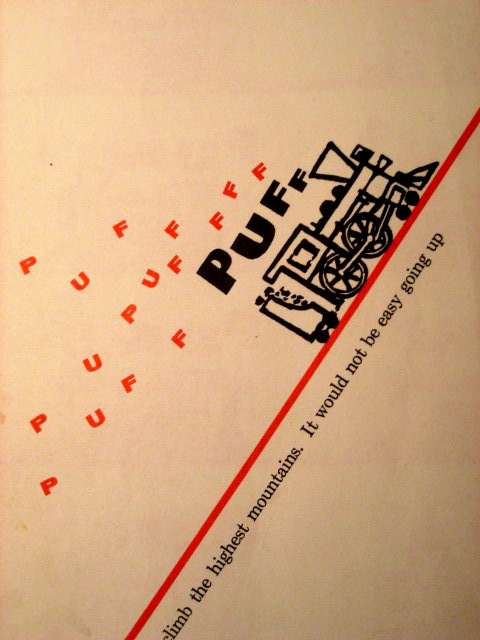
PUFF — lovely pictures of PUFF by William Wondriska (published in 1960 by Pantheon Books Inc.) at the wonderful Grain Edit (pictured above).

Image Spark— A neat image bookmarking tool. V. excited about this as you can probably imagine… (via @michaelSurtees/DesignNotes) .

1 Comment

What Are You Looking At?

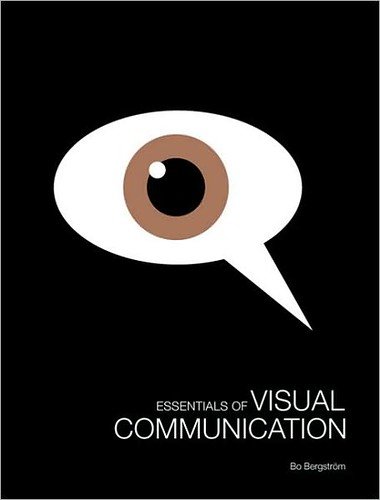
This book just arrived in our office and it’s staring right at me!

There’s more than a little something of  the late, great Paul Rand about the transfixing cover for Essentials of Visual Communication by Bo Bergstrom (published by Laurence King)  wouldn’t you say?

…which is about all the excuse I need  to post this great video:

(Full disclosure: Raincoast Books distribute Laurence King, and therefore Essentials of Visual Communication, in Canada)

3 Comments

Midweek Miscellany, February 4th, 2009

Slow Burner (above) — a rather awesome — if slightly racy — cover seen at the Bookkake Blog.

How to Publish in a Recession Part 3 — The always interesting Richard Nash, the editorial director of Soft Skull Press and the executive editor of Counterpoint, talks to Scott Esposito at Conversational Reading.

The Once and Future e-book: On Reading in the Digital Age — A fascinating article on the past, present, and future of e-books and e-book readers by John Siracusa at Ars Technica.  I think — like many —  he underestimates the challenges (such as rights issues and, on a really basic level, a lack of expertise and human resources) publishers face making their titles available as e-books, but this really is a must-read.

Book Expo Canada is officially dead. It is an ex-trade show– Surprising precisely no one. The Globe and Mail has publisher reactions and a postmortem interview with Tom Best, vice president, marketing, at H.B. Fenn. What troubles me is the belief that we need something to replace it…

There’s so much written about how publishers don’t know what they’re doing… But how do you know what to do?”The New York Observer talks to former PW editor Sara Nelson:

You’re making a bet on who’s gonna like something a year and a half from now. That’s without even getting into the economy or anything—just, ‘What’s the mood of a number of people going to be a year and a half from now?’ If you thought too much about that, you’d shoot yourself.”

“We are on the verge of an explosion in independent book publishing” — Hugh McGuire of Librivox and The Book Oven chats to Allentrepreneur.

The Google Paradox — Andrew Keen, author of The Cult of the Amateur, on two new books published (in the conventional way) about Google:

“the more Google does to kill the traditional publishing industry with the free online content from its search engine, the more books will get written about the central role of Google in our new digital economy… The irony of Elsewhere USA and What Would Google Do? is that both books rely on the five hundred year-old technology of Johannes Gutenberg’s moveable type to explain the wrenching digital transformation of the 21st century.”

Who is on twitter? — I think I fall into the cateogory of “people who are concerned about the collapse of the publishing industry.” (Thanks Sio!)

Comments closed