Skip to content

The Casual Optimist Posts

Midweek Miscellany, March 18th, 2009

The BombAlison Forner‘s cover design for Stephen M. Younger’s history of nuclear weapons (Ecco June 2009), seen at Book Covers Anonymous.


Has the computer democratised design? — Designer Peter Saville (perhaps best known for his iconic designs for Factory Records) at D&AD President’s Lecture earlier this month (above). More interesting snippets from the talk are available here (via The Strange Attractor).

Reminder — Writer Charlie Stross on why there isn’t a tipjar on his blog (via Times Emit):

If I put a Paypal tipjar on this blog to take conscience money from folks who’ve downloaded a (cough) unauthorized ebook or two, the money would come to me, not to the publisher. And without the publisher those books wouldn’t exist: wouldn’t have been commissioned, wouldn’t have been edited, wouldn’t have been corrected and marketed and sold in whatever form filtered onto the unauthorized ebook market. (Yes, they commission books, and pay authors for them up-front — a vital part of the process, because most of us can’t afford to take a year to write a book on spec and then hope somebody liked it enough to buy it…)

“We publish books and give them away – free” — Concord Free Press (via Scott Pack):

All 1,500 copies of our first free book, Give and Take, are circulating through the world—from New England to New Zealand, Soho to Slovakia. Our readers are making voluntary donations to charities or people in need. We ask them (nicely, of course) to give, then pass the book on, so that every time it changes hands, it generates more contributions.

Comments closed

Monday Miscellany, March 16th, 2009

Beyond Miffy —  Caustic Cover Critic on Dutch illustrator and graphic designer Dick Bruna, best known for Miffy, but who also designed some very cool book covers for crime novels (picture above).

Cautiously Hopeful — Literary agent Nathan Bransford, who has been talking about remaining positive in the face of negativity on his own blog recently,  interviewed by Alan Rinzler on The Book Deal blog:

The role of publishers especially is going to change dramatically as there will be tremendous downward pressure on prices and publishers increasingly retrench behind “known” commodities and bestsellers.

Publishers will live and die by their big bets if they aren’t cultivating any small bets that have the potential of panning out in a big way.

6 Projects That Could Change Publishing for the Better — Michael Tamblyn’s  presentation from the BNC Tech Forum is available online.

Open Baskerville — An open source project to create a digital version of Fry’s Baskerville,  originally created by  Isaac Moore a punchcutter at the typefoundry of Joseph Fry in the 18th Century (via Eightface):

With the written word an absolute fundamental component of daily communication, typography and fonts have are vital to providing aesthetic harmony and legibility to our textual works. There are thousands of fonts available, of which only a small number are useful or any good for setting vast quantities of text, and of which an even smaller number are available to be freely distributed and shared. This project aims to help close that hole, beginning with a Baskerville revival.

Optic Nerve — the fabulous Adrian Tomine interviewed at the Creative Review (illustration above).

Why Kindle On The iPhone Matters — Michael Gaudet on the iPhone Kindle app at E-Reads:

What Amazon is finally acknowledging is that E-Books are a multi-device service and that Kindle is not just a device but an E-Book platform. E-Books may be commodities, but reading is a user habit that has always required a distribution service that anticipates the creative ways readers are looking to acquire new content.

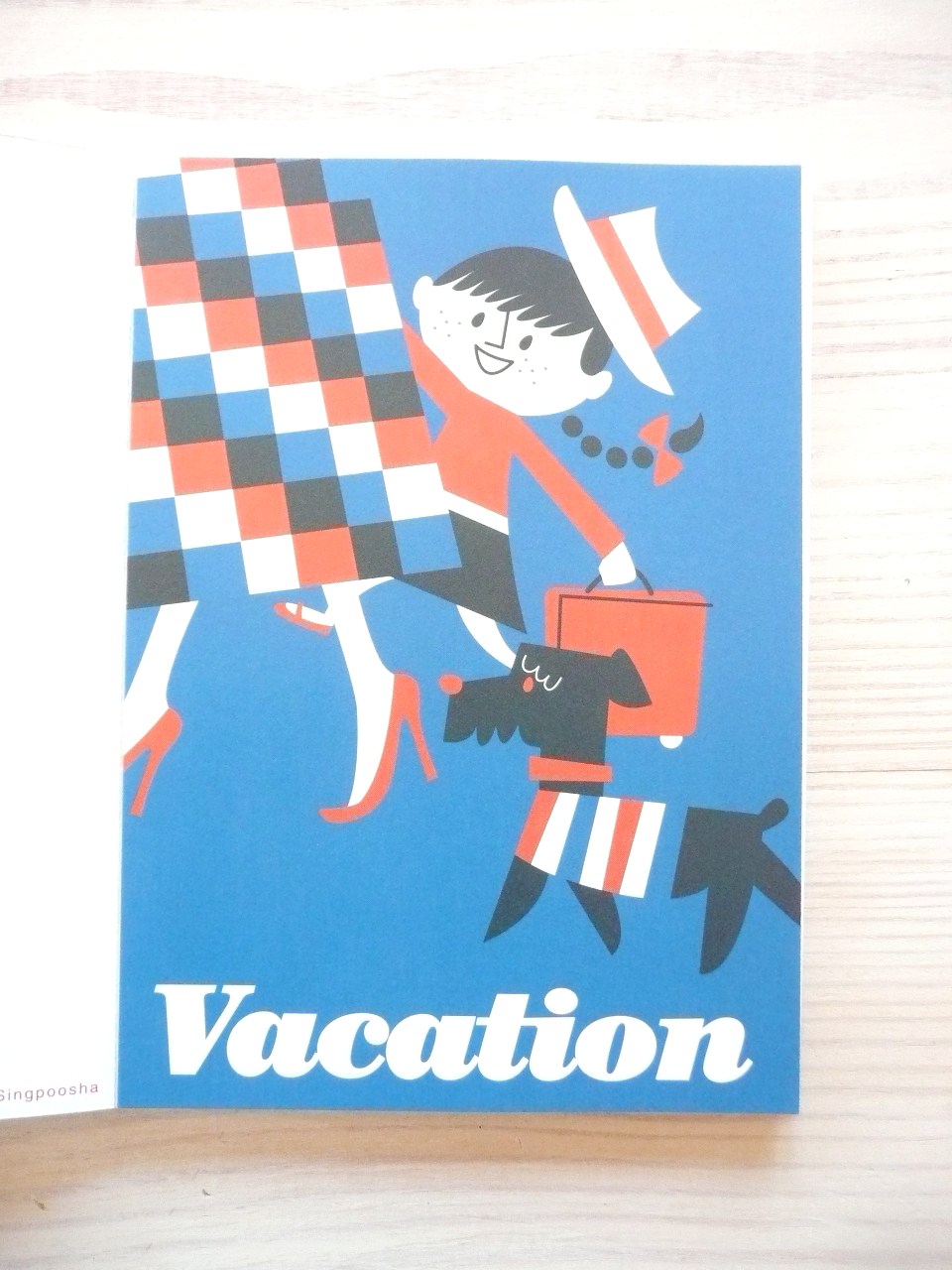
Books and Stuff — Illustrator and designer Amy Cartwright, who blogs about vintage kids books and modern design at Stickers and Stuff, shares some wonderful pictures of her favorite books and “the stories behind some of her finds” at the always awesome Grain Edit (including the Cosy Tomato Post Card Book pictured above).

Comments closed

Experiments

One of the recurring themes of the Book Net Tech Forum was that publishers need to learn through frequent experimentation, or as BNC CEO Michael Tamblyn put it: “place lots of little bets quickly.”

Mark Bertils has just posted this great interview with  O’Reilly Media’s Andrew Savikas recorded at the BNC Tech Forum last week on exactly this topic (and Andrew — sorry about making fun of your PowerPoint slides on Twitter):

And, all this ties in quite nicely with Clay Shirky’s recent — must read — essay on Newspapers and Thinking the Unthinkable :

“You’re gonna miss us when we’re gone!” has never been much of a business model. So who covers all that news if some significant fraction of the currently employed newspaper people lose their jobs?

I don’t know. Nobody knows… it’s easier to see what’s broken than what will replace it… We just got here. Even the revolutionaries can’t predict what will happen…

“If the old model is broken, what will work in its place?” The answer is: Nothing will work, but everything might. Now is the time for experiments, lots and lots of experiments…

Comments closed

Things Are Not Working Very Well. In Fact, They Never Did.

Trawling my RSS feeds looking for Monday’s links, I came across an interesting review of Systemantics, John Gall’s essay on ‘How Systems Work & Especially How They Fail’ (originally published in 1977 and available online here) .

I’m still processing everything from the Book Net Tech Forum, but in the context of revolutionizing the book industry, this line caught my eye:

“Reformers blame it all on “the system”, and propose new systems that would, they assert, guarantee a brave new world… Everyone, it seems, has his own idea of what the problem is and how it can be corrected. But all agree on one point — that their own system would work very well if only it were universally adopted.”

And now having just read the book’s introduction, which — somewhat remarkably — doesn’t seem to have dated much,  I think I’m going have to read the whole book…

Link (via LinkMachineGo)

Comments closed

BookNet Tech Forum

Yesterday I was at Book Net Canada’s Technology Forum at the Radisson Hotel on Queens Quay West in Toronto.

The theme of the event was Evolution or Revolution: “How does the publishing community best prepare for the next generation of reading (and readers)?”

With a wide-range of speakers from publishing and beyond, there were lots of ideas zipping around.

For basic details, the day’s schedule,  brief summaries, and slide-show presentations are available from the BNC website, and  immediate, off-the-cuff comments (including my own not terribly clever insights) can be found on Twitter with the tag #bnc09.

The Quillblog has just posted a scholarly summary of the day, but here are some of my slightly random notes on the good, the indifferent, and the ugly of Tech Forum 24 hours later…

The Good

BookNet. Along side SalesData and the forthcoming BiblioShare (which will facilitate access to bibliographic data),  Tech Forum demonstrated that BookNet is fast becoming the honest broker for publisher collaboration in Canada.  Whilst dropping heavy hints about future BNC projects (notably electronic cataloging) CEO Michael Tamblyn delivered a genuinely brilliant presentation, and slipped in the line of the day:

Plastic Logic is like Jesus: It’ll save the world, but only 12 people have seen it, and no one knows when it is coming.”

(With quips like that I can almost forgive him for: “What do you want your revolution to be?” Er… Something that doesn’t involve vacuous bullshit hyperbole?*)

Harlequin Enterprises. Discussing the evolution of their ebook program, it was hard not to be impressed with Harlequin’s willingness to experiment in  a potentially conservative market.  I’m yet to be convinced that everything they do could be done as effectively by a general trade publisher, but Harlequin’s initiatives  demonstrate  that publishers should innovate and innovate often. And involving authors and readers will only improve that process.

Neelan Choksi, COO of Lexcycle who managed to talk about technology without condescending to his audience or hard selling Stanza. He also dealt with  speed-presenting  the app’s new features as the video demo malfunctioned behind him with self-deprecating good humour.

Hugh McGuire (LibriVox, BookOven) shaking off scurilous internet rumours that he is the angry man of publishing, and talking about love. A lot. Hugh’s advice: Focus on readers and enable book lovers to talk about your books. Do not underestimate the power of passionate people!

And, it should also be said, Tech Forum was  a great opportunity to meet new people in the industry and catch up with familiar faces.

The Indifferent:

Too little discussion of quality and how to make better books; too much blather about marketing and window-dressing.

Asking a room full of Canadians “how many of you have Kindles?” is an easy mistake for an American to make, but it was indicative. The US and Canada are very similar — in lots and lots of ways — but there was very little recognition that there are also very real differences between the markets. The absence of any Canadian sales figures and stats (or even cultural references) made several presentations markedly less compelling.

Assuming that your specific experience can be generalized; the current model is valueless and irreparably broken (even though it provides the vast majority of our business and fuels yours);  that publishers are fiddling while Rome burns; you know something (anything) about the music industry and can make a convincing argument with sloppy comparisons;  all content is of equal value; social media will save the world; the screen is inherently better than print; DRM is the biggest thing we have to worry about…etc. etc.  =  big *meh*. Platitudinous  digital orthodoxy is . not. interesting.

The surprisingly low number of people online at the forum. Mark Birtels’ unofficial count had a dozen laptops in use in the room of around 200 people (all Apples except mine!), which is pretty close to the number of  people who live-tweeted the event… It’s hard to convince people we know our arse from our technological elbow with those kind of numbers…

The Ugly

The really good news is that there was surprising little to complain about. BNC Marketing Manager Morgan Cowie and the rest of the BNC staff did a great job of corralling everyone and ran a great event. BUT, just for the record,  if there’s one thing worse than PowerPoint presentations, it’s BAD PowerPoint presentations: Never. Use. Comic. Sans. In. Anything. Ever.


And if you were at Tech Forum yesterday, I would love to know what you thought about it. Send me an email send at danielwagstaff [at] gmail.com, DM me on Twitter, or leave a comment below…

*As its overall glibness atests, this post was written in haste  to be timely, ‘hyperbole’ better fits my intended meaning better than ‘bullshit’.

3 Comments

Midweek Miscellany, March 11th, 2009

Rare (and not so rare)Joel Kral‘s fabulous collection of book covers on  Flickr (via Monoscope):

These are some of the rare (and not so rare) books that I have collected over the past 13 years. They range from graphic design, architecture, art, typography, illustration, skateboarding, graffiti, etc.

Literary Fibs“Miserable writerist” Charlie Brooker responds  to the claim that 65% of us lie about the novels we’ve read in a bid to impress people:

The… irony is that while people lie about having read highbrow novels in order to impress each other, a massive percentage of highbrow novels aren’t worth reading anyway because the authors are too busy trying to impress the reader (who, we now know, probably hasn’t bothered turning up)

Shelved Books — “A blog dedicated to the cover that never happened” by designer Kimberly Glyder.

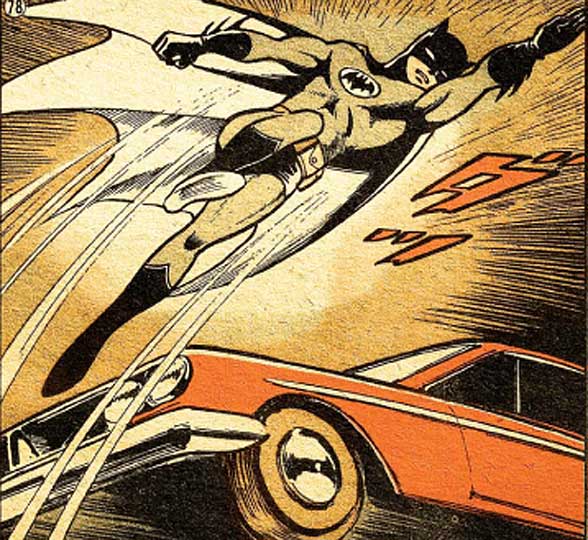
Day to Day Batman — Chip Kidd, the self-described “Indiana Jones of Forgotten Japanese Batman Comics”,  talks about Bat-Manga! on NPR (pictured above).

Isn’t that enough?Jeff Gordiner, Editor-at-Large at Details magazine and author of X Saves the World, interviewed at The Raleigh Quarterly (via@RonHogan):

Other than Philip Roth, though, almost everybody’s writing too much. Blogs, chat rooms, Twitter, Facebook status updates —there’s a wordy data glut going on, and it’s made me more reverent than ever of strategic silence. I’m fond of the J.D. Salinger approach — just evaporating from public view. Is it wrong that Salinger hasn’t left us with 30 or 40 books?

Snooty British traditions and  New York brashness — the National Post talks to Nicole Winstanley about Penguin Canada’s new imprint Hamish Hamilton Canada. This is the 4th installment of the Post‘s  ‘The Ecology of Books’ series. Part one is about literary agents, part two looks at literary journals, part three is a fascinating profile of McClelland & Stewart’s Ellen Seligman.

The Periodic Table of Typefaces —  (pictured above)

And finally, Alan Taylor has launched  ‘meta-blog’ Big Picture Notes to accompany the Boston Globe‘s brilliant photo blog The Big Picture.  Great stuff.

Comments closed

C.S. Richardson on Book Design

BookLounge have posted three really interesting videos of  C.S. Richardson, VP, Creative Director at Random House of Canada, discussing the history and practice of book design (clip 1 above).

Link

2 Comments

Something for the Weekend, March 6th, 2009

Abecediary — Steven Heller on alphabet books (Die Flucht Nach ABECEDERIA by the French comic artist Blexbolex pictured above).

Imprints in the 21st Century — Admittedly HarperCollins new Imprint It Books is an easy target (NB use of “tap into the zeitgeist” in a sentence = fail), but Mike Shatzkin does a good job of explaining why their strategy is past its sell by date (and beginning to smell):

General trade publishers need to see, and apparently don’t,  that their legacy brands are B2B [business-to-business]. They should be exploited that way. They need brands that can work B2C [business-to-consumer], but it will require discipline, focus, and an audience-first picture of what to publish to accomplish that.

Writing for a Living — Luminaries such as Will Self, Joyce Carol Oates, and AL Kennedy (quoted below) discuss whether writing is a joy or a chore in The Guardian:

“The joy of writing for a living is that you get to do it all the time. The misery is that you have to, whether you’re in the mood or not.”

Hugh at BookOven is angry this week.  He wants to know why publishers are not selling directly to customers from their website and why they make e-books so complicated. I think Hugh underestimates the time/money/skill-deficit obstacles publishers face in regard to both problems. I suspect Hugh thinks I’m an apologist and will be first up against the wall when the revolution comes.


Book Design Made Easy — cartoonist Tom Gauld is making his genius cartoons from The Guardian available on Flickr (via Drawn!, source of so many life-improving things).

4 Comments

From New Typography to Swiss Style

As the cover of Emil Ruder’s Typographie (pictured above) suggests, Felix Weidler’s vast collection of modernist book design in Germany and Switzerland 1925-1965+ is a remarkable archive. It not only includes covers, but interior photos, and notes. Brilliant. (via davidthedesigner).

Comments closed

Monday Miscellany, March 2nd, 2009

Apologies for a delayed entry in the Monday Miscellany category, but here we go (better late than never)…

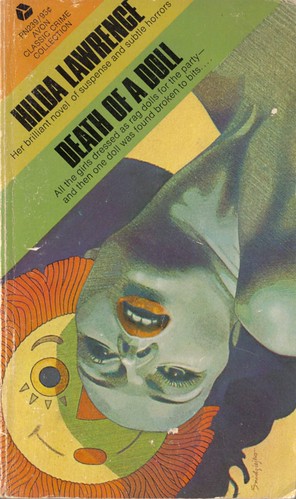
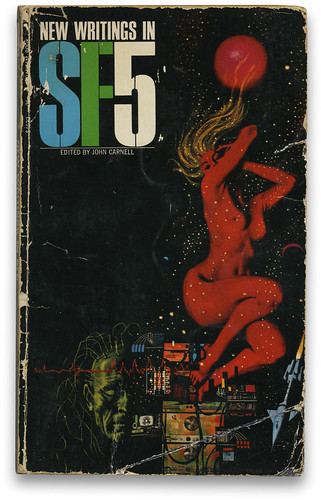
Eric Carl‘s Flickr photostream has some nice classic sci-fi and fantasy book covers (the rather fine looking Death of a Doll and New Writings in SF 5 pictured above). (via but does it float)

Re-envisioning the American small press — Fiona McCrae, director and publisher of Minneapolis independent Graywolf Press, profiled in PW (via @sarahw):

McCrae believes the publishing business is changing in favor of smaller presses, which can have close contact with their audiences and realistically support the smaller sales that typify many literary books: “I think that’s been true for a long time, and it’s just getting truer and truer and truer. There’s still obviously a layer in which we don’t compete, and it’s not our job to”

Rearrange, Rewrite, Redefine and ReimagineChicago-based indie Featherproof Books would like you to “remix” parts of their forthcoming titles, starting with Tour of the Drowned Neighborhood a short story taken from Blake Butler’s Scorch Atlas (via @R_Nash).

Overdue! The Central Library in Atlanta, the last building by “Modernist master” Marcel Breuer, is under threat according to Jonathan Lerner in Metropolis Magazine (pictured above).

A fair share — In the final installment of a 3-part series for the Globe and Mail on the publishing industry in Canada, James Adams looks at the thorny issue of digital rights.

Wild Hair, Wilder Ideas —  The Guardian profiles Alan Moore (and — on a related note — novelist Lydia Millet’s somewhat ill-considered assessment of Watchmen for the WSJ)

From Caveman to Spray Can: A Graphic Journey — Mike Dempsey’s gently meandering history of graphic design which not only features one or two books, but also the lovely Gill Sans typeface (picture above) which was used on the early Penguin paperbacks (via Noisy Decent Graphics).

Comments closed

Something for the Weekend, Feb 27th, 2009

The 5 Rules of Book Cover Design Book — John Gall, VP and art Director at Vintage, talks about designing books at Barnes & Noble (video). There is also a nice print interview with John Gall from 2007 at STEP Inside Design magazine and another interview with the designer from the same year  at fwis Covers website (which is worth it just for the immortal line: “I want a telepathic dog.”) (John Gall at the Book Cover ArchivePragmatism: A Reader designed by John Gall,  pictured above)

Fear, panic, and a little bit of hope — Sarah Weinman discusses the perilous state of  the publishing industry on NHPR’s Word of Mouth.

Chapters-Indigo‘s move into e-books, Shortcovers, goes live to much curiousity and twittering. The Globe and Mail has the basics, The National Post’s The Ampersand rounds up some of the reactions, but O’Reilly’s TOC seems to sum up the general mood: “A Good Start, But Room for Reader Improvement”. Michael Serbinis, the executive VP, writes about the first day on the Shortcovers blog.

(NB – I’ve sort of been ignoring the Kindle2 stuff as it’s not available in Canada, but — just to have some balance — E-Reads has a nice round up of the coverage).

Influence the futureAnthro Goggles lists the first 4 SF books you should read if you work in social media.

Jacket Copy — An interesting interview with David L. Ulin, book editor of the Los Angeles Times (who folded their standalone book section 6-months ago), in PW:

Ulin takes a realistic, broad-ranging view of how book coverage will be presented in the future. “I’m committed to both print and Web. There are two readerships, and I’m not sure they’re the same. My main interest is, how do we get the most book coverage to the most people?” Ideally, Ulin would welcome a return to the stand-alone book review. “But we don’t have one now, and we’re not going to have one,” he says.

modernism 101 : from aalto to zwart — “We specialize in rare and out-of-print design books and periodicals. Our carefully-selected online inventory spotlights both famous and forgotten modernist architects, photographers, typographers, and industrial designers in all their published glory.” How could I not link to this? Even if you can’t afford the books (which I can’t) you can at least look at the covers! (The Twentieth Century Book by John Lewis pictured above). (via ISO150)

And on a related bookporn note, Grain Edit has some rather nice pictures of Typographica, the design journal edited by Herman Spencer…

Comments closed

Midweek Miscellany, Feb 25th, 2009

“Facts are stranger than fiction”The Toronto Star profiles  The Monkey’s Paw bookshop and owner Stephen Fowler (pictured):

“Books have been totally superseded by digital. A generation ago, books were not only the primary, but the only way we stored and transmitted culture. Books were culture. And they’re not any more. They’re these odd anachronisms,” Fowler says. “But that doesn’t mean they don’t contain all sorts of treasures. They’re beautiful and interesting and they have fascinating content and startling stuff in them.”

The serendipity of accidental discovery — Allison Arieff profiles William Stout, publisher and owner of the eponymous architecture and design bookstore in San Francisco, for the New York Times:

I love the tangents an afternoon spent searching the Internet can generate… But I realize as well that it’s contributing to a sort of collective ADD that makes ambling through aisles of a place like Stout Books feel that much more special, requiring an altogether different commitment of time, care and attention.

A Publisher’s Decalogue — 10 (+1) good rules for publishers from Alma Books (via The Book Depository Blog).

The E-Book Difference — The Book Oven’s Hugh McGuire on why publishers need to get to grips with e-books and mobile devices:

The reason digital and ebooks are going to become more important is that’s where the eyeballs are going to be. And if you can’t find more ways to get eyeballs on digital books, then I do fear for the future of (traditional) book publishing.

Making Magic — A sprawling interview with the brilliant (and possibly quite bonkers) Alan Moore in Wired:

I thought that a book like Watchmen would perhaps unlock a lot of potential creativity… I was hoping naively for a great rash of individual comic books that were exploring different storytelling ideas and trying to break new ground… That isn’t really what happened. Instead it seemed that the existence of Watchmen had pretty much doomed the mainstream comic industry

Borderless thinking —  Graham Vickers looks at how digital is rewriting the rules for publishers and distributors in The Guardian:

The most creative ideas are still to be found outside the orbit of the traditional media… in places where there were no predefined models, and no pre-existing ground rules to impede borderless thinking.

Daily Routines — A blog about how writers, artists, and other interesting people organize their days. For someone who endlessly struggles with their daily routine, I find this fascinating.

2 Comments