Always entertaining type-designer Erik Spiekermann talks to FormFiftyFive about pretty much everything except type design:
Comments closed
Published September 20, 2011
Books, Design and Culture
Always entertaining type-designer Erik Spiekermann talks to FormFiftyFive about pretty much everything except type design:
Comments closedNot My Type — Paul Shaw really doesn’t like Just My Type by Simon Garfield:
This is the second time I have tried to write a review of Just My Type. It is a frustrating book—warm and friendly on the surface but obnoxious underneath. The first time, I methodically tore it to pieces in my blue-pencil style, pointing out its deficiencies in niggling detail. When I was done, I felt satisfied but also uncomfortable. Did Simon Garfield really deserve such a bashing? After all, the book is full of fascinating stories and odd trivia about type, and the author has a charming, breezy style that makes each bit of typographic arcana easy to swallow. Is it really that bad? Yes, it is.
Ouch.
“I just call them books” — Robert Birnbaum interviews author John Banville for The Morning News:
I don’t like this ghettoization of books. When I started publishing fiction it is was good, not so good, bad, you know. Now there is a ghetto for crime fiction. I would like to have books listed alphabetically—no distinction.
And finally…
Control+A / Control+ C / Control+V — A provocative excerpt from Uncreative Writing: Managing Language in the Digital Age by Kenneth Goldsmith in the Chronicle of Higher Education:
Comments closedThere’s been an explosion of writers employing strategies of copying and appropriation over the past few years, with the computer encouraging writers to mimic its workings. When cutting and pasting are integral to the writing process, it would be mad to imagine that writers wouldn’t exploit these functions in extreme ways that weren’t intended by their creators… The previous forms of borrowing in literature, collage, and pastiche—taking a word from here, a sentence from there—were developed based on the amount of labor involved. Having to manually retype or hand-copy an entire book on a typewriter is one thing; cutting and pasting an entire book with three keystrokes—select all / copy / paste—is another.

The Economist’s international editor, Edward Lucas, discusses the work of Vasily Grossman and the BBC adaptation of his novel Life and Fate:
The Economist: The Beauty and Horror of War
The Economist reviews the BBC adaptation here.
Comments closed
Music journalist Simon Reyolds talks to Michael Silverblatt about his book Retromania: Pop Culture’s Addiction to Its Own Past on KCRW’s Bookworm:
Comments closed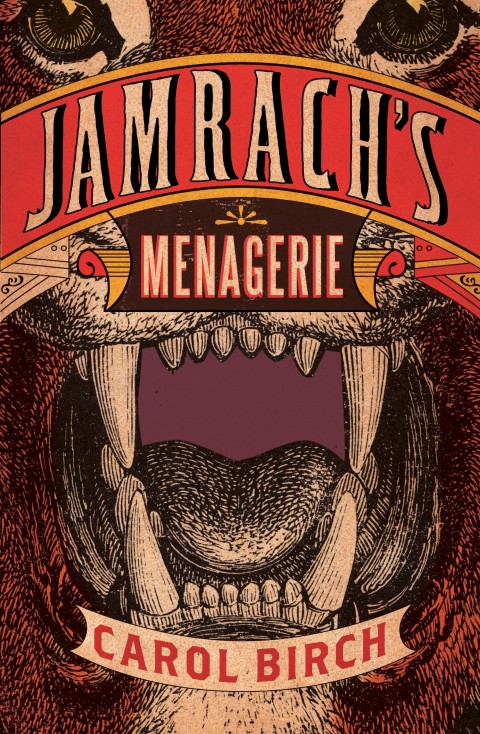
Creative Review takes a look at the cover designs for the books shortlisted for the Booker Prize, including this beauty by the mighty Jon Gray for Jamrach’s Menagerie by Carol Birch.
Let’s Get Critical — Long-form cultural criticism, essays and reviews, curated by architecture and design critic Alexandra Lange.
Never Fashionable, Always in Style — Costume designer Jacqueline Durran on tailored suits worn by the spies in the film adaptation of Tinker, Tailor, Soldier, Spy, for The Guardian:
“I thought that lots of these middle-aged men had bought suits 10 or 15 years ago and stuck with them,” she says. “I would look at a character and try to work out where they had bought their suit.”
She decided that everything in the film could have been bought from shops within half a mile of Piccadilly in London: “Things from Savile Row, Jermyn Street, Fortnum & Mason, Burlington Arcade – one of those upper-middle-class shops that are never fashionable but always do a certain kind of clothing.”
(Related: The real-life spies of Tinker Tailor Soldier Spy)
Also in The Guardian… Michael Prodger reviews Nikolaus Pevsner: The Life by Susie Harries:
Whereas art history in Germany was a creditable discipline of long standing, in England it was a new subject – class-ridden, based on connoisseurship and, he thought, “at its worst, an activity a bit like stamp collecting”. It was this fustian world that Pevsner and other émigrés such as Ernst Gombrich, Rudolf Wittkower and Edgar Wind were to transform.
Pevsner had a hard time fitting in, not least because he was a modernist, something the British found temperamentally uncongenial. For Pevsner, though, it represented an antidote to art for art’s sake and he saw it as an appropriate expression of the spirit of the age. Art, he believed, should be functional and of service, and architecture was the most important of the arts because it was the most closely connected with human life.
And finally…
Pathos and Pantomime — Peter Ackroyd choose five books about London:
Comments closedLondon has always had the reputation of being a city of contrast, where pathos and pantomime meet. That is true in the work of Charles Dickens and Charlie Chaplin, for example. And it is certainly true in the work of [William] Blake. So you can see patterns of the London imagination at work. It is a world of theatre. The grand theatre of the human spirit which London most readily represents, and there is scenic detail and movement and passion and the action of crowds. It is quite different from other cities.
London-based creative agency Devilfish has created this fantastic Saul Bass-inspired animated trailer for a new BBC Radio dramatisation of Vasily Grossman’s novel Life and Fate:
Kenneth Branagh and David Tennant star in the eight-hour dramatisation of the book, which will be broadcast from 18 to 25 September on Radio 4. All the episodes will be available for download(!).
(via Creative Review)
Comments closedIn this short film for Lynda.com, the late Doyald Young, legendary typographer, logotype designer, author and teacher, talks about his life and work:
(via Brain Pickings)
Comments closed
The Technological Sublime — Rick Poyner on the science fiction artist Chris Foss and Hardware, a new book collecting his work, at Design Observer:
These visionary images have a stillness, a control of atmosphere and a mood of mystery and wonder, even when something huge, alien, imponderable and beyond our terrestrial grasp is taking place. Foss loves the paintings of J.M.W. Turner and his finest pictures, often from the 1970s, seem as much concerned with ambience and painterly effect — they are cosmic cousins of Turner’s Rain, Steam and Speed, at least in spirit — as with the engineering of the vast structures they depict. They are also early visual encapsulations of what came to be known in the 1990s as the technological sublime. The vertiginous sense of awe, wonder, poetry and terror that people experienced in nature, when opening their senses to the sky, mountains, forests, rivers or oceans, could now be felt when contemplating the frightening immensity of a machine’s harnessed power, the magical effectiveness of electricity, or the boundless matrix of digital connection.
(Pictured above: Chris Foss, The Bloodstar Conspiracy by Stephen Goldin and E. E. “Doc” Smith, Panther, 1978)
Those Who Can… — Eric Olsen, journalist, editor and co-author of We Wanted To Be Writers, discusses writing and picks 5 books on the subject:
There are always ways that you can help a writer along. You’re not going to take a mediocre writer and turn him or her into a great writer, and there are also some things that can’t be taught, like the basic desire to be a writer. That seems to be a given. You’re not going to make someone want to be a writer. Sometimes what goes on in a writing workshop is that you convince the writer that he doesn’t want to be a writer. That is a kind of teaching too…
The Source Code of Our Being — Tom McCarthy, author of Remainder and C, on the influence of Freud:
As a writer, I’m in love with Freud. I can’t imagine any serious writer not being. Freud, ultimately, concerned himself not with the mind, nor with the individual, but with the question of meaning’s emergence in the world, and of the mechanisms through which this emergence takes place. What, according to him, are these mechanisms? Why, they’re substitution and elision, condensation and displacement, metaphor, metonymy — in short, the very mechanisms at work in a poem or a novel. For Freud, if you want to understand mental and social life you don’t take a biopsy of a murderer’s brain or observe groups of people in a room: you study Antigone and Hamlet. That’s why his case-histories read like Gothic novels. It’s why his best patients are fictional characters like Jensen’s Norbert and Goethe’s Werther. And it’s why his preferred model for memory is a mystic writing pad.
And finally…
A short film homage to author Jorge Luis Borges by Ian Ruschel:
Comments closed
Colin Marshall talks to Professor Peter Toohey about his book Boredom: A Lively History for The Marketplace of Ideas:
The Marketplace of Idea: Boredom A Lively History by Peter Toohey
The painting on the cover of the book (shown above) is, of course, by that master ennui Edward Hopper.
Comments closed
Book designer and all-round good chap David Pearson on phillumeny at We Made This:
It’s no coincidence that a book designer should be drawn to matchbox labels. Their shape is intrinsically book-like, their method of communication instantaneous and spare, and they provide a dizzying range of illustrative styles. Their uncluttered compositions ensure communication across language barriers, and designs appear cohesive as a result of type and image being rendered by the same hand. But perhaps most alluring of all is their uncompromised clarity of purpose, an attribute that most modern designers can only dream about.
You can see more of David’s ephemera collection on Flickr, there’s another amazing collection of match-box covers here.
An Invisible Rightness — Six graphic designers, including Derek Birdsall and Peter Saville, discuss designers they admire in The Guardian.
A Repurposeful Life — Author William Gibson on cities and fiction in The Scientific American:
Necessity being one of invention’s many mothers, I have a certain faith in our ability to repurpose almost anything, provided it becomes sufficiently necessary. Then again, I suspect we’ve abandoned cities in the past because they were too thoroughly built to do some specific something that’s no longer required.
Let Us Tweet! — An epic-length rant by Jared Lanier, author of You Are Not a Gadget, at Edge:
I’m astonished at how readily a great many people I know, young people, have accepted a reduced economic prospect and limited freedoms in any substantial sense, and basically traded them for being able to screw around online… What that leads to is the world that Wells and Kurt Vonnegut and many others wrote about, where there just is enough virtual bread and circuses, just barely enough to keep the poor in check, and perhaps somehow not breeding, and they just kind of either wither away through attrition or something.
The A.V. Club offer a nice primer on newspaper comics.
Meanwhile… Robot 6 lists six great superhero comics from unlikely sources.
And finally…
An Act of Vengeance Against Former Pleasures — The Comics Journal reviews The League of Extraordinary Gentlemen: Century 1969, neatly summing up my own reservations about the direction of the series:
Comments closedWhat’s disconcerting about 1969 is how joyless the exercise has become, and how wan and stretched the story feels. Like its predecessor…, 1969 comes off as glum and a bit rancid. It feels like the story of characters who have outlived their time, which may indeed be the point… I don’t need to itemize the various bits of cleverness in 1969, or to point out the screamingly obvious, that 1969 is more intelligent and insinuating than most comic books. It is, after all, a book by Alan Moore and Kevin O’Neill. But the taste of it sits like battery acid on the tongue, and, like 1910 before it, it reads like an act of vengeance against former pleasures.
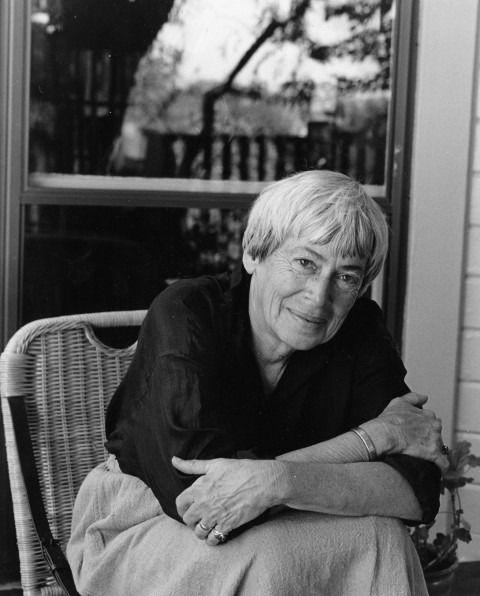
Author Ursula K. Le Guin talks to Eleanor Wachtel about writing, science fiction and short stories in this archive interview for CBC Radio show Writers & Co. from 1993:
CBC Radio Writers & Co: Ursula K. Le Guin
At the end of the interview, Le Guin reads her short story ‘Crosswords’ from the collection Searoad.
(image: Copyright © by Marian Wood Kolisch)
Comments closed
A short interview with Simon Garfield author of Just My Type on NPR’s All in a Weekend:
NPR Weekend Edition: Just My Type, Simon Garfield
I love the story about a man who tried to go a day without Helvetica.
Comments closed