Skip to content

The Casual Optimist Posts

Midweek Miscellany

Book Sniffing — Six writers on their book collecting habits, including Gary Shteyngart:

I’m big on sniffing books. The old Soviet ones really have this strong smell, reminding me, for some reason, of tomato soup in a cheap Soviet cafeteria.

Fear of a Blank Canvas — Book designer Chip Kidd interviewed at Azure Magazine:

If I’m designing a book for myself, that’s a very different thing than if I’m designing a book for Murakami – he’s ultimately the boss. For 1Q84, what I’m really trying to do, as pretentious as it sounds, is to create a work of art that services a greater work of art. It’s him. It’s not about me. But at the same time, I want to make something great for him. If I’m designing something for myself, it can be liberating and potentially stifling at the same time. It’s the literary equivalent of being given a blank canvas. And I’m not a great blank canvas kind of guy. I want the canvas filled in, in terms of content, by Murakami, and then I can make it look like something.

See also: Book designers Lauren Duffy, Kimberly Glyder, Henry Sene Yee and David Drummond on the ins-outs of book design at The Book Deal.

The Incommunicability of Difference — David Bellos discusses translation and his new book Is That A Fish In Your Ear? on Talk of the Nation:

For translation to exist, you have to accept the fact that languages are all different and they don’t describe the world in quite the same way. You also have to accept that languages are all the same in that anything you can say in one language can be said in any other. And it seems to me [that the] tension between the incommunicability of difference and … the sharing of a common set of messages and meanings is … human. I mean, we all live in that state, that I am not like you. My experience is not directly commensurable with yours, and yet, for us to get on and to be human and to be in a society, we have to also make the assumption that in another dimension, we’re all the same. We have the same needs, the same fears, the same desires.”

And finally…

James Parker on George Smiley, John le Carré’s literary spy, and why he is the antithesis of James Bond at The Atlantic:

Bureaucratically dowdy, rarely spotted in the field, a dull fucker by both instinct and training, Smiley drops no one-liners, romances no tarot-card readers, roars no speedboats through the Bayou… When John le Carré dies, there will be no pseudo–le Carrés, rotating the clichés of Smileydom through their potboilers. Not only is le Carré more or less inimitable—less imitable, certainly, than Ian Fleming, whose style was essentially that of a school bully with a typewriter—but Smiley himself is too elusive a creature to be captured by any pen other than that of his creator.
Comments closed

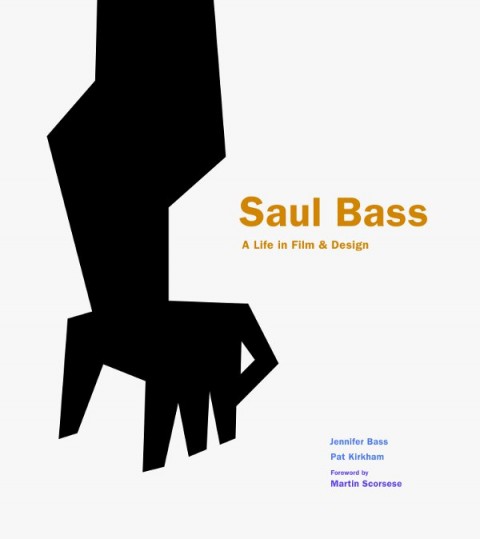
The Title Design of Saul Bass (A Brief Visual History)

I’ve been waiting for a book about Saul Bass since I was bookseller. Now Saul Bass: A Life In Film & Design is finally in bookstores, Ian Albinson of the brilliant Art of the Title has put together a brief visual history of some of Bass’s most celebrated work:

(For the record: Saul Bass: A Life in Film & Design is published by Laurence King and distributed in Canada by my employer Raincoast Books)

Comments closed

Something for the Weekend


Read This — Alex Ross, author of The Rest is Noise and Listen To This, on books about music at FiveBooks:

There’s a long list of bad examples of vague and gushy writing about music in literature, but there’s also a string of distinguished examples. I wrote a piece for The New Yorker a couple of years ago where I talked about my favourite composers in literature. It makes me very happy when I see a novelist going to the trouble of getting the musical details right, because this is part of the conversation on classical music that we very much need. To have plausible and vivid representations of composers and classical musicians in literature and in film is very important.

(Disclosure: the paperback editions of The Rest is Noise and Listen To This are published by Picador in the US and are distributed in Canada by my employer Raincoast Books)

Building from the Bones of a Superstore —  Businessweek on the decline of Borders and the opportunities for independent bookstores in the US:

Despite rising online book sales and digital downloads and the Great Recession, bookstores in the area were profitable—right up until they closed. Even Davis-Kidd, locally owned until the Joseph-Beth Booksellers chain purchased it in 1997, had been solvent, undone not by the collapse of the local market but by the bankruptcy of the parent company… Nashville lost its bookstores not because people there had abandoned physical books and retailers. For the most part, it lost them remotely, at the corporate level.

It’s Just a Device — Errol Morris talks to Stephen King about the Kennedy assassination and his new novel 11/22/63:

When you write about the past, the more you write, the clearer the past becomes. It’s like being regressed under hypnosis. My view of the past is that attitudes change, but they change very slowly. Underneath, they stay pretty much the same. “The fundamental things apply as time goes by.”

The Artist and The Scientist — Paola Antonelli, critic and curator at MoMA, on type design for Domus magazine:

Font designers who are able to marry critical and commercial success are a unique mixture of two basic clichés: the artist and the scientist. They are eclectic, curious, obsessive and absorbed, as well as rigorous, punctilious, enamoured of rules and limitations, and loyal to a higher code of design behaviour. They are an even more different breed among the many different breeds of designers working today. Contending now with the dynamic methods of communication provided by tablet computers, smartphones and other supports for text and brand, they deal with each family of fonts as if it were truly made of individuals, live characters that need to be able to fend for themselves once released into the wider world. In this vein, font design might just be the most advanced form of design existing today.

And finally…

Failure and Disappointment — Comedian Ricky Gervais on the difference between American and British humour:

Americans say, “have a nice day” whether they mean it or not. Brits are terrified to say this. We tell ourselves it’s because we don’t want to sound insincere but I think it might be for the opposite reason. We don’t want to celebrate anything too soon. Failure and disappointment lurk around every corner. This is due to our upbringing. Americans are brought up to believe they can be the next president of the United States. Brits are told, “it won’t happen for you.”

Have. A. Nice. Day.

Comments closed

Midweek Miscellany

Expanded Original — Geoff Dyer, author of Otherwise Known as the Human Condition, on Penguin Modern Classics and the paintings used on their covers:

The use of different paintings meant each book was a “modern classic” in its own particular way. A side effect was that books I was reading for an education in literature doubled as an introduction to art history… Since then the happiest moments in 35 years of museum-going have occurred when I’ve seen these Penguin Modern Classic paintings on a gallery wall. Especially since the cover often showed only a detail of the original. Seeing the works themselves revealed exactly what had been lost, though I invariably saw it the other way around, with the painting as an expanded version of the Penguin original.

Sci-Fi Diet — Mike Doherty interviews Gary Shteyngart, author of Super Sad True Love Story and Absurdistan, in Caplansky’s Delicatessen in downtown Toronto:

“My cholesterol is in the science-fiction realm,” he says. You’d expect him to be gargantuan, like Misha Vainberg, the gourmand oligarch from Absurdistan who’s always asking his manservant to make him meat pies, but Shteyngart is a slight fellow, with big black-rimmed glasses and a perpetually amused mien. He’s an ideal dining companion, if you’re not a rabid vegetarian, his speech a mixture of astute cultural observations, probing bons mots and moans of contentment.

That Synching Feeling — James Meek, author of  The People’s Act of Love, on e-books and social reading:

Once there were private libraries; then there were public libraries; now there is the ghost library, where poltergeistic fellow readers may not only be reading the same book as you at any moment but actually underlining the page of the book you are reading seconds before you get to it. They may be next door; they may be in Kamchatka; they may be anywhere, so long as they have Kindle and wifi.

And finally…

An epic twopart interview with John Hodgman, whose new book That Is All has just been published, at the AV Club. It is totally worth it, if only for the extended rant about children, mortality, the apocalypse and Cormac McCarthy’s The Road:

I did a little math, and was like, “Wait a minute, Cormac McCarthy is like 75 years old! And he has a 12-year-old son! No wonder he wrote this book!” I’m like, “Cormac McCarthy, you jerk, you’re not talking about the apocalypse, you’re talking about your personal apocalypse, because you’re an old man who’s not going to get to see his son grow up. That’s what this book is about. And for you, it feels like the end of civilization, and an intolerable world, and you can’t say goodbye to a son that you can’t guide through this awful world that allows you, an old person, to die.” I’m like, “How dare you, Cormac McCarthy, put me through all that when you’re the one going through this personal apocalypse?”

Comments closed

The Wild Bunch | A. O. Scott

New York Times film critic A.O. Scott on Sam Peckinpah’s fantastic 1969 Western The Wild Bunch:

Comments closed

Address Change

If you’re in the habit of sending me catalogues or review copies, it is time to update your address books — please drop me a line  and I will send you the details.

And, yes, sadly I am losing the view.

Comments closed

Something for the Weekend

Project Thirty-Three, one of my favourite mid-century modern design blogs, is now using Blogger’s “Dynamic Views” template. It looks great using the new ‘Flipcard’ feature.

The Crash — Alan Hollinghurst talks about writing and his new novel The Stranger’s Child with the New York Times:

Mr. Hollinghurst said he modeled his work habits on another friend and novelist, Kazuo Ishiguro. “He has this thing he calls ‘the crash,’ ” Mr. Hollinghurst explained. “He takes a lot of time to prepare a novel, just thinking about it, and then he draws a line through his diary for three or four weeks. He just writes for 10 hours a day, and at the end he has a novel.”

He laughed and pointed out that for him the Ishiguro method was only partly successful: at the end of three or four nonstop weeks he is still years away from being done.

Also in the New York Times, author Adam Thirlwell (The Escape) on translation and David Bellos’ new book Is That a Fish in Your Ear?:

Google Translate, no doubt about it, is a device with an exuberant future. It’s already so successful because, unlike previous machine translators, but like other Google inventions, it’s a pattern recognition machine. It analyzes the corpus of existing translations, and finds statistical matches. The implications of this still haven’t, I think, been adequately explored: from world newspapers, to world novels. . . . And it made me imagine a second prospect — confined to a smaller, hypersubset of English speakers, the novelists. I am an English-speaking novelist, after all. There was no reason, I argued to myself, that translations of fiction couldn’t be made far more extensively in and out of languages that are not a work’s original.

Counter-Culture — Loren Glass on Barney Rosset and the history of Grove Press at the LA Review of Books:

Philip Larkin famously dated the beginning of sexual intercourse to the end of the Lady Chatterley ban and, more recently, Fred Kaplan has used Rosset’s campaign to situate 1959 at the crux of an epochal transformation. Whatever its larger historical significance, it surely marked a turning point in the fortunes of Grove Press. On the brink of a decade in which the geopolitical order would be transformed, flush with cash for the first time, and well connected to the international avant-garde, the West Coast scene, and the nascent counterculture in college towns across the country, Grove was positioned in the eye of the coming storm. At the nexus of an emergent international vanguard, Grove became a potent symbol of the counter-culture, increasingly drawing radical authors, readers, translators, professors, lawyers and activists into its expanding network.

Part two of Glass’ history Grove Press is here.

And finally…

A slightly weird  interview with the David Lynch in The Guardian:

Film is dead, Lynch tells me. It is too heavy, too much of a dinosaur, and its time has largely past. But digital is alive and well and pointing to the future. He admits he’ll miss shooting on celluloid (“because it’s so beautiful”), but is more than happy to shoot on digital instead – as and when the opportunity arrives.

Until then he’s happy pottering around his studio and slurping his coffee; painting his spooky black houses and singing his eerie songs of love gone sour. “I can understand why people might be frustrated with me: ‘Let’s give up on these side ventures and go make a film instead.'” He chuckles. “But all these other things feed into the future. And if the ideas aren’t there for cinema, and if the pressure is on, then you might pick a bad idea and find yourself forced to marry something you’re not totally in love with. So I’m happy to wait.”

Comments closed

Jay Rubin on Translating Murakami

In an interview for the New Yorker, Haruki Murakami’s longtime translator Jay Rubin talks about the work of the Japanese author (whose new book 1Q84 has just been published) and his own work as a translator:

New Yorker Outloud: Translating Murakami mp3

The New Yorker also published a Murakami short story, Town of Cats, translated by Rubin, in September.

Comments closed

Mendelsund on Lolita

Knopf book designer Peter Mendelsund has written a fascinating essay on cover design and Lolita by Vladimir Nabokov:

Book jackets these days, for reasons I won’t unpack, seem to revel, overtly, in wit, conceptual deviousness, unusual clever or droll juxtapositions — we, as a professional community, seem to have elevated the visual bon mot above all other virtues. Again, I won’t delve into the “why” of the matter here for want of space, but suffice it to say that clever work is the work that is celebrated in our community. Not that wit in itself isn’t valuable, and doesn’t have an appropriate place in design — but wit is not the same thing as insightfulness, and often insightfulness is what is called for in a book jacket. Our fetishizing of cleverness has taken a toll I believe, in that (quite often) these clever solutions work at cross-purposes to the (more often than not sincere) narratives they represent. A book in which an author has gone out on a considerable limb in order to write in a genuine and unaffected fashion does not want a cover that winks at the reader. Wit, when it becomes compulsive (as anyone knows who has a friend who puns too often) quickly becomes its opposite- dullness or predictability.

Peter says this is just the first in a series of posts about the process of “jacketing works of fiction”. One can only hope.

(pictured above: a proposed jacket for Nabokov’s Lolita by Emmanuel Polanco)

Comments closed

Blood

Did you read the end of Emily Carroll’s gothic horror story Margot’s Room? She did say there would be blood. But holy shit… Amazing.

Comments closed

Midweek Miscellany

On Record — Rick Poynor at Design Obsever waxes all lyrical about Continuum’s 33 1/3 music series:

The best 33 1/3 titles… have an urgent personal mission, even obsession, and they tunnel deep down into an album’s defining moment and milieu: dark sixties Los Angeles in Forever Changes, isolated seventies Berlin in Low, creative nineties Athens, Georgia in In the Aeroplane over the Sea… Usually around 30,000 words, these detailed studies are hugely challenging to research and write. Continuum has let it be known that a batch of previously announced titles has been canceled after initial high hopes: the authors just couldn’t deliver.

Movies on Paper — Tom McCarthy, author of Tintin and the Secret of Literature (as well as Remainder and C), reviews Steven Spielberg’s The Adventures of Tintin: The Secret of the Unicorn:

Tintin was always premised on a set of implicit borrowings and relocations from one medium to another. Hergé’s earliest strip-cartoons were billed as “movies” on paper; creatively, he was as indebted to the films of Buster Keaton and Harold Lloyd as to the novels of Jules Verne or the illustrated poems of Benjamin Rabier (which, long forgotten now, featured a tuft-headed boy called Tintin-Lutin and his dog). Hergé’s remarkable achievement with the Tintin series was to pluck all these elements from their original contexts and join them together, holding them in perfect equilibrium, in a new, hybrid format whose conventions (speech-bubbles joined with left-to-right action, for example) he established in the very act of assembly.

McCarthy loathes the movie by the way.

See also: Nicholas Lezard getting really quite upset about it.

(If you’re wondering why the British are so bothered by the Speilberg’s movie, my take on it is that we view Tintin as an eccentric, quintessentially British hero — not unlike T.E. Lawrence — rather than a Belgium one, and Spielberg is well… just so American. Or it might just be a shit movie.)

And finally…

Gum-Chewers of the World (Unite and Take Over) — Canadian cartoonist Seth on being awarded the Harbourfront Festival Prize at the International Festival of Authors in Toronto:

I’ve always believed the comics medium was capable of genuine subtly and grace and complexity… and of telling stories that would appeal to an adult mind. Stories that reflect real human experience. That said, it didn’t look too likely that the literary world or the art world…or even the mainstream pop culture was likely to cut the comic book much slack. Comics were considered entertainment for the gum-chewers of the world. Kid junk at worst – nerd culture at best.

Comments closed

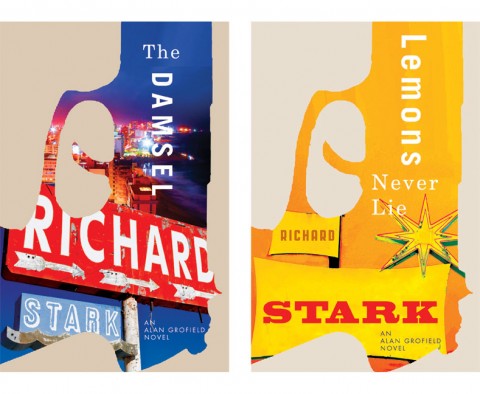
Stark’s Grofield Novels Designed by David Drummond

David Drummond designed the covers for the University of Chicago Press recent reissues of Richard Stark’s ‘Parker’ novels. Now David has designed great new covers for the reissues of Stark’s ‘Alan Grofield’ novels as well – The Dame, The Damsel, Blackbird and Lemons Never Lie.

I actually really like these earlier, slightly looser, alternatives as well:

David has written more about the design process on his blog, and you can read my interview with him here.

Comments closed