Skip to content

Tag: vintage

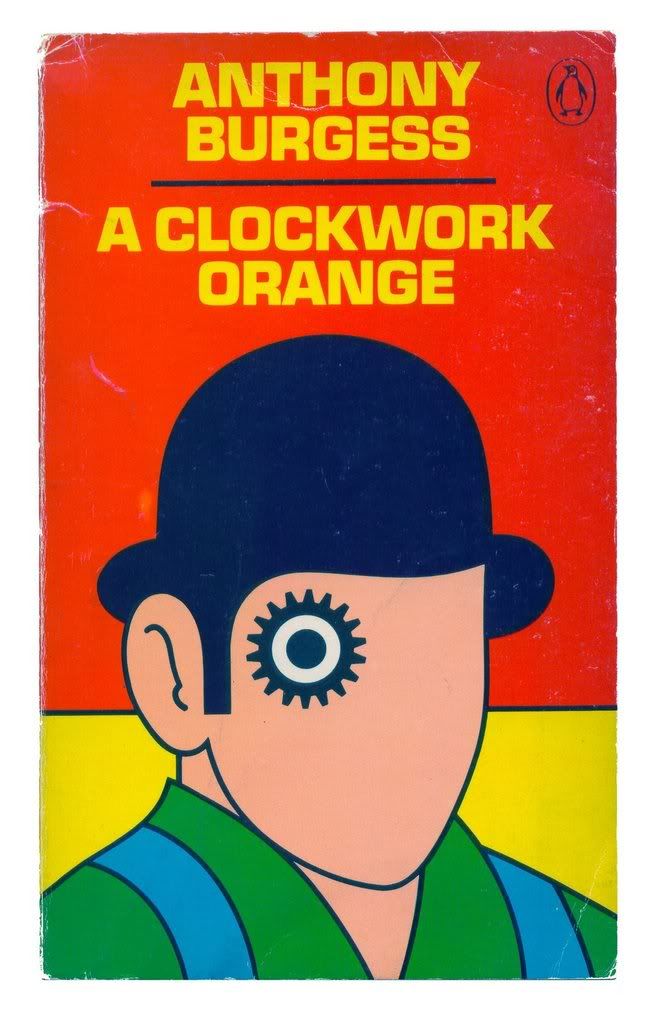
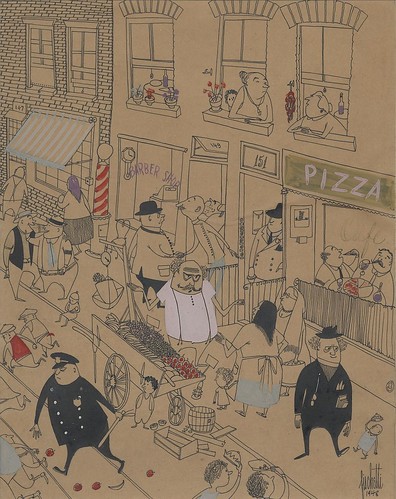
10 Websites for Vintage Books, Covers and Inspiration

1. A Journey Round My Skull — “Unhealthy book fetishism from a reader, collector, and amateur historian of forgotten literature.”

2. The Art of Penguin Science FictionA comprehensive collection of Penguin sci-fi covers from 1935 onwards.

3. BibliOdyssey“Books… Illustrations… Science… History… Visual Materia Obscura… Eclectic Bookart.”

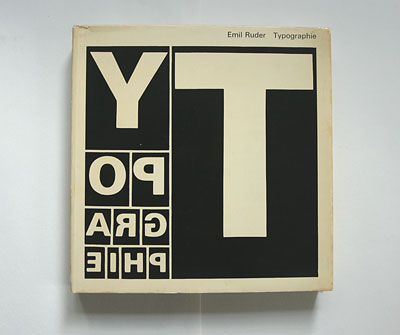
4. Book (Design) Stories — Felix Wiedler’s incredible collection of modernist design and typography books from Germany and Switzerland 1925–1965.

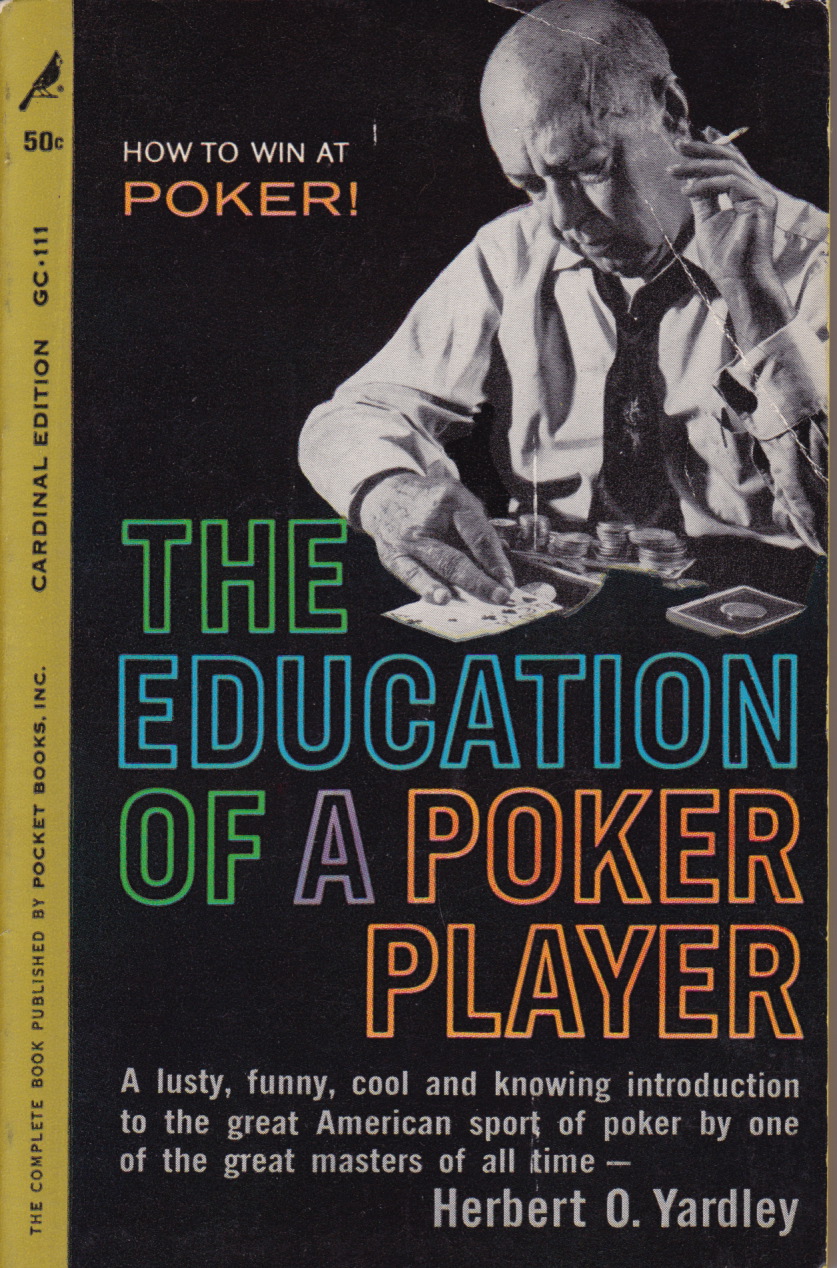
5. Book Worship — “graphically interesting, but otherwise uncollectible, books that entered and exited bookstores quietly in the 50s, 60s, and 70s”.

6. I Was A Bronze Age BoyComic books, crime fiction and pulp magazines curated by Mark Justice. Awesome name. Awesome blog.

7. Killer Covers of the Week — Pulpy goodness and vintage crime fiction covers expertly curated The Rap Sheet‘s J. Kingston Pierce.

8. The Pelican ProjectThings Magazine‘s collection of Pelican paperbacks organized by decade.

9. Pop Sensation — Rex Parker appraises, critiques and generally ridicules his vintage paperback collection.

10. Spanish Book CoversSpanish pulp: detectives, masked gangsters, pin-ups, skeletons, and zombies! (French language)

AND BONUS! 11. French Book Covers — But not entirely safe for work… It’s French. You have been warned.

Let me know if I’ve missed any other great vintage book cover sites. AND  I’m working on a list of book cover related photostreams and groups on Flickr so please pass on your recommendations! Cheers.

modernist book design in germany and switzerland 1925–1965 (and beyond)

17 Comments

Sunnyside

I just picked up  copy of Glen David Gold’s most recent novel Sunnyside.

Book Covers Anonymous gave the British cover — with a whimsical illustration by Adam Simpson — some love back in July, but I think I prefer this lovely elegant, and understated cover by Megan Wilson for the US edition published by Knopf:

You can see more of Megan Wilson’s work at her website, including these rather lovely covers for Vintage’s Richard Yates reissues:

Young Hearts Crying: Photograph by Richard Rutledge

A Special Providence: Photograph by John Rawlings

Comments closed

Midweek Miscellany, September 9th, 2009

Getting Paid by the Joke — Roy Hattersley on Keith Waterhouse, author of Billy Liar, who died last week aged 80:

One of the great lines, spoken in the subsequent film version by Wilfred Pickles playing Billy’s father, combined fury and bewilderment. Why, he demanded to know, had his son told the neighbours that he had only one leg. Billy worked in a dismal office – an ironic tribute to Waterhouse’s first job as clerk to an undertaker. It seemed a step up for the son of a door-to-door vegetable salesmen and a cleaner who had left Osmondthorpe Council School at 15 with an interest in books but no qualifications and few prospects.

When’s That Book Coming Out? — A nice breakdown of the production process by Shelby Peak which explains why it seems to take a long time for books to be released after an author has turned in their final manuscript. Every time I read something like this, I wonder why we don’t hear from publishing professionals more often. It would be great to see publishers explain this kind of thing on their own blogs. (via blog.rightreading)

Spine Out — John Gall has started a blog. Holy fuck.

And — on a related note — there is a nice conversation on Vintage’s The Sun & Anchor blog between designer Peter Buchanan-Smith and photographer Todd Hido about the new Raymond Carver covers (commissioned by John Gall).

Doing the Work — A fascinating interview with Australian book designer Tony Palmer at Caustic Cover Critic:

Sometimes you hear the bigger book publishers described as being like factories – where the work is churned out in a mechanical and unthinking way. It’s never been like that for me at Penguin. The editors, production staff and designers all love their work. But love can be wild and unpredictable. So I’ve dreamt of being a plumber. I like the way water moves on surfaces. I like the fact that there are only four different ways to plumb a house. But book design? Gawd, maybe there’s about 120 right ways to do a good book cover, and there are probably millions of ways to make a bad one.

And finally…

A Master of ReinventionBrad Mackay, director and co-founder of the Doug Wright Awards, reviews David Mazzucchelli’s remarkable Asterios Polyp for The Globe & Mail. The Comics Reporter has a critical reading guide.

6 Comments

Something for the Weekend, August 28th, 2009

Now, About That Cover — Ted Striphas, an assistant professor in the Department of Communication and Culture at Indiana University, discusses the cover of his new book The Late Age of Print, which uses a dramatic photograph by artist Cara Barer:

The Late Age of Print is a book about the past, present, and future of book publishing, and so I knew early on that I wanted some type of cover image that would represent the themes of permanence and change.  Much later, as I looked at the books about books appearing on my bookshelf at home, I decided that I wanted a more abstract type of design, since many titles in my opinion overly-literalized their subject matter.

Another other Cara Barer’s images can also be seen on the cover Michael Greenberg’s  Beg, Borrow, Steal: A Writer’s Life released in September.

You can download a PDF of Striphas’ book under a Creative Commons license from his site, cunningly called The Late Age of Print.

Why Are Artists Poor? — Author and professional  contrarian Andrew Keen (The Cult of the Amateur),  looks at how the creative class make a living in the “new digital economy” for The Telegraph.

Keen is as provocative as ever, but his conclusions — that self-promotion is a requirement for all artists and that being paid for content can be replaced by getting paid to perform in person — are a little underwhelming.  Ernesto Priego offers more thoughts on Keen’s article in his blog post “Portrait of the Artist as a Digital Native”.

And finally…

Having mentioned the  Richie Fahey illustrations that adorn the covers of  Megan Abbott‘s crime novels earlier this week, it would be remiss of me not mention the remarkable R.A. Maguire Cover Art site, which includes an amazing collection of the artist’s book covers, paintings, and source photos from the 1950’s and 60’s:


(And if you can’t get enough of pulp covers and vintage paperbacks, you probably should check out the slightly potty-mouthed Pop Sensation.)

Self promotion and making money in the new digital economy

2 Comments

Something for the Weekend, August 21st, 2009

Picador Paperback have posted their fall catalogue to Facebook. Apparently they also did this with their spring list too . Needless to say, I think this is  a great idea. Is any one else doing it? (via Arthur’s Design)

Control — An interview with Alan Rapp, former senior editor of art, design, and photography at Chronicle Books and the new Associate Director of Hey, Hot Shot!:

for all the possible flaws in the trade publishing model, one thing I always liked about it is the collaborative process. It defies the auteur model; the author is almost never the sole creator. I suppose that this could sound like the ex-editor making a case for the value of his role in an industry that is really undergoing massive and fundamental changes, but I stand by the principle: all content benefits from editing. The author, whether a verbal or visual one, is almost always too involved with the material to see how it can be best adapted to another form. And the design and production processes are also critical to making the best book possible; one thing [that] I think is in danger of getting lost in self-publishing is the production potential. The physical aspects of books make important, and often subliminal, effects on the reader, but we are getting a much more homogenized offering through the current self-publishing models.

Final Crisis — A short Q & A with Chip Kidd about designing comic book covers at the NY TImes‘ ‘The Moment’ blog.

And finally, thinking of comics, Will Kane (The World of Kane) recently posted some mind-blowing pop-art pages from French comic “La Vie Privée de Dyane” drawn by Michel Quarez, published in 1968 (pictured below). Also check out Will’s post on Quarez’s 1967 Mod Love.

Comments closed

Midweek Miscellany, August 19th, 2009

‘The 100 Best Comic Book Covers’ Part 1, Part 2, Part 3, and Part 4 at Kelly Thompson’s 1979 Semi-Finalist blog. I am not a comics nerd (believe that if you will), but there’s some great stuff (new and old) in this epic list…

Open to QuestionThe New York Times reports on Sony’s decision adopt the “open standard” ePub format for all their digital books. This means that “books bought from Sony’s online store will be readable not just on its own device but on the growing constellation of other readers that support ePub”. Progress of sorts I would say, but before you break out the bunting, David Rothman questions how “open” this format actually is at TeleRead.

Book Design on Twitter — Ben at the Book Cover Archive has posted a list of book designers who Tweet.

Ben’s list was also a nice reminder to mention  Jennifer Tribe‘s amazing directory of book industry people on Twitter.

Book Worship —  Shawn Hazen’s blog cataloging “graphically interesting, but otherwise uncollectible, books that entered and exited bookstores quietly in the 50s, 60s, and 70s.” Lovely (via Book Cover Archive blog).

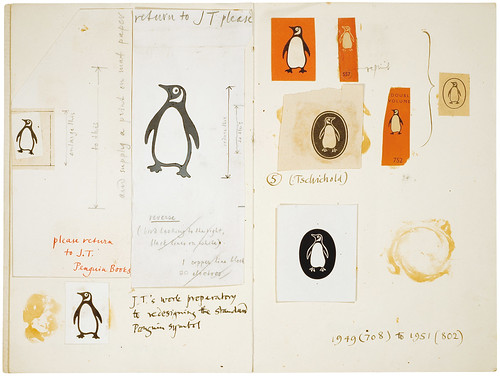
Penguin Symbols — I know I just mentioned designer David Pearson’s Flickr the other day, but how fantastic is this? “An investigation by Production Manager Hans Schmoller into the origins and usage of Penguin devices”

And speaking of Penguin…

Covers And That — Jim Stoddart, Art Director of Penguin Press, discusses their book cover process and looks at some of the new covers for book released this month:

Each cover may face a wide range of hurdles and conflicting opinions, this is the very nature of book covers. Good designers tend to be very focussed and resiliant, and the value of a good sense of humour cannot be underestimated. As with most design jobs there is a balance of concept, craftsmanship and time dexterity required. Any number of changes to the brief may occur even once the design is finished. But in Penguin Press it is widely appreciated that the more a cover is ‘tweaked’ by a committee the less chance there is of retaining that original spark that we all know helps a book stand out in a world where thousands of books are vying for attention.

Comments closed

Midweek Miscellany, July 29th, 2009

Geometric books covers at Design Daily.

The Debate That Will Not Die — Mike Shatkin weighs in on DRM and tries to find that elusive middle-ground. The discussion continues into the comments (of course)…

Unputdownable — A nice ad campaign by Saatchi & Saatchi for Penguin Books in Malaysia (via The 26th Story).

Great Ideas — The Caustic Cover Critic looks at the covers for all 20 of the new additions to Penguin’s Great Ideas series. Some fantastic typographic stuff here as you might imagine, although — to be honest — I think there are one or two weaker entries in this round and the purple motif works better for some books than others…

A New Page — (Much linked to elsewhere, but in case you missed it) Nicholson Baker’s meticulous vivisection (or “epic takedown” if you prefer) of the Kindle in The New Yorker:

The problem was not that the screen was in black-and-white; if it had really been black-and-white, that would have been fine. The problem was that the screen was gray. And it wasn’t just gray; it was a greenish, sickly gray. A postmortem gray. The resizable typeface, Monotype Caecilia, appeared as a darker gray. Dark gray on paler greenish gray was the palette of the Amazon Kindle.

This was what they were calling e-paper?

And if you can’t get enough of that Kindlenfreude feeling…

David L. Ulin, book editor  The LA Times, weighs in on Amazon’s troubling reach.

Niches — Richard Nash, formerly of Soft Skull Press, talks about his new community-based venture, tentatively called ‘Cursor’, in Publishers Weekly.

And finally…

A Journey Round My Skull has a nice post of vintage Swedish books covers from collected from the excellent  Martin Klasch. I particularly like this vampiric cover for Raymond Chandler’s The Big Sleep by Martin Gavler from 1963 (above).

Comments closed

Midweek Miscellany, July 15th, 2009

Vintage Camus — Seen at Bente Miltenburg‘s Flickr photostream (via A Journey Around My Skull).

An Intricate Dance — Author Sonya Chung describes her experience of the cover design process (and the weird — slightly tortured — anxieties that accompany it) for her debut novel Long For This World at The Millions blog (via Duke University Press on Twitter):

I am still a little nervous – having no control over the final printing process, color-correcting, etc. – about what this cover will look like. But I also realized that as each response piled on one after the other in my inbox, I was beginning to delight in the wackiness of the whole thing.

And on a related note, writer Neelanjana Banerjee looks at stereotypical images of Asian Americans on book covers in Hyphen Magazine (issuu document). Henry Sene Yee, creative director of Picador, makes an interesting general point — which I think is often forgotten — about ‘recognizable codes’:

“Russian constructivist font for Russian books; torn paper and beige for Westerns; italics, diamond rings and legs for women’s fiction… The writer is tapping into this culture; so is the designer, and so is the reader.”

GroupThink — After a bit of a hiatus, designer Christopher Tobias is back blogging with a series of discussions on book design:

Beginning today, I plan to post an ongoing series of questions aimed at book designers as a way of opening discussion about various topics related to our industry… Others outside of book design are certainly free to field the questions or give input. I hope that together we can compile a nice collection of discussions for the benefit of those in the profession now and in the future.

Swiss — A bilingual, expandable book designed for the UK art and design gallery Blanka by Dylan Mulvaney: “It honors Josef Müller-Brockmann as well as conveys the principles of Swiss Graphic Design as exemplified by the leader of the revolutionary Swiss Style.” (via SwissMiss and Swiss Legacy).

Good — Christopher Simmons has a quick chat about The Good Design Book project with Grain Edit:

I frequently come back to the definition of design proffered by Charles Eames: “Design is a plan for arranging elements to achieve a particular purpose.” If you break that down, it contains 5 equal parts: the plan (strategy), the arrangement (layout or formalism), the elements (content), the achievement (result) and the purpose (the goal). Good design can therefore be thought of as design based on a good strategy and which features a good arrangement of good content for a good purpose. And of course it needs to yield good results.

And lastly… Following the survey of Mick Wiggins work (mentioned previously here),  Caustic Cover Critic discusses those rather lovely Steinbeck covers with the illustrator:

The Steinbeck gig was about as dreamy a gig as an illustrator can hope to land: 24 covers to date, I think. It was not difficult in the sense of inspiration—he’s so good at evoking mood, and his settings are described so beautifully—but the flop-sweat for me was intense. Steinbeck’s such a classic figure in the literary landscape and bookshelves, delivering art that disappointed was not an option.

4 Comments

Something for the Weekend, July 3rd, 2009

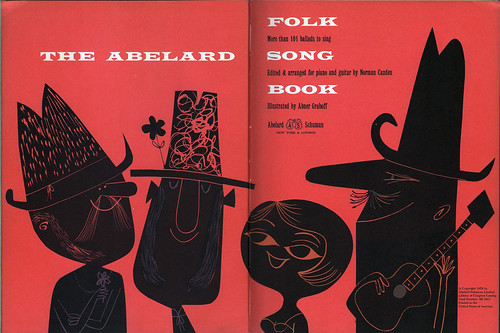
Who Was Abner Graboff? —  Frustrated with the lack information available online about artist, designer and illustrator Abner Graboff, Ward “Ward-O-Matic” Jenkins decided to do some digging himself. His research — now available in a three part series —  includes a host of great images of Graboff’s children’s books and book cover designs, as well as a nice interview with Graboff’s son Jon:

Throughout my father’s career, he did hundreds of book jacket designs and I once asked him, in a slightly condescending way, if he enjoyed that kind of work? He said he loved it because he had to nail the vibe of the book in a single illustration and when he got it right, that it was very satisfying. There was a long period of time when I could walk into a bookstore, look around, pick up a book and look at the jacket design credit… and more often than not, find his name. Later on, I started to get fooled. Other designers were either copying or being heavily influenced by his style.

Calling Bullshit on Social Media — Scott Berkun, O’Reilly author of The Myths of Innovation and Making Things Happen (via — irony alert — Mark Bertils on Twitter):

TV forced radio to change and in some ways improve. The web forced TV, newspapers and magazines to change, and they will likely survive forever in some form, focusing on things the web can not do well.  Its unusual for new thing to completely replace the old ones and when they do it takes years. Anyone who claims social media will eliminate standard PR or mass media is engaging in hype, as odds are better those things will change and learn, but never die. It’s wise to ask what each kind of media / marketing is good and bad for and work from there.

Berkun’s definitely onto something here and it probably deserves a whole post (maybe later!)… Certainly, he’s right to point out (earlier in the essay) that there have always been social networks. But he doesn’t note that for many city dwellers traditional social and familial networks have been breaking down in the post-war period, which I suspect is part of the seductive appeal of connecting online for us slightly older urban types whose use Twitter and Facebook a lot… Anyway, it’s interesting that some of Berkun’s points about technology probably also apply to e-books.

Berkun’s essay also reminded me of an article I read in Fast Company earlier in the week, Our Kids Aren’t Web-Addicted… Are We?:

It’s only we adults that are at PC workstations all day, looking for ways to avoid doing work or trolling the boundaries of our IT-installed browser filters. And we’re the only ones who have social networks big enough to require a tool like Twitter. Imagine how absurd Twitter seems when you only have 10 or 12 friends, not a network of 300+ coworkers, college buddies and colleagues?

And finally…

Krazy — Bill Watterson, creator of Calvin & Hobbes, on George Herriman’s seminal comic strip Krazy Kat, reproduced at This Recording (via Bookslut):

Krazy Kat gains its momentum less from the personalities of its characters than from their obsessions. Ignatz Mouse demonstrates his contempt for Krazy by throwing bricks at her; Krazy reinterprets the bricks as signs of love; and Offissa Pupp is obliged by duty (and regard for Krazy) to thwart and punish Ignatz’s “sin,” thereby interefering with a process that’s satisfying to everyone for all the wrong reasons. Some 30 years of strips were wrung out of that amalgam of cross-purposes. The action can be read as a metaphor for love or politics, or just enjoyed for its lunatic inner logic and physical comedy.

Comments closed

Somthing for the Weekend, May 8th, 2009

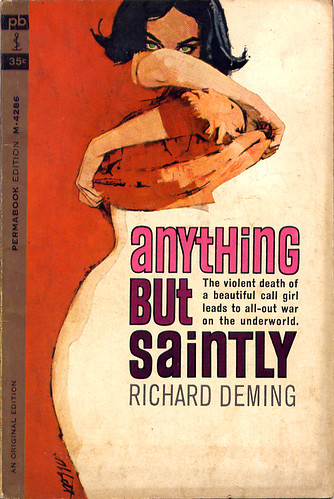
Anything But Saintly — More pulp goodness seen at The Old-Timey Paperback Book Covers Flickr pool.

The Decline and Fall of Books — Nicholas Clee, editor of Book Brunch, dons “The End is Nigh” sandwich-board in The Times:

A Gutenberg-style revolution is not… expected in the next few months. But if you are a lover of well-stocked bookshops, then you should enjoy them while you can.

Poets Ranked by Beard Weight — Or why I <3 the internet (via eightface).

Penguin Automaton made by artist-maker Wanda Sowry to celebrate Penguin’s 70th anniversary and available from Art Meets Matter . Apparently winding the handle “causes the Penguin to drink from a mug, its flippers to waggle and a piece of 70th Birthday cake to rise magically from the table” (via the lovely tweeps at New Directions ).

Good Typography is Invisible, Bad Typography is Everywhere — Stephanie Orma talks to five acclaimed designers about the art of type in the SF Examiner. Interesting to see some conflicting/contrasting opinions in the mix…

7 Habits of Highly Effective People I Know — A nice list from Noisy Decent Graphics Ben Terrett.

Comments closed

Midweek Miscellany, May 6th, 2009

Vintage awesomeness — Hella Haase cover seen at the Vintage Paperbacks (Non-Penguin) Flickr Pool.

Make it Good — Jacket copy matters according to a Publishing Trends survey:

Flap copy is especially important for fiction. And title and cover impact are closely related to the impact of jacket copy. If the flap copy defies the expectation created by the cover and title—if, for instance, the cover of the book leads the reader to expect a thriller but the flap copy identifies it as horror—readers are less likely to buy it.

The Common Addiction to MediocrityGuy Kawasaki talks to Hartmut Esslinger, founder of frog design and professor at the University for Applied Arts in Vienna (lessons here for the book industry for sure):

Excellent products require more then just a good designer or a good design agency—they require humanistic and cultural vision, courage and discipline in execution.

Which leads quite nicely to Nora Young‘s podcast great conversation with filmmaker Gary Hustwit, director of Objectified and Helvetica, on CBC Radio’s Spark.

Thrift-Store Philosophy — some nice vintage book cover design finds at the always excellent Ward-O-Matic.

Instant Gratification — An interesting Q&A with Patrick Brown of Vroman’s bookstore in Pasadena (PW‘s Bookseller of the Year in 2008) on The Big Bad Book Blog:

People greatly underestimate how important browsing is for physical purchases, largely, I think, because it’s lacking in the online world. People come to an ecommerce site already knowing what they want to buy (for the most part). This isn’t so in our store, where people frequently come in for one book and end up leaving with a book that caught their eye on the way to the section or waiting in line at the register. The other thing we provide that I think is invaluable is a physical place for literary culture to happen.

Well-Aimed Typewriter Keys — After 70 years, Little, Brown and Co. have unveiled a new logo  designed by  Lance Hidy.

The Book Depository — who have a great range of books and offer free shipping world wide (and have this great live map), has launched an affiliate program. Can I humbly request someone develop a wordpress widget for it please?

And lastly, The New Yorker‘s The Book Bench blog has a sneak preview of the new Dan Clowes book.

Comments closed

Monday Miscellany, April 6th, 2009

Gregg Kulick‘s design for Being and Time (pictured above) seen at The BDR (of course). You can see more of Gregg’s work on his website.

Try before you buy — Matthew Baldacci, VP of of marketing and publishing operations at St Martin’s Press, talks to Book Business about ‘Read-it-First’, a free email service that allows subscribers to sample books before they decide to buy them (via Joe Wikert).

Can ‘Curation’ Save Media? — Steve Rosenbaum at The Business Insider:

Curation is the new role of media professionals.

Separating the wheat from the chaff, assigning editorial weight, and — most importantly — giving folks who don’t want to spend their lives looking for an editorial needle in a haystack a high-quality collection of content that is contextual and coherent. It’s what we always expected from our media, and now they’ve got the tools to do it better.

City of Juxtapostions — a short Q & A with Portuguese designer and illustrator Cristiana Couceiro (mentioned previously here for her New York Times Book Review cover illustration) at Untrendy Graphics:

Lisbon is deliciously decadent, ripped in time, full of vintage elements. And I let myself get lost in those little details. In shops that closed down, but which still hold, intact, beautiful examples of typography and logotypes on the shop windows. On neighbourhood hair-dressers and groceries. Lisbon seems to fluctuate between the old and the new.

The Fox — A beautiful cover design  seen at Sci-Fi-O-Rama. Apparently the illustration was originally used for 1967 movie adaption of D.H. Lawrence’s novella (via The Ministry of Type).

Comments closed