Skip to content

Tag: translation

Jay Rubin on Translating Murakami

In an interview for the New Yorker, Haruki Murakami’s longtime translator Jay Rubin talks about the work of the Japanese author (whose new book 1Q84 has just been published) and his own work as a translator:

New Yorker Outloud: Translating Murakami mp3

The New Yorker also published a Murakami short story, Town of Cats, translated by Rubin, in September.

Comments closed

Something for the Weekend

Peirene Press is small independent publisher in the UK specializing in previously untranslated contemporary European novellas. Their most recent series of books, designed by Sacha Davison Lunt, has been short-listed for the 2011 British Book Design and Production Awards in the Brand/Series Identity category.

Txt — Thomas Jones looks back at the work of author William Gibson at The Guardian:

The most striking feature of cyberspace in Neuromancer, however, the most radical way in which it differs from the modern internet, is its textlessness. Case is, or may as well be, illiterate: his skills as a cyberspace “cowboy” don’t depend on being able to read. He wouldn’t get very far as a hacker these days. The internet, as we now know it, even in the era of YouTube and podcasts, is still heavily text-based and text-dependent. Tweeting not only looks about as low-tech as you can get, it’s also all about language.

One Way or Another — Marjane Satrapi and Vincent Paronnaud talk about the film adaptation of Chicken with Plums with New York Magazine:

When you draw, you don’t have any limits; it kind of transforms our brain. Also, we had not [gone to] any cinema school, so we don’t have these techniques. Like when we started the project they were telling us things like, “Voice-over? Nobody does that any more” and “Cross-dissolve is out.” This notion of “out” and “in,” it depends on what you are saying. You don’t have one way of doing things.

Also at New York Magazine, Scott Snyder talks about the Batman #1 relaunch and rewriting Batman:

Gotham is almost a nightmare generator, filled with villains that seem to represent an extension of Batman’s greatest fears. A lot of his greatest villains feel like mirrors: the Joker is who Batman would be if he broke his rule and fell into madness; Two Face is a mockery of the duality of his life. But what I love about Bruce in particular, and the reason I’m so excited to be doing Batman, is he’s a superhero that has no powers. He takes it upon himself to go out every night, punish himself, and be the best out there. To me, that is both incredibly heroic and exciting, but also really pathological and obsessive.

Related: Scott Snyder interviewed about the same (but at greater nerdiness) at The Huffington Post.

And finally…

Here’s a short documentary about the making of the Vitsœ shelving system, originally designed by Dieter Rams in 1960 and still going strong:

Comments closed

Is That a Fish in Your Ear?

In this lovely animated book trailer by Matt Young for Penguin UK, author David Bellos talks about words, language and his new book Is That a Fish in Your Ear? Translation and the Meaning of Everything:

(via @alantrotter who produced the video, clever chap).

Comments closed

Midweek Miscellany

There’s been much speculation online about who designed the wonderful hand-drawn cover for Big Machine by Victor LaValle (pictured above). Thanks to the nice folks at UK publisher No Exit, I can finally identify the designer as Lynn Buckley, who originally designed the cover for the US publisher Spiegel & Grau.

Collected — Gary Groth, co-founder of alternative comics publisher Fantagraphics, talks about the state of the industry with the Comic Book Reporter (via Robot 6):

By and large, nobody publishes alternative comic books anymore. The reason is fairly obvious; since the reader knows it’s going to be collected in a graphic novel, there’s very little reason for them to buy a twenty-four page comic of something he’s going to get a year or two down the line as a graphic novel, and in the way it probably ought to be published anyway, collected in a single work. I think it’s just an inevitability of the rise of the graphic novel as the dominant form of alternative comics. I don’t know how accelerated that’s going to be for mainstream comics. It feels like it’s headed that way.

Lingua Franca — Tim Parks on translation and international literature for the NYRB:

[N]either readers nor writers are happy any longer with the idea that a literary text’s nation or language of origin should in any way define or limit the area in which it moves, or indeed that a national audience be the first and perhaps only arbiter of a book’s destiny. We feel far too linked, and linked in the immediate present, not to want to see immediately what books are changing or at least entertaining the whole world. And if we are writers, of course, we want our own books to travel as widely as possible.

And finally…

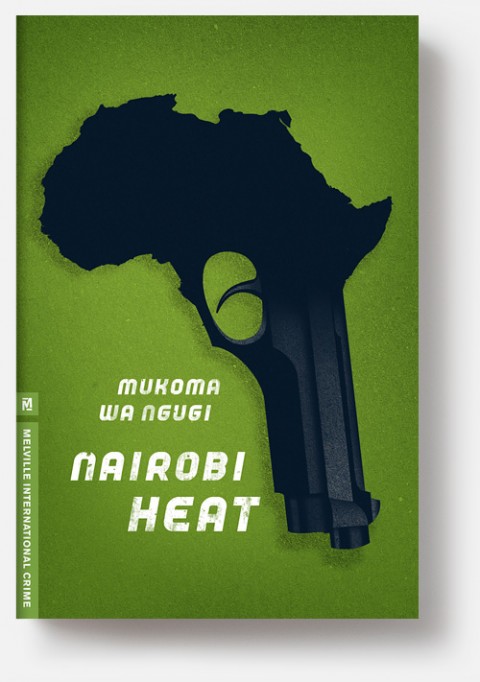
Chisel Away — An interview with designer Christopher Brian King, art director at Melville House, at Slated Magazine:

On a conceptual level, [designing for book covers] actually isn’t much different from designing a logo, for example. After all, a logo has to give you a glimpse into the whole story of a company, so it comes down to the same challenge: how do I chisel away at this big, complicated story until it becomes a single elegant image which explains what the whole thing is about? Where book covers differ is that you have a much larger toolkit to work with—typography, color, illustration photography, production tricks, or anything else. Since it’s so open-ended, the real challenge starts to become figuring out which tool is best to use on any given project.

3 Comments

Something for the Weekend

A Sense of What’s Possible — Ramona Koval talks to Edith Grossman about her book Why Translation Matters and her translation of Don Quixote for The Book Show on ABC Radio National. From the transcript:

What I mean by ‘deep reading’…and it comes after a couple or three readings…what I mean is capturing the subtleties of what the original author is doing. Because artful language has both the stated and the unstated in it, and the stated is fairly obvious, the unstated is really what differentiates one writer’s style from another. And those unstated, unspoken elements are what I try to bring over in analogous fashion into English. That kind of reading, analysing the way parts of the sentence relate to one another and how the sentences in a paragraph relate to one another and so forth, how the paragraphs connect within the chapter, this is more intensive than an ordinary reading of a book. But to my mind it’s what I have to do in order to create something in English that feels to the English-speaking reader the way the original feels, in my case, to the Spanish speaker.

MyFonts’ Top Fonts of 2010, which includes the charming Lady René by Argentinian foundry Sudtipos:

See Also: DesignWorkLife’s favourite typefaces of 2010.

Legendary design consultancy Pentagram have launched a new website to showcase their work, including  some great book design (via FormFiftyFive).

And finally…

The New York Times looks at the work of Thatcher Wine and other designers who assemble and create custom book collections for clients (one can only hope the above was for The White Stripes).

Comments closed