Skip to content

Tag: tim parks

Tim Parks on Where I’m Reading From

Where I'm Reading From (1)

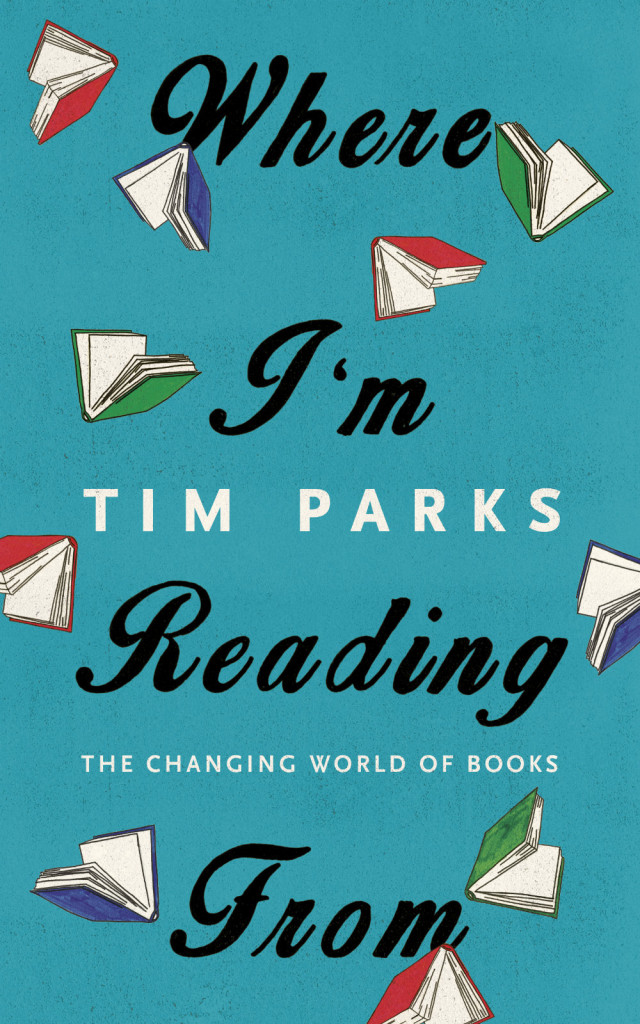
At BOMB Magazine, writer Tim Park discusses his new book Where I’m Reading From, a collection of his essays from the NYRB Blog, with Scott Esposito (co-author of The End of Oulipo):

In a way, this book is an autobiography of someone brought up with a very particular relation to books, in a religious family, in an English literary tradition, who on becoming an adult, for private personal reasons, set himself literary goals that were gradually revealed as spurious. Also, it’s about a person from the literary center—English, London— who has spent more than thirty years in another country, Italy, that is out of the literary mainstream. And a writer who also, by chance, became a translator and went on to teach translation. My life has been a long process of awakening to the reality, the changing reality, of the contemporary book world, which is a million miles from the naïve vision I had when I started writing books at twenty-two. Since it is in the publishers’ interests, and indeed the University’s, to sustain a false picture of what the book world is like and what the contemporary experience of books amounts to, my articles were a response to this, and an attempt to get my own head straight about what I’m really doing and the environment I move in. One is seeking at last to be unblinkered about it all.

And, if you missed it, Park reviewed What We See When Read by designer Peter Mendelsund on the NYRB Blog earlier this month:

One of the pleasures of his book is his honesty and perplexity at the discovery that every account he offers of the process of visualization very quickly falls apart under pressure. We do not really “see” characters such as Anna Karenina or Captain Ahab, he concludes, or indeed the places described in novels, and insofar as we do perhaps see or glimpse them, what we are seeing is something we have imagined, not what the author saw. Even when there are illustrations, as in many nineteenth-century novels, they only impose their view of the characters very briefly. A couple of pages later they have become as fluid and vague as so much of visual memory. At one point Mendelsund posits the idea that perhaps we read in order not to be oppressed by the visual, in order not to see.

(Pictured above is the cover of the UK edition, published by Harvill Secker in December last year, of Where I’m Reading From designed by James Paul Jones. The US edition, which has a more utilitarian cover, was just published by New York Review of Books)

Comments closed

Too Many Books

At the NYRB Blog, Tim Parks wonders if there are just too many books:

Is there a relationship between the quantity of books available to us, the ease with which they can be written and published, and our reading experience?

At present, for example, it’s hard not to feel that we are in an era of massive overproduction. Just when we were already overwhelmed with paper books, often setting them aside after only a few pages in anxious search of something more satisfying, along came the Internet and the e-book so that, wonderfully, we now have access to hundreds of thousands of contemporary novels and poems from this very space into which I am writing.

Inevitably, this tends to diminish the seriousness with which I approach any particular book. Certainly the notion that these works could ever be arranged in any satisfactory order, or that any credible canon will ever emerge, is gone forever.

1 Comment

Tim Parks: Life Transformed into a Series of Categories

Gustave Doré: Canto VII—Hoarders and Wasters, from Dante's Inferno

Tim Parks on literature and bureaucracy for the New York Review of Books blog:

So could it be—and this is the question I really want to ask—that however much literature may appear to be opposed to bureaucracy and procrastination, it actually partakes of the same aberration? Balzac’s Comedie humaine with his declared ambition to “compete with the civil registry”; Proust’s monstrous, magnificent Recherche, which he likened to a cathedral, tediously extending the analogy to every section of the work; Joyce’s encyclopaedic aspirations in Ulysses, his claim that Finnegans Wake would be a history of the entire world. Or go back to Dante, if you like, and his need to find a pigeonhole in hell for every sinner of every category from every sphere of society. Or fast forward again to Bouvard and Pécuchet, Flaubert’s two incompetents who react to practical failure by becoming obsessive copiers of literary snippets. This without mentioning the contenders for the Great-American-Novel slot, so eager to give the impression that their minds have encompassed and interrelated everything across that enormous continent (one thinks of the interminable lists of contemporary paraphernalia in Franzen’s writing). In each case, however different in tone and content the texts, life is transformed into a series of categories, made more mental, more a matter of words and intellect; we revel in the mind’s ability to possess the world in language, rather than to inhabit it or change it.

(pictured above: Gustave Doré: Canto VII—Hoarders and Wasters, from Dante’s Inferno)

Comments closed

Tim Parks: The Romance of Train Stations

Taken from his new book, Italian Ways: On and Off the Rails from Milan to Palermo, Tim Parks considers the emotional drama of the Italian train station:

The train station is the ideal scenario for greetings and farewells. The car is too banal. What does it mean to set off in a car? Nothing. The airport is too exhausting and impersonal, the plane itself remote, unseen, the barriers and security disturbing. Here the powerful beast of the locomotive thrusts its nose under the great arch of the station. The lines straighten from the last bend. Clanking and squealing, the train slows. The last moments of waiting begin. Eyes focus on the platform, keen to possess their loved ones; in the train corridor, meanwhile, the long-awaited beloved is jostling and jostled, luggage at his heels. The train slows, slows, slows, teasing everyone on both sides of the divide, making them wait, making them savor the tension between absence and presence.

The cover design is by the talented Jaya Miceli by the way…

Comments closed

Midweek Miscellany

Drawing for a Living — A 1994 interview with the late, great Joe Kubert, who died earlier this week aged 85, at The Comics Journal:

Doing comics was usually not a matter of choice, for most artists. I guess they felt the real brunt of the Depression a lot more than I did. The Depression hit in ’32 and we were slowly climbing out of it through the ’30s and into the early ’40s. It was actually World War II in ’41 that generated work and jobs. Especially when everyone else was starting to be drafted. Most working cartoonists came from extensive art backgrounds… It was a way to make some money, that’s all: pure and simple. Nobody considered it an art form. Nobody was proud of being a comic-book artist. Matter of fact, it was a couple of steps below digging ditches. Syndication was recognized success. If you could get to do a syndicated strip, my God, that was the answer. But comic books were considered for many, many years to be a shameful occupation. Most of the guys in the business, if you asked them what they did, would never admit that they were comic-book artists. “I do commercial artwork,” or “I just draw for a living.”

See also: Obituaries at TCJ, New York Times and the Los Angeles Times.

Penis Rays and Self-Loathing — Kim O’Connor on the truth or otherwise of autobiographical cartoonists, at The Awl:

[The] one place where fact and fiction fraternize… freely is in the graphic novels section, which is located, in most bookstores, between sci-fi and fantasy in what champion of popular fiction Michael Chabon has called the genre slums. In libraries, too, most graphic novels are grouped together regardless of content, so that autobiographical and semi-autobiographical comics share the shelf with fiction that ranges from one-dimensional superhero stuff to literary stories like Neil Gaiman’s Sandman. The line between fantasy and reality—and high and low culture—is blurred in a way that makes everything that exists within this milieu more rich and resonant.

And finally…

Tim Parks asks “Does Copyright Matter?” at the NYRB blog:

Officially the idea is that the writer, artist, or musician should be allowed to reap the just rewards for his effort. This is quaint. There is very little justice in the returns artists receive. Works of equal value and quality produce quite different incomes or no income at all. Somebody becomes a millionaire overnight and someone else cannot even publish. It is perfectly possible that the quality of work of these two writers is very similar. The same book may have a quite different fate in different countries. Any notion of justice in the incomes of artists is naive.

What we are talking about, more brutally, is preventing other people from making money from my work without paying me a tribute, because my work belongs to me. It’s mine. What we are talking about is ownership and control.

Comments closed

Midweek Miscellany

Everybody Thinks Their an Auteur” — Film director and critic Peter Bogdanovich at New York Daily News book blog Page Views:

Auteurism today? Well, everybody thinks they’re an auteur. But nobody seems to understand what the whole auteur thing was. It wasn’t a theory as far as the French were concerned. It was a political statement called la politique des auteurs. Truffaut and Godard were attacking the old-fashioned, well-made film, Franch or American. They thought Howard Hawks was an infinitely better director than Fred Zinnemann. They thought Alfred Hitchcock was a greater director than David Lean. They were against Marcel Carné  and for Jean Renoir. Personal films were what they looking for, where a director’s personality dominated despite who wrote it or who was in it or who photographed it.

Nothing But a Number — An interview with Gary Shteyngart, author of Super Sad True Love Story, at CultureMap Austin:

“There’s a kind of anxiety, I think. When you’re ranked you sort of know who you are and where you stand, and people become obsessed in their rankings. The quantitative takes the place of qualitative.”

Does this mean we are starting to reject the belief that we will never be just a number? “That’s the big generational shift from the ’60s of ‘I am not a number’ to 2012, where ‘I am a number but hopefully I’m a good number. I’m a high number,’” he laughs.

A Slow Books Manifesto: “Read books. As often as you can. Mostly classics.”

Not Your Conventional Hell — British horror writer Ramsey Campbell (The Darkest Part of the Woods) on the mighty H. P. Lovecraft for the BBC:

Lovecraft developed his own invented mythology, at least as influential on fantastic fiction as Tolkien’s work. Most of it is set in a New England steeped in history and in hidden occult influences, although the monstrous creatures glimpsed by his characters are frequently from outer space rather than from any conventional hell.

And finally…

Do We Need Stories? — Tim Parks continues his one-man argument with everything Jonathan Franzen has ever said ever:

Of course as a novelist it is convenient to think that by the nature of the job one is on the side of the good, supplying an urgent and general need. I can also imagine readers drawing comfort from the idea that their fiction habit is essential sustenance and not a luxury. But what is the nature of this need? What would happen if it wasn’t met? We might also ask: why does Franzen refer to complex stories? And why is it important not to be interrupted by Twitter and Facebook? Are such interruptions any worse than an old land line phone call, or simply friends and family buzzing around your writing table? Jane Austen, we recall, loved to write in domestic spaces where she was open to constant interruption.

Comments closed

Something for the Weekend

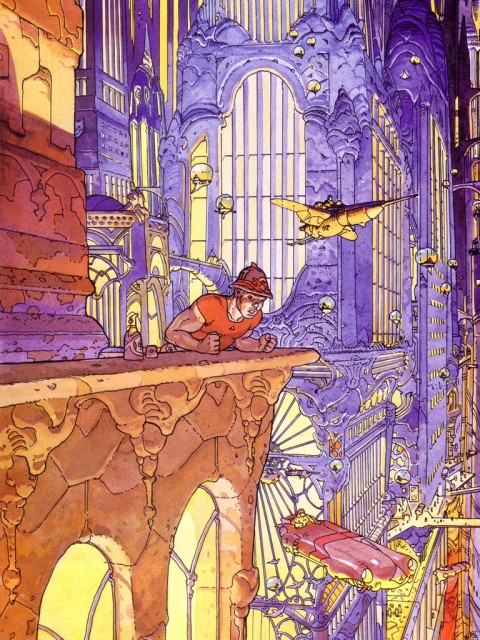
Tim Maughan on the influence of  the Jean Giraud on science fiction for Tor.com:

[The] combination of neon-lit noir streets, cramped towering city blocks, airborne traffic jams and scruffy characters seems almost a cliche today. But this was the first time anything like this had been drawn; and the first time science fiction had embraced the visual chaos of realistic urban environments. And the groundbreaking work is not just there in the architecture and mechanical designs; it’s apparent in the fashions and clothes of the city’s inhabitants. Although fantastic, exaggerated and other-worldy the city of The Long Tomorrow comes alive from the page because it feels so real, so layered and built — it is the urban paradise and nightmare of every industrial city from Tokyo to London.

The Catharsis of Exhaustion — Tim Parks on when to finish a book for the NYRB:

Other writers deploy what I would call a catharsis of exhaustion: their books present themselves as rich and extremely taxing experiences that simply come to an end at some point where writer, reader and indeed characters, all feel they’ve had enough… [These] writers it seems to me, by suggesting that beyond a certain point a book might end anywhere, legitimize the notion that the reader may choose for him or herself, without detracting anything from the experience, where to bow out.

Detachment — Edward St. Aubyn, Patrick Melrose Novels and At Last, profiled in the New York Times:

 “[There] is something morally condescending about forgiveness… Detachment is what interests me, seeing how people couldn’t have been any other way, how they were the product of forces that they had no control over… I was in the downstream of my father’s unhappiness, but it must have been hell to be him.”

And finally…

The Beat Hotel — A new documentary about the cheap no-name hotel at 9 rue Git le Coeur in Paris that harboured the likes of Allen Ginsberg and William Burroughs:

1 Comment

Monday Miscellany

It is all hands to the pump at The Optimist HQ right now (meetings, deadlines, house maintenance, and vomit-propelled kids), but apologies for the missing links on Friday. Here’s a very quick Monday round-up to make up for it:

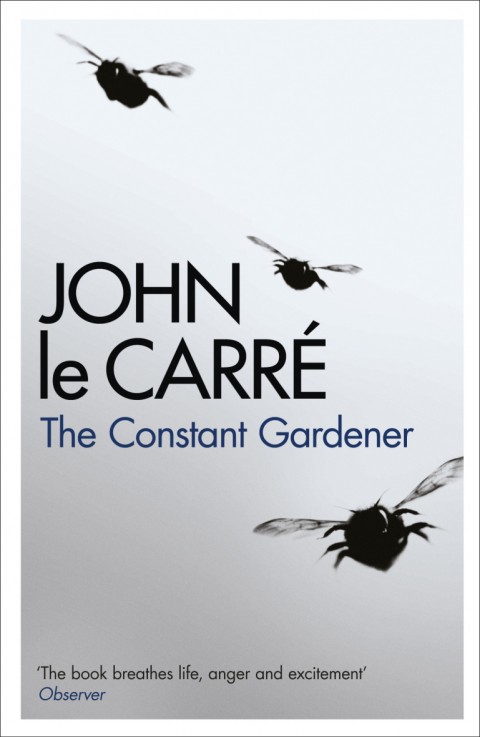
Designer Stuart Bache talks to Faceout Books about his John Le Carré covers.

I also talked to Stuart about his designs here.

Nicholas Carr, author of The Shallows, chooses five books on the impact of the information age at The Browser.

The Writer’s Job — Tim Parks on writing as a career choice:

Creative writing schools are frequently blamed for a growing standardization and flattening in contemporary narrative. This is unfair. It is the anxiety of the writers about being excluded from their chosen career, together with a shared belief that we know what literature is and can learn how to produce it that encourages people to write similar books. Nobody is actually expecting anything very new. Just new versions of the old. Again and again when reading for review, or doing jury service perhaps for a prize, I come across carefully written novels that “do literature” as it is known. Literary fiction has become a genre like any other, with a certain trajectory, a predictable pay off, and a fairly limited and well-charted body of liberal Western wisdom to purvey. Much rarer is the sort of book… where the writer appears, amazingly, to be working directly from experience and imagination, drawing on his knowledge of past literature only in so far as it offers tools for having life happen on the page.

1 Comment

E-Books Can’t Burn

Author Tim Parks has an interesting post on the virtues of e-books on the NYRB blog:

The e-book, by eliminating all variations in the appearance and weight of the material object we hold in our hand and by discouraging anything but our focus on where we are in the sequence of words (the page once read disappears, the page to come has yet to appear) would seem to bring us closer than the paper book to the essence of the literary experience. Certainly it offers a more austere, direct engagement with the words appearing before us and disappearing behind us than the traditional paper book offers, giving no fetishistic gratification as we cover our walls with famous names. It is as if one had been freed from everything extraneous and distracting surrounding the text to focus on the pleasure of the words themselves…Add to that the e-book’s ease of transport, its international vocation (could the Iron Curtain have kept out e-books?), its indestructibility (you can’t burn e-books), its promise that all books will be able to remain forever in print and what is more available at reasonable prices, and it becomes harder and harder to see why the literati are not giving the phenomenon a more generous welcome.

It is encouraging to see a writer at the venerable NYRB enthusing about e-books, but two things immediately spring to mind. First, that reading on the screen might present more, not fewer, distractions than reading an unconnected book. And, second, the idea that e-books — which can not only be monitored but endlessly rewritten and immediately deleted across an entire network without a reader’s permission — are some how less vulnerable than paper-ones seems, to put it politely, naive.

2 Comments

Something for the Weekend

Adrift in the World — Tim Parks on fiction and place for the NYRB Blog:

If there is a problem with the novel, and I’m agreed with [David] Shields that there is, it is not because it doesn’t participate in modern technology, can’t talk about it or isn’t involved with it; I can download in seconds on my Kindle a novel made up entirely of emails or text messages. Perhaps the problem is rather a slow weakening of our sense of being inside a society with related and competing visions of the world to which we make our own urgent narrative contributions; this being replaced by the author who takes courses to learn how to create a product with universal appeal, something that can float in the world mix, rather than feed into the immediate experience of people in his own culture.

The Degree-Zero of Typeage — The “un-Google-able” Jenny Hendrix on Tintin for LA Review of Books:

Hergé himself described Tintin as the “degree-zero of typeage — a typographic vanishing point.” The formulation suggests Samuel Beckett, and there is indeed something Beckettian about Tintin. In French, appropriately, the phrase “faire tintin” means something approximating “to go without” or “to be frustrated.” Tintin may be a reporter, motivated, like any good journalist, by the hint of a good story, but only in his very first of his 24 adventures does he actually file copy. He was born 15, and supposedly stays that way, though it is hard to imagine he’s any age at all. He has no last name, no parentage and no past, no desires and no sexual identity. Even his appearance has little to say about him: his face is just a circle, with two black dots for eyes and a black, semi-circular wedge of mouth. He could be anyone, and frequently is…

Super-Punch — The New York Times reviews ‘Printing for Kingdom, Empire & Republic: Treasures From the Archives of the Imprimerie Nationale’, an exhibition of historical steel punches, copper matrices, and typefonts at the Grolier Club in New York:

[T]hese exquisite artifacts… offer a reminder, in the ethereal era of bitmapping, that type was once the tangible province of engravers and metal casters who labored in unforgiving but enduring media. To make a C with a cedilla, for example, involved a lot more effort and thought than holding down the Option key on your Mac. A comma-shaped steel appendage had to be lashed with string to the bottom of the C punch to produce a new matrix.

“People are practically printing books with their smartphones,” Mr. Fletcher said, in a tone suggesting that he did not think this was such a good idea. “It’s much more gratifying to be able to touch something and find out it’s real, rather than a matter of bits and bytes.”

Comments closed

Midweek Miscellany

There’s been much speculation online about who designed the wonderful hand-drawn cover for Big Machine by Victor LaValle (pictured above). Thanks to the nice folks at UK publisher No Exit, I can finally identify the designer as Lynn Buckley, who originally designed the cover for the US publisher Spiegel & Grau.

Collected — Gary Groth, co-founder of alternative comics publisher Fantagraphics, talks about the state of the industry with the Comic Book Reporter (via Robot 6):

By and large, nobody publishes alternative comic books anymore. The reason is fairly obvious; since the reader knows it’s going to be collected in a graphic novel, there’s very little reason for them to buy a twenty-four page comic of something he’s going to get a year or two down the line as a graphic novel, and in the way it probably ought to be published anyway, collected in a single work. I think it’s just an inevitability of the rise of the graphic novel as the dominant form of alternative comics. I don’t know how accelerated that’s going to be for mainstream comics. It feels like it’s headed that way.

Lingua Franca — Tim Parks on translation and international literature for the NYRB:

[N]either readers nor writers are happy any longer with the idea that a literary text’s nation or language of origin should in any way define or limit the area in which it moves, or indeed that a national audience be the first and perhaps only arbiter of a book’s destiny. We feel far too linked, and linked in the immediate present, not to want to see immediately what books are changing or at least entertaining the whole world. And if we are writers, of course, we want our own books to travel as widely as possible.

And finally…

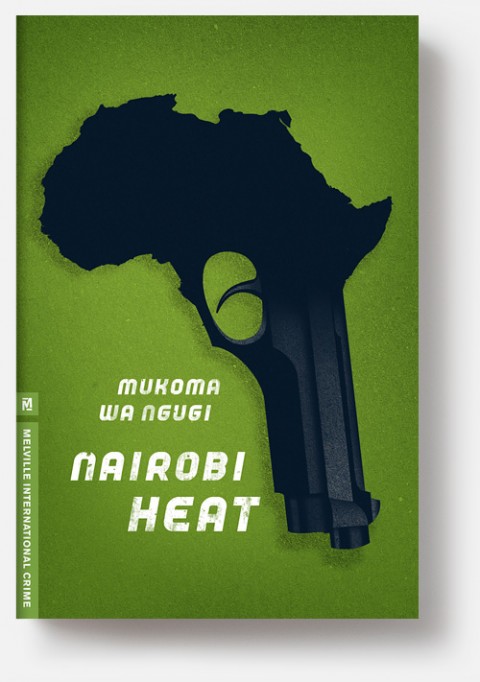
Chisel Away — An interview with designer Christopher Brian King, art director at Melville House, at Slated Magazine:

On a conceptual level, [designing for book covers] actually isn’t much different from designing a logo, for example. After all, a logo has to give you a glimpse into the whole story of a company, so it comes down to the same challenge: how do I chisel away at this big, complicated story until it becomes a single elegant image which explains what the whole thing is about? Where book covers differ is that you have a much larger toolkit to work with—typography, color, illustration photography, production tricks, or anything else. Since it’s so open-ended, the real challenge starts to become figuring out which tool is best to use on any given project.

3 Comments