Skip to content

Tag: technology

Out of Print

Out of Print, a documentary by Vivienne Roumani about “the turbulent and exciting journey from the book through the digital revolution,” will première at  the Tribeca Film Festival on April 25th:

[vimeo http://vimeo.com/54234607 w=480]

The film features interviews with Scott Turow, Ray Bradbury, and Amazon.com founder and CEO Jeff Bezos among others.

Comments closed

Books Are Amazing, Guys


Books. Will. Never. Be. Cool.

The latest Supermutant Magic Academy webcomic by Jillian Tamaki.

Between this, Richard Nash, Evan Hughes, and Mike Shatkin, books have been having a rough time this week. (But I’m still keeping the faith).

Comments closed

Something for the Weekend

Impressionable Minds — Edward Tenner on Al Capp: A Life to the Contrary and the legacy of the controversial cartoonist, at The Atlantic:

I still think of Fosdick as Capp’s masterpiece, running postmodern-style as a comic strip within a strip and accepted good-naturedly by Chester Gould, creator of its target Dick Tracy, for whom Capp always professed the highest regard. Its greatness exists even if Capp bowed to 1950s social conservatism in marrying Li’l Abner and Daisy Mae (which his emerging rival Charles Shultz called the worst comic-strip decision ever) in 1952. Even Disney didn’t hitch Mickey and Minnie Mouse.

Yet Fosdick, who had been introduced a decade earlier, was a pivotal character, probably the most subversive of authority of any of the comic personalities, but presented with such engaging absurdity that even Dr. Fredric Wertham’s anti-comic crusade could not stop him. As Shumacher and Kitchen say, it was an adult strip—and yet it was one acceptable on a Sunday morning around the family dining table, whatever its effects on impressionable young minds.

Friends Electric — Nicholas Carr, author of The Shallows, on the difference between online and offline experiences:

The reason people struggle with the tension between online experience and offline experience is because there is a tension between online experience and offline experience, and people are smart enough to understand, to feel, that the tension does not evaporate as the online intrudes ever further into the offline. In fact, the growing interpenetration between the two modes of experience—the two states of being—actually ratchets up the tension. We sense a threat in the hegemony of the online because there’s something in the offline that we’re not eager to sacrifice.

And finally…

Who says publishing is full of over-caffeinated alcoholics?Prospero on the future of bookstores:

For a bookstore to remain successful, it must improve “the experience of buying books,” says Alex Lifschutz, an architect whose London-based practice is designing the new Foyles. He suggests an array of approaches: “small, quiet spaces cocooned with books; larger spaces where one can dwell and read; other larger but still intimate spaces where one can hear talks from authors about books, literature, science, travel and cookery.” The atmosphere is vital, he adds. Exteriors must buzz with activity, entrances must be full of eye-catching presentations and a bar and café is essential.

Comments closed

TateShots: Kraftwerk

Guardian journalist Alexis Petridis on the first performance of KRAFTWERK — THE CATALOGUE 1 2 3 4 5 6 7 8 at the Tate Modern in London:

Comments closed

The Disappearance of Darkness

In this documentary short, Toronto-based photographer Robert Burley talks about his project documenting the demise of the photographic industry since 2005:

The photographs from the project are collected in the book The Disappearance of Darkness published by Princeton Architectural Press earlier this month.

(Note: Princeton Architectural Press are distributed in Canada by my employer Raincoast Books)

Comments closed

Midweek Miscellany

A few remembrances of art critic Robert Hughes, author of The Shock of the New, Nothing If Not Critical and Things I Didn’t Know among others, who died earlier this week aged 74…

Maria Bustillos for The Awl:

“The Shock of the New”… brought him fame, and no wonder. It’s a marvel: a solid education in post-Impressionist modern art of the 20th century in the form of a luscious entertainment stretching over hours and hours; awareness, scholarship, wit, and a visual sensitivity matched for once by an equally sensitive sense of language, all delivered in a brisk, whip-smart, slightly clipped Anglo-Australian voice of enormous power and beauty.

Adam Gopnik for The New Yorker:

Hughes believed in modern art with something close to innocence. Although “The Shock of the New” is in many ways an account of the tragedy of modernism—the tragedy of Utopias unachieved, historical triumphs made hollow, evasions of market values that ended by serving them—that tragedy is more than set off by the triumph of modern artists.

Jonathan Jones for The Guardian:

Hughes believed in modern art, whose story he told more eloquently than anyone else ever has. He was not some stick-in-the-mud. But he compared art in the 1900s with the art of today and observed that even our best do not deserve comparison with the pioneers of modernism. This is a truth that is hard to refute. The words of Robert Hughes have cost me a lot of sleep.

I’m sure there are many more… What a loss…

See also: obituaries in The Guardian,  New York Times, and The Telegraph.

Fertilizer — The always fascinating Jeet Heer reviews Blown Covers: New Yorker Covers You Were Never Meant to See by Françoise Mouly, for the LA Review of Books:

the deeper value of Blown Covers is the insight it gives us into Mouly’s editing process. Editing is a very difficult art to write about, being by its very nature invisible, and based on thousands of tacit, unstated backstage decisions. Blown Covers shows that every idea that makes the page requires an editorial environment where new concepts are constantly being generated. Since the rejection rate is high, this can be frustrating for artists, but Mouly gets around this problem in part by allowing her artists to go all out during the brainstorming sessions, so that even if the idea doesn’t make the cover there is still the pleasure of daring to think of something new and fresh. The failed ideas are the necessary fertilizers of successful covers.

And finally…

Collective Unintelligence — James Gleick, author of The Information, on Autocorrect, for the New York Times:

In the past, we were responsible for our own typographical errors. Now Autocorrect has taken charge. This is no small matter. It is a step in our evolution — the grafting of silicon into our formerly carbon-based species, in the name of collective intelligence. Or unintelligence as the case may be.


2 Comments

Bill Moggridge: The Design of Service and Education

Bill Moggridge, founder of design company IDEO and current director of the Smithonian Cooper-Hewitt National Design Museum in New York, discusses design and the Cooper-Hewitt’s collection:

Comments closed

RSA Animate: The Power of Networks

In this new RSA Animate, Manuel Lima, senior UX design lead at Microsoft Bing and author of Visual Complexity, talks about networks and the challenges of mapping a complex world:

Comments closed

Midweek Miscellany

Krazy Kriticism — Sarah Boxer on George Herriman’s long-running newspaper comic strip Krazy Kat, at the LA Review of Books:

[E]ven 95 years ago the truth was as loud and clear as a pair of clapping mitten rocks rising up out of the mesa encantada: Krazy Kat is perfect and Herriman is a genius — linguistically, graphically, poetically, onomatopoetically, every which way. Confronted with such perfection, most of Herriman’s critics, once they finish reciting plot, affecting accents, and making comparisons to classics, have always thrown up their hands and said, “Behold!” But does it have to be that way? The genius label, after all, has never kept Shakespeare or Picasso scholars from finding something to say.

A Natural End — An interview with Tom Gauld at The Comics Journal:

I never draw things big. Even if something needs to be big, I’d still draw it small and scale it up. I like to draw small (my drawings are not much bigger than the finished, printed comics) as it reigns in perfectionism, and I get a bit of natural wobble and error into the drawings. One problem with digital is that you can zoom in and in forever: but with a pen, the width of the line gives a natural end.

Canaries — Nick Harkaway, author of The Blind Giant, talks about books on the digital age at The Browser:

Our environment seems to be constantly filled with moral panics. When you open the newspaper, there’s always a piece about how the digital environment is making us stupid or paranoid, but so little of it has any basis. There was a piece in The Guardian the other day about how behaviour on Facebook was linked to socially aggressive narcissism. You had to go six paragraphs into the story to find out that the link wasn’t causal. It was just as possible that Facebook was the canary in our coal mine, telling us that our society was aggressively narcissistic in general – which I don’t find terribly difficult to believe.

And finally…

Little Glories —  Sam Taylor, who translated HHhH by Laurent Binet, on the art (and perils) of translation, at the Financial Times:

There is… something else slightly troubling about the relationship between authors and translators. It can, I suppose, be reduced almost to a hierarchical relationship: the author is primary, the translator secondary. We notice when a translation is bad, but when it is good we forget that what we are reading is a trans­lation at all. However, while there is little glory in translation, and although I began doing it only for financial reasons, I wouldn’t want to give it up now – even were I able to make a living from writing novels.

Comments closed

Midweek Miscellany

Insufficiently Bored — An essay by author Toby Litt on technology and reading (and writing) at Granta:

Proposition: ‘The human race is no longer sufficiently bored with life to be distracted by an art form as boring as the novel.’

Perhaps novels will continue, but instead of the machine it will be the connectivity that stops, or becomes secondary.

What we’re going to see more and more of is the pseudo-contemporary novel – in which characters are, for some reason, cut off from one another, technologically cut off. Already, many contemporary novels avoid the truly contemporary (which is hyperconnectivity).

Rereading All Over Again — Bharat Tandon reviews On Rereading by Patricia Meyer Spacks and Second Reading by Jonathan Yardley for the TLS:

[If] rereading… teaches us anything, it is that the conjunctions between readerly and textual lives will always be unpredictable and promiscuous ones. “What did you make of that book?”, runs the conventional phrase. As we revisit the objects of our reading, like recognizable but weathered landmarks, there can be no full going back, because we are not exactly the same people we were; but the consolation of rereading is the knowledge that we are these different people in part because of what those books have made of us.

Artwork Confidential — An interview with Daniel Clowes about the first retrospective museum exhibition of his work, “Modern Cartoonist: The Art of Daniel Clowes, and the accompanying monograph at Publishers Weekly:

[T]he work wasn’t created to be seen on a wall. The final artwork is the book. But I collect original artwork. It has a meaning to me that goes beyond the printed page. It’s the only [kind of] artwork you can see on a wall that you may already have a personal relationship with. If you read the story that that artwork comes from, you have a connection to it in a way you don’t have with a painting or something that’s only intended to be seen in that context. That made it interesting to me. There’s something about that final piece as an artifact of the printed work that gives it a certain value and magic. My goal with both [the exhibition and the book] is to get people interested in the work and then to read the books. If that is achieved, then both of these will have been a success.

And finally…

Six Degrees of Aggregation — A really fascinating history of the Huffington Post at the CJR:

Huffington Post, they understood, was not an enterprise whose core purpose was the creation of works of journalism—as significant or mundane as that can be. It was in the content business, which created all sorts of possibilities of what it could gather and, with a new headline and assorted tags, send back out, HuffPost’s logo affixed. Content would come to mean original reporting by Sam Stein or Ryan Grim from Washington, as well as Alec Baldwin’s blog, Robert Reich’s rants about the forsaking of the American worker, a “Best Retro Bathing Suits” slide show, “Why Women Gladly Date Ugly Men,” David Wood’s Pulitzer Prize-winning 10-part series on wounded veterans, “Nine Year Old Girl’s Twin Found Inside Her Stomach,” campaign dispatches from the Off The Bus citizen journalists, “Angelina and Brad Wow at Cannes,” and “Multitasking Wilts Your Results and Relationships”—as well as Nico Pitney’s blogging on the violence after the disputed 2009 Iranian presidential elections and the 111,000 comments it generated. Because comment was content, too.

Comments closed

The Impact of Kickstarter, Creative Commons & Creators Project | Off Book

The latest installment of the PBS short documentary series Off Book looks at how interconnectivity is changing the funding and sharing of creative projects:

Comments closed

Monday Miscellany

It is all hands to the pump at The Optimist HQ right now (meetings, deadlines, house maintenance, and vomit-propelled kids), but apologies for the missing links on Friday. Here’s a very quick Monday round-up to make up for it:

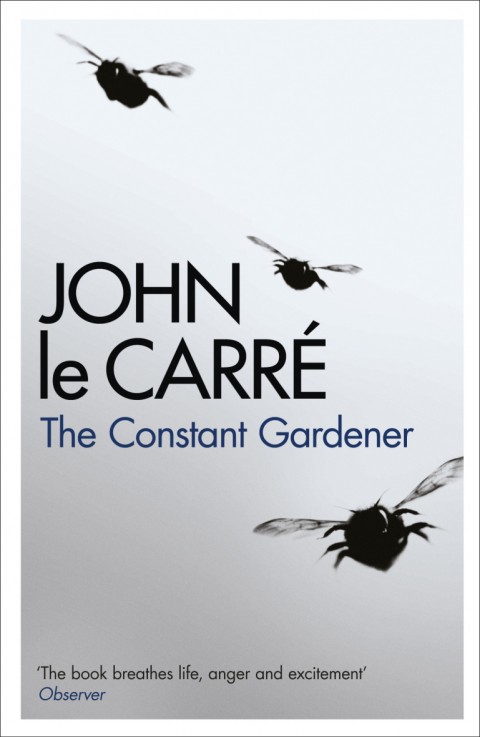
Designer Stuart Bache talks to Faceout Books about his John Le Carré covers.

I also talked to Stuart about his designs here.

Nicholas Carr, author of The Shallows, chooses five books on the impact of the information age at The Browser.

The Writer’s Job — Tim Parks on writing as a career choice:

Creative writing schools are frequently blamed for a growing standardization and flattening in contemporary narrative. This is unfair. It is the anxiety of the writers about being excluded from their chosen career, together with a shared belief that we know what literature is and can learn how to produce it that encourages people to write similar books. Nobody is actually expecting anything very new. Just new versions of the old. Again and again when reading for review, or doing jury service perhaps for a prize, I come across carefully written novels that “do literature” as it is known. Literary fiction has become a genre like any other, with a certain trajectory, a predictable pay off, and a fairly limited and well-charted body of liberal Western wisdom to purvey. Much rarer is the sort of book… where the writer appears, amazingly, to be working directly from experience and imagination, drawing on his knowledge of past literature only in so far as it offers tools for having life happen on the page.

1 Comment