Skip to content

Tag: technology

How The New York Times Works

gallery_1423676945-front_page_markup

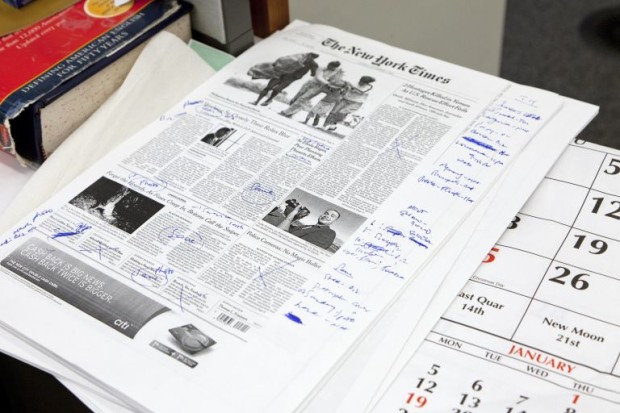
In a fascinating piece for Popular Mechanics, Reeves Wiedeman looks at how the New York Times gets made in 2015. It’s interesting how their graphics department has evolved in the past few years:

The Times employs approximately 1,300 journalists, a classification that now includes much more than writers, editors, and photographers. There are videographers and developer–journalists and graphic designers, who insist that you not call them graphic designers. Every section of the paper has been affected by the Internet, but the graphics department is hardly recognizable from the days not long ago when, to accompany a story about Borneo, for example, it would simply produce a small black-and-white map of Borneo. [Graphics editor] Duenes’s desk still produces traditional newspaper graphics, but it also now employs thirty-five people who have expertise in statistics, programming, cartography, 3D modeling, motion graphics, audio production, or video editing. At the department’s two long desks, designer Haeyoun Park combs through data on the racial breakdown of police forces—a story the graphics team reported without any instigation from print reporters—while nearby Matt Bloch is updating the paper’s digital hurricane tracker… A breaking-news event might require eight members of Duenes’s team, who are otherwise free to focus on the kind of in-depth reporting for which the Times‘ print reporters are generally known. Last August a graphics editor who had been tracking police data for four years discovered that the New York Police Department had more or less ended its controversial stop-and-frisk policy, which some critics had described as racial profiling. This was news to the reporters on the Metro desk, and the editor there assigned a story to go along with the graphics department’s analysis.

The story, and the graphic, ran on the front page.

I also particularly liked the stuff about their R & D Lab:

The R&D Lab opened nine years ago with the goal of looking three to five years into the future. (TheTimes declined to say how much it cost to build.) Marc Frons, the company’s CIO says he has no idea how people will interact with theTimes in ten years, “whether it’s on your wrist, or your forehead, or you take a pill, or it’s a holographic contact lens, or a head-up display in your vehicle—or on your mirror in your bathroom.” The lab explored E Ink before the Kindle even existed, was responsible for delivering the earliest versions of the paper’s mobile news alerts, and helped the Times become the first publisher with an application on Google Glass. One of the lab’s researchers recently designed a brooch programmed to light up whenever a topic is mentioned that matches something the wearer read about online that day. What good would that do, exactly? Boggie answers with enthusiasm, “We don’t know yet!”
1 Comment

Ten Good Reasons the Book is Important

Over at Design Observer, writer Timothy Young gives 10 reasons why the book is still important. Number seven is that it is an object fixed in time:

“A book can tell us about its status in history. If we look through first editions of Moby Dick or Leaves of Grass, we find that they give away information not only about when they were created, but also about the worlds in which they were created, by way of advertisements, bindings, the quality of their paper, and watermarks on that paper. Such components are often not captured by scanning or are flattened out to make them of negligible use. In Nicholson Baker’s Double Fold—his saga about how libraries microfilmed runs of newspapers in the 1950s and 1960s and then discarded them—one of his chief complaints was that the filmers skipped advertising supplements and cartoons: things that had been deemed unimportant.”

Here’s the full list:

  1. It is a piece of technology that lasts
  2. It needs very little, if any, extra technology to be accessed
  3. The book retains evidence
  4. Books are true to form
  5. Each copy of a book is potentially unique
  6. Printed items are consumable goods
  7. A book is an object fixed in time
  8. A book can be an object of beauty and human craftsmanship
  9. When you are reading a book in a public place, other people can see what you are reading
  10. The Internet will never contain every book
1 Comment

Jesse and the Typewriter Shop

Related to yesterday’s post on Gramercy Typewriter Co. in New York, here’s a short film about U.S. Office Machines, one of the last remaining typewriter repair shops in Los Angeles:

https://vimeo.com/43212146

(Thanks Sam!)

1 Comment

The Last of the Typewriter Men

last-typewriter

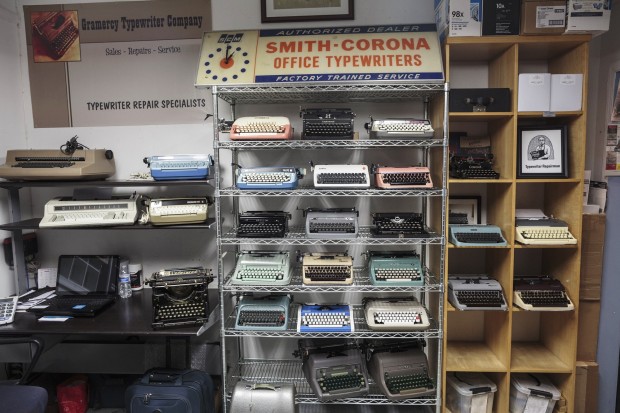
At Medium, Mary Pilon profiles Paul Schweitzer of Gramercy Typewriter Co. — a father-and-son business in the Flatiron District of New York that will still repair your typewriter:

“Computers are being updated all the time,” he said, rolling his eyes at a PC laptop his son keeps in the corner. “Your computer becomes obsolete in a very short amount of time. It’s slow. It doesn’t have enough memory. A new model comes out. A printer won’t work with it anymore. That Underwood over there” — he points at a gleaming, black machine fit for James Joyce — “it’s 100 years old. What computer is going to last 100 years?”

Schweitzer was also the subject of this 2012 documentary short by Prospect Productions:

And if you can’t get enough of this stuff, I was reminded of this 2010 Wired article about the last generation of typewriter repairmen in California.

3 Comments

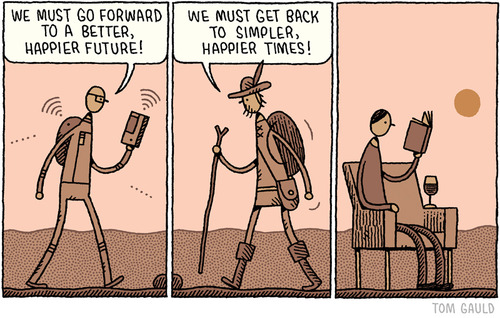
Happier Times

happier-future

Tom Gauld

Comments closed

Have You Seen My Kindle?

have-you-seen

Tom Gauld

Comments closed

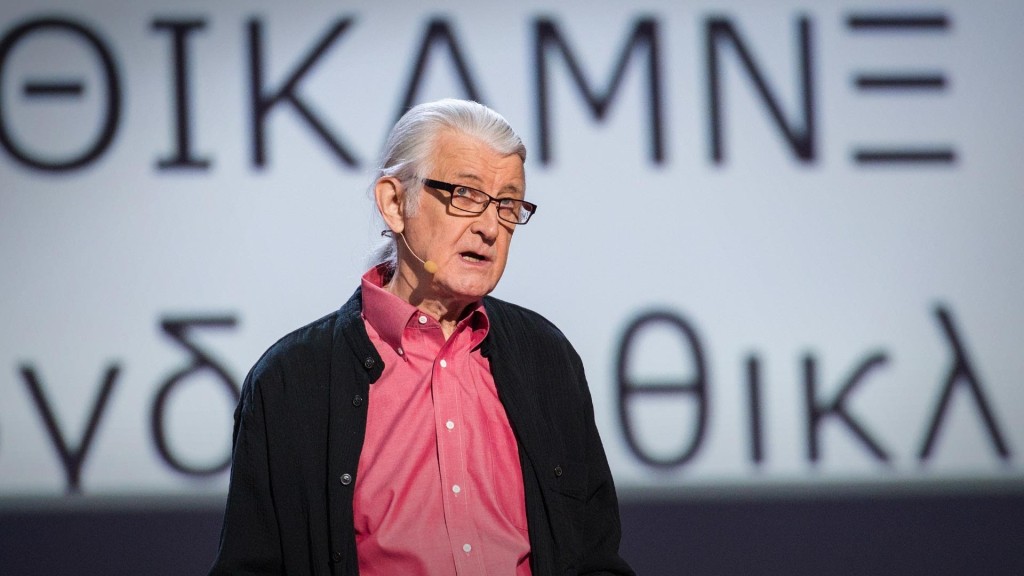
Matthew Carter: My life in typefaces

matthew-carter-TED
Type designer Matthew Carter, creator of typefaces such as Verdana, Georgia and Bell Centennial, talks about his career, working within constraints, and the connection between technology and type for TED Talks:

1 Comment

Hold or fold

Basbanes-On-Paper

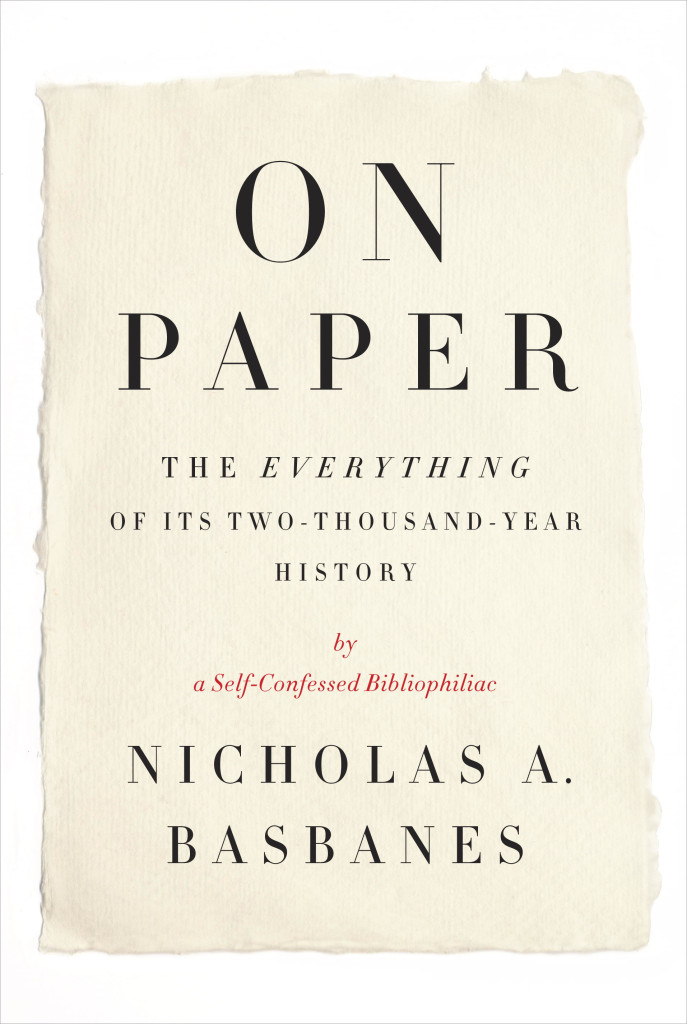
At the TLS, Leah Price reviews On Paper: The Everything of Its Two-Thousand-Year History by Nicholas A. Basbanes:

You may be reading this across a fold of paper, or you may be squinting at an electronic screen. Two centuries ago, the former would have seemed almost as futuristic as the latter. Wood-based paper wasn’t successfully patented until 1845, after inventors had cooked straw, boiled banana peels, crushed walnut shells and dried seaweed. The coinage “pulp fiction” followed once it became clear that the new technology produced pages more brittle than those manufactured from costlier linen rags. By the dawn of the digital age, W. J. T. Mitchell could dismiss books as “tree flakes encased in dead cow”.

Unlike those cows, however, paper remains in robust health. One reason is that it combines apparently irreconcilable properties – durability (it outlasts papyrus and floppy disks alike), portability (a precondition of modern postal systems) and foldability (one of Nicholas A. Basbanes’s most engrossing chapters concerns origami). That trio allowed it to displace other writing surfaces that were fragile, unwieldy or both: clay, stone, papyrus, parchment, metal, bark, bones and even seashells.

And inscription is just the beginning. Basbanes points out that during the Second World War, the same long paper-making tradition that allowed Japan to devise bomb-bearing paper balloons rendered its cities uniquely vulnerable to incendiary bombs: more civilians died in the blazes spread by paper windows and screens than from either of the nuclear strikes on Hiroshima and Nagasaki. Meanwhile, generals were deciding how much toilet paper to issue to soldiers: the British got three sheets a day, American GIs twenty-two.

Comments closed

Stephen Page: Past, Present and Future

The Bookseller has posted an edited transcript of a recent speech by Stephen Page, chief executive of Faber & Faber, at the IPG and Publishing Scotland conferences:

One joy of digital is that it promotes thinking about all incarnations of reading, from the insubstantial to the disposable to the luxurious. We’re back to a place where we must imagine all the means we have of expressing value for a text. Where a reader will buy a £100 edition, let’s make that, and a 99p e-book where that’s appropriate… In the future we’ll spend a lot more time talking and listening to consumers. Whether they’ll listen will depend on our skills and the degree of fandom for the writer. If we’re successful, we’ll get a conversation going among consumers, and if we’re really skilful they’ll come back to talk some more. Having the systems and skills to do this will be the core to a publisher’s commercial opportunity, alongside taste.

Comments closed

Worse than Wal-Mart?

In an excerpt from his new book, Mindless: Why Smarter Machines Are Making Dumber Humans, Simon Head compares the labour practices of Amazon and Walmart:

Amazon equals Walmart in the use of monitoring technologies to track the minute-by-minute movements and performance of employees and in settings that go beyond the assembly line to include their movement between loading and unloading docks, between packing and unpacking stations, and to and from the miles of shelving at what Amazon calls its “fulfillment centers”—gigantic warehouses where goods ordered by Amazon’s online customers are sent by manufacturers and wholesalers, there to be shelved, packaged, and sent out again to the Amazon customer…

…With Walmart’s and Amazon’s business model, the workplace practices that raise employee productivity to very high levels also keep employees off balance and thus ill placed to secure wage increases that match their increased output. The “cult of the customer” preached by both corporations is a scented smoke screen thrown up to hide this fact. Apart from the model’s intensive use of IT, there is not much to distinguish its methods from those of the primitive American and European capitalism of the late nineteenth and early twentieth centuries.

UPDATE: George Packer, continuing his series about Amazon, touches upon a similar topic in a new post for The New Yorker:

[T]hese companies are everywhere and nowhere, ubiquitous in our lives but with no physical presence or human face. They are regarded by many users as public resources, not private corporations—there for us—and their own rhetoric furthers this misperception: Facebook’s quest for a “more open and connected world”; Google’s motto, “Don’t be evil,” and its stated mission to “organize the world’s information and make it universally accessible and useful”; Amazon’s ambition to become “Earth’s most customer-centric company.” Because these endeavors seem to involve no human beings, no workers, other than ourselves—the supposed recipients of all the benefits—it takes an effort to realize that the tech economy is man-made, and that, as with the economies that preceded it, human beings have the capacity to shape and reform it for the public good. It would be easier to remember this if every time you clicked “BUY,” searched for an article, or texted a friend your screen flashed the face of a worker who once held a job that made way for your seamless online experience.

Comments closed

David Byrne on Creativity and Constraints

David Byrne talks about music, technology and his recent book How Music Works (now out in paperback), at Salon:

I’m not saying that the artist doesn’t put their feelings into it, or any part of their biography, but that there’s a lot of constraints and considerations and templates that they work with – unconscious decisions or constraints put upon them that guide what they’re going to do… Our imaginations are constrained by all these other things — which is a good thing. There’s kind of a process of evolution that goes on where the creative part of you adapts to whatever circumstances are available to you. And if you decide you want to make pop songs, or whatever, there’s a format. You can push the boundaries pretty far, but it’s still a recognized thing. And if you’re going to do something at Lincoln Center, there’s a pretty prescribed set of things you are going to do. You can push that form, but kind of from inside the genre. So I guess I’m saying that a lot of creative decisions are kind of made for us, and the trick is then working creatively within those constraints.

Comments closed

Kodak: Bankrupted By Its Own Innovations

In an interesting piece on the decline of Kodak, Kenny Suleimanagich describes how it was not simply a reluctance to innovate that caused problems at the company, it was that they brought their innovations to market too early:

No matter what [Kodak] came up with, nothing digital would sell. To consumers, everything was too expensive, and to professionals, the quality was not yet good enough. “It was a difficult thing to market,” [computer engineer Peter] Sucy admits, “especially for people who didn’t have any kind of experience marketing this kind of product; people who didn’t really know what it did.”

In the end, being early did not help, because the market simply wasn’t ready. As obvious as the endgame was, Kodak’s leaders were faced with an unwinnable predicament: either keep investing in end-of-life products until the profits dried up — and die over the long run; or switch to stillborn product lines that produced mostly red ink in the ledgers — and die immediately.

In his book, The Disappearance of Darkness: Photography at the End of the Analog Era, published by Princeton Architectural Press, Toronto-based photographer Robert Burley documented the closure (and destruction) of the Kodak facilities in Rochester, Toronto, and Chalon-Sur-Saône. Pictured above are Burley’s photographs ‘View of Kodak Head Offices from the Smith Street Bridge, Rochester, New York 2008’ and ‘Implosions of Buildings 65 and 69, Kodak Park, Rochester, New York [#2] October 6, 2007.’

Burley talks about the project and the book in this short video:

A slightly longer 5- minute short about the project can be found here.

(On a related note–at least in my brain–the New York Times reported on the resurgence of vinyl over the weekend. The manufacturers are apparently having some difficulty meeting demand. The last new press was built in 1982. Perhaps analogue photography just isn’t out-of-date enough yet for some people?)

(And full disclosure etc: PA Press are distributed in Canada by my employers Raincoast Books)

Comments closed