Skip to content

Tag: superheroes

Art Spiegelman on Golden Age Superheroes

The Guardian has an essay by American cartoonist Art Spiegelman on the events that shaped the original ‘golden age’ superheroes and their creators, and why these characters still resonate with readers and movie-goers:

The young Jewish creators of the first superheroes conjured up mythic – almost god-like – secular saviours to deal with the threatening economic dislocations that surrounded them in the great depression and gave shape to their premonitions of impending global war. Comics allowed readers to escape into fantasy by projecting themselves on to invulnerable heroes.

Auschwitz and Hiroshima make more sense as dark comic book cataclysms than as events in our real world. In today’s all too real world, Captain America’s most nefarious villain, the Red Skull, is alive on screen and an Orange Skull haunts America. International fascism again looms large (how quickly we humans forget – study these golden age comics hard, boys and girls!) and the dislocations that have followed the global economic meltdown of 2008 helped bring us to a point where the planet itself seems likely to melt down. Armageddon seems somehow plausible and we’re all turned into helpless children scared of forces grander than we can imagine, looking for respite and answers in superheroes flying across screens in our chapel of dreams.

Apparently a version of this essay was originally intended to serve as the introduction to a Folio Society collection called Marvel: The Golden Age 1939–1949, but was rejected for not being ‘apolitical’.

Comments closed

Memoir, Chapter 1

Oh, Batman.

(Zachary Kanin for The New Yorker)

Comments closed

Jeet Heer on Jack Kirby

At the New Republic, Jeet Heer looks back at the work of Jack Kirby, the cartoonist who shaped the Marvel Universe and remade popular culture: 

The superhero stories Kirby created or inspired have dominated American comic books for nearly 75 years and now hold almost oppressive sway over Hollywood. Kirby’s creations are front and center in the Marvel Cinematic Universe, but his fingerprints are all over the DC Cinematic Universe too, where the master plot he created—the cosmic villain Darkseid invading earth—still looms large. It was Kirby who took the superhero genre away from its roots in 1930s vigilante stories and turned it into a canvas for galaxy-spanning space operas, a shift that not only changed comics but also prepared the way for the likes of the Star Wars franchise. Outside of comics, hints of Kirby pop up in unexpected places, such as the narrative approaches of Guillermo del Toro, Michael Chabon, and Jonathan Lethem.

If you walk down any city street, it’s hard to get more than fifty feet without coming across images that were created by Kirby or inflected by his work. Yet if you were to ask anyone in that same stretch if they had ever heard of Kirby, they’d probably say, “Who?” A century after his birth, he remains the unknown king.

Comments closed

Put Your Faith in Comics

At The New Yorker, Jia Tolentino profiles G. Willow Wilson, the writer behind Ms. Marvel, a superhero who is (in her current incarnation) a teenage Muslim from Jersey City:

The première of “Ms. Marvel” sold more copies digitally than it did in print—a company first. Marvel doesn’t release digital-sales numbers, but piecemeal statistics have shown female characters performing especially well in digital formats. Traditionally, comic books are purchased in single, floppy issues at dedicated brick-and-mortar shops, but these can be intimidating spaces for novices: when I walked into Forbidden Planet in Manhattan, I found myself wishing for the ability to act like I belonged. Some readers may simply opt to buy collected issues in paperbacks at regular bookstores or, increasingly, to download e-books. There are now, Wilson suggested, two audiences for comic books, and many people in the industry “are loath to recognize that these two audiences might want two very different things out of the same series. They don’t shop in the same places, they don’t socially overlap, and their tastes might not overlap.”

The relationship between this divided landscape and the most recent Presidential election is not lost on her. At the coffee shop, as a barista cleared our plates, we talked about how the stakes of every identity-politics debate feel heightened since November—and also about new alliances that seem to be forming in the election’s wake. Wilson spoke with some astonishment about the fact that she could include a gay secondary character in “Ms. Marvel”—the blond, popular Zoe—and still have mothers and daughters show up to her readings in hijabs. “It’s funny. Those right-wing bloggers who said my work was part of some socialist-Muslim-homosexual attack on American values, they really created the thing they feared. There wasn’t a socialist-Muslim-homosexual alliance before, but there sure as fuck is one now, and I love it.”

I don’t read a lot of comics from Marvel (or DC for that matter) these days, but Ms. Marvel is truly a joy. 

Comments closed

Superhero Comics and The Tyranny of Pew-Pew

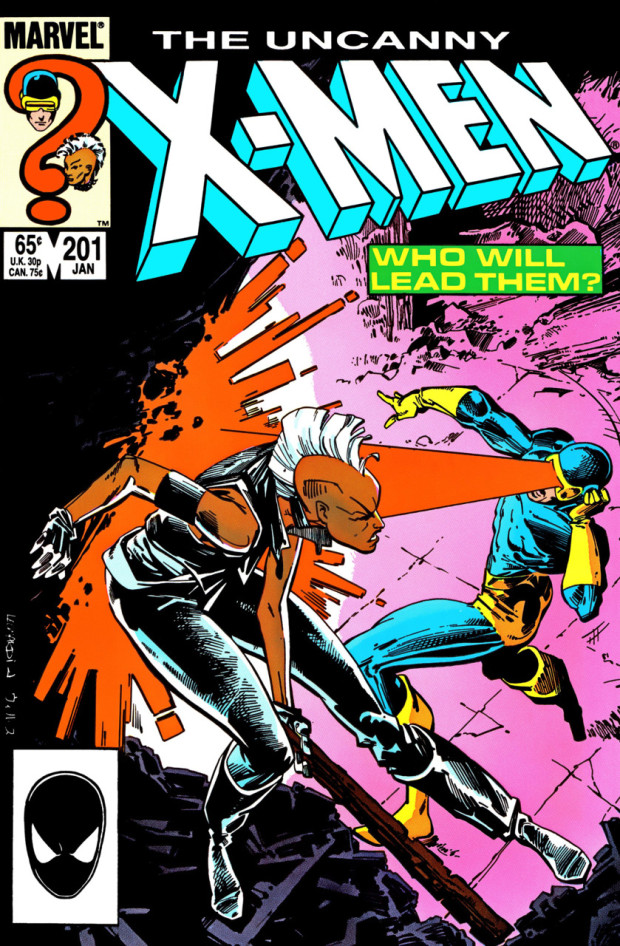
uncanny-x-men

Ta-Nehisi Coates, who writes so compellingly about culture and politics for The Atlantic, talks to Vulture about superheroes and his love of (Marvel) comics:

Comic books aren’t perfect, but listen: In the 1980s, Marvel had a black woman — not just a black woman, a woman who was born in Harlem, a woman who was African-American and whose mother was Kenyan — leading their most popular title. And then when she lost her powers, she was still kicking ass. Like she still had enough to whip Cyclops’s ass. That was something they were doing. I can’t really think of anywhere else I would’ve went at that time to see something like that. Just today I was reading that Hickman one. And this kid, Manifold, is like an Aboriginal. This is incredible! I mean this has to do with Hollywood: You don’t actually see that diversity reflected on-camera. [Comics] are not perfect, especially around gender and the women’s stuff, but you start comparing it to Hollywood, it’s not even a conversation. I mean consider it like this: There could’ve been [a Hollywood] adaptation, a true adaptation, of X-Men in which Storm was the protagonist in the way that we were reading it; that would’ve been a true rendering of what the comic book actually was. But that’s not possible, that’s not possible in Hollywood. It’s deeply sad.

Meanwhile, at the Village Voice, Alan Scherstuhl ponders The Tyranny of Pew-Pew, or how fun fantasy violence became inescapable:

Just a generation before it came to dominate our culture, comic and fantasy violence was disreputable, a little underground, scruffy and impolite. It didn’t yet have clearly established rules covering what was and wasn’t acceptable: Note how the ‘Fangoria’-lite bloodiness of the first two ‘Indiana Jones’ pictures contrasts with the gentlemen’s fisticuffs of the third one, a course correction made after the public scolded Lucas and Spielberg for having gone too far with the heart-ripping and kid-whipping. But the sadism of ‘Temple of Doom or the ‘Daredevil’ Netflix series differs from that of the Marvel films or ‘Indiana Jones and the Last Crusade’ only in tone and degree: At root, they’re all still about how awesome it would be to run around and kick everyone’s ass.

Comments closed

Child’s Play: Blockbuster Movies, Comics and Superheroes

At RogerEbert.com, Alexander Hul has an interesting piece on self-indulgent movie directors and the degeneration of blockbusters:

Artists certainly are allowed to make films that only satisfy their own creative pursuits. But blockbusters—more than any other kind of film—are conceived of as a way to entertain and satisfy audiences (so they can make money). Modern spectacles feel like they’re built to entertain and satisfy their filmmakers instead. They’re not considering who their destruction is actually for anymore. They’re just doing it. Or, as Vulture wrote, when it comes to destruction porn, “No one necessarily asks for it; it just kind of happens.” Bless his honesty, but [Damon] Lindelof’s assessment of the climactic destruction he penned for “Star Trek Into Darkness” only reinforces how embedded and unconscious this has all become for the moviemakers: “Did ‘Star Trek Into Darkness’ need to have a gigantic starship crashing into San Francisco? I’ll never know. But it sure felt like it did.” All of this makes me recall “Jurassic Park”‘s Ian Malcolm sentiment when he lectures Hammond for blindly realizing his dinosaur fantasies with the technology he has access to. Filmmakers are now so preoccupied with how much they can (and are encouraged to) destroy digitally, they don’t stop to think if they really should. They don’t stop to ask “Who is this really for?”

On a related note, Toronto-based writer Mike Doherty asks comic-store owners have blockbuster movies been good for comics?:

“I hate to say it… but after waiting so long for really good superhero movies—all my life, almost—and now they’re here, I’m almost getting bored of them. There are so many now. And they’re always basically the same story, which is not much story: bad guy versus good guy, good guy wins in the end.”

Almost getting bored of them? I think I’m already well passed that point. And much as it pains me, I’m beginning to think Alan Moore may have a point:

[Superheroes] don’t mean what they used to mean. They were originally in the hands of writers who would actively expand the imagination of their nine- to 13-year-old audience. That was completely what they were meant to do and they were doing it excellently. These days, superhero comics think the audience is certainly not nine to 13, it’s nothing to do with them. It’s an audience largely of 30-, 40-, 50-, 60-year old men, usually men. Someone came up with the term graphic novel. These readers latched on to it; they were simply interested in a way that could validate their continued love of Green Lantern or Spider-Man without appearing in some way emotionally subnormal. This is a significant rump of the superhero-addicted, mainstream-addicted audience. I don’t think the superhero stands for anything good. I think it’s a rather alarming sign if we’ve got audiences of adults going to see the Avengers movie and delighting in concepts and characters meant to entertain the 12-year-old boys of the 1950s.”

Sigh.

Comments closed

Jeet Heer: In Love With Art and The Superhero Reader


At the Comics Reporter, Jeet Heer discusses his two recent books on comics, The Superhero Reader edited with Charles Hatfield and Kent Worcester, and In Love With Art: Françoise Mouly’s Adventures in Comics with Art Spiegelman, with Tom Spurgeon: 

Strange to say, when I work on a biographical essay, I’m also often writing a type of disguised autobiography. The introduction to the first volume of the Walt and Skeezix books deals with father/son relationships. I wrote it not long after my father died. The introduction of first volume of the Orphan Annie series touches on the fact that Harold Gray never had kids and examines the theme of infertility in the strip. It was written while my partner and I were struggling with our own fertility problems. In the case of Mouly, yes, it’s true that she, like me, learned English as a second language, aided by comics. And in general, Mouly’s experiences as an immigrant speak to my own history (and perhaps even more, the lives of my parents). Mouly’s cultural interests are another commonality. One of the nicest compliments I’ve received is from Mouly herself, who told my publisher that she was happy that I wrote this book because I was someone who not only knew about comics but had a wider cultural frame of reference. One of the attractive things about Mouly is that she understands comics but has a horizon that is wider than comics culture. It might be a form of pernicious self-flattery, but I like to think the same is true of me.

The fact that Mouly is such an anomalous figure in comics makes her story interesting to me since I also feel like I’m an odd duck in the comics world. Even when I was a kid first reading comics, I paid attention to the credits to see if there were other outsiders in the field. I got a secret thrill whenever I saw Ben Oda (hey, he doesn’t sound like he’s white!) listed as letterer. And I took note of the few women in comics as well, not just Mouly but also Marie Severin, or Glynis Wein. Even as a kid, I noticed that the few women in comics were almost invariably colorists. I often wondered why. I wasn’t a particularly politically astute kid but I did notice a few things.

3 Comments

Grant Morrison | All Things Considered

Author and comics writer Grant Morrison talks about superheroes and his new book Supergods with NPR’s All Things Considered:

NPR ALL THINGS CONSIDERED: Grant Morrison Supergods

Comments closed

Something for the Weekend

A Period of Digestion — Music journalist and author Simon Reyolds talks about his new book Retromania: Pop Culture’s Addiction To Its Own Past with the A.V. Club:

[S]o much happened in the 20th century and things moved so fast, and you had this enormous capitalist engine generating all these toys and gadgets and things that became rapidly obsolescent. It’s all piled up, hasn’t it? And you think of the sheer amount of recording that went on. It always blows my mind whenever I go record shopping how many records I’ve never seen before. I’ve been in record stores forever, decades I’ve been looking through them, and I still see things I’ve never seen, artists I’ve never heard of. The sheer amount of recording that was done, it is almost like this universe of music. Daniel Lopatin in the book actually says it’s a period of digestion, we’re digesting and processing all this stuff that happened musically and in other senses in this really runaway, fast period of time of production. And perhaps that’s fine. Perhaps that’s what we need.

And on a not unrelated note…

A wide-ranging interview with Alan Moore about his new book, Extraordinary Gentlemen: Century 1969, comics and popular culture, for Wired:

[T]he overall legacy of the first decade of the 21st century has been one wherein culture mirrors what was going on in our politics during those years. We had a form of politics that was concerned with spin and surface at the expense of any kind of moral or even rational content. In keeping with our well-spun political landscape, I think a lot of contemporary art, if it has a concept it is a concept in the advertising sense. It’s a little mental pun, something that you can use to sell cars or burgers. But in terms of art, once you’ve got the idea of joke, if you like, there is absolutely no need to ever look at those works again.

And sticking with comics…

From Superheroes to Superbrands — Paul Gravett on Grant Morrison’s new book Supergods: Our World in the Age of the Superhero and the poor treatment of the original creators of the comic book superheroes (thx Ed):

How easy is it for fans and pros today, so hypnotised since childhood by these ubiquitous, constantly repromoted properties, to ignore their tarnished histories? I’ve talked recently to some fan readers who are troubled when I mention this horrific, disfigured portrait lurking beneath the polished profiles, masks and capes, hidden in the attic, but who can’t seem to help themselves from still wanting to follow these perfect-looking, super-powered Dorian Grays, no matter what. Morrison prefers to elevate the superhero as an indestructible concept, almost an independent, self-actualising entity, acknowledging only slightly its murkier commercial side, but glossing over the exploitation rife in this business, then and now. Unlike earlier ‘public domain’ gods and goddesses from antiquity and religious faiths, Superheroes are as much Superbrands, properties that must make profits for DC, part of Time-Warner-AOL, and Marvel, bought by Disney. While Morrison and his ilk earn tidy sums from endless, spiralling makeovers of these franchises, both publishers are aggressively fighting lawsuits over ownership against the estates of Siegel and of Jack Kirby, joint architect of the Marvel Universe.

And finally…

A fascinating article by Adrian Hon on ‘cargo cults’ and Unbound, a crowdfunding site for books, in The Telegraph (via Waxy):

Unbound isn’t some fly-by-night operation; it was heavily promoted at the Hay Festival, it’s received gushing praise across the media – yet it may end up with a one in six success rate.

So, why was Unbound set up in the first place? It’s because they constructed a cargo cult, believing that if they mimicked the superficial elements of successful crowdfunding, they could enjoy the same success as others – but perhaps even more, thanks to their relationships with publishers, agents, authors, and the media.

It is perhaps a little unfair to single out Unbound. Traditional publishers who jump on the latest genre bandwagon without truly understanding what made the original popular are just as guilty.

Comments closed