Skip to content

Tag: stefan zweig

The Lost World of Stefan Zweig

collected-stories

At the LA Review of Books, Tara Isabella Burton reviews The Collected Stories of Stefan Zweig recently published by Pushkin Press

Zweig’s world is the world of the exile: the world of those displaced — by war, imprisonment, or by life, for whom hotels on Lake Geneva or the French Riviera are the only safe, if liminal, spaces. His characters are bereft of any sense of belonging; in the absence of a network, a sense of home, their emotions are heightened and their actions become ever more erratic. Thus in “Amok,” a doctor working in India finds himself blackmailing a patient for sex, painfully aware of how his self-imposed exile is disconnecting him from his own personal morality. In “Incident on Lake Geneva,” a Russian prisoner of war attempting to return home is stymied by a series of redrawn borders he does not understand; he tries to swim across, only to drown.

Such stories, of course, are colored by their political context: Zweig’s world is a world cut loose from itself. People’s bonds to their sense of self, of home, of country, of allegiance, have all been severed. But even consciously temporal stories like “Mendel the Bibliophile” — about a Viennese book collector sent to a concentration camp, and “The Invisible Collection,” about a blind art collector unaware of the fact that his family has sold his beloved prints to cope with rising German inflation — transcend their political context. They are, at their core, about the human need to connect, to ascribe meaning to what is not there, to look too fondly on an easier and imagined past as a means of coping with the at times impossible demands of real life.

Meanwhile, in the new issue of the London Review of Books, Michael Wood reviews the Zweig-inspired The Grand Budapest Hotel:

Zweig was born in an actual Europe and left, in the 1930s, to die in an actual Brazil… Best known during his lifetime for his vast and immensely readable biographies (of Dickens, Dostoevsky, Marie Antoinette, Mary Queen of Scots), he has recently been resurrected (in English, that is, since in French and German he hadn’t died) as the author of brilliant and bitter, if slightly too well-made fictions. It is from Joan Acocella’s fine introduction to one of them (Beware of Pity) that I take the fact that Zweig wrote a book called The World of Yesterday and the notion that he ‘saw himself as a citizen not of any one country, but of Europe as a whole.’ Of course Zweig was more serious about that world than the movie is or wants to be. He thought he had lived there. The movie thinks no one did.
1 Comment

Wes Anderson’s Elegy to Stefan Zweig

Film Review The Grand Budapest Hotel

I really wasn’t going to post anything else about Wes Anderson and Stefan Zweig, but film critic Max Nelson’s review of The Grand Budapest Hotel for the LA Review of Books is one of the best things I’ve read on the subject:

Like much of Zweig’s fiction, The Grand Budapest Hotel ends on an elegiac note. But what exactly is it elegizing? Agatha is too indistinct and vaguely defined a character for the movie to work as a tribute to lost love; her closest, warmest scenes with Zero pale in comparison to, say, Sam and Susie’s beachside dance in Moonrise Kingdom, Mr. Fox’s mid-film confrontation with his wife, or Margot and Richie’s devastating brief encounter late in Tenenbaums. You could argue that Zero, in Zweigian fashion, is conflating Agatha with the whole of prewar European life: its varied perfumes, its elaborately decorated baked goods, and its general sense of romance and adventure. But unlike prewar Vienna, prewar Zubrowka never existed anywhere other than in Anderson’s imagination. It’s difficult to imagine Zweig setting, for instance, Letter from an Unknown Woman or Journey into the Past in a fantasy country; like many of the author’s stories, they speak directly to his acute awareness of having caught the tail end of a particularly vivid chapter in his own national history. “I pity those,” he wrote, “who were not young during the last years of confidence in Europe,” for “whoever experienced that epoch… knows that all since has been retrogression and gloom.” If The Grand Budapest Hotel is an elegy for the codes and manners of fin-de-siècle Europe, then Anderson is trapped in a potentially disingenuous position: that of eulogizing a world he only ever could have accessed through the nostalgia-drenched writings of its earlier elegists, and which he can only now evoke on his own, imagined terms.


1 Comment

Wes Anderson and Stefan Zweig

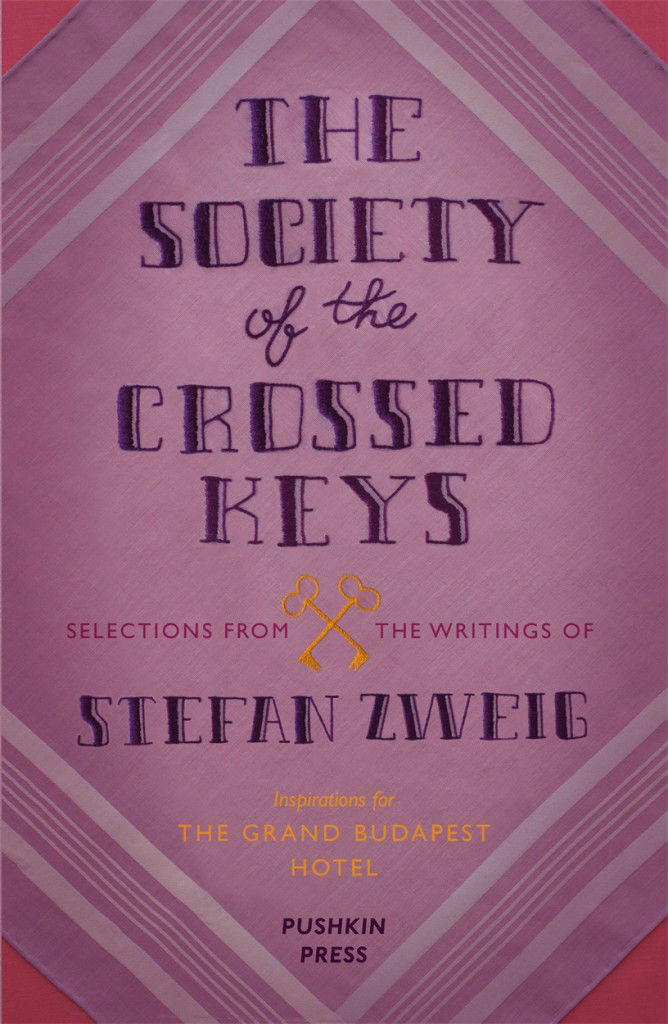
society-of-crossed-keys

At The Telegraph, film-maker Wes Anderson discusses the influence of Stefan Zweig on his new movie The Grand Budapest Hotel with Zweig biographer George Prochnik (author of the forthcoming Stefan Zweig at the End of the World):

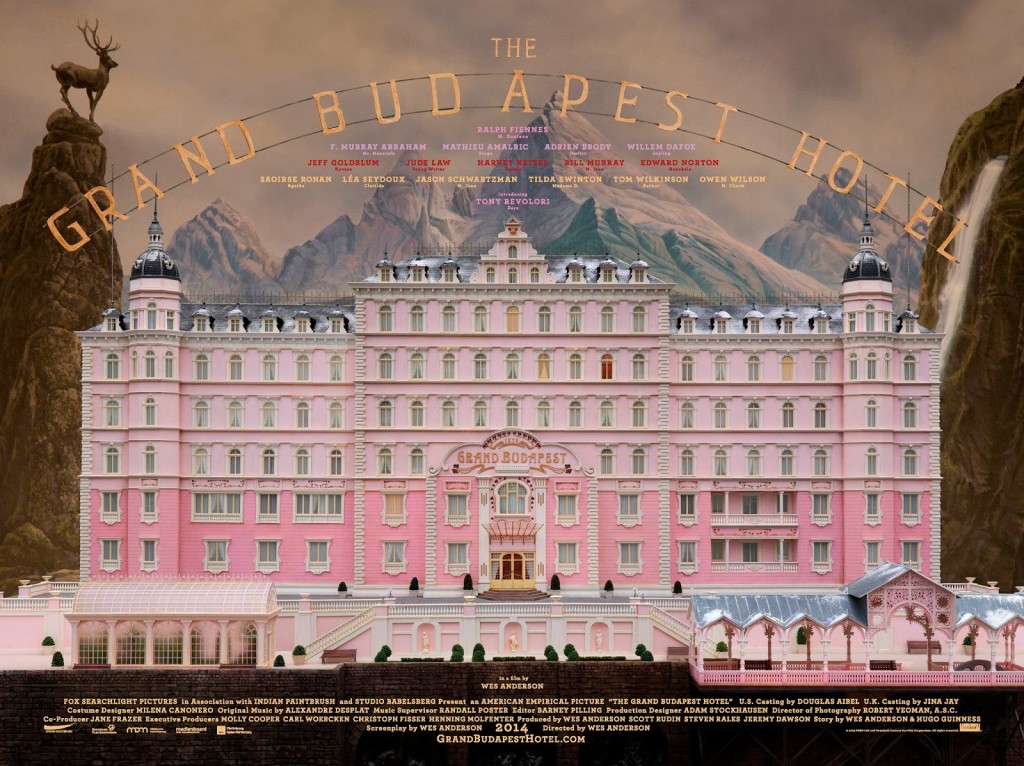
There’s a wonderful photochrom of the hotel that I always thought of as sort of the model for our hotel, which is the Hotel Pupp in Karlovy Vary, which was in Carlsbad. The thing we learned when we visited all sorts of places that we found on this collection of pictures was that none of them were enough like what they once were to work for us. But the photochrom images seemed to tap into a truth about Zweig’s vision of the world that I was able to draw on in developing a visual aura for the film.

In The Post Office Girl, Zweig’s description of the grand hotel in Switzerland is so evocative. The protagonist is a girl who works in the post office. She’s invited to stay in this hotel as a gift from her rich aunt, and when she arrives in this place, the management thinks she’s there to make a delivery. Her suitcase is a basket. Finally they realise she’s actually going to be a guest in the hotel, which is unlike anywhere she’s ever been. Her point of view about this treatment she receives, and her experience of walking in and realising, “This is where I’m going to sleep”, is so powerful. But also that by the time her holiday abruptly ends, she is already addicted to this other way of life, and her existence is so dramatically changed, and a sort of desperation comes over her — and then a connection she makes with someone who is in his own desperate state. The idea of that work being something that had been out of print for that long is sort of surreal.

At a recent event at the New York Public Library, Anderson similarly discussed Zweig’s work with Paul Holdengräber:


UK publisher Pushkin Press has recently published The Society of the Crossed Keys a selection of Zweig’s writings that inspired Anderson. The cover illustration (pictured top) is by Nathan Burton (whose covers for Alma Classics I mentioned here yesterday). Pushkin have reissued a number of Zweig’s books with covers by Burton, Petra Börner, and David Pearson.

Grand-Budapest-Hotel-Poster

The movie itself was reviewed all over place the last week, but I quite enjoyed Richard Brody’s review for The New Yorker:

Perhaps more than ever, Anderson takes a joyful yet aching delight in recreating the styles of bygone days. The hotel is like a majestically confected cake on the outside and a jewel box on the inside, adorned with staff and guests whose uniforms and fashions are nuanced to the buttons, and whose behavior is self-controlled to the glance. Yet also, more than in any of his other films, that very recreation is his subject. “The Grand Budapest Hotel” is about the spiritual heritage and the political force of those long-vanished styles—about the substance of style, not just the style of his Old World characters but also, crucially, Anderson’s own. This isn’t Anderson’s most personal film, in the strict sense, but it is, alongside “The Life Aquatic with Steve Zissou,” his most reflexive one—even more so because the new film exposes the inner workings not just of his practice of filmmaking but of his sensibility.

UPDATE: Creative Review talks to the film’s lead graphic designer Annie Atkins about her work:

We actually used comparatively few typefaces in the movie, as most lettering was created by hand. Wes and Adam had been on location recces all around Eastern Europe and had references of all kinds of hand-made signage from the last 100 years or so. The beautiful thing about period filmmaking is that you’re creating graphic design for a time before graphic designers existed, per sé. It was really the craftsmen who were the designers: the blacksmith designed the lettering in the cast iron gates; the glazier sculpted the lettering in the stained glass; the sign-painter drew the lettering for the shopfronts; the printer chose the type blocks for the stationery…

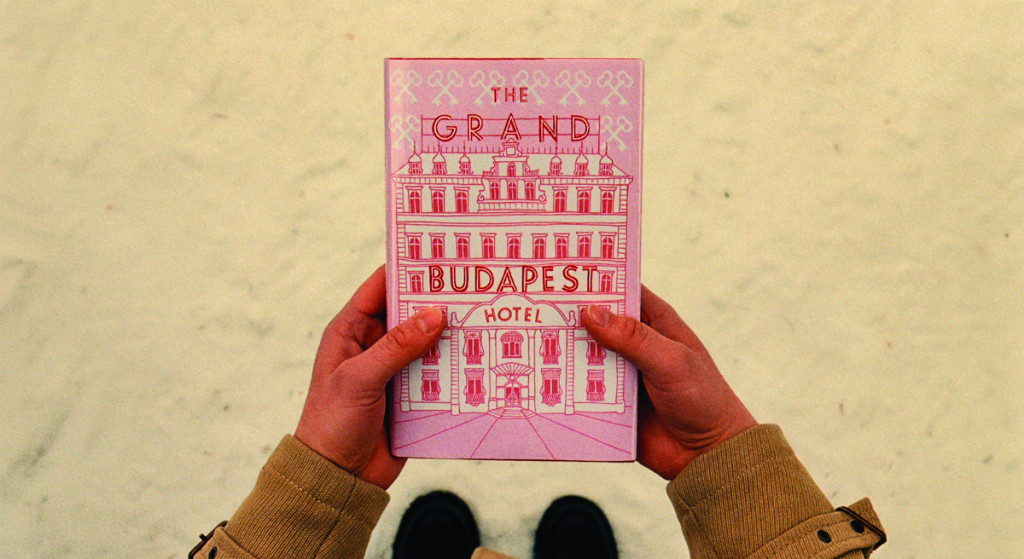
… My absolute favourite piece is the book itself that opens the story. It’s a modern pink hardback with a drawing of the hotel on the front, and the name of the movie as the hotel sign. It’s a relatively simple piece, but it’s really special having a prop that you made with the movie’s name on it like that. I remember Wes had sent me a quick sketch showing his idea for the book, and I really loved being able to help make that work for him. I treasure that piece, actually – we made three for the shoot, in case one got dropped in the snow, and so I brought one home with me.

grand-budapest-hotel-book

2 Comments