Skip to content

Tag: State of the Industry

Keep Calm and Carry On?

There is nothing quite like pricing to get book people’s pulses racing and the recent price war in the US — and the American Booksellers Association’s open letter to the Department of Justice — certainly has everyone and their mother all aflutter.

We have plenty of pricing issues of own in Canada. The unique challenges of publishing here (big geography + small population) and the fluctuating US dollar make Canadian pricing particularly fraught. But we haven’t really seen the same kind of problems as the US or the supermarket price wars that have plagued the UK.

As The Toronto Star helpfully points out, Canada is different. But it is not simply a matter of being more polite than Americans (or nicer than the British) — what makes us different is that we are a small book market dominated by a single retailer. Dropping the gloves with Canada’s Chief Booklover hardly seems worth the effort.

Nevertheless, Canadian consumers keep a keen eye on the US and a sustained price war south of the border would inevitably put pressure on bookstores in Canada (including Chapters-Indigo). It would be foolish to ignore what is going on.

The most emotive issue is, of course, the detrimental impact of price wars on already struggling independent bookstores. As HarperStudio’s Bob Miller notes:

The short-term results of this price war are some losses for Wal-Mart and Amazon, and some brisk sales for the publishers whose books have been chosen. But the “road kill” here are the accounts who can’t afford to participate in the race—traditional booksellers.

Clearly though, publishers like Miller are worried too. It has been a particularly difficult 18 months in US publishing, and the thought of additional pressure on prices and discounts is, for many, terrifying. We seem to be lurching from one crisis to the next.

But, is this really anything more than another storm in the tempestuous book industry teacup?

To some extent I agree with Mark and The New Yorker that twitchy book people are exaggerating the effects of this price war. We are, after all, only talking about ten books. This isn’t going to wreck publishing just yet. In the short term it will be good for sales, and as long as Amazon, Wal-Mart and Target are willing to take the losses, the publishers will be laughing all the way to the bank.

But there will clearly be problems down the road if this continues, and I think Michael Hyatt, CEO of Thomas Nelson, is on to something when he suggests that the strategy behind the price war is actually damaging for everyone publishers, authors, booksellers, mass retailers, and consumers (although Dennis Johnson at Moby Lives isn’t totally convinced by Hyatt’s solutions).

If there are going to be ‘winners’ in this, it is only going to be the big retailers and it will not be long before they demand more books and deeper discounts. Publishers will have to run the risk of crippling returns if the discounted books don’t sell, and will be increasingly reluctant to bet on creative projects. Corners will be cut in the effort to produce cheaper books that are short-term ‘sure things’.

Without over-stating it, I am also troubled that such discounts set the expectation that all books should be less than $10 (and if you’re skeptical about setting expectations with arbitrary numbers, you might want to read Nudge).

In the end, you get what you pay for. Books — good books — take time and they take money, whether they are printed or distributed digitally. If a book costs less than $10, then you can expect publishers  — and self-publishers for that matter — to churn out a lot of poorly researched, quickly written, hurriedly edited, badly designed and cheaply produced books. And, as Don Linn, former Senior VP and Publisher at Taunton Books, points out, this will certainly hurt authors first:

When content’s price and value is pushed below a sustainable level for publishers… writers will suffer. They will be forced to make the economic choice to write less to finance their careers. It’s not enough to say glibly that ‘writers have to write so they will’ or that self-publishing will be their salvation. When content’s value drops, self-published content’s value drops as well.

Of course, publishers need to take responsibility here. Too often publishers dump bad books into stores in pursuit of a fast-buck, and they only have themselves to blame when stores demand big discounts up front and readers don’t actually want to pay full price for them.

And I think it is too easy to say that books (paper or digital) need to be cheaper and more ‘timely’. Sure. But I’m willing to bet that readers are also willing to seek out and to pay for books that surprise and delight (and that format isn’t the real issue).

It is difficult for publishers to think about the long-term (especially if shareholders are involved), but if we are seriously worried about pricing, then perhaps the place to start is publish books that are worth the price tag?

2 Comments

Less is More…

Poets & Writers magazine have just published the final installment of Jofie Ferrari-Adler’s series of interviews with publishing professionals.

The last interview in this excellent series is with Jonathan Karp, publisher and editor in chief of Hachette‘s remarkably successful Twelve imprint.

Formerly an editor at Random House, Karp founded Twelve with the objective of publishing no more than one book a month. Since their launch, 15 of Twelve’s first 30 books, including Christopher Hitchens’ God Is Not Great and Dave Cullen’s Columbine (pictured above — cover designed by Henry Sene Yee), have been New York Times best-sellers. It’s clearly a successful model, even if it is one that’s hard for start-ups to replicate (how many new imprints could have snapped up the rights to True Compass by Ted Kennedy for example?).

The interview is, of course, well worth reading in full. But here are a few passages about Twelve that stood out for me…

On founding Twelve:

I was thinking, “Okay, I want everything to be the lead title. I want to have at least a month to put it across. And I want to have the best talent. What’s the best way to do that?” It’s to make a promise to the author and to make the promise so explicit that it’s on the spine of the book: Twelve. That’s it. One a month. You get your launch and, although we can’t guarantee that the book’s going to be a best-seller, we can at least guarantee that you will have our full attention, focus, and commitment for a sustained period. We will talk about your book until people will not listen to us anymore.

On acquisitions:

I really am amazed by how often publishers decide to do something because a similar book succeeded. That is flawed reasoning. Books catch on for any number of reasons, and it’s not a mathematical formula that can be reproduced. Even more insidious is the idea that sometimes creeps into acquisition decisions in a really cynical and negative way, where people say, “Well, that nondescript work caught on, so this nondescript work could too.” I just don’t understand why you would want to go down that road. It makes no sense to me. I would think that you would feel as if you were going through your life just imitating other people, doing something you didn’t really believe in. I’m genuinely mystified by that.

On publishing fewer books:

What I do think is that the Twelve model makes a great deal of sense for unknown authors or authors who want to break out. I think that’s true. I think that this is the best way to publish a midlist author or an author who’s on the way up. Let me put it another way: I think it would behoove the major publishing houses to publish fewer books with more focus. I think that everybody would benefit from that. What I don’t know is whether the companies can meet their targets doing it. I’d have to be a CFO to know that, and it would be arrogant of me to say that a major publisher can get by without disposable books. I don’t know the answer to that. What I know is that I’m working for a company that publishes a lot less than the other major publishers with a more concentrated marketing approach and seems to be making a lot of money doing it.

On the “future of publishing”:

I have an idealistic hope that as more and more media becomes disposable, books will be increasingly regarded as the permanent expression of thought and feeling and wisdom. So publishers who can offer definitive material will thrive. Now, as I say, that’s idealistic. Plenty of publishers are going to continue to do well publishing derivative material that they don’t really believe in. But I think it’s going to be harder for them. It’s going to be harder for them to survive. I think there will be some displacement—some houses will shrink and other houses will grow. I could see some pure play digital publishers who aren’t encumbered by the weight of overhead and the history of their business relationships becoming influential factors in the publishing world. So I think it’s a transitional time and a transformative time. But it’s always been that way. I don’t think anything should be regarded as permanent. All we ultimately have is our belief in the particular books. And as long as you have that, you’re fine.

As I say, the whole interview (the whole series in fact) really is worth your time.

3 Comments

Something for the Weekend, September 25th, 2009

Great Ideas — Art director and designer David Pearson discusses his publishing venture White’s Books with Peter Terzian in Print Magazine (above: cover for Emma, published by White’s Books; illustrated by Amy Gibson):

Due to the arrival of eBooks, many prophesied the death of the printed word, but we see it as an opportunity to turn the spotlight back on the traditional methods of book production and to luxuriate in the craft and tactility of the physical book and the printed page. It’s lovely to be designing with longevity in mind as we aim to create objects that will be retained and cherished by their readers.

David Pearson also discusses his work for Éditions Zulma and Penguin. I’m hoping to post a Q & A with David on The Casual Optimist later this fall.

Questions Should Be Answered — Dutch type designer Jos Buivenga, whose quality free typefaces (including personal favourite Fontin Sans) are available from his one-man font foundry exljbris, interviewed in the MyFonts newsletter. Jos’ new typeface Calluna (shown above) looks rather lovely.

The Future of Publishing? — Patrick at the Vroman’s Bookstore blog looks at what publishers do and how they might do it (or something different) in the future. While there is nothing especially new here, it’s an interesting post in part because it’s written from the perspective of a bookstore. The comments are worth reading too, if only for Ann Kingman‘s contributions and hilarity of a certain self-styled “agent of change” having the audacity to accuse someone else of oversimplifying (pot introducing kettle). All of which is a good, solid reminder that I have a related post in my drafts folder than needs dusting off… *Sigh*

And on a related note…

Reimagining the Book — Mark of index//mb is looking for people to help organise a conference on authorship in Toronto.

And just FYI: There is a good chance that this will be the last post for a couple of weeks. Work stuff + Life Stuff + Internet Fatigue means that I need a break from even the gentle rigours of irregularly posting here. Hopefully normal service will resume in October (for what it’s worth…).

Out.

2 Comments

Something for the Weekend, July 24th, 2009

Group Thinkery — Book-designing, tuba-playing Christopher Tobias has launched a new blog to discuss books, design, and publishing. Group Thinkery is also on Twitter.

I came across the stellar portfolio of High Design’s David High — which includes this rather brilliant cover for The Management Myth for W.W. Norton — earlier this week thanks to a tweet from the chaps at FaceOut Books. Go take a look.

Luck — In another one of those long, fascinating Agents and Editors Q&As from Poets and Writers that are always well worth your time, Jonathan Galassi, president and publisher of Farrar, Straus and Giroux, looks back at his career and comments on the current state of the industry:

One of the really hard lessons was realizing how much of a crapshoot publishing is—how you can love something and do everything you can for it, and yet fail at connecting it to an audience. Maybe you misjudged it. Maybe it didn’t get the right breaks. One of the hardest things to come to grips with is how important the breaks are. There’s luck in publishing, just like in any human activity… That was one of the hardest lessons: how difficult it is to actually be effective… Writing is its own reward. It has to be. I really believe that. This is a part of publishing that’s really hard to come to grips with. But publishers can’t make culture happen the way they want it to happen… We can huff and puff and pay money and advertise and everything else, but in the end, if the readers don’t come, we can’t do anything about it.

The lovely-looking limited edition, hand-made Done Walking With My Regular Shoes by recent graduate Stina Johansson. The cover design is screen-printed onto canvas (via DesignWorkLife).

Andy designing — The New Directions blog looks at the book designs of Andy Warhol:

Andy Warhol worked for New Directions as a book designer off and on for almost 10 years. Our editor-in-chief recalls James Laughlin telling her an Andy Warhol anecdote:

“He was a very strange looking man. But all the secretaries loved him because he would sneak little origami creatures on their desks when they weren’t looking. One time as he was walking out of the office he looked bashfully over at a secretary goggling at him and said ‘I like you. You’re so hirsute.’ Her reply? A very soft and giggly ‘thank you.’”

Personalization — Steven Heller talks to Rick Smolan about The Obama Time Capsule, a book that can be customized by the reader before it is printed:

I wondered if there was a way to create a book that wove together all these amazing images with each individual book buyer’s own story, photos and even their children’s artwork, so that every single copy was unique. I intentionally didn’t want to do a trade book edition because part of the goal was to have no books in warehouses, no print run, no books printed that might have to be later pulped and destroyed, no books shipped over by container ship from China or Korea (where all the big coffee table books are printed). The idea was to do the book of the future 10 years ahead of its time.

In this particular instance the customization of the book sounds a little gimicky to me, but possibilities it opens up seem pretty endless…

And lastly… Not being very quick on the uptake (what, you noticed?) I just came across the winners of The Strand bookstore’s Eye on The Strand photography contest. The Grand Prize was awarded to Josh Robinson for ‘Strand Shadows’ (above) and the contest exhibition, which opened on July 15th, will run through August 26, 2009 at the Pratt Institute CCPS Gallery, located at 144 West 14th Street, New York. I’m also rather fond of Cary Conover’s ‘Upside Down’ which took second place:

1 Comment

Something for the Weekend, July 10th, 2009

Shute — JRSM, the Caustic Cover Critic, has a great post on the work of book designer and illustrator Mick Wiggins, whose evocative illustrations (which look a bit like dark interpretations of vintage Tube posters) adorn the Penguin Classics US editions of John Steinbeck and the new Vintage Classics editions of Nevil Shute.  JRSM will have an interview with Mick Wiggins soon. Can’t wait…

The Revenge of PrintEric Obenauf, publisher at Two-Dollar Radio on the state of print and publishing for The Brooklyn Rail:

The goal for book publishers, most simply put, should not be to undertake a virtual arms race of developing technology with both the Internet and media, or to try to compete on a bloated scale with music and film, or even to translate a work to conform to an undetermined potential future model. The mission for book publishers and print media at large should be to create a product that is irreplaceable and indispensable.

And I will just add for the umpteenth time that it’s not about e-books, DRM, pricing, or devices — it’s about making better books.

Big BluePhilip Hoare, author of Leviathan or, The Whale winner of this year’s Samuel Johnson Prize (and one the books I’m currently reading), chooses his Top 10 Whale Tales in The Guardian. You can also hear Claire Armitstead’s interview with Philip for The Guardian here and read PD Smith‘s TLS review here. And, for the record, Philip is a Southampton boy like myself…

Top 10 Comic Book Cities as chosen by Architects Journal. Gotham is only number 6 (via Book Oven on Twitter).

And lastly…

Up We Go! Up We Go! — The wonderful BibliOdyssey has posted a number of E. H. Shepard’s lovely illustrations for The Wind in the Willows.

Have a great weekend.

1 Comment

What’s Next For Publishers?

An unforeseen consequence of the “New Think for Old Publishers” debacle at SXSW in earlier this year is that I will be a participant in a session on the role of the publishers in the digital age at Book Camp Toronto on June 6th.

140 Character Assassination

The now infamous SXSW panel was supposed to discuss “what’s going right and what’s going wrong in publishing, assess success of recent forays into marketing digitally, digital publishing, and what books and blogs have to gain from one another.”

As has been well documented elsewhere, things did not go according to plan.

Despite the presence of heavyweight panelists (including the venerable Clay Shirky), new ideas were in short supply. Audience frustration overflowed on to Twitter and an array of 140 character bullets (identified by a #sxswbp hashtag) ripped into the panel, with what was perhaps the kill-shot fired by a writer in the audience:

“If, as an author, I can design it myself, write it myself, publish it myself, why would I bother going to a publisher at all? What purpose do you serve?”*

Existential Crisis

The old answer to this question was that publishers offered technical expertise and mass distribution.

But, nowadays, digital technology has made it easy for writers to publish, distribute and market their own books independently. And whilst professional editing, design, production, distribution, and marketing may still be valuable and sought-after services, it’s become very apparent that the perceived gap between self-publishing and traditional publishing is narrowing.

The battering that the SXSW panel took inadvertently revealed what we have long-suspected — publishers need to change the way they think about themselves, the decisions they make, and the services they offer, or cease to exist.

Fine Filtering

One idea that gained some currency in the aftermath of SXSW was that publishers are — or could be — ‘cultural curators’, a role made only more important by the explosion of content created and distributed by digital technology.

In a world where it is impossible to read everything that is emailed, texted, tweeted, posted, uploaded, or printed, there is an opportunity for publishers to become trusted advisers who sift through the vast digital slush-pile and present only the best, most interesting work. Or so the argument goes.

Unfortunately, the truth of the matter is that publishers haven’t proved to be very effective at curating in the past, and it’s precisely this kind of pretension that gets them in trouble at events like SXSW.

A rap sheet of opportunistic publishing, self-indulgence, costly blunders, and generally too much poor product means that publishers (not to mention the mainstream media) have squandered any cultural authority they may once have had, and have been superseded by an informal network of curators connected online.

Furthermore, curation doesn’t really explain what publishers actually do for authors. If it’s just filtering (by set a of cultural criteria I may or may not agree with), why bother going to a publisher at all?

Strengthening the Signal

Not long after after SXSW I sat down in Toronto with Book Camp TO organizer Hugh McGuire to discuss these crumbling cultural hierarchies and the implications for publishers.

Expressing my dissatisfaction with the idea of publishers as curators  — and trying to take into account Hugh’s reader-centric approach — I suggested that perhaps we’d stand ourselves in better stead if we thought of ourselves more as ‘advocates’.

More proactive than curation, advocacy takes into account that publishers do more than find completed works of art and present them to the public. And it goes at least part way towards explaining what publishers do for authors, whilst offering a model for how they can interact meaningfully (and honestly) with readers.

Perhaps, just as crucially, it also means being able to effectively publish and promote books that we believe in, without making any of the claims of cultural authority or superiority that are attached to curating — the framework of advocacy works whether you are publishing literary fiction or genre, poetry or humour.

Admittedly, there are probably minimal and maximal versions of what ‘publisher as advocate’ means. On the minimal side, publishers promote (and defend if necessary) their books in the public forum. A more maximal version — which is probably where my thinking lies — would not simply limit advocacy to marketing a finished product. It would begin with the commissioning editor championing the work in-house, and continue through the production of the book to the publicist who is pitching it to reviewers, and beyond. It would also mean publishing less and publishing better.

So…

These ideas are not definitive. In fact they’re a rather hurried formation (at the prompting of Sean Cranbury) of a jumble of ideas that I’ve had kicking around my head that need more time, but also more air and more discussion.

The Book Camp Toronto session about the role of publishers is on Saturday June 6th at the University of Toronto’s iSchool. Please come along and share your ideas. If you can’t make it, please feel free to leave your feedback, ideas, and links in the comments section or send me an email or a DM.

Over and Out.

* For the record, this quotation is from panelist Peter Miller‘s account of #sxswbp

1 Comment

Midweek Miscellany, May 13th, 2009

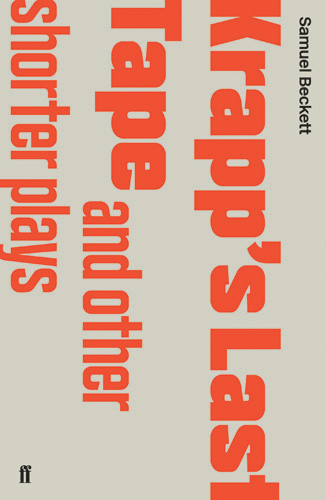
Any colour, so long as it’s grey” — New typographic covers for the Faber editions of Samuel Beckett,  designed by London-based studio A2/SW/HK. You can see more from the series at Faber’s Flickr photostream.

The Publishers’ Dilemma — Tobias Schirmer on publishing’s digital future:

[D]igitalization is not about a product moving from its analogue to a digital form. It is a revolution that changes everything. The old business models don’t work the way they used to. Inevitably, publishing needs to think about how it can still inject value somewhere in between the creation of content and its distribution. Not transition but change management is needed.  Acknowledging this is the first step in getting out of the publishers dilemma.

Now is the Winter of our Discontent — Peter Olson, the former chairman and CEO of Random House, is feeling gloomy in Publishers Weekly. I wonder how much of this only applies to bloated multinationals?:

With the recession accelerating changes that are already taking place in the market, the world after 2009 will likely begin to look very different for book publishers, and a likely return to the relative security of the last decade may be wishful thinking.

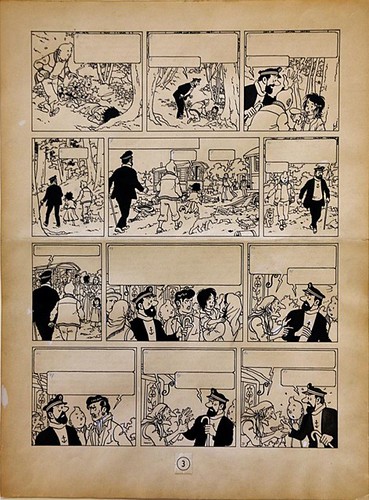
Tintin and the Broken Records600 lots associated with the cartoonist Hergé were sold at auction at the weekend:

The sale in Namur, southern Belgium, dominated by five large hand-drawn pages of original cartoon strips, raised 1,172,000 euros (1.57 million dollars), including charges, — a world record for Herge-associated items and a cartoon strip book record in Belgium, said Thibaut Van Houtte, an expert on hand for the Rops auction house sale.

Titles Designed by Saul Bass — A collection of Bass’ incredible film credit sequences at Not Coming To A Theater Near You (via Grain Edit on Twitter):

One is pressed to cite an example of an active, self-contained, and characteristic credits sequence in film prior to the work of Saul Bass. And…  in regard to innovation, renown, and influence, Bass’ impact in credits design remains virtually unparalleled, even to this day.

Comments closed

Somthing for the Weekend, May 8th, 2009

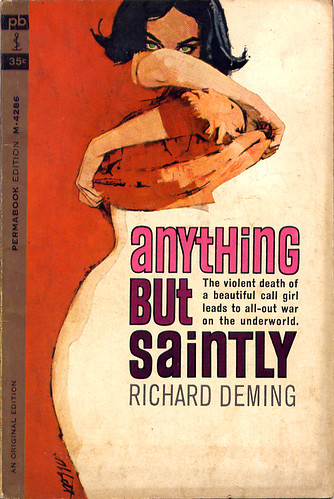
Anything But Saintly — More pulp goodness seen at The Old-Timey Paperback Book Covers Flickr pool.

The Decline and Fall of Books — Nicholas Clee, editor of Book Brunch, dons “The End is Nigh” sandwich-board in The Times:

A Gutenberg-style revolution is not… expected in the next few months. But if you are a lover of well-stocked bookshops, then you should enjoy them while you can.

Poets Ranked by Beard Weight — Or why I <3 the internet (via eightface).

Penguin Automaton made by artist-maker Wanda Sowry to celebrate Penguin’s 70th anniversary and available from Art Meets Matter . Apparently winding the handle “causes the Penguin to drink from a mug, its flippers to waggle and a piece of 70th Birthday cake to rise magically from the table” (via the lovely tweeps at New Directions ).

Good Typography is Invisible, Bad Typography is Everywhere — Stephanie Orma talks to five acclaimed designers about the art of type in the SF Examiner. Interesting to see some conflicting/contrasting opinions in the mix…

7 Habits of Highly Effective People I Know — A nice list from Noisy Decent Graphics Ben Terrett.

Comments closed

Midweek Miscellany, April 22nd, 2009

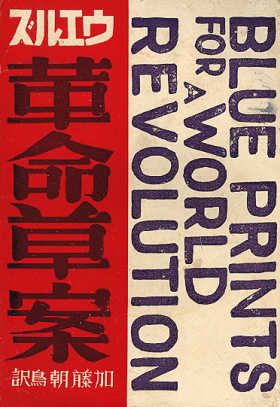
Blue Prints for a World Revolution — seen at the Antiquarian Bookshop 108 Buddhas, which has an amazing collection of avant-garde journals and books from Japan and Eastern Europe  in their gallery section (via Michelle McCormick’s Inspiration Resource ).

12 Steps to Better Book Publishing — Good stuff from Jonathan Karp, publisher and editor-in-chief of Twelve Books in Publishers Weekly:

It seems likely that the influence and cultural centrality of major publishers, as well as other producers of information and entertainment, will diminish as digital technology enables more and more people to create and share their work. This is exactly why publishers must distinguish themselves by doing better what they’ve always done best: champion books that offer carefully conceived context, style and authority.

The State of the IndustryNeil Nyren, senior VP, publisher and editor in chief of G.P. Putnam’s Sons talks to author  J.T. Ellison at Murderati (via @sarahw).

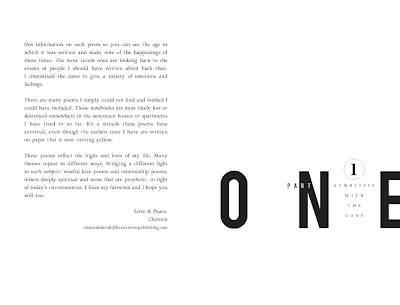
Poetic Interiors — Some lovely typography for Arrays of Conscious by Chanson Duvall at Beyond the Covers.

Embracing Change — Victoria Barnsley, chief executive and publisher at HarperCollins UK,  profiled in The Guardian:

There are still concerns about the digital future, such as how to continue making money. “There are some very big questions that we still have to answer – the biggest one being value,” says Barnsley. “How to make sure that consumers are going to be prepared to pay for digital content, because a lot of them are getting quite used to getting it for free?”

And yet…

Why newspapers can’t charge for online content — Dan Kennedy elsewhere in The Guardian:

I have no philosophical objection to the idea that news organizations ought to be able to charge for their online content. The problem is that it’s highly unlikely to work – mainly because there are too many sources of free, high-quality news with which they’re competing.

Font of Ill Will — Vincent Connare, designer of Comic Sans, profiled at the WSJ:

The font, a casual script designed to look like comic-book lettering, is the bane of graphic designers, other aesthetes and Internet geeks. It is a punch line: “Comic Sans walks into a bar, bartender says, ‘We don’t serve your type.'”

And finally…

Soldiers of Lead — An introduction to layout and typography for use in the Labour Party  (via Design Observer).

Comments closed

Experiments

One of the recurring themes of the Book Net Tech Forum was that publishers need to learn through frequent experimentation, or as BNC CEO Michael Tamblyn put it: “place lots of little bets quickly.”

Mark Bertils has just posted this great interview with  O’Reilly Media’s Andrew Savikas recorded at the BNC Tech Forum last week on exactly this topic (and Andrew — sorry about making fun of your PowerPoint slides on Twitter):

And, all this ties in quite nicely with Clay Shirky’s recent — must read — essay on Newspapers and Thinking the Unthinkable :

“You’re gonna miss us when we’re gone!” has never been much of a business model. So who covers all that news if some significant fraction of the currently employed newspaper people lose their jobs?

I don’t know. Nobody knows… it’s easier to see what’s broken than what will replace it… We just got here. Even the revolutionaries can’t predict what will happen…

“If the old model is broken, what will work in its place?” The answer is: Nothing will work, but everything might. Now is the time for experiments, lots and lots of experiments…

Comments closed

Cautious Optimism

Books a better buy in Canada? After all the problems caused by the high Canadian dollar in 2007, Canadian publishers and booksellers are “cautiously optimistic” at the start of this year’s holidays according to Vit Wagner in the Toronto Star:

“The climate is much better this year,” says [Nancy] Frater, proprietor of the Orangeville store BookLore. “My reason for optimism is that in challenging economic times, people do turn to books. As gifts, books have long-lasting value and they’re reasonably priced.”

It’s all relative though:

“I can’t look into the future and say everything’s going to be sanguine,” says Random House of Canada’s [Brad] Martin. “We’re doing a lot of cost cutting, but it’s more discretionary, like cutting the number of sales conferences from two to one. But we believe that the organization that we have now is what we need to successfully publish books in this country at the level that we have been publishing them.

“What I can’t tell you is what is going to happen to the market over the first six months of next year. It’s concerning for all of us. But certainly right now we seem to be performing better in a difficult market than the two other major English-language markets.”

And I’m not sure how this all sits with the recently reported “belt-tightening” in Canadian publishing — including staff changes at KidsCan Press and Thomas Allen postponing most of  their spring 2009 list — and all the grim news coming out of the US.

Is there worse to come? Any Thoughts?

1 Comment

Whiskey Tango Foxtrot?*

There has been relentless torrent of grim publishing news coming out of New York the last few days.

It has, at times, been hard to keep up with it all, and I don’t know the people involved well enough or understand the machinations sufficiently to offer much in the way of trenchant analysis. I hope that a summary of ‘Black Wednesday’ and the rest of this week’s events — with appropriate links — will, at least, offer some kind of context.

The details are sketchy, but Houghton Mifflin Harcourt acknowledged that there would be further changes at the company, including job-cuts. According to Publishers Weekly, at least eight people have been let go including executive editor Ann Patty, senior editor Anjali Singh and legendary editor Drenka Willen. GalleyCat has spokesman Josef Blumenfeld’s full statement about the changes.

Personally I’m stunned that the recipient of the 2007 Maxwell E. Perkins Award Drenka Willen, the US editor of Günter Grass, José Saramago and Umberto Eco, has been let go by HMH. PW profiled Willen in 2002, and, after pointing out that she has edited four Nobel Prize winners, MobyLives asked, pertinently, “do the proprietors of Houghton Mifflin Harcourt really know what they’re doing?”

I think my favourite quote, however, came from an unnamed ‘publishing veteran’ who told GalleyCat:

“Those fuckers have destroyed two venerable publishing houses in less than a fucking year.”

Elsewhere things are not much better.

Earlier in the week, Christian publisher Thomas Nelson announced it would be laying off 54 employees, or about 10% of its workforce. CEO Michael Hyatt said in a statement on his corporate blog From Where I Sit :

This was the second round of reductions this year. Unfortunately, this one was no less painful. We did the first round after significantly cutting our SKU count. However, this second round was purely a result of the slowdown in the economy.

According to GalleyCat , Hyatt apparently first made the announcement by Twitter. Stay classy Michael, stay classy…

After Doubleday cut 16 jobs in October, the “long anticipated” restructuring of Random House was announced on Wednesday. Maud Newton offered some bleak analysis and reprinted the full memo from Random House CEO Markus Dohle. Sarah Weinman has questions. Kassia Krozser at BookSquare thinks it’s all irrelevant:

“Who really cares if Crown or Knopf or Ballantine or Bantam Dell survives? I’m serious. Who. Cares… Focusing on imprints is focusing on the wrong problem.

The hyperbole-prone New York Observer called it “The End of an Era”.

In addition to the upheaval at Random House, Simon & Schuster announced it was eliminating 35 positions on Wednesday. Publishers Weekly reported that the Rick Richter, the president of the company’s children’s book division, and Rubin Pfeffer, senior v-p and publisher of the children’s group, would also be leaving.

On Thursday, Penguin Group chairman and CEO John Makinson announced the company will not give pay raises to anyone earning more than $50,000 in the new year. PW quoted Makinson as saying: “I cannot of course guarantee that there will be no job losses in Penguin in 2009. In this financial climate that would be plain foolhardy.”

And, according to a recent wire story from the AP on this week’s events in publishing, pay raises at HarperCollins have been delayed until next July. Spokeswoman Erin Crum says that “no decisions had been made” on job cuts, whatever that means…

All in all, it’s been quite a week. Thursday’s New York Times had a thorough summary and postmortem, and Andrew Wheeler has been keeping a running tab of the changes on his blog if you want more details.

Do I see a silver lining? Well, my hope is that all the talented, smart people who got unceremously dumped this week will stay in publishing (but who could blame them if they don’t?) and take their brilliance and vast experience to smaller more flexible companies and deliver a resurgence of creativity in New York. That would be nice wouldn’t it?

UPDATE:

Ron Hogan has posted some that trenchant analysis that I was talking about over at GalleyCat.

Also, what are the implications of all this, if any, for Canadian publishers? Anyone…?

*Thanks to Pete for the best blog post title ever.

Comments closed