Skip to content

Tag: social media

The Revolution Will Not Be Tweeted

Author Malcolm Gladwell on Twitter, Facebook, and social activism in the New Yorker:

[Social media] is simply a form of organizing which favors the weak-tie connections that give us access to information over the strong-tie connections that help us persevere in the face of danger. It shifts our energies from organizations that promote strategic and disciplined activity and toward those which promote resilience and adaptability. It makes it easier for activists to express themselves, and harder for that expression to have any impact. The instruments of social media are well suited to making the existing social order more efficient. They are not a natural enemy of the status quo. If you are of the opinion that all the world needs is a little buffing around the edges, this should not trouble you. But if you think that there are still lunch counters out there that need integrating it ought to give you pause.
Comments closed

Something for the Weekend

A series of book cover design concepts for The Infamous Press by Norwegian graphic designer Morten Iveland (via IS050).

Paid by the Joke — The enduring appeal of Keith Waterhouse’s Billy Liar in The Guardian:

Billy Liar’s longevity is not an example of a tale that is told and told again with a dulling faithfulness; rather, the long life of Billy Liar is a story of reincarnation, of each new generation seizing upon the tale afresh and making the story its own. Its influence may be felt in half a century of creative endeavour, in drama and literature and film, and, perhaps most keenly, in popular music: referenced, for instance, in the video for the Oasis single The Importance of Being Idle, and in a song by the Decemberists, and popping up, too, in many of Morrissey’s lyrics, including the Smiths’ 1984 hit William, It Was Really Nothing.

And if anyone at Penguin is reading, please, please reissue Billy Liar with the Tony Meeuwissen Woodbine cover from the 1970’s (come on, you know you want to):

(image via David The Designer)

If Covers Could Talk — A nice satirical book cover blog, kind of like Unhappy Hipsters for books.

And finally…

W. W. Norton, who have done great job with their Flickr — particularly their book design archive where the above stunner by Gray318 comes from — now have a Tumblr as well. The latest post, at the time of writing, is an animated scene from Stitches, the graphic memoir by David Small. Nice work.

5 Comments

The Slow Media Manifesto

Slow Media is a blog about literature, music, film, arts and entertainment. Here, re-posted with permission, is their Slow Media Manifesto:

The first decade of the 21st century, the so-called ‘naughties’, has brought profound changes to the technological foundations of the media landscape. The key buzzwords are networks, the Internet and social media. In the second decade, people will not search for new technologies allowing for even easier, faster and low-priced content production. Rather, appropriate reactions to this media revolution are to be developed and integrated politically, culturally and socially. The concept “Slow”, as in “Slow Food” and not as in “Slow Down”, is a key for this. Like “Slow Food”, Slow Media are not about fast consumption but about choosing the ingredients mindfully and preparing them in a concentrated manner. Slow Media are welcoming and hospitable. They like to share.

1. Slow Media are a contribution to sustainability. Sustainability relates to the raw materials, processes and working conditions, which are the basis for media production. Exploitation and low-wage sectors as well as the unconditional commercialization of user data will not result in sustainable media. At the same time, the term refers to the sustainable consumption of Slow Media.

2. Slow media promote Monotasking. Slow Media cannot be consumed casually, but provoke the full concentration of their users. As with the production of a good meal, which demands the full attention of all senses by the cook and his guests, Slow Media can only be consumed with pleasure in focused alertness.

3. Slow Media aim at perfection. Slow Media do not necessarily represent new developments on the market. More important is the continuous improvement of reliable user interfaces that are robust, accessible and perfectly tailored to the media usage habits of the people.

4. Slow Media make quality palpable. Slow Media measure themselves in production, appearance and content against high standards of quality and stand out from their fast-paced and short-lived counterparts – by some premium interface or by an aesthetically inspiring design.

5. Slow Media advance Prosumers, i.e. people who actively define what and how they want to consume and produce. In Slow Media, the active Prosumer, inspired by his media usage to develop new ideas and take action, replaces the passive consumer. This may be shown by marginals in a book or animated discussion about a record with friends. Slow Media inspire, continuously affect the users’ thoughts and actions and are still perceptible years later.

6. Slow Media are discursive and dialogic. They long for a counterpart with whom they may come in contact. The choice of the target media is secondary. In Slow Media, listening is as important as speaking. Hence ‘Slow’ means to be mindful and approachable and to be able to regard and to question one’s own position from a different angle.

7. Slow Media are Social Media. Vibrant communities or tribes constitute around Slow Media. This, for instance, may be a living author exchanging thoughts with his readers or a community interpreting a late musician’s work. Thus Slow Media propagate diversity and respect cultural and distinctive local features.

8. Slow Media respect their users. Slow Media approach their users in a self-conscious and amicable way and have a good idea about the complexity or irony their users can handle. Slow Media neither look down on their users nor approach them in a submissive way.

9. Slow Media are distributed via recommendations not advertising: the success of Slow Media is not based on an overwhelming advertising pressure on all channels but on recommendation from friends, colleagues or family. A book given as a present five times to best friends is a good example.

10. Slow Media are timeless: Slow Media are long-lived and appear fresh even after years or decades. They do not lose their quality over time but at best get some patina that can even enhance their value.

11. Slow Media are auratic: Slow Media emanate a special aura. They generate a feeling that the particular medium belongs to just that moment of the user’s life. Despite the fact that they are produced industrially or are partially based on industrial means of production, they are suggestive of being unique and point beyond themselves.

12. Slow Media are progressive not reactionary: Slow Media rely on their technological achievements and the network society’s way of life. It is because of the acceleration of multiple areas of life, that islands of deliberate slowness are made possible and essential for survival. Slow Media are not a contradiction to the speed and simultaneousness of Twitter, Blogs or Social Networks but are an attitude and a way of making use of them.

13. Slow Media focus on quality both in production and in reception of media content: Craftsmanship in cultural studies such as source criticism, classification and evaluation of sources of information are gaining importance with the increasing availability of information.

14. Slow Media ask for confidence and take their time to be credible. Behind Slow Media are real people. And you can feel that.

Stockdorf and Bonn, Jan 2, 2010

Benedikt Köhler
Sabria David
Jörg Blumtritt

(via Wired)

2 Comments

Something for the Weekend

Sorry (again) for the late (and lack of) posting recently. This week, the BookNet Tech Forum in Toronto kept me out of the office and away from the blog. If you’re interested in the conference, the ACP‘s Sarah Labrie has a great round up of the main day here.

But on to the links…

Alexander S. Budnitz’s INCREDIBLE ASB Cover Archive. This site should definitely be added to this list (via Karen Horton’s ace Daily Design Discoveries).

Thick and Thin — Umair Haque on social media at The Harvard Business Review:

The social isn’t about beauty contests and popularity contests. They’re a distortion, a caricature of the real thing. It’s about trust, connection, and community. That’s what there’s too little of in today’s mediascape, despite all the hoopla surrounding social tools. The promise of the Internet wasn’t merely to inflate relationships, without adding depth, resonance, and meaning. It was to fundamentally rewire people, communities, civil society, business, and the state — through thicker, stronger, more meaningful relationships.

I don’t entirely agree with everything in this post (and I wonder how much of it has to do with Haque’s recent Twitter mauling as SXSW?) but it’s a timely reminder that quality is more important than quantity.

Fine Hypertext Products — A podcast interview at The Pipeline with Jason Kottke founder of one of the most consistently interesting blogs out there (and a big influence on this one) kottke.org. There is also an interesting earlier interview with Jim Coudal president of design studio Coudal Partners.

Straight-Talking — The Book Oven’s Hugh MacGuire interviews Don Linn, former CEO of Consortium Book Sales & Distribution and publisher at The Taunton Press:

Too many titles now are bought (often at way too high a price), produced sloppily and just tossed into the market without adequate support. This benefits no one. Second, I’d like to see all publishers implement workflows (using XML or other flexible tools) and production processes that make their content more agile… Finally, I’d just encourage more intelligent experimentation and attempts at innovation. I sense paralysis on the part of a large number of publishers based on a (not irrational) fear of making the wrong bet during this chaotic time.

(NB: It’s also interesting to read why Don felt digital publishing venture Quartet failed, although I kind of think some of that stuff should have been obvious to them before they started).

And finally…

The Rise of the “Paper-Bounds” — Leif Peng excerpts a 1953 Fortune magazine article on mass-market paper-bounds at the always brilliant Today’s Inspiration. There’s more here, here, and here

Comments closed

Delivered in Beta

Delivered in Beta is a short documentary about design, products, social media, and creativity (amongst other things) created during the Open Design Workshop at the Betahaus as part of Social Media Week Berlin 2010:

Any thoughts how this applies to books?

(via SwissMiss)

1 Comment

Something for the Weekend, July 3rd, 2009

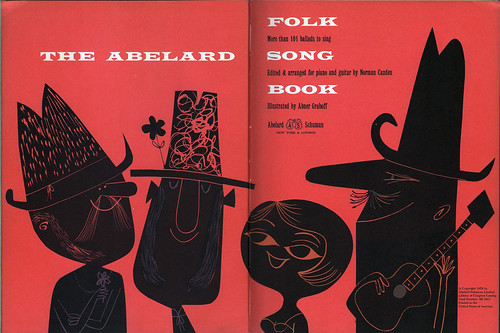
Who Was Abner Graboff? —  Frustrated with the lack information available online about artist, designer and illustrator Abner Graboff, Ward “Ward-O-Matic” Jenkins decided to do some digging himself. His research — now available in a three part series —  includes a host of great images of Graboff’s children’s books and book cover designs, as well as a nice interview with Graboff’s son Jon:

Throughout my father’s career, he did hundreds of book jacket designs and I once asked him, in a slightly condescending way, if he enjoyed that kind of work? He said he loved it because he had to nail the vibe of the book in a single illustration and when he got it right, that it was very satisfying. There was a long period of time when I could walk into a bookstore, look around, pick up a book and look at the jacket design credit… and more often than not, find his name. Later on, I started to get fooled. Other designers were either copying or being heavily influenced by his style.

Calling Bullshit on Social Media — Scott Berkun, O’Reilly author of The Myths of Innovation and Making Things Happen (via — irony alert — Mark Bertils on Twitter):

TV forced radio to change and in some ways improve. The web forced TV, newspapers and magazines to change, and they will likely survive forever in some form, focusing on things the web can not do well.  Its unusual for new thing to completely replace the old ones and when they do it takes years. Anyone who claims social media will eliminate standard PR or mass media is engaging in hype, as odds are better those things will change and learn, but never die. It’s wise to ask what each kind of media / marketing is good and bad for and work from there.

Berkun’s definitely onto something here and it probably deserves a whole post (maybe later!)… Certainly, he’s right to point out (earlier in the essay) that there have always been social networks. But he doesn’t note that for many city dwellers traditional social and familial networks have been breaking down in the post-war period, which I suspect is part of the seductive appeal of connecting online for us slightly older urban types whose use Twitter and Facebook a lot… Anyway, it’s interesting that some of Berkun’s points about technology probably also apply to e-books.

Berkun’s essay also reminded me of an article I read in Fast Company earlier in the week, Our Kids Aren’t Web-Addicted… Are We?:

It’s only we adults that are at PC workstations all day, looking for ways to avoid doing work or trolling the boundaries of our IT-installed browser filters. And we’re the only ones who have social networks big enough to require a tool like Twitter. Imagine how absurd Twitter seems when you only have 10 or 12 friends, not a network of 300+ coworkers, college buddies and colleagues?

And finally…

Krazy — Bill Watterson, creator of Calvin & Hobbes, on George Herriman’s seminal comic strip Krazy Kat, reproduced at This Recording (via Bookslut):

Krazy Kat gains its momentum less from the personalities of its characters than from their obsessions. Ignatz Mouse demonstrates his contempt for Krazy by throwing bricks at her; Krazy reinterprets the bricks as signs of love; and Offissa Pupp is obliged by duty (and regard for Krazy) to thwart and punish Ignatz’s “sin,” thereby interefering with a process that’s satisfying to everyone for all the wrong reasons. Some 30 years of strips were wrung out of that amalgam of cross-purposes. The action can be read as a metaphor for love or politics, or just enjoyed for its lunatic inner logic and physical comedy.

Comments closed

Midweek Miscellany, June 17th, 2009

Claustrophobic and Irrational — I love these elegantly understated designs by Rodrigo Corral and Christopher Brand Jason Ramirez for Patricia Highsmith’s Ripley books published by W.W. Norton.

A Strategy For Authenticity — Don Linn, prolific Twitterer and publisher at The Taunton Press, on O’Reilly’s Twitter Boot Camp and Twitter as a marketing channel:

I’m relatively new to twitter, but what I’ve loved about it since discovering it is its immediacy and its spontaneity. That’s where the joy is and, in my opinion, that’s where the power is (witness #iranelection and related topics). My fear is that the suits will “Clear Channel” (yes, that’s a new verb) this simple little application into nothing but a giant vanilla message board filled with thinly-disguised spam, planned spontaneity.

Cars and Books Sean Rogers discusses Dutch cartoonist (and cover artist) Joost Swarte at The Walrus:

Swarte has some mild fun, on the Walrus cover, with the nutty rush out of the city that clogs our highways every summer. But the assignment also offers Swarte the opportunity to clear-line the hell out of some cars and books, a couple preoccupations that crop up all over his work.

Why Ulysses? — To coincide with Bloomsday , Gary Dexter explains how Joyce’s masterpiece got its title:

The paradox of Ulysses is that one needs to read it to understand twentieth-century literature, but one needs to read twentieth-century literature to build up the stamina to read Ulysses.

The problem starts with the title. Early readers of Ulysses, exhilarated and appalled after 800 pages, were often still left thinking ‘Why Ulysses?’ Ulysses is barely mentioned.

And lastly… I can’t thank the chaps at the BCA enough for the link love . You are gentlemen and scholars.

And thanks to the scarily talented Nate for creating the Paradox of Awesome album cover yesterday afternoon and sharing on Twitter. Hilarious. Or maybe you just had to be there… It made my day anyway…

5 Comments

Meanwhile, Elsewhere…

As is probably obvious, I spend a lot of time online clicking on stuff.

The things I bookmark, tag, and mentally store away that are (vaguely) about books end up here in one form or another.

But because I have eclectic interests, I bookmark a lot of photographs, illustrations, videos, and other things that just don’t have place on The Casual Optimist.

I’ve been mostly collecting these together in a digital scrapbook at Image Spark.

Image Spark has a really useful bookmarking plugin for Firefox so it’s easy to use and I really like it — despite it’s occasional  slowness.

But whilst Image Spark is great for me, I don’t think it’s so good for sharing.

I tried Tumblr and discovered I didn’t particularly like it (no offensive Tumblr — it’s not you, it’s me… Well, it’s a little bit you…), and so I have switched (at Ehren‘s suggestion) to Posterous which has a neat bookmarklet that makes it incredibly easy to post things when you see them.

So The Accidental Optimist is up and running. It’s just images and videos that I’ve stumbled upon. There’s links and tags but no commentary.

Inevitably there is some overlap with my Image Spark stuff but I don’t post everything to both, and I think the new blog will take on a personality of its own.

Anyway, like The Casual Optimist, it’s a work in progress, only it’s not about books (or anything really — which breaks about a bazillion rules of blogging).

Recent posts include a photograph of World War II airplanes in Texas, a bonkers animated music video by Mcbess and an Eric Gill quotation, so — as I say – eclectic. But maybe you’re interested? OK, maybe not…

(You can also find me — grumpy and misanthropic — on the Twitter if you care to)

Comments closed

Something for the Weekend, May 15th, 2009

The Story of Goddesigner Arthur Cherry discusses his elegant design (which uses Marian Bantjes’ typeface Restraint to such brilliant effect) for the new edition of Michael Lodahlr’s book at FaceOut Books.

A Manifesto — Ted Genoways, the editor of Virginia Quarterly Review, on the future of university presses and journals:

University presidents need to see what articulate ambassadors they have in their journals and presses, what tangible, enduring records they present of the variety and vigor of their sponsoring institutions…[G]reat universities extend well beyond the edges of their campuses. They reach out to the larger world, they challenge and engage the public, and the most effective and enduring way of doing so remains the written word.

HarperCollins Wants to Be Your Friend — Leon Neyfakh looks at publishers and social media in the New York Observer. Ostensibly it’s about the ever so anodyne HarperStudio, but more interesting stuff comes from the other people interviewed:

“I don’t know if it’s a direct response to the fact that publishing is in a very uncertain period right now, or if it’s just an idea whose time has finally arrived, but people right now are really interested in experimenting,” said Ami Greko, a 29-year-old digital marketing manager at Macmillan. “There seems to be a real sense of, ‘Let’s get creative—nothing is set in stone yet, so let’s just try a whole bunch of stuff.’”

Das Buch vom Jazz — The German-language version of The Book of Jazz, illustrated by Cliff Roberts ,  found in a used-bookstore by Today’s Inspiration’s Leif Peng. The black and white illustrations are wonderful.

Moaning Eton-boys & Middle-Aged Hackettes — A great defense of blogging by Nina Power at Infinite Thøught  (via PD Smith on Twitter):

Print media suffers from a lack of space; certainly it is selective, but it is also exclusive — all the stories that don’t get told, the injustices that get covered-up. We may feel we can ‘trust’ print journalists more than bloggers… but the sheer quantity and variety of information online allows for the exposure and discussion of things that might otherwise get ignored.

And finally…

The Tyranny of Data — The New York Times on Douglas Bowman‘s decision to leave his position as top visual designer at Google, and the  limitations of crowd-sourcing design:

“Getting virtually real-time feedback from users is incredibly powerful,” said Debra Dunn, an associate professor at the Stanford Institute of Design. “But the feedback is not very rich in terms of the flavor, the texture and the nuance, which I think is a legitimate gripe among many designers.”

Adhering too rigidly to a design philosophy guided by “Web analytics,” Ms. Dunn said, “makes it very difficult to take bold leaps.”

1 Comment

Why Not? Or How We Live-Tweeted Fall 09

Why Not?

One the things that really stuck with me from Michael Tamblyn’s 6 Projects That Could Change Publishing For Ever presentation at the BookNet Tech Forum in March was the idea that publishers have to “place lots of little bets quickly.”

It tied into another idea that’s been kicking around recently about reframing ‘Why?’ questions into ‘Why Not?’ questions. That is to say, whenever we — publishers, book distributors et al — ask “why would we do this?” we should flip the question on it head and ask “why wouldn’t we?”.

This doesn’t mean we should pursue every idea that someone puts forward. Sometimes there will be good reasons not to try something — “it costs too much” and “it’s illegal and/or evil” are perfectly valid reasons that spring to mind to nix something (and no doubt there are  plenty more). But, in my experience, reframing the ‘why?’ question encourages people (me included) to think creatively and be more positive about ideas/projects we might otherwise dismiss out of hand.

#rainfall09

This is all a roundabout way of explaining how I ended up twittering from the  Raincoast Books Fall 09 Sales Conference last week.

Before we got under way on the first morning, a few of the early birds were laughing about using Raincoast’s Twitter account to micro-blog the presentations as they happened. Although it started as a joke, the near-inevitable “why would we?” and “who cares?” questions came up, and that raised the stakes. I turned the questions around and couldn’t actually think of any good reasons why we shouldn’t ‘live tweet’ the conference. I had my laptop, wireless access and a power source, so it seemed easy enough to do. And I figured people would tell me pretty quickly if they were bored and I should stop.

Decision made.

We quickly adopted #rainfall09 (an identifying reference tag for twitter posts or ‘tweets’ which was accidentally shortened to #rainfall on more than one occasion) and,  with some help from my colleague Siobhan, I covered all 3 days of the conference in a series of posts of 140 characters or less.

To people who live their lives online and are accustomed to social media rather than the slightly conservative book publishing world, the response to all this is probably a very sarcastic “big whup”. But sales conferences are not usually open and inclusive, and, needless to say, there was a degree of skepticism and resistance to overcome. Certainly it was experiment for us, if not, admittedly, a very large one. And  we were, as far as I’m aware (and someone please correct me if I am wrong), the first publisher/book distributor to Twitter their entire conference.

20/20

With the benefit of hindsight, the drawbacks were predictable. It was very intensive and time-consuming and I found it was difficult — at least initially —  to interact with the people actually in the room and tweet. I’m sure I missed a lot of nuance and I passed on more than few book samples with the barest of glances. We probably over-tweeted and lost a few followers as a consequence.

That all said, the positive outcomes vastly outweighed the problems. The feedback was overwhelmingly positive. We learnt as we went along — becoming better organized and tweeting less — and we gained far, far more followers than we lost over the 3-day period. Our posts were re-tweeted. Followers asked questions and made requests. We raised awareness of Raincoast, the publishers we work with, and the books we distribute. And we were able to connect with reviewers and bloggers we weren’t previously aware of.

I would do some things differently next time for sure. But, ultimately, it was definitely worth doing.

If you are thinking about live-tweeting your conference, here are my 5 Tips:

  1. Be Prepared — Whilst Twitter is great for spontaneity,  making sure you can set-up  your laptop with internet access, and a power source is essential (our conference days were 10 hours straight). And knowing the books (at least a little) in advance, definitely helps — I was often scrambling to find additional information on particular titles and bookmarking a few pages in my browser in advance would have been a plus.
  2. Be selective — Raincoast Books is primarily a distributor. We have something like a thousand titles a season from a variety of publishers. It is impossible to tweet about all of them, and it became quickly apparent it isn’t desirable to try. Our followers just wanted the highlights.
  3. Link — Readers also wanted links to more details if a title caught their eye. I had publisher websites and google open in separate tabs at all times. Even so, linking wasn’t always possible. Put your marketing materials online early and encourage your authors to update their sites (and join Twitter!).
  4. Be creative — If you can’t get your marketing material for your key titles online before conference, or something comes out of left-field, use the resources you do have to find an interesting work-around. When we had some very immediate reader interest in a book called The Quotable Douchebag and there was no information available online, the publisher Quirk Books quickly threw up a blog post with details.
  5. Tool-Up — Twitter management tools like TweetDeck and HootSuite are always useful for professional Twittering, but being able to quickly monitor replies, retweets, and references, not to mention conveniently shorten URLs was essential during conference.

Did you follow @RaincoastBooks or #rainfall09 last week? If so, how did you think it went? What could we do better next time? Leave a comment below or email me.

Note: This is my personal blog, and this post is my personal opinion. Neither reflect the opinion or official policy of Raincoast Books.

Illustrations from the Inspired Magazine Social Bird Icon Set (From the top: Chimero’s Birdie by Frank Chimero, Burdy by Tad Carpenter, and Jacque by Jessica Gonacha).

2 Comments

Something for the Weekend, March 20th, 2009

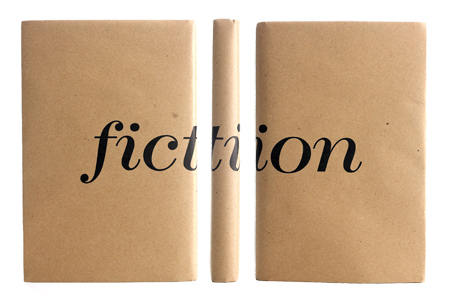
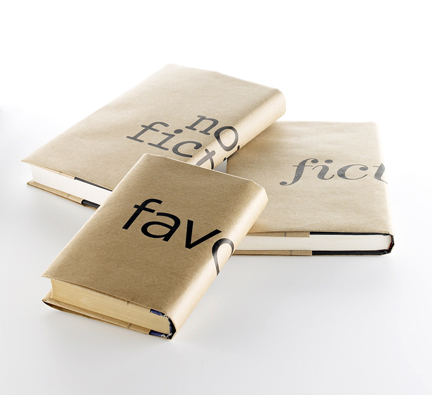
Book City Jackets— Printed at a small press in downtown New York, these lovely “updated versions of the classic paperbag bookcover” are made from recycled paper and sized to fit almost any book (pictured above). And they have a blog!  (via swissmiss & Design*Sponge).

Near Heretical — The inimitable Mike Shatkin on the story of DRM.

Don’t kill me, Robert BringhurstNic Boshart, BookNet Canada intern and coordinating editor at Invisible Publishing, offers another nice round-up of lessons for small presses from the BookNet Tech Forum.

Wish you were hereSeen Reading‘s collaborative Google map of independent bookstores.

That elusive viral componentWired on Random House, Simon & Schuster, Workman Publishing Co., Berrett-Koehler, Thomas Nelson, and Manning Publications making e-books and excerpts available on Scribd:

For book publishers, Scribd is not the only platform they are utilizing with the rising e-book hype, but the viral components are limited elsewhere… Along with navigation features like search and zoom, the books can be download (as a .pdf) and viewed on compatible e-book readers or shared across numerous social networks including Digg, Facebook and Twitter.

“The YouTube for print”PW has more on Scribd.

Sony e-book reader gets 500,000 books from Google, but Sara Nelson doesn’t think it will be enough in the LA Times:

Sony seems, instead, to be hitting hard on the theme that it’s giving options to publishers, who have not been shy about their complicated feelings toward Amazon and the power it wields.

Making public domain books more available is all to the good. But at the moment, Sony’s move appears to be too little, too late.

2 Comments