Skip to content

Tag: science fiction

Something for the Weekend

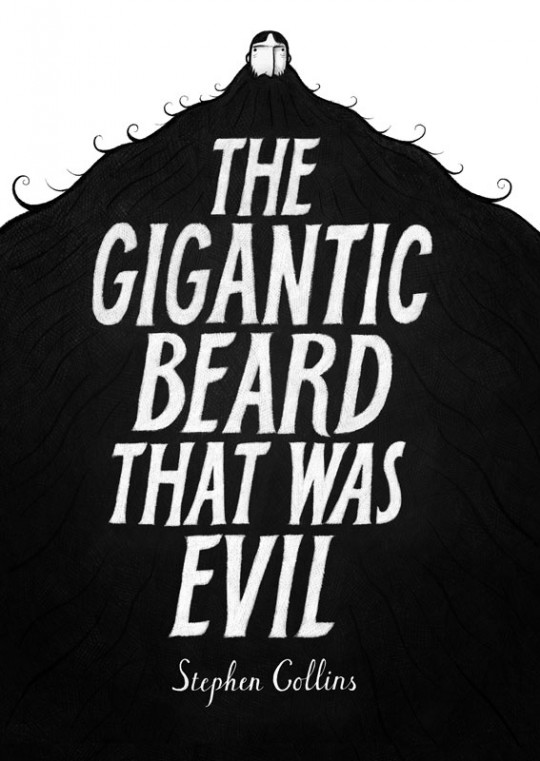
The Gigantic Beard That Was Evil by Stephen Collins is out next month. The launch party is at Gosh in London (but I just wanted to post the cover because it is fantastic).

Belief in the Writer — Mark Danner talks to Robert Silvers, founding editor of the New York Review of Books, at New York Magazine:

I believe in the writer—the writer, above all. That’s how we started off: admiring the writer. We organized the New York Review according to the writers we admired most: Edmund Wilson, Wystan Auden, Fred Dupee, Norman, Bill, Lizzie, Mary among them. Each of them had a confident sense of their own prose, and it meant a great deal to them—the matter of a comma, a semicolon, a word—and it does to our writers today. And so, when it comes to making a change, we should not do it without their permission. If a moment comes at some point where we see something should be improved, we don’t just scribble it in but call them up wherever they are. And that is, I think, crucial.

Consternation — Renata Adler, whose novels Speedboat and Pitch Dark have just been reissed by NYRB Classics, in conversation at The Believer:

it used to be one way a young writer made it in New York. He would attack, in a small obscure publication, someone very strong, highly regarded, whom a few people may already have hated. Then the young writer might gain a small following. When he looked for a job, an assignment, and an editor asked, “What have you published?” he could reply, “Well, this piece.” The editor might say, “Oh, yeah, that was met with a lot of consternation.” And a portfolio began. This isn’t the way it goes now. More like a race to join the herd of received ideas and agreement.

But, too mean versus too nice? I don’t know. Nice criticism is good when it tells you something. A lot of negative “criticism” isn’t criticism at all: it’s just nasty, “writerly” cliché and invective.

Isolation — Antonia Quirke reviews the movie Oblivion for the Financial Times. The movie itself sounds immediately forgettable, but this is spot on:

It’s the sense of isolation in good science fiction that we really dig. Studios refuse to get it into their skulls, but audiences have tremendous patience for the sci-fi blues – long lonely sequences with things feeling a bit lost or off, followed by a little bit of tension and action. We don’t really need much more.

And finally…

Who can resist academic hoaxes? When Dickens Met Dostoevsky:

It is not only that the apparent practice of submitting articles under fictitious names to scholarly journals might well have a chilling effect on the ability of really existing independent scholars to place their work. Nor is it just the embarrassment caused to editors who might in an ideal world have taken more pains to check the contributions of Stephanie Harvey or Trevor McGovern, but who accepted them in good faith, partly out of a wish to make their publications as inclusive as possible. The worst thing here, if they are fictitious, is a violation of the trust that remains a constitutive element of the humanities. There is, it seems to me, a fundamental difference between posting partisan, anonymous reviews on Amazon, where there is no assumption of proper evaluative standards or impartiality, and placing similar reviews or hoaxing articles in academic journals, which are still the most hallowed sites for the development and transmission of humanistic ideas. The former is a cheap act of virtual graffiti; the latter may be the closest a secular scholar can come to desecration.

The whole thing is bonkers.

(Next you’ll be telling me Sherlock Holmes didn’t meet Sigmund Freud).

1 Comment

Midweek Miscellany

A bit late in the day on this, but the British edition of HHhH by Laurent Binet, designed James Paul Jones Senior Designer at Vintage Books, is quite something. The book was recently released in paperback in the UK.

And, if you’re curious, the North American edition designed by Rodrigo Corral looks like this:

The Language Policy — Further thoughts from Tim Parks on the role of editors, at the NYRB Blog:

As readers, it seems, we love to feel we are in direct, unmediated contact with an especially creative, possibly subversive mind and that we are getting all of its quirks and qualities unmediated and unmitigated by the obtusity of lesser folks perversely eager to return everything to the expected and mundane. This is no doubt why so little is said about editing even in the more learned papers, while nothing at all appears in the popular press, let alone at a promotional level. One cannot imagine, for example, a publisher launching an advertising campaign to boast that it has the most attentive copy editors in the business and can guarantee that everything you may read from its list has been properly purged of anything grammatically iffy, or foreign, or idiosyncratic.

Numbers — Rick Poyner on The Book of Numbers created by Herbert Spencer Spencer  in collaboration with his daughter, Mafalda:

The concept is simple enough. “We live in a world full of numbers: on houses and shops, on buses and motor cars, on magazines and packages, on stamps and labels, in fairgrounds and markets, on boats and aeroplanes, on road signs and posters,” write the Spencers. A series of photographs documents the occurrence of the numbers 1 to 100 going about their business somewhere out there in the world. Most numbers — seen on a showcard, a trash can, a hanging sign, a ceramic tile, a bus stop — receive their own images. In a few cases, such as house numbers and a set of maps, several consecutive numbers form a photogenic group within the same picture.

(It sounds fantastic).

And finally…

Colin Dickey on the haunted hotels of Los Angeles, at the Virginia Quarterly Review:

All hotels are haunted. It doesn’t matter which hotel; it’s already played host to a murder, an overdose, an accidental death with a story. You’re kidding yourself if you don’t see this, if you don’t recognize you sleep with ghosts. Every hotel staff has its stories, any cleaning woman or bellhop knows the score. In Wilkie Collins’ 1878 gothic novel The Haunted Hotel, an Italian villa is converted to a hotel shortly after it houses an unexplained, horrific tragedy. On opening night, a guest (“not a superstitious man”) takes Suite 14, and leaves hurriedly the following morning. The next night another couple take the suite; throughout the night the woman has horrifying dreams—awake, “afraid to trust herself again in bed,” she too makes excuses and leaves.

Assume, then, that every nightmare you’ve ever had in a hotel was a cry for help, some violence from the past reaching out to you.

Comments closed

Midweek Miscellany

Thrills — As part of British Comics Week, Colin Smith looks at the success of science fiction comic 2000AD, for The New Statesman:

The past year has been a remarkable success for 2000AD and its publisher Rebellion Press. The transformation of the entertainment landscape means it’s no longer able to rely on a mass audience of young readers inculcated with the habit of reading comics. But Rebellion has responded by nurturing new markets for its huge library of characters and stories through book collections, digital distribution, films, gaming, audio plays, and more… The content itself is typically a touch more measured now, aimed at an older audience. But the comic’s never lost its signature fusion of out-there excitement, ever-ambitious craftsmanship and smart, challenging content.

And if science fiction art is your thing, take a look at the 2000AD Covers Uncovered blog. The ABC Warriors cover above is by artist Clint Langley.

Also at The New Statesman: Alex Hearn on comics journalism; Seb Patrick on British football comics; and Laura Sneddon on kids comics.

And on a somewhat related note… Ian Jack’s memories of the The Dandy at The Guardian are interesting (if you can get passed his ridiculously prim “get off my lawn” dismissal of modern comics):

Nearly 40 years ago, the writer George Rosie compared Desperate Dan to the works of Magritte and appeared in Pseuds Corner for it, and yet, as Rosie pointed out, what could be more surreal than a town, Cactusville, which combined hitching rails and wild west saloons with tramcars and pillar boxes, and where a cow pie with two horns poking through pastry could be bought from a corner shop that looked suspiciously like a Scottish bakery.

And finally… an interview with Tony Fletcher, author of A Light That Never Goes Out: The Enduring Saga of The Smiths, at Salon:

 Part of Morrissey’s personality that I found liberating was growing up in Britain — and I’m sure it’s true in America — at 19 years old and you don’t have a girlfriend, people are going to say to you, “What’s wrong with you, mate? You a poof?” And maybe you are, but you can’t come out and say it because you’ll get beaten up. And maybe you aren’t, but it’s just not working out in your life. And maybe you just want someone to say, “It doesn’t matter.” I think that that was a genius element. So whether or not he didn’t have the confidence to come out, I think there was also a sense of, “No, I refuse to let you identify me.”

Quite.

Comments closed

Tom Gauld’s Ray Bradbury Tribute

…just about covers it. Sigh.

Comments closed

Midweek Miscellany

Survival Training — Colson Whitehead, author of Zone One, on watching horror flicks and b-movies, in science fiction edition of The New Yorker:

It was survival training. “A Clockwork Orange,” which I saw several times on HBO before I was ten, taught me more about not opening my door to strangers than a hundred school-assembly lectures. I never talked much in educational settings, so it is unlikely that I asked my mother, “What are they doing to that woman?” during my introduction to Stanley Kubrick, but, had I inquired, I’m sure she would have said, “It’s a comment on society, son.”

See also: Laura Miller on the first fictional space aliens, William Gibson on science fiction and Tomorrow, and cover illustration by Daniel Clowes (pictured above).

And on a related note: Nobel Prize-winning economist Paul Krugman talks science fiction at Wired.com:

I read Foundation back when I was in high school, when I was a teenager, and thought about the psychohistorians, who save galactic civilization through their understanding of the laws of society, and said “I want to be one of those guys.” And economics was as close as I could get. Those are pretty unique novels — they really are structured nothing like even the great bulk of science fiction, because they are about how social science can be used to save humanity.

Terrifying French children’s books.

And finally… An interesting interview with The New York Times media columnist David Carr (and star of the documentary Page One) at Talking Points Memo:

The tools of production are at hand for everyone. I used to hire a lot of young people when I was the editor of Washington City Paper, and you used to have them show you the clips and see where else you worked. Show me what you’ve made with your own bare little hands. That, I think, is super important. People say, “You should’ve been here for the good old days.” I think that’s crazy. Yeah, it’s a little harder, but you have so many more tools at your disposal to story-tell. It’s cool to be in a business where you still learn. You don’t have to be able to code yourself, but you have to know what coding is. You should be able to work in Final Cut Pro. WordPress should be second-nature. I think, in generational terms, being able to produce and consume content at the same time.

Comments closed

Something for the Weekend

Typographica’s favourite typefaces of 2011 (pictured above: A2 Beckett designed by Henrik Kubel for A2-TYPE).

The Coroner`s Report — John Banville reviews The Complete Poems by Philip Larkin for The Guardian:

A “Complete Poems” is a death certificate and memorial combined. After the Selected and the Collected, the Complete marks the poet’s official demise and at the same time erects a carven monument designed to outlast the ages. In the case of this mighty volume of the all of Larkin, there is something too of the coroner’s report.

A twopart interview with William Gibson, author of Distrust That Particular Flavor, in the Wall Street Journal.

And finally…

Go Outside — Ian Leslie responds to criticism of his essay on serendipity:

The inherent limits of older formats like newspapers or bookstores are a feature as well as a bug. They make things a bit difficult for us, and because of that they often push us towards unsought-for discoveries.The modern internet makes each of us like a rich man in his mansion who has the finest food flown in from every corner of the world and whose favourite singers and artists come and perform for him in his bedroom at a moment’s notice. He has a nagging feeling that he ought to go outside and experience the city and its manifold surprises first-hand. Nothing is stopping him from doing so. But it feels like such an effort.


Comments closed

Midweek Miscellany


Everyday Epic — Tom Spurgeon interviews Tom Gauld at The Comics Reporter:

I find that when I’m drawing I’m quite happy to come up with larger than life, epic things but when I write things tend to be more down to earth. The contrast between greatness and everyday reality is something which interests me.

You can find my interview with Tom here. His new book Goliath is out in March.

I Am Lousy Copywriter — A list by legendary adman David Ogilvy, author of Confessions of an Advertising Man, at Letter of Note:

If all else fails, I drink half a bottle of rum and play a Handel oratorio on the gramophone. This generally produces an uncontrollable gush of copy.

My Name is Tyranny — Mike Doherty interviews William Gibson about his new book, Distrust That Particular Flavor, for Salon:

I very seldom compose anything in my head which later finds its way into text, except character names sometimes – I’m often very much inspired by things that I misunderstand. Have you ever seen Brian Eno’s deck of Oblique Strategies? One of them is “Honor thy error as a hidden intention.” That’s my favorite. [At a] hotel in New York a couple of days ago, the young woman who checked me in said what sounded to me like, “Thank you, sir; my name is Tyranny. If there’s anything you need …” For the rest of the day, I was thinking of young, benevolent female characters with the first name “Tyranny.”

And finally…

Tiptoeing Through a Sickroom — Luc Sante on Patti Smith for The New York Review of Books:

Her memoir Just Kids (2010), the account of her friendship with the photographer Robert Mapplethorpe, has been justly celebrated. It is delicate and affectionate as it tells of their adventures in a New York City bohemia that now seems a century removed, of the endurance of their relationship despite his realization that he was gay, of their separate pursuits of fame, of his illness and death. It is almost too literary for its own good, since her choices of word and phrase always come down on the genteel side of the ledger: “perhaps” rather than “maybe,” “rise” rather than “stand,” “yet” rather than “but,” “one” rather than “you.” There’s hardly a contraction, outside the dialogue, in the entire book. But despite the fact that this sort of talk is patently not the way she expressed herself at the time, and that it sounds more effortful than natural on the page, it does cover the book with an appropriate hush—it sounds like someone tiptoeing through a sickroom.


Comments closed

Something for the Weekend

The Technological Sublime — Rick Poyner on the science fiction artist Chris Foss and Hardwarea new book collecting his work, at Design Observer:

These visionary images have a stillness, a control of atmosphere and a mood of mystery and wonder, even when something huge, alien, imponderable and beyond our terrestrial grasp is taking place. Foss loves the paintings of J.M.W. Turner and his finest pictures, often from the 1970s, seem as much concerned with ambience and painterly effect — they are cosmic cousins of Turner’s Rain, Steam and Speed, at least in spirit — as with the engineering of the vast structures they depict. They are also early visual encapsulations of what came to be known in the 1990s as the technological sublime. The vertiginous sense of awe, wonder, poetry and terror that people experienced in nature, when opening their senses to the sky, mountains, forests, rivers or oceans, could now be felt when contemplating the frightening immensity of a machine’s harnessed power, the magical effectiveness of electricity, or the boundless matrix of digital connection.

(Pictured above: Chris Foss, The Bloodstar Conspiracy by Stephen Goldin and E. E. “Doc” Smith, Panther, 1978)

Those Who Can… — Eric Olsen, journalist, editor and co-author of We Wanted To Be Writers, discusses writing and picks 5 books on the subject:

There are always ways that you can help a writer along. You’re not going to take a mediocre writer and turn him or her into a great writer, and there are also some things that can’t be taught, like the basic desire to be a writer. That seems to be a given. You’re not going to make someone want to be a writer. Sometimes what goes on in a writing workshop is that you convince the writer that he doesn’t want to be a writer. That is a kind of teaching too…

 The Source Code of Our Being — Tom McCarthy, author of Remainder and C, on the influence of Freud:

As a writer, I’m in love with Freud. I can’t imagine any serious writer not being. Freud, ultimately, concerned himself not with the mind, nor with the individual, but with the question of meaning’s emergence in the world, and of the mechanisms through which this emergence takes place. What, according to him, are these mechanisms? Why, they’re substitution and elision, condensation and displacement, metaphor, metonymy — in short, the very mechanisms at work in a poem or a novel. For Freud, if you want to understand mental and social life you don’t take a biopsy of a murderer’s brain or observe groups of people in a room: you study Antigone and Hamlet. That’s why his case-histories read like Gothic novels. It’s why his best patients are fictional characters like Jensen’s Norbert and Goethe’s Werther. And it’s why his preferred model for memory is a mystic writing pad.

And finally…

A short film homage to author Jorge Luis Borges by Ian Ruschel:

Comments closed

Steampunk | Off Book

The latest episode of the PBS Arts series Off Book explores the Steampunk aesthetic and art movement:

It’s a little a bit disappointing that the video doesn’t feature any books. Didn’t it all start with Jules Verne and H.G. Wells?

Comments closed

J.J. Abrams | Fresh Air

One last miscellaneous post before the weekend…

Filmmaker J.J. Abrams  talks about his new movie Super 8 and, perhaps most interestingly, his storytelling process with Terry Gross for NPR’s Fresh Air:

In a movie like “The Graduate,” Ben and Elaine had their first real date and they’re, you know, sitting at a restaurant eating in his convertible car and people are being very loud and they put the top up. And they’re having this conversation and you can’t hear it, but you’re watching it. So you get to sort of, you know, fill in the blanks and I think there is a sort of – almost a reflexive reaction that we have to fill the blanks in when there’s something of some substance and pieces are missing. You sort of fill it in.

I think there’s something about the unseen and the unknown that has real value in moments. But I do think that, you know, you can’t apply a magic box approach to everything. And if you go to see a movie or if you watch a show, you better have something of substance that you’re building to. The whole thing in itself can’t be a magic box.

NPR FRESH AIR: J.J. Abrams: The ‘Super’ Career Of A Movie-Crazed Kid

The full transcript is here.

(via The Cultural Gutter)

1 Comment

If You Haven’t Saved By Now… | Lauren Panepinto

Lauren Panepinto, Creative Director at Orbit, whose Making of a Book Cover video was such a hit last year, has made a new video about creating the graphic optical illusions she originally intended to use in the design of the Simon Morden’s Equations of Life trilogy:

The no less stunning final covers actually look like this:

Comments closed

PKD Documentary

After mentioning Philip K. Dick earlier this week, it only seems appropriate to post A Day In The Afterlife, a 1994 BBC documentary about the author:

(via Largehearted Boy | Open Culture)

2 Comments