
Google marks Saul Bass’ birthday with a neat animated short based on his work:
Comments closed
Books, Design and Culture
Google marks Saul Bass’ birthday with a neat animated short based on his work:
Comments closed
The Film Before The Film is a documentary short by the Berliner Technische Kunsthochschule about the history of opening titles. Although the narration is a little flat, the film itself is a visual treat:
Comments closed
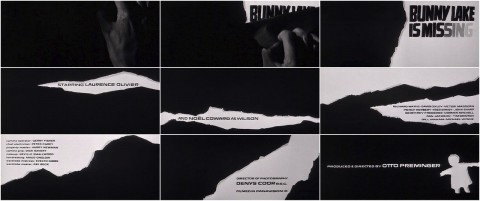
The excellent Art of the Title looks at the opening sequences to Anatomy of a Murder and Bunny Lake is Missing by Saul Bass.
Just Getting Started — Bill Moran on the Hamilton Wood Type and Printing Museum in Two Rivers, Wisconsin, for Design Observer:
When you hold a piece of wood type in your hands this deceptively simple piece of mass communication rewards you with its grace but also surprises with its weight. End grain maple is cut from the cross section of a tree yielding a harder and heavier piece of wood. Using the end grain of the wood improves durability with most wood type that was made in the nineteenth century still fully functional a century after its date of manufacture.
Leading the Blind — Nick Harkaway, author of The Blind Giant: Being Human in a Digital World, on book publishers and technology at The Guardian:
There’s a willingness to think: we’ll let everyone else figure out how the market should work, and then we’ll just supply books in the same way that we did to bookshops to electronic sellers like Amazon, Apple and Google. But booksellers are tied to publishing – they need conventional publishing models to continue – but for those companies that’s not the case. Amazon is an infrastructure company; Apple sells hardware; Google is really an advertising company. You can’t afford as a publisher to have those companies control your route to market.
Creative Paralysis — Michelle Dean on the future of ‘serious’ publishing at The Rumpus:
I don’t think there is anyone out there who has recently looked at the state of book publishing, I mean really looked, and not tightened her grip on her wineglass… I don’t work inside or report on publishing, but what limited exposure I do have suggests that there is indeed a crisis on the horizon. Anyone who’s ever wanted to see their name in print on the cover of a book — biography or novel, chapbook or memoir — ought to be thinking about that, about how to sustain the world of books. But the focus on the internet as the death of culture, which drones on in tired refrain on certain book sites, strikes me as bizarre, and overstated, not to mention creatively paralyzing.
And finally…
Eleanor Wachtel interviews composer Philip Glass for CBC Radio:
CBC Radio Ideas: Wachtel on the Arts with Philip Glass mp3
Comments closed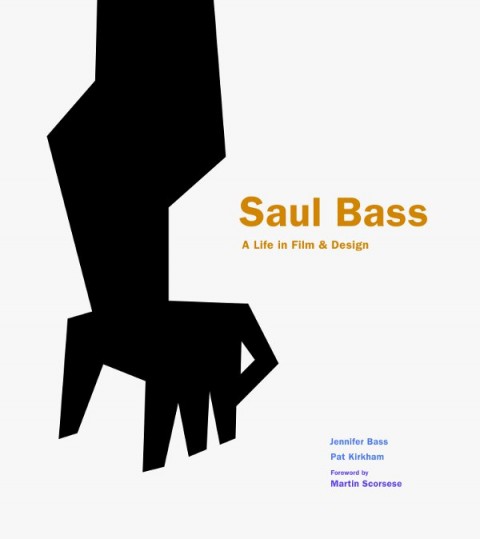
Lyra Kilston reviews Saul Bass: A Life in Film and Design for the LA Review of Books.
The Well-Made Book — An interesting article by Michael Agresta on how printed books, and their design, are changing in the digital age:
Now, as we move into the digital age, the well-made copy has come to occupy a familiar, almost nostalgic middle ground between the aura of an original and the ghostly quality of a computer file. A mass-produced paper book, though bulkier and more expensive, may continue to be more desirable because it carries with it this material presence. And presence means something—or it can, at least, in the hands of a good book designer.

Innards and Interiors — The Bauhaus: Art as Life exhibition at the Barbican reviewed at The Financial Times:
Paul Klee favoured risotto with steamed calf’s heart, sour liver and lung ragout: in the kitchen, as in his paintings, he was obsessed with innards, interiors, reconfiguring essential forms. Wassily Kandinsky lived in a streamlined white apartment but, incongruously, cooked on a “kamin” – a Russian wood-burning stove made from heavily ornamented black iron. Josef Albers claimed “I paint the way I spread butter on pumpernickel” – robustly and straightforwardly; he called the colour mixes in his “Homage to the Square” series his “recipes”. And Swiss painter and vegetarian zealot Johannes Itten was driven out of Weimar because he hijacked the Bauhaus kitchen and alienated director Walter Gropius by producing only “uncooked mush smothered in garlic”. The Barbican’s new exhibition… gives a whole new flavour to the story of the art school long seen to embody sober, purist German modernism.
Weird Comics — Local small press publisher Annie Koyama profiled in the Quill & Quire:
Koyama says her strategy for the year ahead is “to throw everything against the wall and see what sticks,” but she acknowledges her biggest business challenge is twofold: increasing print runs to improve margins and lining up reliable distribution for the fledgling firm. After working around the clock for nearly four years… she says her goal now is to create a sustainable enterprise that can continue to fulfill its artist-centric mandate… She’s also considering expanding into children’s books. But not in the way you’d expect. “While there are a million good kids’ books out there, there aren’t a million good kids’ comics I can see – especially not weird ones,” she says.
And finally…

Maurice Sendak, “author of splendid nightmares” has passed away aged 83. The New Yorker has made a short Art Spiegelman comic about meeting Sendak available online. And here is a wonderful interview with author from December last year:
Comments closedThe new episode of PBS Arts documentary series Off Book takes a look at the art of the title sequence. The designers of the titles for Blue Valentine, Mad Men, The Pacific, Se7en, and Zombieland discuss their work, and there’s a lovely bit at the end when they all talk about the influence of the mighty Saul Bass:
Comments closedPsycho-Drama — Pat Kirkham reassesses the collaboration between Saul Bass and Alfred Hitchcock for Design Observer:
The entire Bass/Hitchcock collaboration deserves to be better known, partly because of the sheer quality of the work, partly because it offers an interesting case study of the complex interchange between film and design, and partly because of the controversy surrounding Bass’s contribution to what is arguably the most famous scene in U.S. cinema — the shower scene in Psycho. Serious discussion of Bass’s contribution to the shower scene — a fascinating collaboration, from novel and script to musical score — remains problematic, not least because issues of authorship are far from dead in many academic disciplines, design history and film studies included.
Portmanteau — William Gibson’s new collection of non-fiction, Distrust That Particular Flavor, reviewed in The New York Times:
Everything he notices seems to be a this grafted onto a that. In these essays, we see a man fascinated by objects and places containing their own contradictions. It makes sense, then, that Gibson’s novels have helped promote several portmanteau words and neologisms, like “cyberspace,” into widespread English use. This is the essence of Gibson-think — anything can be a kind of portmanteau, a glued-together paradox.
See also: Gibson interviewed in The National Post (who get bonus points for their “Neuromantic” headline) and The Globe and Mail.
And finally…
What You Want, But Not What You Need — An interesting article by Ian Leslie, author of Born Liars, on serendipity:
Comments closed[T]here is a reason why Amazon is successful and bookshops are closing: in a world of infinite choice, efficiency is hard to resist. The pleasures of the bookshop or the library are easily outgunned by the knowledge that we can order or download a book instantly, or find the information we’re looking for within seconds. Serendipity, on the other hand, is, as Zuckerman says, “necessarily inefficient”. It is a fragile quality, vulnerable to our desire for convenience and speed. It also requires a kind of planned vagueness. Digital systems don’t do vagueness very well, and our patience with it seems to be fading.
I’ve been waiting for a book about Saul Bass since I was bookseller. Now Saul Bass: A Life In Film & Design is finally in bookstores, Ian Albinson of the brilliant Art of the Title has put together a brief visual history of some of Bass’s most celebrated work:
(For the record: Saul Bass: A Life in Film & Design is published by Laurence King and distributed in Canada by my employer Raincoast Books)
Comments closedA History of the Title Sequence is a short film by Jurjen Versteeg. It charts the development of film title sequences by displaying the names of influential title designers in the style of their own work. In other words, it is a film about title sequences that looks like a title sequence. How great is that?
The film references the following designers and their titles:
Georges Méliès, Un Voyage Dans La Lune; Saul Bass, Psycho; Maurice Binder, Dr. No; Stephen Frankfurt, To Kill A Mockingbird; Pablo Ferro, Dr. Strangelove; Richard Greenberg, Alien; Kyle Cooper, Seven; Danny Yount, Kiss Kiss Bang Bang and Sherlock Holmes.
Comments closed
I was in Vancouver last week discussing the new titles from Raincoast Books this fall. It was a great week and there are lots of amazing new books coming down the pipe — not least of which is the MASSIVE Saul Bass: A Life in Film and Design by Pat Kirkham and Jennifer Bass published by Laurence King (it looks incredible!) — but I am now really behind on just about everything else and life really caught up with me today. Suffice to say that posting around here might be even more erratic than usual for the next little while. Normal service (whatever that might be) will be back at some point. In meantime, here a few grainy (and rainy!) shots I took of Vancouver…


A Swiss Typeface + 2 Italian Designers = New York City — Michael Bierut reviews Helvetica and the New York City Subway System by Paul Shaw for the WSJ:
Mr. Shaw is irritated with the widespread belief that the modern New York subway system has always been associated with the Swiss typeface Helvetica. This misperception was fueled by the attention the typeface received in 2007 on the 50th anniversary of its introduction, especially in Gary Hustwit’s “Helvetica,” a documentary survey of the astonishing ubiquity of a lettering style that appears over the entrances of American Apparel and Staples, on Lufthansa airplanes and New York City garbage trucks, on Comme des Garçons bags, and, yes, on New York subway signs. But the last, as Mr. Shaw shows, was not always so.
The Habit of Reading — Harvard professor Marjorie Garber talks about her new book, The Use and Abuse of Literature, with The Atlantic:
I don’t believe there’s a necessary divide between highbrow and lowbrow or whatever. I think that the habit of reading is intensely pleasurable and it’s also hard. The pleasure of it is partly the pleasure of detection, the pleasure of recognition, the pleasure of response… I’m very optimistic actually about the future of literature and literary reading—I’m far from despairing and I don’t actually feel that there’s a crisis. What we need is to continue to show the power of reading, the pleasure of reading—and, again, more people experience that than we are sometimes aware of.
Jessa Crispin, editor-in-chief of Bookslut, reviews the book for NPR:
In fact, it’s proof of literature’s strength and lasting value that a 19th century writer like Jane Austen can still speak to the contemporary love lives of her readers, and that a book like the Diary of Anne Frank can still cause a ruckus among protective parents. That fight over comic books? The same arguments were made about Shakespeare, because, it was suggested, Elizabethan drama wasn’t real literature. (Early debates also routinely happened over novels, ballads and books written by women.) People have been trying to ban books for ages, from the 18th century’s Fanny Hill and the court cases against Lady Chatterley’s Lover and Ulysses, all the way to Harry Potter. “[Literature’s] greatness… is enhanced rather than undercut” by these challenges, Garber argues. There will always be stubborn, scandalized readers trying to define what literature is, but the greats will endure.
From Head to Hand — A lovely essay by ceramic artist Edmund de Waal, author of The Hare With Amber Eyes, on Primo Levi’s The Wrench and being a maker, in Slate:
Here, at last, was a book structured round structure. It was a conversation about how you took one part of learning and took it to another job. This made sense of how deeply connected the hand and the head really are. It articulated for me the way that I would throw a dozen porcelain pots and look at them, affectionately perhaps but also with a dispassionate eye, and plan the next dozen. It understood how I knew when dipping a pot into a bucket of glaze or listening to the sound of the flames when firing my kiln that there is something out of balance.
And, above all, there was a feeling that Levi was not speaking for people who make things. He doesn’t explicate or translate technical terms. In The Wrench, Faussone’s voice is clear and unhurried, paced in response to the real complexities and real pleasures that he encounters. Alongside him is Levi with his “specific challenge: I have a double experience—a chemist in the world’s eyes, and feeling, on the contrary a writer’s blood in my veins.”
People Like Us — A profile of Coudal Partners on Signal vs. Noise, the 37 Signals blog:
Despite the varied efforts, one consistent theme for the firm is a sense of curiosity and playfulness… That attitude attracts kindred spirits. “In our experimental films, in our contests, in our blog postings, and the products we make, we are trying to satiate our own curiosity and interest,” he says. “And we just take it on faith that there are a lot of people who share those curiosities and those interests with us. And if so, they will buy our products and they’ll watch our movies. Maybe you don’t have to sell to everybody. Maybe there’s enough people like us.”
And finally…

Bass is Best — Steven Heller on the movie posters of Saul Bass, for The Atlantic:
Comments closedBass’s work is appealing for its nuance, and his keen ability for making subtle, abstract symbols speak louder than literal photographs. What makes the new Hollywood versions so unappealing is the inability to allow the viewer to fill in the blanks. When Bass worked for Hollywood studios he created a consistent identity for films, from main and credit titles to posters and ads.

Punching Through the Din — designer Jim Northover on the exhibition of Saul Bass movie posters at Kemistry in London.
This is the End — Sarah Weinman on chronicling the end of the chain bookstore era:
But maybe what really happened was as simple as this: chain bookstores were never supposed to last as long as they did, and have reached their natural end point after twenty years. Publishing in general has enough struggle with scale, either being too small and prone to great risk and failure, or too big and beholden to larger entities who want greater and greater annual profits. Whatever possessed us to think bookstores could operate this way? Why is the art of bookselling supposed to be conflagrated with abundance, with excess and with millions of square feet?
And on a somewhat related note…
The Cost of Keeping Authors Alive –Boyd Tonkin for The Independent (via MobyLives):
Dirt-cheap e-books benefit the very rich – and the very dead. They might also help new authors to find a foothold and win an audience – although, on that logic, newcomers should think about showcasing their work for nothing. Many do. But the almost-free digital novel hammers another nail into the coffin of a long-term literary career. Who cares? Readers should, if they cherish full-time authors who craft not safe genre pieces but distinctive book after distinctive book that build into a unique body of work.
(see also: Margaret Atwood at TOC)
Kick Ass Annie — An interview with Anne Koyama, the founder and operator of Toronto-based Koyama Press, at Design Feaster:
I look at all kinds of artwork, films, architecture, photography and typography. I subscribe to a lot of art/artist’s blogs. I like to walk around cities and try to really see the details of things around me (which is more difficult than you may think for someone possessed of a short attention span). I carry a little point-and-shoot camera often. Of course, all of the artists I work with inspire me and I seem to find a few artists each week that I’d like to work with if I had the funds.
And lastly…

Meet the Classics — A Brazilian ad campaign to promote Penguin Classic Books (via This Isn’t Happiness).
1 Comment
Steven Heller, editor of I Heart Design and author/editor of countless other books about design, at 10 Answers.
And Steven Heller is one of the designers featured in BBC Radio documentary I Heart Milton Glaser about the iconic I (Heart) NY logo and the designer who created it (go listen now because it’s only available for a few more days).
Print and the City –a fascinating look at whether movable type printing presses were the drivers of economic growth in cities by Jeremiah Dittmar (via The Browser):
[C]ities in which printing presses were established 1450-1500 had no prior growth advantage, but subsequently grew far faster than similar cities without printing presses… Cities that adopted print media benefitted from positive spillovers in human capital accumulation and technological change broadly defined. These spillovers exerted an upward pressure on the returns to labour, made cities culturally dynamic, and attracted migrants.
In the pre-industrial era, commerce was a more important source of urban wealth and income than tradable industrial production. Print media played a key role in the development of skills that were valuable to merchants. Following the invention printing, European presses produced a stream of math textbooks used by students preparing for careers in business.
The Savage Marketplace — A really interesting and thoughtful survey of the current state of book editing in the UK by Alex Clark , with contributions from Diana Athill, Blake Morrison, Jeannette Winterson and others, for The Guardian:
[W]hat saps the spirit are the manuscripts that leave you with the question: why did no one sit down with the writer and point out where this isn’t working? Why didn’t a red pen mark the hackneyed phrase, or the stock character, or the creaky dialogue? And, sometimes, why didn’t someone deliver the unfortunate verdict: this simply isn’t ready yet, and may never be?
And finally, if you’re in London… Kemistry Gallery have an exhibition of film posters by Saul Bass from the BFI archive, February 17th to March 17th:
