Skip to content

Tag: pushkin press

The London Library Designs by David Pearson

a_full_account_of_the_dreadful_explosion_design_david_pearson

I mentioned Pushkin Press‘s ‘Found on the Shelves’ series earlier this year. The books celebrate 175 years of The London Library, and four more are coming out this month. The entire series has covers designed by David Pearson and, I’m happy to say, three of the new ones — The Right to Fly, Through a Glass Lightly, and Hints on Etiquette — have wonderful cover illustrations by Joe McLaren as well David’s (brilliant) trademark typography:

the_right_to_fly_design_david_pearson_illus_joe_mclaren

through-a-glass-lightly-design-david-pearson-illus-joe-mclaren

hints_on_ettiquette_design_david_pearson_illus_joe_mclaren

McLaren also provided illustrations for the covers of On Corpulence and Life in a Bustletwo earlier books in the series (also designed by David needless to say):

Save

Save

Comments closed

David Pearson Found on the Shelves

on_corpulence-design_david_pearson_illus_joe_mclaren

At The Bookseller, designer David Pearson talks about his new cover designs for Pushkin Press’s ‘Found on the Shelves’ series celebrating 175 years of the London Library:

At the heart of successful series design is motif – be it colour, type, grid, imagery, or other visual touchpoints – yet Pearson’s latest covers for Pushkin are perhaps less obviously groupable. “The series identifier is a subtle one,” he says, “but it is present in the use of decorative borders. I had begun to explore this idea of active border-making with some of Pushkin’s Collection Covers; the idea being that a decorative border can provide a layer of meaning or a tension point within the cover, and not simply act as a framing device.

“For The London Library series, this takes the form of overlapping tyre treads in ‘Cycling: The Craze of the Hour’; snaking, northbound steam in ‘The Lure of the North. It’s a small thing to hang your ideas on – and it matters little if no one notices it – but it ensured that I didn’t flounder at the beginning of the design process, as I had something to kick against, an inbuilt challenge to wrestle with.”

Pearson attributes much of the covers’ liveliness to the illustration, which he is quick to credit: “I intend to broaden the illustrative scope [further titles are scheduled for November] but for this first selection I’m relying on tried, trusted and incredibly talented hands. Joe McLaren produced the illustrations for ‘On Corpulence’ and ‘Life in a Bustle’ – and as with all of Joe’s work, the result is joyous.” The additional images were sourced from illustrations within the texts themselves, giving some of the covers a distinctly vintage appearance.

Each of the covers will print using a spot colour – one outside the gamut of four-colour CMYK printing, as it cannot be created using a combination of cyan, magenta, yellow and black (“key”); as a consequence of this it is bolder, more vibrant and less ubiquitous (and therefore more striking) – and will feature black foil-blocking on uncoated paper stock.


On Reading design David Pearson

life_in_a_bustle_design_david_pearson_illus_joe_mclaren Cycling David Pearson

Save

Comments closed

Jamie Keenan on Book Cover Design

Little Apple design Jamie Keenan

Book designer Jamie Keenan talks to Shiny New Books about his design process and designing the covers for Pushkin Press’s Vertigo imprint:

I think designers might have brains that are set up slightly differently to ‘normal’ people (there are always a lot of left handed people design departments). Quite often someone will mention authors and titles of books to me and it won’t mean anything, but when I look those books up on Amazon and see some pictures, I’ll realise I’ve read them or even worked on them. Words don’t seem to lodge in my brain in the same way that images do – I’m useless at remembering people’s names, but I can recognise someone because I sat next to them on a bus three years ago. When I read a book, I’m not sure if I experience in the way you’re supposed to do. It’s hard to describe, but from reading a book I get a sense, in quite an abstract way, of what the tone of the cover for that book should be. Each book seems to create its own world with its own rules and logic. And working on a book you don’t like is always easier – there’s nothing worse that trying to design a cover for your favourite book. It’s like being so keen to be friends with someone that you instantly become the most boring person in the world.

1 Comment

Pushkin Vertigo Crime Series Designed by Jamie Keenan

Vertigo Keenan

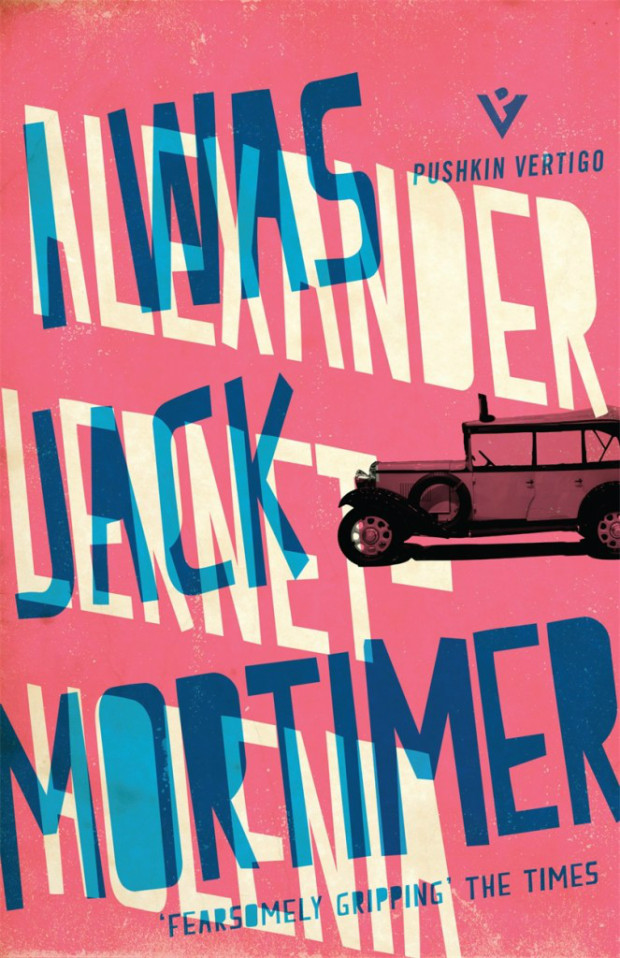
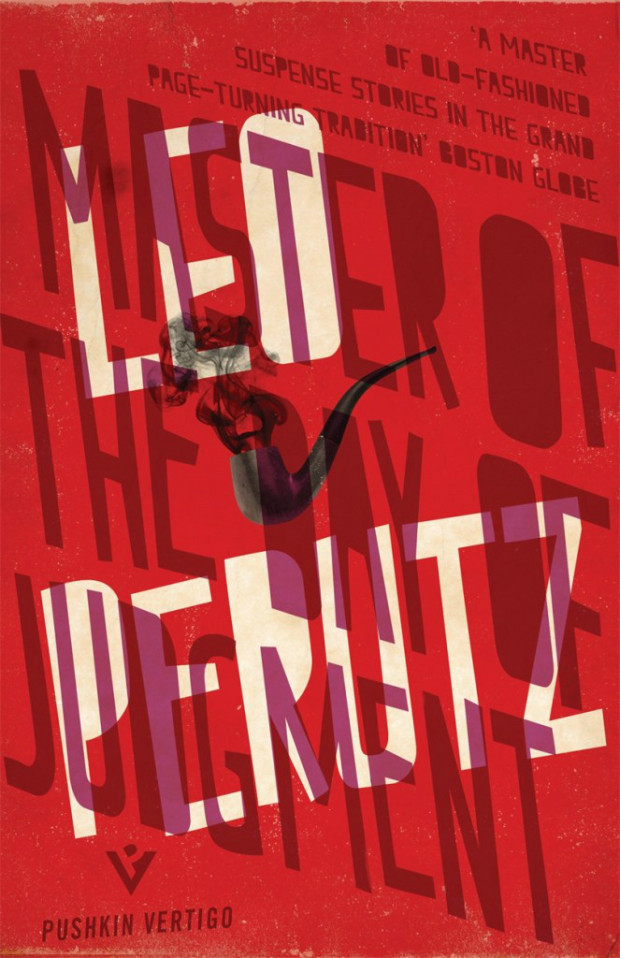
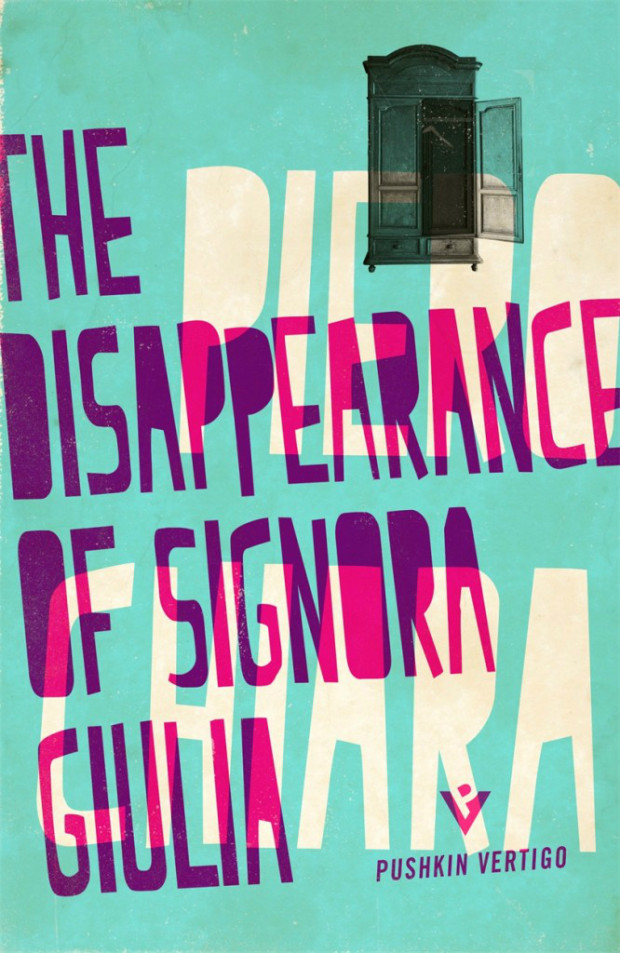
At the Creative Review blog, Jamie Keenan talks about his cover designs for Pushkin Press‘s new crime fiction imprint Pushkin Vertigo:

“From the beginning I wanted to come up with something that looked alien, as though someone had brought it back from a holiday in a country you’d never heard of”

They make for a stunning set.

Jamie also created that rather nice “PV” logo for the imprint. Nicely done Mr. Keenan.

I Was Jack Mortimer Keenan

Master of the Day of Judgment Keenan

She Who Was No More Keenan

The Disappearance of Signora Giulia Keenan

The Tokyo Zodiac Murders Keenan

Vertigo, The Tokyo Zodiac Murders, The Disappearance of Signora Giulia and Master of the Day of Judgment will be published by Pushkin Vertigo on next month; two more titles, I Was Jack Mortimer and She Who Was No More, will be published in November.

Comments closed

A Little Film About… Jean Jullien

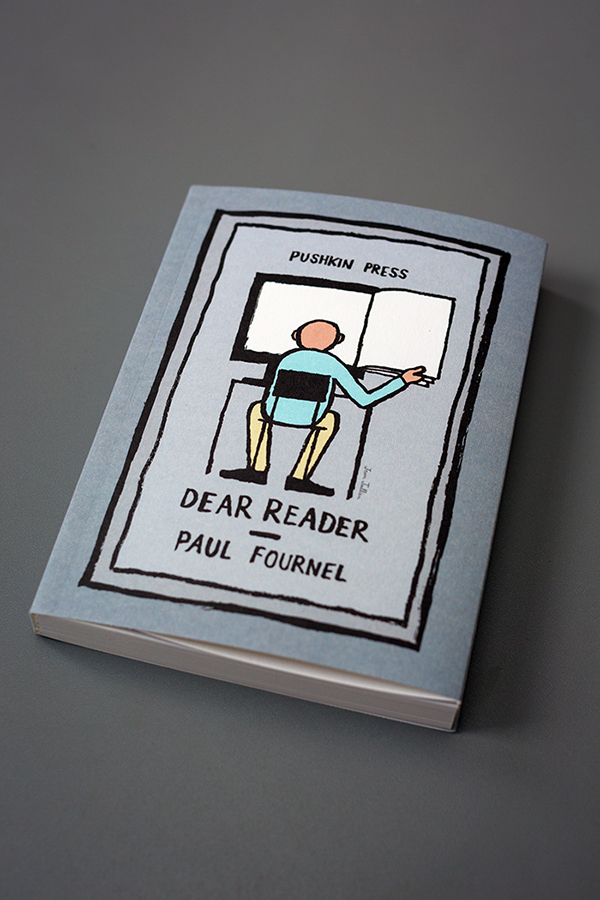
dear-reader

Another cover featured in this month’s round-up was Jean Jullien‘s illustrated design for Dear Reader by Paul Fournel, published by Pushkin Press. In this short film by Handsome Frank, Jullien talks about his work, drawing with a brush, his relationship with technology, and laughing at yourself:

(via It’s Nice That)

Comments closed

The Lost World of Stefan Zweig

collected-stories

At the LA Review of Books, Tara Isabella Burton reviews The Collected Stories of Stefan Zweig recently published by Pushkin Press

Zweig’s world is the world of the exile: the world of those displaced — by war, imprisonment, or by life, for whom hotels on Lake Geneva or the French Riviera are the only safe, if liminal, spaces. His characters are bereft of any sense of belonging; in the absence of a network, a sense of home, their emotions are heightened and their actions become ever more erratic. Thus in “Amok,” a doctor working in India finds himself blackmailing a patient for sex, painfully aware of how his self-imposed exile is disconnecting him from his own personal morality. In “Incident on Lake Geneva,” a Russian prisoner of war attempting to return home is stymied by a series of redrawn borders he does not understand; he tries to swim across, only to drown.

Such stories, of course, are colored by their political context: Zweig’s world is a world cut loose from itself. People’s bonds to their sense of self, of home, of country, of allegiance, have all been severed. But even consciously temporal stories like “Mendel the Bibliophile” — about a Viennese book collector sent to a concentration camp, and “The Invisible Collection,” about a blind art collector unaware of the fact that his family has sold his beloved prints to cope with rising German inflation — transcend their political context. They are, at their core, about the human need to connect, to ascribe meaning to what is not there, to look too fondly on an easier and imagined past as a means of coping with the at times impossible demands of real life.

Meanwhile, in the new issue of the London Review of Books, Michael Wood reviews the Zweig-inspired The Grand Budapest Hotel:

Zweig was born in an actual Europe and left, in the 1930s, to die in an actual Brazil… Best known during his lifetime for his vast and immensely readable biographies (of Dickens, Dostoevsky, Marie Antoinette, Mary Queen of Scots), he has recently been resurrected (in English, that is, since in French and German he hadn’t died) as the author of brilliant and bitter, if slightly too well-made fictions. It is from Joan Acocella’s fine introduction to one of them (Beware of Pity) that I take the fact that Zweig wrote a book called The World of Yesterday and the notion that he ‘saw himself as a citizen not of any one country, but of Europe as a whole.’ Of course Zweig was more serious about that world than the movie is or wants to be. He thought he had lived there. The movie thinks no one did.


1 Comment

Ryu Murakami Cover Designs by David Pearson

I’ve already posted a couple of David Pearson‘s cover designs for the new Pushkin Press editions of Ryu Murakami’s novels, so I thought I might as well put them all in one place:


 Popular Hits of the Showa Era by Ryu Murakami; design by David Pearson


 Sixty-Nine by Ryu Murakami; design by David Pearson


From the Fatherland, with Love by Ryu Murakami; design by David Pearson


Coin Locker Babies by Ryu Murakami; design by David Pearson

Comments closed

Ryu Murakami: Against the Mainstream


Pushkin Press have posted an interesting Q & A with author Ryu Murakami, whose new novel, From the Fatherland, with Love, was published last month:

For me, there’s nothing ordinary or routine about writing novels, though I’ve been doing it for thirty-seven years. When I write, even now, my brain is in a mode that’s different to everyday consciousness. So the words always come; I never find myself unable to write. Perhaps the fact that I consider myself a “cult novelist” helps. Though I’m famous in Japan and have achieved some status as an author, my works are by no means mainstream. They aren’t really accepted by the majority, and I don’t imagine that most people here understand them. And that motivates me to keep on writing.

The rather splendid cover is by David Pearson, I believe.

Comments closed