Skip to content

Tag: print

The Bends

The Guardian has posted an transcript of this year’s Andrew Olle Lecture given by their editor Alan Rusbridger. The subject of his talk was “The Splintering of the Fourth Estate”, and even in its edited form, it is a long and fascinating read that covers movable type, the BBC,  Rupert Murdoch, social media, pay walls, collaborative journalism and more. It’s essential reading…

It’s developing so fast, we forget how new it all is. It’s totally understandable that those of us with at least one leg in traditional media should be impatient to understand the business model that will enable us magically to transform ourselves into digital businesses and continue to earn the revenues we enjoyed before the invention of the web, never mind the bewildering disruption of web 2.0.

But first we have to understand what we’re up against. It is constantly surprising to me how people in positions of influence in the media find it difficult to look outside the frame of their own medium and look at what this animal called social, or open, media does. How it currently behaves, what it is capable of doing in the future.

On one level there is no great mystery about web 2.0. It’s about the fact that other people like doing what we journalists do. We like creating things – words, pictures, films, graphics – and publishing them. So, it turns out, does everyone else.

For 500 years since Gutenberg they couldn’t; now they can. In fact, they can do much more than we ever could.

(via Jay Rosen)

Comments closed
Linotype: The Film

Linotype: The Film is a work-in-progress documentary about the revolutionary Linotype typecasting machine.   Director Doug Wilson has just released a new trailer for the film:

You can help fund the Linotype: The Film at Kickstarter.

Comments closed

Field Notes: Wings

A short documentary by Coudal Partners about the production of the new limited edition Field Notes notebook Raven’s Wing:

Comments closed

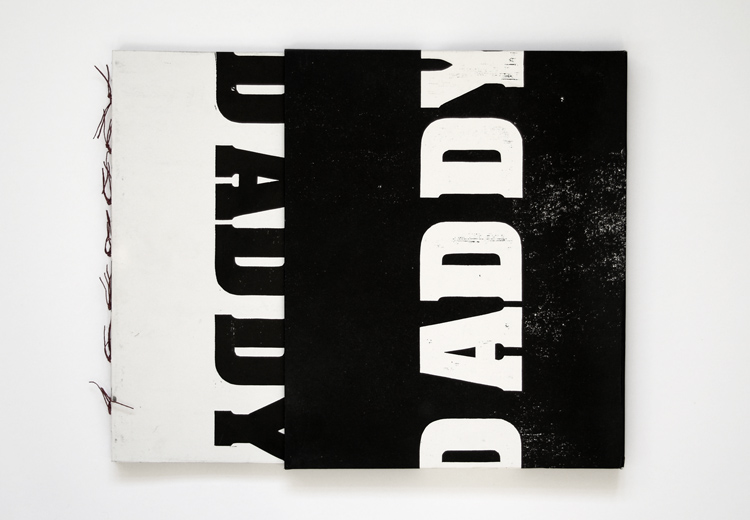
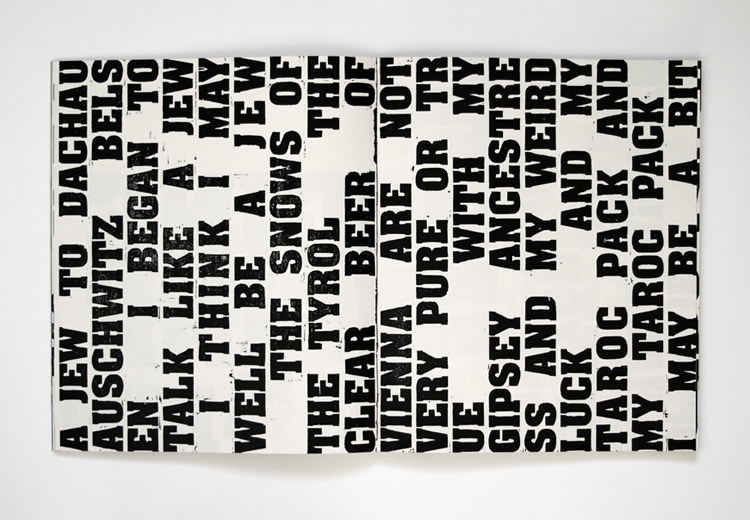
Daddy

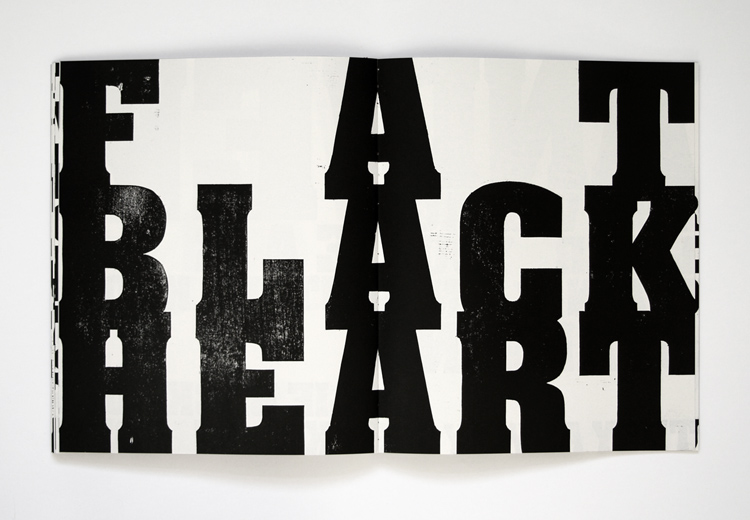
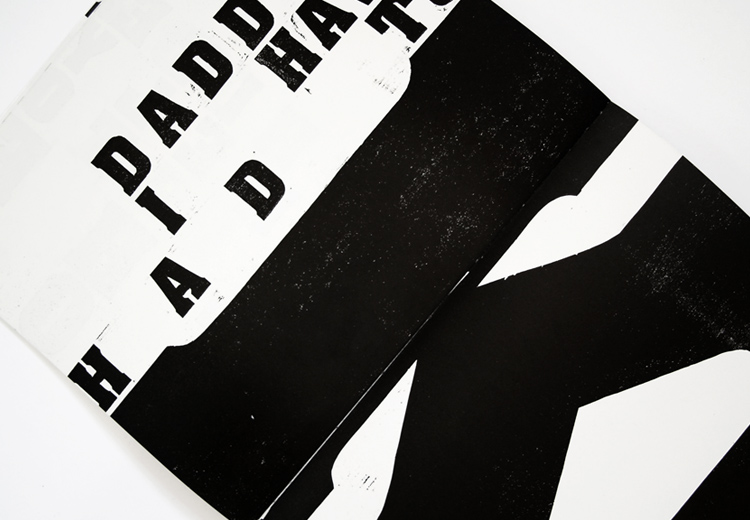
A typographic interpretation of the poem Daddy by Sylvia Plath, printed from 80 hand-carved woodblocks by Copenhagen-based design studio Daddy.

The book “seeks to capture and express the emotions and atmosphere of the text through the typographic treatment and woodblock printing.” Beautiful stuff:

(via Inspiration Lab)

Comments closed

Midweek Miscellany

Mode of Transportation by VSA Partners for Mohawk Fine Papers, seen at For Print Only.

Convergence — Richard Nash on the Frankfurt Book Fair, the book business, and enhanced e-books:

The reality is that the lack of audio and video in book is a feature, not a bug. All art forms are defined as much by what they exclude as by what they include, by what is left out as much as what is put in, by performing addition by subtraction, by less being more. The rules of haiku, of villanelle, of science fiction all exist to describe what is disallowed so as to give the freedom of not-everything-being-possible to the artist. Which, again, is not to say artists ought not create transmedia works. They should, and will. It is instead to say that when frightened publishers start scheming to create them in cahoots with third-party vendors we can safely say that this is a policy designed not to create desirable consumer products nor to create art but to create a survival pod for the publisher. What problem does the enhanced eBook solve?

(While not exactly a fan of enhanced e-books myself, I have no doubt that some people would be equally critical if publishers weren’t experimenting in this area).

Daniel Justi’s new font Ataxia is now available from You Work from and MyFonts. My interview with Daniel is here.

And finally…

A neat book trailer for John Lanchester’s Whoops! Why Everyone Owes Everyone and No One Can Pay (I.O.U. in Canada and the US) with animated segments by Yum Yum London (who made the wonderful short Parallel Parking):

(h/t the funniest man who-used-to-work-at-Penguin, Alan Trotter)

Comments closed

Jay Rosen on the Media

The Economist’s Democracy in America blog has an interesting Q & A with Jay Rosen, professor of journalism at NYU and author of What Are Journalists For?, about the American news media. The focus is largely on politics (Democracy in America is a blog about American politics after all), but Rosen’s insights into the future of the news media in general are also pertinent to the book industry:

The cost of changing settled routines seems too high, but the cost of not changing is, in the long term, even higher. A good example is the predicament of the newspaper press: the print edition provides most of the revenues, but it cannot provide a future. I know of no evidence to show that young people are picking up the print habit. So if the cost of abandoning print is too high, the cost of sticking with it may be even higher, though slower to reveal itself. That’s a problem…

…[T]he alternative to chasing clicks is building trust and an editorial brand. “What people want” arguments don’t impress me. I think anyone with a half a brain knows that you have to listen to demand and give people what they have no way to demand. You have to listen to them, and assert your authority from time to time, because listening well is what gives you the authority to recommend what is not immediately in demand.

Link

Comments closed

Midweek Miscellany

Jardin de la Connaissance —  Berlin-based landscape architect Thilo Folkerts and artist Rodney Latourelle used 40,000 reclaimed books to create a ‘Garden of Knowledge’ for the 11th International Garden Festival in Grand-Métis, Quebec (via Kitsune Noir).

A History of Print Culture — Assistant Professor of Media Culture,  C.W. Anderson,  provides his annotated syllabus for a print history course at CUNY in The Atlantic (thx Jamie):

The primary goal of this class is to teach students about the culture of “print media” in an era when that culture is being joined (and in some cases, overtaken) by a culture that we might variously call digital culture, online culture, or the culture of the web. What does “print” mean in our digital age? And what does “culture,” mean, for that matter? By culture I mean something that is not reducible to “economics,” “technology,” “politics,” or “organizations” — although culture emerges out of the nexus of these different factors, and others.  In other words, I want to disabuse my students of the notion that new technologies or new economic arrangements can create digital or print culture in the same way that a cue ball hits a billiard ball on a pool table.

Also in The Atlantic10 Reading Revolutions Before E-Books by Timothy Carmody.

Knowledgeable Criticism — An interesting interview with Fred Brooks, computer scientist and author of The Mythical Man-Month, for Wired magazine:

Great design does not come from great processes; it comes from great designers… The critical thing about the design process is to identify your scarcest resource. Despite what you may think, that very often is not money.

And finally…

When You Don’t Know You Are Breaking the Rules… Eli Horowitz, managing editor of McSweeney’s, interviewed for Scotland on Sunday (via the indefatigable  Largehearted Boy):

At the heart of McSweeney’s success is the huge amount of care and attention which goes into producing each book, ensuring that the jacket design and layout complement the words inside the covers. Though Horowitz believes there is a McSweeney’s aesthetic he is struggling to put into words what it is. “There’s a notion of old-fashioned story-telling and a compelling plot combined with an innovative literary impulse – when we’ve had those ingredients that’s when we’ve done our best works.”

Comments closed

Something for the Weekend

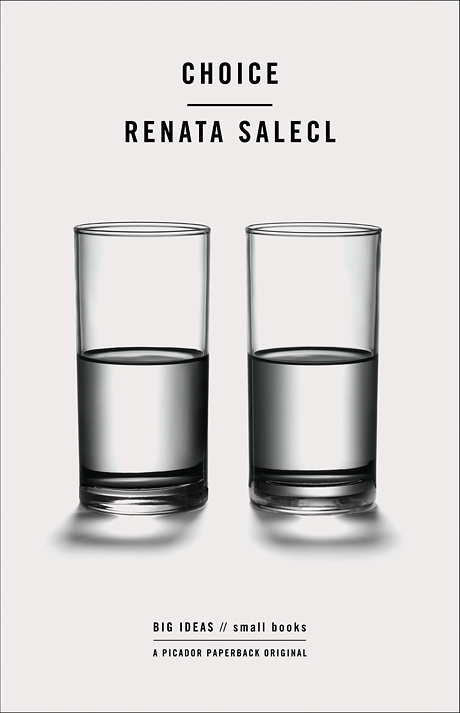
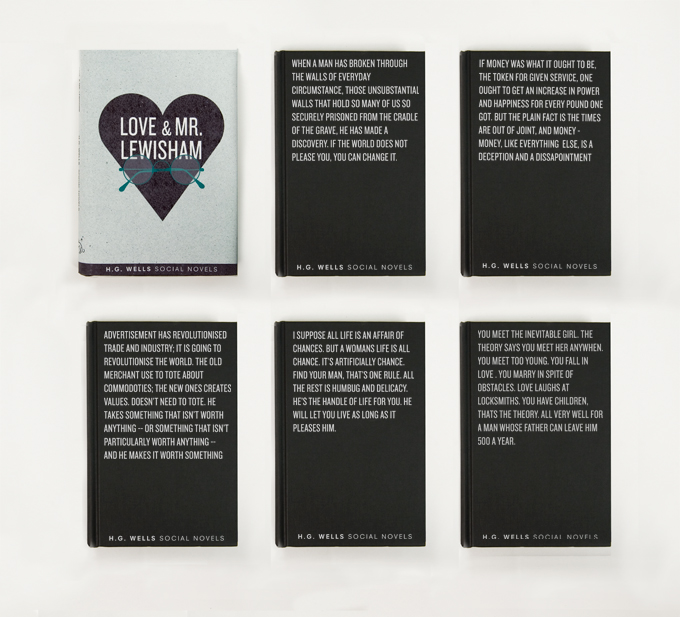
Two stunningly beautiful, and sadly unused, designs by Henry Sene Yene with photographs by Jon Shireman for Picador’s BIG IDEAS // small books series. Picador decided not to publish the book. You can see Henry’s other designs for the series here.

A Meaningful Publisher — Forbes profiles the fantastic NYRB Classics (via Sarah Weinman):

While the series hasn’t published a bestseller, and is unlikely to do so, readers care about NYRB Classics and are loyal to it. This is a monumental accomplishment at a moment when cultural loyalty is extremely fickle. Frank and Kramer did it using a frills-free, deceptively simple editorial strategy: give readers good books consistently, respect them, engage them, and they’ll stick with you.

Rough Healer — Jamie Byng, publisher at Canongate, on musician, poet, and author Gil Scott-Heron in The Guardian.

The Ultimate Online Bookclub — A little late to the party, but Viv Groskop discovers Twitter is the place to share book opinions and gossip (and stalk authors apparently) in The Telegraph (via Source Books publisher Dominique Raccah on Twitter of course!):

Twitter allows you to discuss books and authors with other fans online without having to set up a blog or invent some dodgy chat room identity. If you “follow” the right people… you soon discover that Twitter brings you compelling snippets from publicists, book fanatics, bloggers and authors themselves. With reading recommendations galore, it is the book addict’s paradise.

The New Narrative — Creative Nonfiction magazine is seeking interesting stand-alone narrative nonfiction blog posts (2000 words or less) to reprint in their next issue. Nominate something from your own blog, or from a friend’s. Closing date is this Monday (April 26, 2010).

And finally…

A Fan of the Form — Author and publisher Dave Eggers talks to On The Media about the McSweeney’s newspaper Panorama:

I like the curatorial, the calmness, the authority of a daily paper. But I do think that it’s a time to make the paper form more robust and more surprising and beautiful and expansive. People still want to read long form literary journals and nonfiction, etc., and so why can’t the print medium do that and be that home and leave the Internet to do the more quick thinking and quick reacting things?

Comments closed

Midweek Miscellany

Some nice book design from graphic design student Tom Pollard, spotted at FormFiftyFive

And speaking of FFF…

Some beautiful print design work by FormFiftyFive contributor Daniel Gray (via Cosas Visuales).

The Dramatist — A great profile of David Simon, creator of HBO series The Wire and Treme, in New York Magazine (via Mark Athitakis’ American Fiction Notes):

“Fuck the exposition,” he says gleefully as we go back into the bar. “Just be. The exposition can come later.” He describes a theory of television narrative. “If I can make you curious enough, there’s this thing called Google. If you’re curious about the New Orleans Indians, or ‘second-line’ musicians—you can look it up.” The Internet, he suggests, can provide its own creative freedom, releasing writers from having to overexplain, allowing history to light the characters from within.

Sympathy for the Librarian — A lovely quote from Keith Richards in The Times (via MobyLives):

“When you are growing up there are two institutional places that affect you most powerfully: the church, which belongs to God, and the public library, which belongs to you. The public library is a great equaliser.”

Amen.

And finally…

After posting about the big man earlier this week, I would be remiss if I didn’t mention The Ten Commandments of George Lois t-shirts available from TypographyShop:

“Great ideas can’t be tested. Only mediocre ideas can be tested.” Awesome.

Comments closed

The Complex of All of These

3000 (ish) photos of Abigail Uhteg making 35 books over a 2 month period at the Women’s Studio Workshop in Rosendale, NY:

(via Jacket Copy amongst others…)

Comments closed

Monday Miscellany, Nov 10th, 2008

Think, study, then post: David D. Perlmutter, author of Blogwars, discusses slow blogging on the Oxford University Press blog:

“many of the bloggers I interviewed talked about the need to feed the blog that is, if you don’t put up 2 to 3 new posts a day you lose your audience. But fast anything, unless you’re competing in the Olympics, is not necessarily the road either to author or audience fulfillment.”

I love this idea, I’m just not very good at it or, perhaps, just a bit too good judging by the number of posts in my ‘drafts’ folder! Must try harder… (via the excellent ReadySteadyBlog by the way)

The business elite still love print according to a Folio magazine survey:

“Top American business executives spend a lot of time worrying about the volatile economic climate—and a lot of time consuming media, with a vast majority of them clinging to print.”

Ghosts in the House! Written and illustrated by Kazuno Kohara.

The Best Illustrated Children’s Books 2008:  a slide show of the New York Times picks (pictured).  The NYT‘s Children’s Books Special Issue is here.

A bitter-sweet love: writer Ellen Jordan discusses her coffee addiction in a essay in The Age:

“I wonder whether I’m afraid to write without coffee, afraid that every good sentence I’ve ever written came out of some mysterious alchemy of coffee and my mind. If I write with nothing, or with some pallid juice or herbal tea or decaf, will I discover that alone I have no talent?”

Comments closed