The New York Times has posted a short video interview with Earl Kallemeyn of Kallemeyn Press about the beauty of letterpress:
Comments closed
Published February 16, 2012
Books, Design and Culture
The New York Times has posted a short video interview with Earl Kallemeyn of Kallemeyn Press about the beauty of letterpress:
Comments closed
The Book Show recently broadcast James Gleick’s closing address to the Sydney Writers’ Festival, in which the author of The Information discusses the future of the printed book:
THE BOOK SHOW: The Future of the Book with James Gleick
Comments closed
Oh. My. Gosh — Jon Klassen’s lovely illustrations and designs for the movie adaptation of Coraline.
Schadenfreude — Literary agent Nathan Bransford on the “death” of the publishing business:
There are definitely problems with the business… But the industry is not stupid. Like any massive industry that is comprised of tens of thousands of individuals, it is a human institution with some institutional problems and weaknesses. But despite a reading public whose appetite for books is not growing at a particularly fast rate, despite tremendous competition from other media, we’re still here, and we’re doing way better than a lot of industries, including ones comprised of supposed geniuses and masters of the universe.
Japan’s 21st Century Cultural Ambassador — Roland Kelts, author of Japanamerica, profiles Haruki Murakami for 3:AM Magazine.

Isolating the Commonplace — The New York Times Book Review‘s photography editor Jeffery Scales discusses the William Eggleston photograph used illustrate Edmund White’s review of Everything Ravaged, Everything Burned by (the improbably — yet charmingly — named) Wells Tower.
Give me Twitter or give me death — The Globe and Mail‘s Ian Brown possibly overthinks things…
1 CommentI finally cancelled our subscription to the Globe & Mail yesterday. But not, as you might imagine, because I can read it for free online. No. I cancelled our subscription because they are unable to deliver it before we leave for work in the morning.
I am actually willing to pay for the convenience of having a newspaper delivered to my door by 6am (even if I am subsidizing that newspaper’s free website) — just like I’m willing to pay music and movies I like (and for books without ads inserted into them FYI) — because I think that service and quality have a value, and that journalists, artists, and writers should be able to make a living.
I’m less willing to pay for a newspaper that is delivered late and is out-of-date — and largely uninteresting — by the time I look it 12 hours later.
Now, I appreciate that losing one newspaper subscriber is not going to keep the CEO of CTVGlobalMedia awake at night. He’s too busy worrying about the internet. But, newspapers, and publishers for that matter, are mising the point. The internet, e-books, social media — they really are not your problem. Taking your readers for granted – THAT is your problem.
Newspapers and publishers have been able to get away with being so utterly complacent about their consumers because, for years, readers had no alternative. But now they do. And too often the newspapers that are printed and the books that are published — and way they are delivered — are not good enough for people to want to pay for them because there is more interesting and convenient stuff elsewhere.
Newspapers and publishers: If you want to survive, stop wringing your hands about digital content — That debate is over bar the shouting. Start respecting your readers. Provide them with something they’re willing to pay for. Delivering my newspaper on time would’ve been a start.
4 Comments
Slow Burner (above) — a rather awesome — if slightly racy — cover seen at the Bookkake Blog.
How to Publish in a Recession Part 3 — The always interesting Richard Nash, the editorial director of Soft Skull Press and the executive editor of Counterpoint, talks to Scott Esposito at Conversational Reading.
The Once and Future e-book: On Reading in the Digital Age — A fascinating article on the past, present, and future of e-books and e-book readers by John Siracusa at Ars Technica. I think — like many — he underestimates the challenges (such as rights issues and, on a really basic level, a lack of expertise and human resources) publishers face making their titles available as e-books, but this really is a must-read.
Book Expo Canada is officially dead. It is an ex-trade show– Surprising precisely no one. The Globe and Mail has publisher reactions and a postmortem interview with Tom Best, vice president, marketing, at H.B. Fenn. What troubles me is the belief that we need something to replace it…
There’s so much written about how publishers don’t know what they’re doing… But how do you know what to do?”— The New York Observer talks to former PW editor Sara Nelson:
“You’re making a bet on who’s gonna like something a year and a half from now. That’s without even getting into the economy or anything—just, ‘What’s the mood of a number of people going to be a year and a half from now?’ If you thought too much about that, you’d shoot yourself.”
“We are on the verge of an explosion in independent book publishing” — Hugh McGuire of Librivox and The Book Oven chats to Allentrepreneur.
The Google Paradox — Andrew Keen, author of The Cult of the Amateur, on two new books published (in the conventional way) about Google:
“the more Google does to kill the traditional publishing industry with the free online content from its search engine, the more books will get written about the central role of Google in our new digital economy… The irony of Elsewhere USA and What Would Google Do? is that both books rely on the five hundred year-old technology of Johannes Gutenberg’s moveable type to explain the wrenching digital transformation of the 21st century.”
Who is on twitter? — I think I fall into the cateogory of “people who are concerned about the collapse of the publishing industry.” (Thanks Sio!)
Comments closedThe publishing industry is finally turning toward “mass digitization”, Matthew Shaer reports in The Christian Science Monitor .
But “it’s not the bigger houses, such as Macmillan or HarperCollins, that are moving the fastest” he says. It is agile independent presses — who can make decisions quickly and are “more open-minded when it comes to distribution and marketing” — that are “making the most extensive restructuring efforts” according to Schaer.
Independent presses are undoubtedly innovating — necessity is the mother of invention after all — and I would really love to believe that they can steal a march on the big publishers in the “e-book revolution”. Unfortunately I just don’t think it’s true. Or, at least, that simple.
Even if you ignore the Schaer’s assertion that the “typical” independent press can make quick decisions “without much internal friction” (in theory yes, in practice I’m not so sure), the ability to adapt is not just about a “fast and light ethos”, it is also about resources. It actually takes a great deal of time and expertise — often in short supply at small presses — to put a digital program in place. And although the cost of creating, marketing, and selling e-books may be low once the infrastructure is there, getting to that point requires a lot investment.
Soft Skull’s ambitious aim to have its entire list available digitally by the end of the year is a huge step for an independent publisher. But the two publishers Schaer specifically identifies as being behind the times are, in fact, already on this track. In November last year, Pan Macmillan made books available for the Stanza e-book reader for iPhones, and they currently offer a large, large number of downloads in different formats from their web site, as do HarperCollins .
In fact, ALL of the other major publishers — Random House, Penguin, and Simon & Schuster — offer e-books to download from their web sites in the US. Not that you would know from Schaer’s article.
And HarperCollins has been trailblazing with creative online initiatives in the past year. They set up Authonomy, a community site for writers, and are launching BookArmy, which Victoria Barnsley, chief executive of HarperCollins UK, describes as a “social networking site organised around books and authors.” . They’ve collaborated with if:book London and Apt to create an online, annotated version of Doris Lessing’s The Golden Notebook , and in December they released a charming online video, This Is Where We Live, to celebrate the 25th anniversary of their 4th Estate imprint, that quickly went viral.
In April 2008, HarperCollins also acquired The Friday Project — originally set up to find web based material and turn it into books — as an “incubator for fostering new talent, and finding new markets.”
And let us not forget HarperStudio who may not be offering e-books yet, but have firmly established themselves on online.
Penguin have not been idle either. In December, Penguin US launched Penguin 2.0 to boost their web presence with an iPhone app and other downloads. Penguin in the UK — who sponsored in the recent BookCamp on technology and the future of the book — not only offer over 1,000 e-books on their website, they have an online dating service (no, really), and have created SpineBreakers, a web site with teenage contributors. And there is, of course, the ever-popular Penguin Blog.
The same day as Penguin 2.0 was announced, PW also reported that Random House would be partnering with Stanza and making select titles available for iPhones, and in January, Simon & Schuster relaunched their website with all the whistles-and-bells — such as blogs and author videos (outlined by PW here) — that one would expect from a publisher who knows their audience is online.
Of course none of these strategies is perfect and the major publishers still have work to do on their e-books programs (there have been complaints about the pricing in particular), but this is a period of experimentation and, with the best will in the world, it’s simply absurd to suggest, that the big publishers are “dinosaurs” who “think people are just sitting down in leather chairs and reading hardcopy books.”
Independent publishers may have “the most to gain from electronic publishing” as Richard Nash of Soft Skull says, and I genuinely hope that e-books usher in a renaissance of independent publishing. But the big publishers are not blind to the possibilities that technology is opening up and they have the resources to move quickly and boldly, and, in some cases at least, they are doing so. Let’s just give credit where it is due.
1 Comment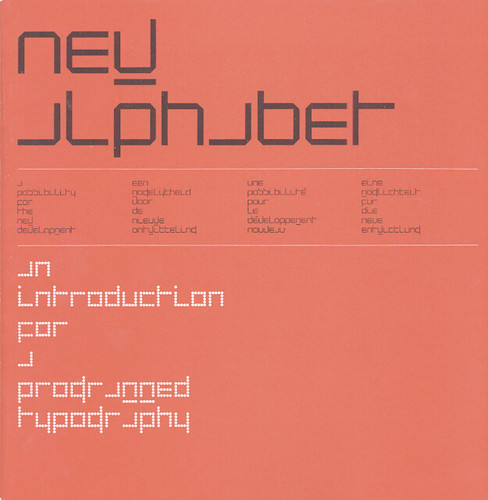
Big Mouth Strikes Again — The Friday Project’s charming Scott Pack interviewed at North Meadow Media:
people who have dealt with me directly are pleasantly surprised that I am not the complete cunt I am sometimes made out to be. I am a bit of an arse but not quite as bad as my press would suggest.
Books Unbound — author Lev Grossman’s (much linked to) thoughts on the evolution of publishing for Time magazine. Meh.
Unhappily ever after — The Guardian’s Nick Laird reviews Richard Yates’ Revolutionary Road, and asks is it “too good a novel to make a great film”?:
It is a solid and noble effort that succumbs to what should be a moral of literary adaptation: bad books can make great movies, but a great book hardly ever does. And though you can see what tempted the movie men – that great dialogue! those poignant characters! – with Yates it’s the sentences themselves that are truly panoramic, and no matter what you do, they’re going to get left behind.
That may all be true, but to be honest, the wayward casting in Sam Mendes film adaptation is so catastrophically contrary to the characters in my mind that I can’t bring myself to see it anyway.
BlogTO profile one of Toronto’s best independent bookshops Ben McNally Books. Lovely bloke that Ben McNally . BlogTO have profiles of other Toronto bookstores here.
Toronto gets another new literary festival. I can hardly contain myself.
The message is the subject — Jenny Tondera interviews Dutch designer Wim Crouwel, creator of the ‘New Alphabet’ (pictured above and famously tea-leafed by Peter Saville for the album cover of Joy Division’s Substance), about the Bauhaus for Geotypografika. Jenny also interviews Michael Bierut, Experimental Jetset, Steven Heller, Paula Scher, Ellen Lupton, and Jessica Helfland.
2 Comments
The Books are alright — Montreal’s Hugh McGuire (of LibriVox and Book Oven) on the Penguin-sponsored BookCamp in London:
If the amount of thought and enthusiasm generated that day — and evening — is any indication, I think we’re going to be OK. The book is alive and well, even if defining “book” is becoming more complicated; and the publishing business, bracing itself for the biggest shake-up since the paperback, will come out the other end, transformed certainly, but alive nonetheless.
Cuts Were Necessary — The New York Observer on Marcus Dohle the new CEO of Random House (previously described as “dapper, but mildly off-putting”):
Now, the feeling among both literary agents and executives who used to work at Random House seems to be that Mr. Dohle inherited a rotten, bloated thing when he took over last May, and though one can wish it hadn’t gone the way it did, there simply was no reversing the damage done by his predecessor, Peter Olson, without forcing the publishers who’d survived his thoughtless 10-year reign to make some hard calls.
Rotten and bloated. Nice.
How to Publish in a Recession — a wide-ranging interview with Declan Spring, senior editor at New Directions, at Conversational Reading (via Ready Steady Blog):
We’re not beholden to stock owners, our overhead is pretty small, and we always count on just a pretty small profit every year anyway. Our staff has worked here for many years, mostly the same folks for twenty years, who are devoting much of their lives to the mission of ND. We see it as a profit-making business, but we are also realistic and dedicated to the cause. That makes it easier in this climate.
And speaking of New Directions… Any excuse (really) to post another book jacket by Alvin Lustig (pictured).
Comments closed
David Mirvish Books, the best fine art bookstore in Toronto, is to close. Damn. At least the Art Gallery of Ontario’s bookstore has re-opened with a decent selection of art books.
“It’s not something you should really do unless you feel really compelled to do it” — An interesting interview with Doug Seibold about founding Chicago-based publisher Agate over at Slate’s Bizbox:
As in a lot of other businesses, there’s a bunch of giant multinational conglomerates that are the big players, and they leave a lot of waste behind them. My feeling was a company that functioned efficiently at the appropriate scale could do a lot of business by being cost-effective and opportunistic. Not too little, but not too grandiose: growing at a careful, natural pace.
Attack of the “renegade cybergeeks”: New York magazine meets the team behind the New York Times’ online operation:
[T]here is something exhilarating about watching web innovation finally explode at the Times, with its KICK ME sign and burden of authority… Despite the effectiveness of blogs, the majority still mainly provide links and commentary. The Times Online suggests what might happen when technology fuels in-depth reportage
A little up it’s own arse and not short on hyperbole (“the New York Times is less a newspaper and more an informative virus”? Really?), it’s still definitely worth a read. Gawker’s predictably acerbic response can be found here.
“Poetry is both flourishing and floundering” — Neil Astley, editor of Bloodaxe Books, argues poetry must be responsive to readers not academic cliques, in the New Statesman:
The producers of poetry aren’t in tune with the lovers of poetry. Many poets and publishers are actually hostile to the promotion of poetry… They see marketing as a dirty word instead of simply the means by which their books are made available to more readers.
“Publishers… lost control of their industry” — a somewhat melodramatic (and therefore much-linked to) “autopsy” of the book business by Jason Epstein in the Daily Beast. I have a lot respect for Epstein, who is indeed a “publishing legend”, but it is worth keeping in mind that he said most of this in Book Business, published in 2001, and in an article for Technology Review from January 2005. He’s also the man behind the futuristic-yet-seemingly-redundant (is there a word for that? Apart from ‘segway’?) Espresso Book Machine, so he’s not an entirely dispassionate observer.
Grant Morrison talks Batman with Publishers Weekly:
I wanted to assemble all the classical tropes of the pulp noir crime genre: the diabolical mastermind, the femme fatale, the inescapable traps, the secret societies of evil…and push them beyond all reasonable limits to a kind of screaming Death Metal crescendo.
Nice.
The Pelican Project: A collection of Pelican Book covers from the 1930’s through to the 1980’s (pictured). (I was reminded of this wonderful project by the eclectically brilliant FFFFound)
1 CommentAccording The Quill & Quire, The Globe & Mail will be folding it’s weekly standalone Books tabloid into the Focus section of its Saturday paper in the new year:
Globe editor-in-chief Edward Greenspon argued that the move is aimed at bringing more eyes to the books pages, and is not an attempt to reduce books coverage. “The Books section itself is a little bit of a ghetto, and the Focus section is one of the best-read sections of the paper,” he said. “There should be more traffic, more eyeballs going through it, both in print and online.”
In the new, combined print section, the number of pages devoted to books will ultimately depend on advertising revenue, Greenspon said, which he admits has been suffering of late. But he said the ramped-up books website should pick up any of the slack in coverage.
After the precipitous decline of book coverage in newspapers across North America in recent years, the Globe‘s decision is hardly unexpected. Standalone book sections have been dropping like flies in the US, and here in Canada the Toronto Star halved its books coverage to two pages in the summer, and the Montreal Gazette has turned its weekly standalone books section into a monthly. The writing was on the wall for the Globe‘s Book section, especially after its unexpected two week ‘hiatus’ in August.
So, no surprise. But the thought occurred to me that what advertisers now want from the Globe & Mail is clearly very different from what I want as a subscriber to the newspaper. And the Globe is — rightly or wrongly — going with the ad revenue. Thus they can maintain a weekly standalone Auto section — bloated with ads — that I don’t read, and scrap their prestigious standalone Books tabloid — with very little advertising — that I read cover to cover.
For newspapers, there is surely a tension between the interests of advertisers and the interests of readers, and whilst trying to strike a balance, the temptation, inevitably, is to follow the money. The question is though, when newspaper readers like me decide that you’re no longer reflecting our interests and cancel our subscriptions, what are the advertisers and, in turn, the newspapers going to do then?
1 CommentAfter a week of feeling gloomy about publishing, here are a few links to some less apocalyptic book-related stories that I’ve been reading:

“Your…fucking…book” : Author Michael Lewis, who just happened to chronicle Wall Street’s excess in the 80’s in his book Liar’s Poker, tries to figure out what the hell just happened for Portfolio magazine (via kottke):
“This was what they had been waiting for: total collapse… Lehman Brothers had vanished, Merrill had surrendered, and Goldman Sachs and Morgan Stanley were just a week away from ceasing to be investment banks. The investment banks were not just fucked; they were extinct.”
Did someone just say ‘Schadenfreude’? Well, I guess it is reassuring that there’s an industry more fucked than publishing… Anyway, Lewis is apparently writing a book about the whole financial crisis…
Contempt for the beautiful losers: Slate‘s Ron Rosenbaum goes to town on BuzzMachine’s Jeff Jarvis (author of the forthcoming book What Would Google Do?) taking in journalism, new media, publishing, the Frankfurt Book Fair, and “New Age boilerplate mysticism” of Paulo Coelho on the way:
“If Jarvis values books (and I can’t help think that despite all the digital bluster, he’s an intelligent guy who likes reading), do we just listen to the market and focus-group what we should print and give away, which is likely to result in all Coelho, all the time, with maybe a little bit of Jarvis thrown in?”
Inevitably you can already read Jarvis’ response on his blog. Despite all the overblown cattiness, it’s actually an interesting argument. (via fimoculous)
More Information Than You Require: Former literary agent turned author John Hodgman, best known for playing PC in those increasingly misfiring Apple commercials, interviewed by The Book Bench blog:
“I believe that by releasing ‘passing interest/low keepsake-value literature’ from the burden of physicality, you are actually releasing the words from their worst liability: the price and inconvenience of actual bookness.”
“Lord Death Man”: PowellsBooks.Blog previews Chip Kidd’s latest pet project Bat-Manga! (pictured).
Comments closed