Skip to content

Tag: podcast

Something for the Weekend

No Idea What I’m Doing — Keith Ridgway, author most recently of Hawthorn & Child, on writing fiction:

I have no idea what I’m doing. All the decisions I appear to have made—about plots and characters and where to start and when to stop—are not decisions at all. They are compromises. A book is whittled down from hope, and when I start to cut my fingers I push it away from me to see what others make of it. And I wait in terror for the judgements of those others—judgements that seem, whether positive or negative, unjust, because they are about something that I didn’t really do. They are about something that happened to me. It’s a little like crawling from a car crash to be greeted by a panel of strangers holding up score cards.

A Dog’s Cock — The history of the exclamation mark:

no one really knows the history of the punctuation mark. The current running theory is that it comes from Latin. In Latin, the exclamation of joy was io, where the i was written above the o. And, since all their letters were written as capitals, an I with an o below it looks a lot like an exclamation point.

But it wasn’t until 1970 that the exclamation point had its own key on the keyboard. Before that, you had to type a period, and then use the backspace to go back and stick an apostrophe above it. When people dictated things to secretaries they would say “bang” to mark the exclamation point. Hence the interobang (?!) – a combination of a question (?) and an exclamation point (!). In the printing world, the exclamation point is called “a screamer, a gasper, a startler or a dog’s cock.”

One more on the late Robert Hughes at The Economist:

As our lives grow increasingly distracted and overstimulated, the critic has become both more and less relevant in the service of cultural sieve, filtering out the good from the bad. Mr Hughes didn’t subscribe to such categorical certainties. In turn he placed as much emphasis on the context of a work as he did on its content. To Mr Hughes, experiencing art wasn’t about passing a few hours in some museum, but what made those few hours meaningful to be alive.

And finally…

Larry Tye talks about his new book Superman: The High-Flying History of America’s Most Enduring Hero, on CBC Radio’s The Current:

CBC RADIO THE CURRENT: Superman: The High-Flying History of America’s Most Enduring Hero mp3

Comments closed

Chip Kidd on the Future of Book Covers

Billy Batson Chip Kidd, associate art director at publisher Alfred A. Knopf (as if you didn’t know), talks to NPR’s Weekend Edition about the future of book cover design:

NPR WEEKEND EDITION: In the E-Book World, Are Book Covers a Dying Art?

2 Comments

Radiolab: Colors

On the latest episode of Radiolab, Jad Abumrad and Robert Krulwich explore the science of colour (in their own inimitable and meandering style):

Radiolab: Colors mp3 

(pictured above: Interaction of Color by Josef Albers. Not mentioned in the show, but somewhat appropriate…? Any excuse for a bit Albers really…)

Comments closed

Midweek Miscellany

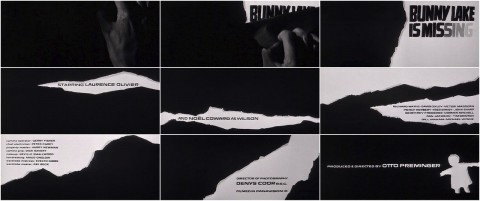
The excellent Art of the Title looks at the opening sequences to Anatomy of a Murder and Bunny Lake is Missing by Saul Bass.

Just Getting Started — Bill Moran on the Hamilton Wood Type and Printing Museum in Two Rivers, Wisconsin, for Design Observer:

When you hold a piece of wood type in your hands this deceptively simple piece of mass communication rewards you with its grace but also surprises with its weight. End grain maple is cut from the cross section of a tree yielding a harder and heavier piece of wood. Using the end grain of the wood improves durability with most wood type that was made in the nineteenth century still fully functional a century after its date of manufacture.

Leading the Blind — Nick Harkaway, author of The Blind Giant: Being Human in a Digital World, on book publishers and technology at The Guardian:

There’s a willingness to think: we’ll let everyone else figure out how the market should work, and then we’ll just supply books in the same way that we did to bookshops to electronic sellers like Amazon, Apple and Google. But booksellers are tied to publishing – they need conventional publishing models to continue – but for those companies that’s not the case. Amazon is an infrastructure company; Apple sells hardware; Google is really an advertising company. You can’t afford as a publisher to have those companies control your route to market.

Creative Paralysis — Michelle Dean on the future of ‘serious’ publishing at The Rumpus:

I don’t think there is anyone out there who has recently looked at the state of book publishing, I mean really looked, and not tightened her grip on her wineglass… I don’t work inside or report on publishing, but what limited exposure I do have suggests that there is indeed a crisis on the horizon. Anyone who’s ever wanted to see their name in print on the cover of a book — biography or novel, chapbook or memoir — ought to be thinking about that, about how to sustain the world of books. But the focus on the internet as the death of culture, which drones on in tired refrain on certain book sites, strikes me as bizarre, and overstated, not to mention creatively paralyzing.

And finally…

Eleanor Wachtel interviews composer Philip Glass for CBC Radio:

CBC Radio Ideas: Wachtel on the Arts with Philip Glass mp3

Comments closed

Design Matters with Steven Heller

In a fascinating and wide-ranging conversation, design historian Steven Heller talks about design and his recent book 100 Ideas That Changed Graphic Design with Debbie Millman on Design Matters:

Design Matters: Steven Heller mp3

Heller really is an astonishingly prolific author.

(Full disclosure: 100 Ideas That Changed Graphic Design is published by Laurence King and is distributed in Canada by my employer Raincoast Books)

Comments closed

Edward St. Aubyn on Writers & Company and Bookworm

In a fascinating conversation, Eleanor Wachtel talks to Edward St. Aubyn about his Patrick Melrose novels on CBC Radio’s Writers and Company:

CBC Radio Writers & Company: Edward St. Aubyn mp3 

KCRW’s Bookworm also recently broadcast a two-part interview with St. Aubyn about the books.

Part One:

KCRW Bookworm: Edward St. Aubyn Part One mp3

Part Two:

KCRW Bookworm: Edward St. Aubyn Part Two mp3

Full disclosure: The collected edition of the first four Patrick Melrose novels has just been published in the US by Picador Books who are distributed  in Canada by my employer Raincoast Books. At Last, the latest Patrick Melrose novel is published separately by Farrah, Strauss & Giroux who are distributed in Canada by Douglas & McIntyre (not my employer).

Comments closed

Radiolab: The Turing Problem

The latest episode of Radiolab is devoted to the life and work of mathematician Alan Turing and features contributions from authors Janna Levin (A Madman Dreams of Turing Machines), David Leavitt (The Man Who Knew Too Much: Alan Turing and the Invention of the Computer) and James Gleick (The Information: A History, A Theory, A Flood):

WNYC RADIOLAB: The Turing Problem mp3

Comments closed

Design Matters with Erik Spiekermann

Debbie Millman talks with designer and self-confessed typomaniac Erik Spiekermann on the latest episode of Design Matters:

Design Matters with Debbie Millman: Erik Spiekermann mp3

Comments closed

RDInsights: Michael Wolff in Conversation

Mike Dempsey interviews renowned British designer Michael Wolff,  co-founder of the Wolff Olins Agency, for the RSA’s RDinsights series:

RSA Insights: Michael Wolff Interview mp3

Comments closed

Design Matters with Peter Mendelsund

Peter Mendelsund — senior book designer at Knopf, art director for Vertical Press and all-round superstar — talks to Debbie Millman on Design Matters:

DESIGN MATTERS: Peter Mendelsund mp3

I interviewed Peter last year about his book cover design for the Knopf edition of Tom McCarthy’s novel C, and you can read a short essay I wrote about his cover for the Schocken editions of Kafka here.

1 Comment

Francis Ford Coppola at TIFF

You know, what was top of my mind when I was making [“The Conversation”] was I wanted to make the film as beautiful as “Blow-Up.” You know, I had seen “Blow-Up” by Michelangelo Antonioni and I said boy, that’s the kind of film I – those were the kind of films I want to make. I – something that’s unique and it occupies its own kind of thing, and I made “The Conversation.” I sat down to write that after being so enthusiastic about seeing “Blow-Up.” And throughout my career, I have seen great films that have just filled me with pleasure and said, I want to make a film like that. And I think that’s OK for young people to do, you know, because it’s impossible. You set out to imitate something you thought was beautiful but in the end you can’t. You’re going to end up with what you have to say, you know?

Broadcast by NPR’s Fresh Air, director Francis Ford Coppola discusses his career with Cameron Bailey, the co-director of the Toronto International Film Festival, and answers questions from the festival audience:

NPR FRESH AIR: Francis Ford Coppola Reflects On His Career mp3

You can read the transcript of the interview here.

AND if you’ve never seen Coppola’s 1974 film The Conversation, you really should make time to watch it…

Comments closed

Design Matters with Brian Rea

In the latest Design Matters podcast, Debbie Millman interviews artist and illustrator Brian Rea. The former art director for the Op-Ed page of The New York Times, Rea recently illustrated three of Malcolm Gladwell’s most popular books for a new boxed-set, Malcolm Gladwell Collected, designed by Paul Sahre:

DESIGN MATTERS: Brian Rea mp3

Comments closed