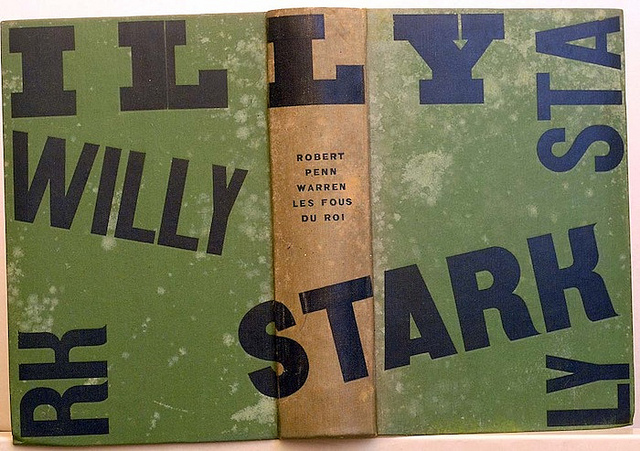
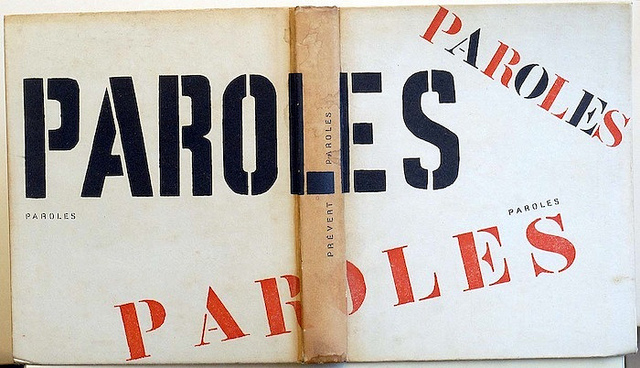
Defending the Unusual — Designer Allison Saltzman, art director at Ecco, interviewed at Caustic Cover Critic:
Everywhere else I’ve worked, the books’ content still informs the cover design, but the overall aesthetic is subject to the publisher’s (and their art director’s) taste. I think the trick to happiness, in this business, is to find yourself a publisher or an art director whose taste you’re comfortable with. And you also need them to trust your instincts as a designer. I am so content at Ecco because the publisher and editors tell me about their books and the audience they’re aimed at, but then they just want me to read them and come up with cover ideas myself. Another good thing about Ecco is that the publisher wants and defends interesting and unusual covers; that’s rare.
Burying the Book — Laura Miller interviews legendary editor and writer Robert Gottlieb for Salon:
[S]ince I’ve been in publishing since the mid-’50s, I’ve lived through all the moments when doom was cried, going right back to “the medium is the message.” The book was dead — I can’t tell you how many times we’ve buried the book in my lifetime. The fact is that we haven’t buried the book, and however all this works out, we’re still not going to be burying the book. People are still going to be reading books, and whether they’re going to be reading them on a Kindle or as a regular physical hardcover book or a paperback or on their phones or listening to audiobooks, what’s the difference? A writer is still sending his or her work to you, and you’re absorbing it, and that’s reading.
Seeing the Pain — Mark Medley talks to Michael Pietsch, editor of the late David Foster Wallace, about constructing the recently released The Pale King:
“This project has been kind of all-consuming,” says Pietsch, whose only other experience editing a posthumous work came in 1985, when he worked on Ernest Hemingway’s bullfighting memoir The Dangerous Summer.
There was no outline, no list of chapters, no clues as to where Wallace planned to take the narrative. The chapters were not in sequence. The names of characters constantly changed. Pietsch thought he’d discovered the novel’s first chapter — the one which begins “Author here” — until he found a footnote explaining precisely why it wasn’t the first chapter. He laughs: “I thought, ‘Oh, I don’t even have a starting point!’ ” Still, the process “was sometimes exhilarating, delightful and joyful because I felt in his presence. And at other times heartbreaking because I saw how hard it was for him. You can’t read this book without seeing pain.”
The War of Independents — Andrew Keen, author of The Cult of the Amateur, on how online piracy is damaging independent filmmakers more than Hollywood:
One of the Internet’s greatest fallacies, its fishiest tale, is the idea of the “Long Tail.” Popularized by Wired magazine editor-in-chief Chris Anderson, first in a 2004 magazine article and then in the bestselling 2006 book, The Long Tail: Why the Future of Business Is Selling Less of More, it argues that the Internet is an ideal distribution platform for independent filmmakers, musicians, and writers struggling to compete against the financial might of mass media conglomerates… But Anderson’s argument has a fatal flaw. He forgets about Internet theft — the online cesspool of illegal peer-to-peer networks and illegal streaming services that has already decimated the music business and is now doing potentially irreparable damage to the motion picture industry. And in the face of piracy, I’m afraid, the belief that all the value in the Internet economy can be located in its tail is, literally, turned on its head. Rather than a long tail, Internet theft’s mass looting of the content industry is transforming the Internet into a fat-headed economy with everything on top — an increasingly unequal medium which discriminates against independent filmmakers and makes it harder, rather than easier, for them to make a living from today’s digital economy.
Before people yell at me, I’m sure that there are counter-arguments to Keen. Constructive ones are welcome in the comments (just leave ad hominem stuff at home).
And finally…
RUR — NPR discusses the origin on the word ‘robot’:
It was the brainchild of a wonderful Czech playwright, novelist and journalist named Karel Capek. He lived from 1880 to 1938. And he introduced it in 1920 in his hit play “RUR,” or “Rossum’s Universal Robots.”… [It] comes from an Old Church Slavonic word, rabota, which means servitude of forced labor. The word also has cognates in German, Russian, Polish and Czech. And it’s really a product of Central European system of serfdom, where a tenants’ rent was paid for in forced labor or service.
And he was writing this play about a company, Rossum’s Universal Robots, that was actually using biotechnology. They were mass-producing workers using the latest biology, chemistry and physiology to produce workers who lack nothing but a soul. They couldn’t love. They couldn’t have feelings. But they could do all the works that humans preferred not to do. And, of course, the company was soon inundated with our orders.
Well, when Capek named these creatures, he first came up with a Latin word labori, for labor. But he worried that it sounded a little bit too bookish, and at the suggestion of his brother, Josef, Capek ultimately opted for roboti, or in English, robots.
Like this:
Like Loading...