Skip to content

Tag: peter saville

Peter Saville at The Talks

Graphic designer Peter Saville discusses his work and influences with The Talks:

It seemed we were in a revolution in our microcosm of youth culture and we had to propose a new way forward, so I began to reference early modernism – Malevich’s Black Square, Constructivism, Modernism in Germany, De Stijl in Holland, Marinetti and the Futurists in Italy. So when I met with Tony Wilson, with whom I would later start Factory Records, and said, “Can I do something?” and he said, “Yes, we’re having a night called The Factory, do a poster,” I knew exactly what I wanted. I knew I wanted to reference Tschichold, one of the pioneers of modern typography, a Swiss designer… [From]  then on the visual side of Factory ended up being my responsibility. For instance, Joy Division gave me some elements when they were ready to do Unknown Pleasures and I was just allowed to do it the way I wanted to do it. And when there was a second album they came to me: “What have you got?” And that’s where the Closer cover came from.


The Talks

Comments closed

Something for the Weekend

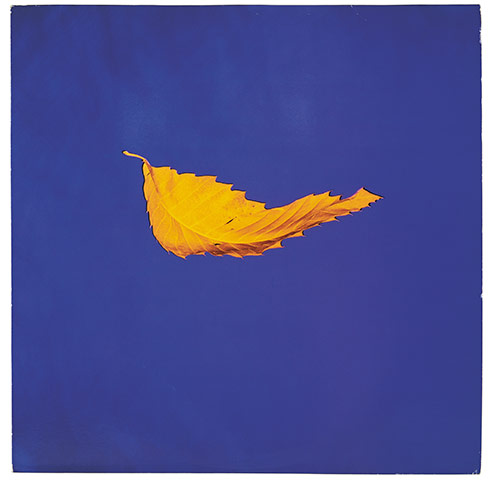
Deciphered — Designer Peter Saville on his designs for New Order, particularly Blue Monday and Power Corruption and Lies, at Upon Paper:

To me a record cover is part of the everyday, the now. And regularly there were phases of reference and quotation that – for whatever reason – I found relevant or pertinent. There were things going on in fashion or architecture that I would be aware of… things that I would take a reading from. I was interested in how the arts in general, but in particular the applied arts, were in some way evoking the mood, the appetite or the direction, the direction of the now. I always had a sense of what direction ‘the now’ was, it started with my own senses and then I would double-check and double-check to determine that what I was thinking was not merely insular. Around ’82 to ’83, I began to feel confident in my own sensibility.

Txtng teh Apclyps — The Guardian rock critic Alexis Petridis talks to  Nick Cave about this new album:

“Texting is apocalyptic on some level,” he muses, when the title of Push The Sky Away’s first single, We No Who U R is mentioned. “It’s a reduction of things. Maybe the last book, the last thing that ever gets written is just a bye, you know, goodbye in text speak.”

And finally…

Teju Cole on literature, Barak Obama,  dirty wars and drone strikes, at The New Yorker:

The plain fact is that our leaders have been killing at will.

How on earth did this happen to the reader in chief? What became of literature’s vaunted power to inspire empathy? Why was the candidate Obama, in word and in deed, so radically different from the President he became? In Andrei Tarkovsky’s eerie 1979 masterpiece, “Stalker,” the landscape called the Zona has the power to grant people’s deepest wishes, but it can also derange those who traverse it. I wonder if the Presidency is like that: a psychoactive landscape that can madden whomever walks into it, be he inarticulate and incurious, or literary and cosmopolitan.

Comments closed

Visual Pleasures

Designer Peter Saville discusses the iconic cover of Joy Division’s 1979 album Unknown Pleasures:

1 Comment

Midweek Miscellany

Book designer and all-round good chap David Pearson on phillumeny at We Made This:

It’s no coincidence that a book designer should be drawn to matchbox labels. Their shape is intrinsically book-like, their method of communication instantaneous and spare, and they provide a dizzying range of illustrative styles. Their uncluttered compositions ensure communication across language barriers, and designs appear cohesive as a result of type and image being rendered by the same hand. But perhaps most alluring of all is their uncompromised clarity of purpose, an attribute that most modern designers can only dream about.

You can see more of David’s ephemera collection on Flickr, there’s another amazing collection of match-box covers here.

An Invisible Rightness — Six graphic designers, including Derek Birdsall and Peter Saville, discuss designers they admire in The Guardian.

A Repurposeful Life — Author William Gibson on cities and fiction in The Scientific American:

Necessity being one of invention’s many mothers, I have a certain faith in our ability to repurpose almost anything, provided it becomes sufficiently necessary. Then again, I suspect we’ve abandoned cities in the past because they were too thoroughly built to do some specific something that’s no longer required.

Let Us Tweet! — An epic-length rant by Jared Lanier, author of You Are Not a Gadget, at Edge:

I’m astonished at how readily a great many people I know, young people, have accepted a reduced economic prospect and limited freedoms in any substantial sense, and basically traded them for being able to screw around online… What that leads to is the world that Wells and Kurt Vonnegut and many others wrote about, where there just is enough virtual bread and circuses, just barely enough to keep the poor in check, and perhaps somehow not breeding, and they just kind of either wither away through attrition or something.

The A.V. Club offer a nice primer on newspaper comics.

Meanwhile… Robot 6 lists six great superhero comics from unlikely sources.

And finally…

An Act of Vengeance Against Former PleasuresThe Comics Journal reviews The League of Extraordinary Gentlemen: Century 1969, neatly summing up my own reservations about the direction of the series:

What’s disconcerting about 1969 is how joyless the exercise has become, and how wan and stretched the story feels. Like its predecessor, 1969 comes off as glum and a bit rancid. It feels like the story of characters who have outlived their time, which may indeed be the point… I don’t need to itemize the various bits of cleverness in 1969, or to point out the screamingly obvious, that 1969 is more intelligent and insinuating than most comic books. It is, after all, a book by Alan Moore and Kevin O’Neill. But the taste of it sits like battery acid on the tongue, and, like 1910 before it, it reads like an act of vengeance against former pleasures.

Comments closed

Midweek Miscellany

An introductory reading guide to the work of Norwegian cartoonist Jason from Robot 6:

Since his U.S. debut in 2001, Jason has produced 15 books, with nary a drop in quality. More to the point, he’s been able to use and play with a lot of familiar genre cliches — movie monsters, the big heist, the man accused of a crime he didn’t commit — and make them seem fresh and inviting.

That’s largely because his characters are usually grounded in a strong emotional reality. What often drives them are not simplistic ideals about right and wrong but love, longing, guilt and anxiety, the same stuff that drives most of us. What’s especially fascinating about his work, though, is how he’s able to convey all these roiling emotions with such a… minimalist style… Anyone interested in learning about timing and tempo… should be studying Jason’s comics.

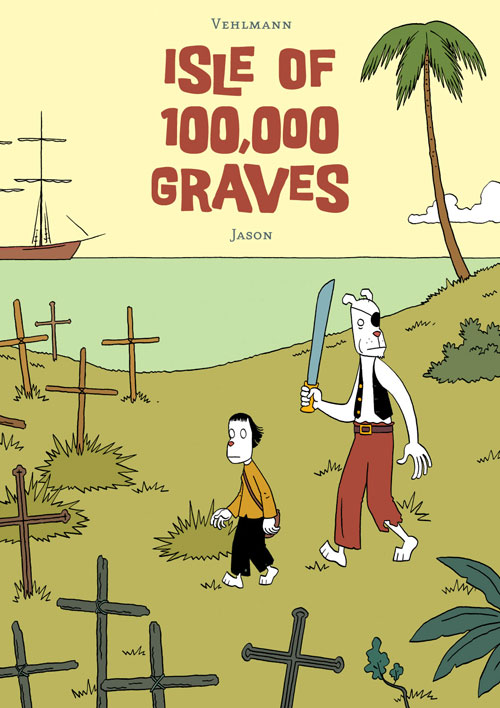
Jason’s latest book Isle of 100,000 Graves is released this month.

Let’s Put It This Way — Cartoonist Ivan Brunetti profiled in The Chicago Tribune:

When people talk about Brunetti, they often couch it with a “Let’s put it this way.” Francoise Mouly, the longtime art director of the New Yorker, said, “Let’s put it this way — Ivan will never be comforted in life.” She said it in her native French lilt, with the breeziness of tone and the bluntness of meaning we associate with the French. But without malice or sarcasm, only lament and concern. There is no comforting Ivan Brunetti.

(I am still slightly traumatized by Brunetti’s Misery Loves Comedy)

The Poverty of Abundance — Sukhdev Sandhu, author of London Calling: How Black and Asian Writers Imagined a City, reviews Retromania: Pop Culture’s Addiction to its Own Past by Simon Reynolds for The Observer:

Retromania is a book about the poverty of abundance. At malls, on mobile-phone ads, in the background as we work at our computers: pop, usually in the form of anorexically thin MP3 sound, is everywhere these days. Perhaps that ubiquity puts a brake on its ability to astound or shape-shift. Perhaps the process of circulating and accessing music has become more exciting than the practice of listening to it.

Future Classics — Agent Andrew Wylie in The WSJ:

[T]he business we’re in is to identify and capture and anticipate the value of books that are inherently classics, future classics… Sure, writers these days can go directly to readers, without publishers or agents. But there needs to be a chain of people who have authority and can help convey what is essential. We spend most of our time strongly supporting work that we believe is significant.

And finally…

Peter Saville discusses his favourite designs for Joy Division and New Order with The Guardian.

Comments closed

Wim Crouwel: A Graphic Odyssey

Phaidon Books has posted a short profile of the original “Gridnik”, graphic designer Wim Crouwel:

Crouwel, who appeared in Gary Hustwit’s documentary Helvetica, is famous for his innovative approach to typography and his 1967 ‘New Alphabet’. The New Alphabet font was adapted by designer Peter Saville for the cover of Joy Division’s album Substance, released by Factory Records in 1988.

An exhibition of celebrating Crouwel’s work, Wim Crouwel: A Graphic Odyssey, is at The Design Museum in London from March 30th – July 3rd.

UPDATE: Wim Crouwel: A Graphic Odyssey – Catalogue is published by Unit Editions with three different cover photographs to choose from.

4 Comments

Midweek Miscellany, March 18th, 2009

The BombAlison Forner‘s cover design for Stephen M. Younger’s history of nuclear weapons (Ecco June 2009), seen at Book Covers Anonymous.


Has the computer democratised design? — Designer Peter Saville (perhaps best known for his iconic designs for Factory Records) at D&AD President’s Lecture earlier this month (above). More interesting snippets from the talk are available here (via The Strange Attractor).

Reminder — Writer Charlie Stross on why there isn’t a tipjar on his blog (via Times Emit):

If I put a Paypal tipjar on this blog to take conscience money from folks who’ve downloaded a (cough) unauthorized ebook or two, the money would come to me, not to the publisher. And without the publisher those books wouldn’t exist: wouldn’t have been commissioned, wouldn’t have been edited, wouldn’t have been corrected and marketed and sold in whatever form filtered onto the unauthorized ebook market. (Yes, they commission books, and pay authors for them up-front — a vital part of the process, because most of us can’t afford to take a year to write a book on spec and then hope somebody liked it enough to buy it…)

“We publish books and give them away – free” — Concord Free Press (via Scott Pack):

All 1,500 copies of our first free book, Give and Take, are circulating through the world—from New England to New Zealand, Soho to Slovakia. Our readers are making voluntary donations to charities or people in need. We ask them (nicely, of course) to give, then pass the book on, so that every time it changes hands, it generates more contributions.

Comments closed