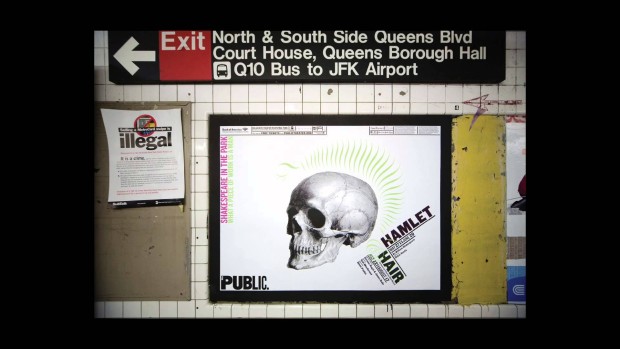
This is wonderful stuff: designer Paula Scher discusses the different kinds of ink she has used throughout her career at Creative Mornings New York:
Comments closedBooks, Design and Culture
This is wonderful stuff: designer Paula Scher discusses the different kinds of ink she has used throughout her career at Creative Mornings New York:
Comments closed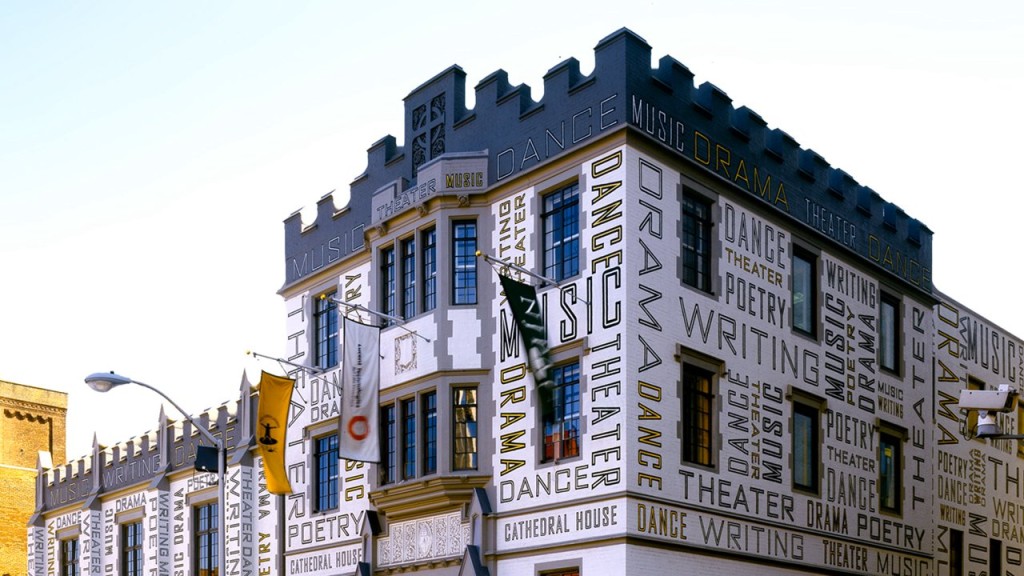
In a new video for Gestalten.tv designer Paula Scher discusses her creative process and her vision of branding and identity design:
Comments closed
The Great Discontent interview designer Paula Scher:
Comments closedI think graphic design is an important profession because it’s part of what we put out into the world, and it’s what people see and perceive. It’s not just about doing design for the “public good.” The design community currently thinks that if you design something to help the victims of Hurricane Sandy, then that’s good, but if you design something for a bank, then that’s bad. I disagree. I think all design matters and all design deserves to be intelligent.
Obviously, we don’t want to advertise products that are horrible for people because that’s immoral. But if we can raise the expectation of what something can be, then we’ve done a huge service for our community. For example, consider the way most strip malls and shopping centers think they have to appear and behave: it’s horrible. Why can’t there be a different kind of experience? Why can’t we see them as something potentially terrific? There’s an architect named James Wines, whose Structure In the Environment architecture firm designed facades for a chain of BEST stores in the 1970s. He took big box stores and turned them into fantastic outdoor sculptures. He raised the expectation of what those experiences could be.
To me, that’s the most responsible design there is: taking something “bad” and making it terrific by raising the expectation. That’s what we do.
In this short documentary for a new online series for PBS called Off Book, Jonathan Hoefler and Tobias Frere-Jones, Paula Scher, Eddie Opara, Julia Vakser and Deroy Peraza discuss typography, design, texture, and infographics:
(via The Donut Project)
Comments closedPrecisely and Concisely — The Caustic Cover Critic interviews designer and Artistic Director of Granta magazine Michael Salu:
Bizarrely, designers looking for employment are often judged by what software they’re able to use. Intellect, cultural awareness and often creativity don’t seem to be values worthy of a resume. There is no substitute for good ideas, the rest are just supportive tools. I have always been quite a craft-led designer, but I am of the generation that studied with a mac in front of them and I think its good to understand the importance of both.
The Honest Bookseller — Erin Balser of Books in 140 profiles Toronto independent bookstore Ben McNally Books for The Torontoist:
“I’d rather have a book that sells one copy that no one else will sell than to stock several best sellers you can get anywhere,” McNally says. “That’s what makes this store. That’s why people come… My first responsibility is my customer. When I think a book should be cut by a third or if there’s a subplot that goes nowhere, I have to tell you that… I’m often a very critical reader. When people come and ask me ‘Is this any good?’ I have to be honest.”
 William Kentridge: Five Themes — Beautiful book design from Abbott Miller and Kristen Spilman at Pentagram.
Speaking of Pentagram… Pentagram partner Paula Scher has some blunt stuff to say about design in a interview with Pr*tty Sh*tty.
The Rules — Inspired by Elmore Leonard’s 10 Rules of Writing, The Guardian asked authors — including Diana Athill, Margaret Atwood, Richard Ford, Jonathan Franzen, Neil Gaiman, and PD James, Hilary Mantel, Michael Moorcock, Philip Pullman, Ian Rankin, Will Self, Sarah Waters, and Jeannette Winterson — for their personal dos and don’ts. (Part two is here).
On the subject of writing, the wonderful BBC radio series The History of the World in a 100 Objects has recently touched on the history of writing, literature, and mathematics in episodes about the Early Writing Tablet, the Flood Tablet and the Rhind Mathematical Papyrus. The series is a collaboration with The British Museum. Great stuff.
I’m a little fatigued by all the inevitable post-Book Expo harping, hand-wringing and hubris, so please forgive me if today’s links are a little light on book-book stuff…
Community Organizer — The New York Observer profiles John Freeman, the new editor of literary journal Granta:
Mr. Freeman believes in the inevitability of books—even if, as he will lay out in his forthcoming manifesto for Scribner, The Tyranny of E-Mail, the Internet is engendering in the people who use it habits that distract them from reading. This is the salve he has to offer a chapped and chafing industry. As people cry doom, he’s there to hold hands and assure them that it’s not that bad.

Cover Versions — Starting with Olly Moss‘ Video Game Classics, Design Week looks at the trend of remixing just about everything to look like vintage 1960’s paperbacks. What Consumes Me has a nice round-up of recent mash-ups (thx James!). And, if that wasn’t enough, Drawn! points to the another recent example: classic records reworked as classic Pelican paperbacks.
Which leads rather nicely to Emmanuel Polanco‘s Saul Bass inspired design for Moby Dick:

Throwing Down the Gauntlet — As widely reported elsewhere, Google are preparing to sell e-books according to the New York Times.
Making Mistakes — A fascinating interview with designer Paula Scher talking about creative failure at Psychology Today:
If you find yourself defending yourself and protecting yourself and being outraged about what’s around you, you’re in trouble. That doesn’t mean some things aren’t genuinely outrageous. But you have to ask yourself: Why are you outraged by something? What are you hiding from? What are you defending?
And, on a not dissimilar note…
Use It or Lose It — Indispensable creative advice from ad exec Dave Trott (via Mark McGuinness on Twitter):
If we wait for the right opportunity it won’t happen. It’ll stay in our drawer until the world has passed it by. Times will change and newer, more exciting things will be happening. Now it looks old and tired. Now it’s too late.
If we don’t find a way to make it happen, if we don’t take a chance and overcome lethargy and embarrassment to do it, it will disappear.
Students always ask me what I think they should do.
I tell them, “The answer is always the same two words: ‘everything’ and ‘now’.”
Everything and Now… Everything and Now…
Comments closed
