Skip to content

Tag: painting

Amy Sherald on Making Breonna Taylor’s Portrait

“She sees you seeing her. The hand on the hip is not passive, her gaze is not passive. She looks strong!…I wanted this image to stand as a piece of inspiration to keep fighting for justice for her. When I look at the dress, it…reminds me of Lady Justice.”

Artist Amy Sherald, who painted Michelle Obama for the National Portrait Gallery in 2018, talks about her portrait of Breonna Taylor for Vanity Fair‘s September issue, ‘The Great Fire’, guest-edited by Ta-Nehisi Coates.

Comments closed

Work in Progress with Stanley Donwood

Artist Stanley Donwood talks about his artwork for Radiohead, his collaboration with author Robert MacFarlane on Ness, and his own book Bad Island, published earlier this year by Hamish Hamilton (and slated to be published in the US by W.W. Norton this fall).

Comments closed

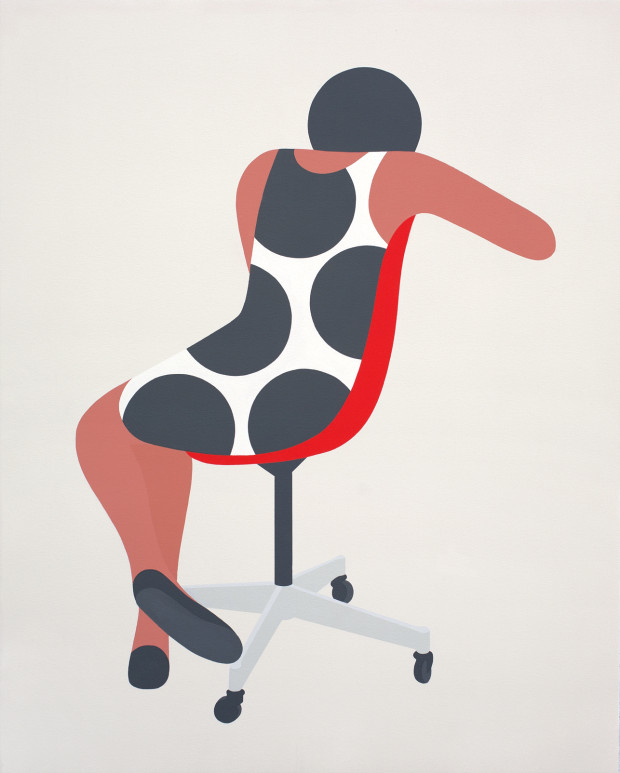
Geoff McFetridge: AIGA Medalist

“Dude… it sounds like you’re making it up.”

Comments closed

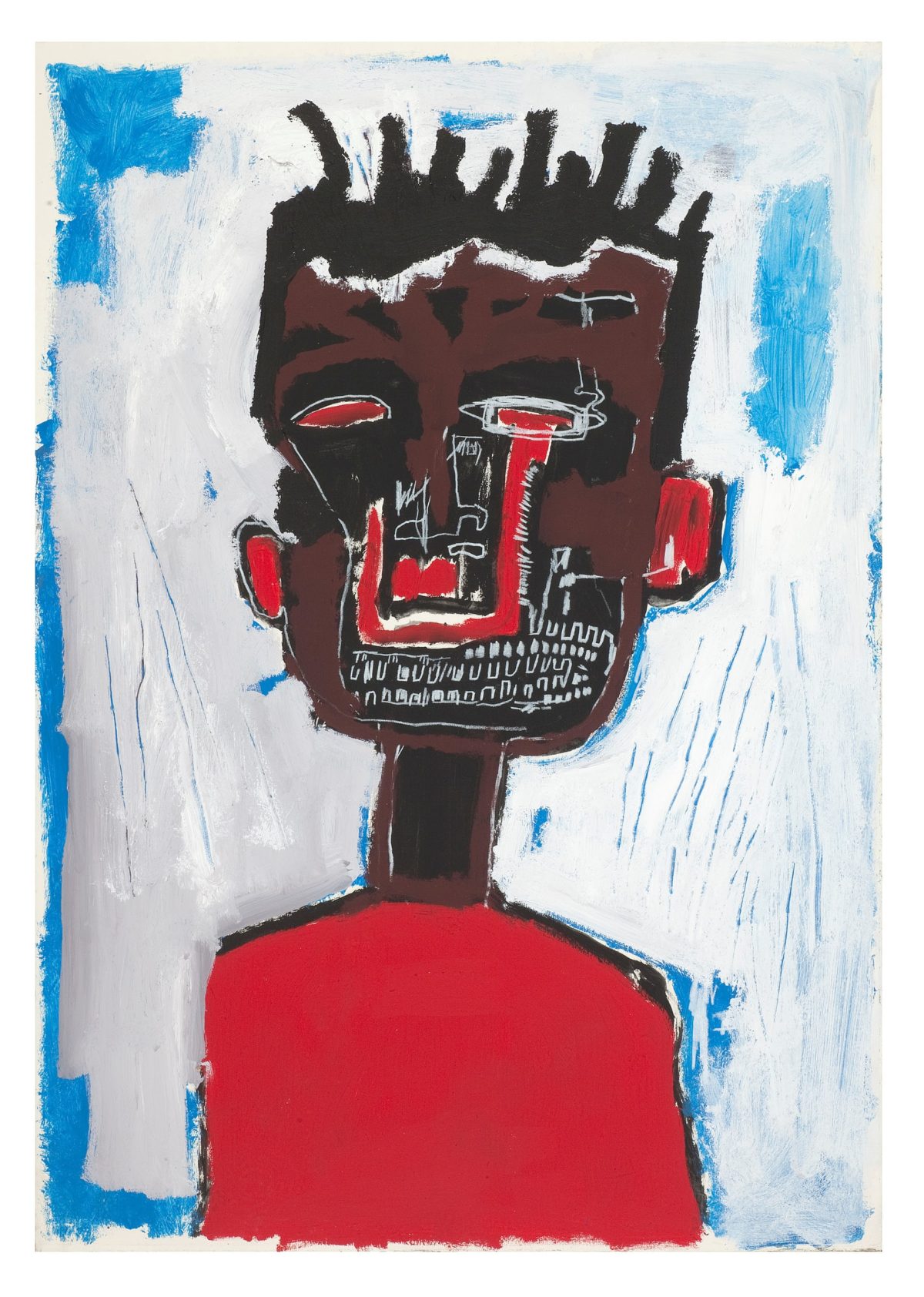
Race, Power, Money: Olivia Laing on Jean-Michel Basquiat

At The Guardian, Olivia Laing, the eminently readable author of To the River, The Trip to Echo Spring, and The Lonely City, on artist Jean-Michel Basquiat: 

There is a graphomaniac quality to almost all of Basquiat’s work. He liked to scribble, to amend, to footnote, to second-guess and to correct himself. Words jumped out at him, from the back of cereal boxes or subway ads, and he stayed alert to their subversive properties, their double and hidden meaning. His notebooks, recently published in an exquisite facsimile by Princeton, are full of stray phrases, odd combinations. When he began painting, working up to it by way of hand-coloured collaged postcards, it was objects he went for first, drawing and writing on refrigerators, clothes, cabinets and doors, regardless of whether they belonged to him or not…

…A Basquiat alphabet: alchemy, an evil cat, black soap, corpus, cotton, crime, crimée, crown, famous, hotel, king, left paw, liberty, loin, milk, negro, nothing to be gained here, Olympics, Parker, police, PRKR, sangre, soap, sugar, teeth.

These were words he used often, names he returned to turning language into a spell to repel ghosts. The evident use of codes and symbols inspires a sort of interpretation-mania on the part of curators. But surely part of the point of the crossed-out lines and erasing hurricanes of colour is that Basquiat is attesting to the mutability of language, the way it twists and turns according to the power status of the speaker. Crimée is not the same as criminal, negro alters in different mouths, cotton might stand literally for slavery but also for fixed hierarchies of meaning and the way people get caged inside them.

Comments closed

Luc Sante on Jean-Michel Basquiat

basquiat-studio

New York Review of Books blog has posted Luc Sante’s reminiscences of artist Jean-Michel Basquait:

The last time I saw Jean I was going home from work, had just passed through the turnstile at the 57th Street BMT station. We spotted each other, he at the bottom of the stairs, me at the top. As he climbed I witnessed a little silent movie. He stopped briefly at the first landing, whipped out a marker and rapidly wrote something on the wall, then went up to the second landing, where two cops emerged from a recess and collared him. I kept going.

A month later he was famous and I never saw him again. We no longer traveled in the same circles. I was happy for him, but then it became obvious he was flaming out at an alarming pace. I heard stories of misery and excess, the compass needle flying around the dial, a crash looming. When he died I mourned, but it seemed inevitable, as well as a symptom of the times, the wretched Eighties. He was a casualty in a war—a war that, by the way, continues. Years later I needed money badly and undertook to sell the Basquiat productions I own, but got no takers, since they were too early, failed to display the classic Basquiat look. I’m glad it turned out that way.

Save

Comments closed

Ed Ruscha: Buildings and Words

Ed Ruscha: Buildings and Words is a short documentary, commissioned by MOCA in Los Angeles, exploring two of the recurring themes in the artist’s work. It was written and directed by Felipe Lima, and is narrated by Owen Wilson:

Apparently Ruscha calls his font ‘Boy Scout Utility Modern’, which immediately makes me wonder if Wes Anderson is a fan.

1 Comment

Geoff McFetridge: Table Talk

6 Dots Geoff McFetridge

The set up of this interview with artist Geoff McFetridge is a little too cool for school, but the artist himself is disarmingly nerdy:


Comments closed

The Endless Combinations of Robert Rauschenberg

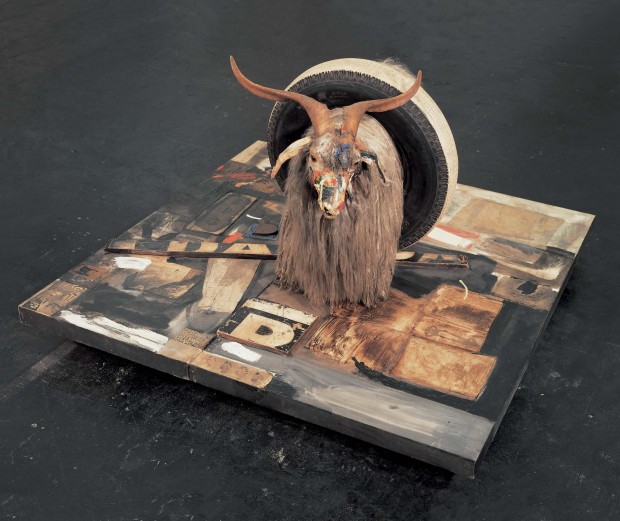
Monogram, Robert Rauschenberg (1955–59)

At the New York Times, Dan Chiasson visits the archive of the late Robert Rauschenberg, currently housed in a high-security warehouse in Westchester, N.Y.. Unsurprisingly, perhaps, it looks “a little like a cross between Charles Foster Kane’s Xanadu and a suburban Lowe’s”:

A source material, for Rauschenberg, could have been almost anything. Among the most prolific and consistently surprising American artists, he worked for over 50 years in a variety of media from feathers, stuffed goats, socks and neckties to cardboard, grass and scrap metal, in genres including choreography, costume design, photography, printmaking and painting. He is most famous for the “combine,” a form he more or less invented that merged three-dimensional collages with sculpture, sometimes with the batty ingenuity of a Rube Goldberg. Few works capture so arrestingly the process that brought them into being: In a finished Rauschenberg, you see a goat, a tire, a tennis ball, but more than that, you see the insights that brought them together. Each component keeps its integrity within a composition in which everything contributes to a profound effect of overall beauty. Indeed, few artists of his era so unabashedly strove for beauty, even majesty: The logic of his work, beginning with cast-offs and flotsam, demanded it. It was the dare he put to himself in everything he made.

Comments closed

Modernity as Catastrophe

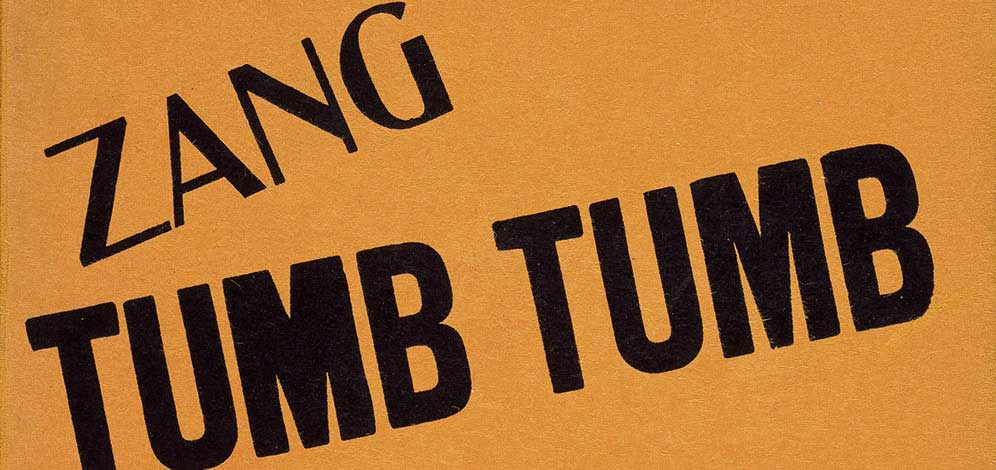
futurism_words_marinetti_zang_tumb_tumb

At the London Review of BooksHal Foster reviews the exhibition of Italian Futurism currently at the Guggenheim in New York:

Futurism wasn’t all bravado; it did have an aesthetic (or anti-aesthetic) of its own, which was to modernise the arts through a mimicry of the effects of new media, such as the adaptation of chronophotography and cinema to painting, photography and sculpture, or the application of the phonograph to musical performance. More ambitiously, the futurists sought to refashion the human sensorium along the lines of these new techniques of perception, and to this end they updated the ideas of synaesthesia, or the fusion of the senses, and kinaesthesia, or the mixing of bodies in motion and at rest. At the same time (and this is just one of many contradictions), the futurists were conservative stylistically; for all their nationalist pride, they relied on French sources, especially the divisionist brushstroke of neo-impressionist painting, which they adapted to themes of the modern city. Thus in Street Light (1909) Giacomo Balla offers the streetlamp as an improvement on the moon: both kinds of illumination are represented as waves of energy, but the artificial light dominates the natural one. So too in The City Rises (1910-11) Boccioni shows us the metropolis as a firestorm of colour greater than any in nature, where construction is difficult to distinguish from destruction; here the futurists thrill to modernity as catastrophe.

Comments closed

Norman Rockwell, American Romantic

Christopher Benfey reviews American Mirror, Deborah Solomon’s recently published biography of artist Norman Rockwell, for the New York Review of Books:

Solomon spends more time than Rockwell did worrying about his status in comparison with what she calls the “Abstract Expressionist ilk,” who “glamorized direct and unmediated gestures” and dominated highbrow taste during the 1950s. Rockwell, who was remarkably uncompetitive and nonterritorial, said, disarmingly, “If I were young, I would paint that way myself.” The Connoisseur of 1962, a painting now in the collection of Steven Spielberg that Solomon considers a “masterpiece,” depicts a balding man seen from behind, in a gray suit with hat and umbrella in hand, contemplating what seems to be a Pollock painting. The floor, bluish-gray and white squares and triangles, constitutes a contrapuntal abstraction. Rockwell had fun making his own drip painting, canvas on the floor, and had a photographer record the event just as Hans Namuth, in 1950, had famously documented Pollock wielding a can of paint over the canvas. It’s charming to learn that Willem de Kooning, a longtime admirer of Rockwell, claimed to think that Rockwell’s Pollock was better than the real thing. “Square inch by square inch,” he said, “it’s better than Jackson!”

(American Mirror: The Life and Art of Norman Rockwell is published by Farrah, Straus & Giroux, and is distributed in Canada by my employer Raincoast Books)

Comments closed

Julian Barnes on Lucian Freud

Julian Barnes reviews two recent books about the painter Lucian Freud — Man with a Blue Scarf by Martin Gayford and Breakfast with Lucian by Geordie Greig — for The London Review of Books:

Freud was always a painter of the Great Indoors. Even his horses are painted at home in their stables; and though he curated a great Constable show in Paris in 2003, the greenery he depicted himself lived either in pots or was visible from a studio window. His subject matter was ‘entirely autobiographical’. Verdi once said that ‘to copy the truth can be a good thing, but to invent the truth is better, much better.’ Freud didn’t invent, nor did he do allegory; he was never generalising or generic; he painted the here and now. He thought of himself as a biologist – just as he thought of his grandfather Sigmund as an eminent zoologist, rather than a psychoanalyst. He disliked ‘art that looks too much like art’, paintings which were suave, or which ‘rhymed’, or sought to flatter either the subject or the viewer, or displayed ‘false feeling’. He ‘never wanted beautiful colours’ in his work, and cultivated an ‘aggressive anti-sentimentality’. When there is more than one figure in a picture, each is separate, isolated: whether one is reading Flaubert and the other is breastfeeding, or whether both are naked on a bed together. There is only contiguity, never interaction.

An interesting painter, but not a pleasant man, unfortunately.

1 Comment

In London’s darkness, and my tears fall

Leon Kossoff: King’s Cross Building Site Early Days

At the London Review of Books, writer Iain Sinclair reviews ‘London Lanscapes’, an exhibition of Leon Kossoff’s drawings at Annely Juda Fine Art, London:

I was thrown off-balance by the intense energy of these marks: the dashes, counter-strokes, over-reaching arcs, sweeps and surges; the structural skeletons lodged in each of these panels. And by how, taken together, and processed down the length of the room, they amounted to something more: a history of struggle and release in the form of a monumental graphic novel from a remembered and reconstituted place. Tension and rapture. Excavation and elevation. The numinous Kossoff drawings are an autobiography forged through engagement with the dirty particulars of place. He’s like a man coming back from long exile in order to make a map of locations where he can begin to search for himself, to confirm his existence. There is a steady pressure to interrogate the specifics of a living past, the oases of ordinary activity that act like radio beacons: a postwar building site close to St Paul’s, a public pool seething with swimmers, a spectral staircase in the revamped Midland Hotel at St Pancras, the molten cliff of a school in Willesden like a glowing crown of red clay. The wrestling of mass into free articulation only confirms the sense of localised fragility. These things will disappear. And the witnesses with them. The pain in this contract is one of the sources of joy in the physical act of drawing: Blakean joy among soot and mud, chains and engines.

London Review of Books

Comments closed