Skip to content

Tag: online marketing

Something for the Weekend

Salu, Bonjour! — The Caustic Cover Critic features the awesome work of designer Michael Salu. The typography is great.

And speaking of typography…

KnockoutThe New York Times profile type jedis Hoefler & Frere-Jones:

Sitting in their New York studio in the charmingly ramshackle Cable Building, designed in 1892 by the flamboyant Beaux-Arts architect Stanford White, Mr. Hoefler and Mr. Frere-Jones are engaging advocates for their craft. They met in 1989, when they were working independently and found themselves hunting for the same antique typography books. “We’ve given up now because the prices have gone crazy,” said Mr. Frere-Jones. “Between us we own so many that if there’s something we don’t have, it’s either an uninteresting variation or there’s only one in the world and it costs $20,000.”

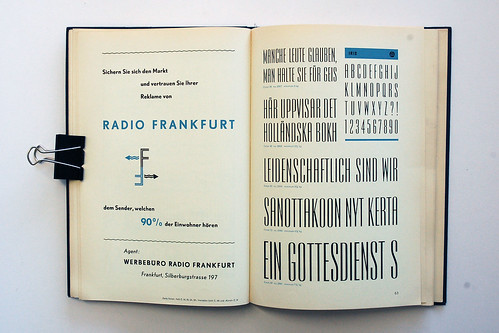
Schriftenkatalog — Beautiful pages from a 1960’s Dutch type catalogue on Flickr (via Inspire Me)

And… The history of the ampersand at the Webdesigner Depot (thanks Nic).

A Guide to Online Publicity (For Dummies) — Freelance writer, editor and blogger Lindsay Robertson’s common sense — but on the money — “do’s and don’ts” for flacks like me approaching bloggers like er… me (via Kottke).

And finally…

Two lovely posts at The Silver Lining featuring the work of Elaine Lustig Cohen: Part 1 and Part 2. There are more Elaine Lustig Cohen book covers at ephemera assemblyman and there is an amazing Flickr pool devoted to the design work of Alvin and Elaine Lustig here.

1 Comment

Why Not? Or How We Live-Tweeted Fall 09

Why Not?

One the things that really stuck with me from Michael Tamblyn’s 6 Projects That Could Change Publishing For Ever presentation at the BookNet Tech Forum in March was the idea that publishers have to “place lots of little bets quickly.”

It tied into another idea that’s been kicking around recently about reframing ‘Why?’ questions into ‘Why Not?’ questions. That is to say, whenever we — publishers, book distributors et al — ask “why would we do this?” we should flip the question on it head and ask “why wouldn’t we?”.

This doesn’t mean we should pursue every idea that someone puts forward. Sometimes there will be good reasons not to try something — “it costs too much” and “it’s illegal and/or evil” are perfectly valid reasons that spring to mind to nix something (and no doubt there are  plenty more). But, in my experience, reframing the ‘why?’ question encourages people (me included) to think creatively and be more positive about ideas/projects we might otherwise dismiss out of hand.

#rainfall09

This is all a roundabout way of explaining how I ended up twittering from the  Raincoast Books Fall 09 Sales Conference last week.

Before we got under way on the first morning, a few of the early birds were laughing about using Raincoast’s Twitter account to micro-blog the presentations as they happened. Although it started as a joke, the near-inevitable “why would we?” and “who cares?” questions came up, and that raised the stakes. I turned the questions around and couldn’t actually think of any good reasons why we shouldn’t ‘live tweet’ the conference. I had my laptop, wireless access and a power source, so it seemed easy enough to do. And I figured people would tell me pretty quickly if they were bored and I should stop.

Decision made.

We quickly adopted #rainfall09 (an identifying reference tag for twitter posts or ‘tweets’ which was accidentally shortened to #rainfall on more than one occasion) and,  with some help from my colleague Siobhan, I covered all 3 days of the conference in a series of posts of 140 characters or less.

To people who live their lives online and are accustomed to social media rather than the slightly conservative book publishing world, the response to all this is probably a very sarcastic “big whup”. But sales conferences are not usually open and inclusive, and, needless to say, there was a degree of skepticism and resistance to overcome. Certainly it was experiment for us, if not, admittedly, a very large one. And  we were, as far as I’m aware (and someone please correct me if I am wrong), the first publisher/book distributor to Twitter their entire conference.

20/20

With the benefit of hindsight, the drawbacks were predictable. It was very intensive and time-consuming and I found it was difficult — at least initially —  to interact with the people actually in the room and tweet. I’m sure I missed a lot of nuance and I passed on more than few book samples with the barest of glances. We probably over-tweeted and lost a few followers as a consequence.

That all said, the positive outcomes vastly outweighed the problems. The feedback was overwhelmingly positive. We learnt as we went along — becoming better organized and tweeting less — and we gained far, far more followers than we lost over the 3-day period. Our posts were re-tweeted. Followers asked questions and made requests. We raised awareness of Raincoast, the publishers we work with, and the books we distribute. And we were able to connect with reviewers and bloggers we weren’t previously aware of.

I would do some things differently next time for sure. But, ultimately, it was definitely worth doing.

If you are thinking about live-tweeting your conference, here are my 5 Tips:

  1. Be Prepared — Whilst Twitter is great for spontaneity,  making sure you can set-up  your laptop with internet access, and a power source is essential (our conference days were 10 hours straight). And knowing the books (at least a little) in advance, definitely helps — I was often scrambling to find additional information on particular titles and bookmarking a few pages in my browser in advance would have been a plus.
  2. Be selective — Raincoast Books is primarily a distributor. We have something like a thousand titles a season from a variety of publishers. It is impossible to tweet about all of them, and it became quickly apparent it isn’t desirable to try. Our followers just wanted the highlights.
  3. Link — Readers also wanted links to more details if a title caught their eye. I had publisher websites and google open in separate tabs at all times. Even so, linking wasn’t always possible. Put your marketing materials online early and encourage your authors to update their sites (and join Twitter!).
  4. Be creative — If you can’t get your marketing material for your key titles online before conference, or something comes out of left-field, use the resources you do have to find an interesting work-around. When we had some very immediate reader interest in a book called The Quotable Douchebag and there was no information available online, the publisher Quirk Books quickly threw up a blog post with details.
  5. Tool-Up — Twitter management tools like TweetDeck and HootSuite are always useful for professional Twittering, but being able to quickly monitor replies, retweets, and references, not to mention conveniently shorten URLs was essential during conference.

Did you follow @RaincoastBooks or #rainfall09 last week? If so, how did you think it went? What could we do better next time? Leave a comment below or email me.

Note: This is my personal blog, and this post is my personal opinion. Neither reflect the opinion or official policy of Raincoast Books.

Illustrations from the Inspired Magazine Social Bird Icon Set (From the top: Chimero’s Birdie by Frank Chimero, Burdy by Tad Carpenter, and Jacque by Jessica Gonacha).

2 Comments

Something for the Weekend, March 20th, 2009

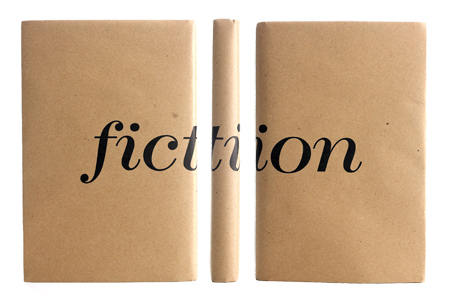
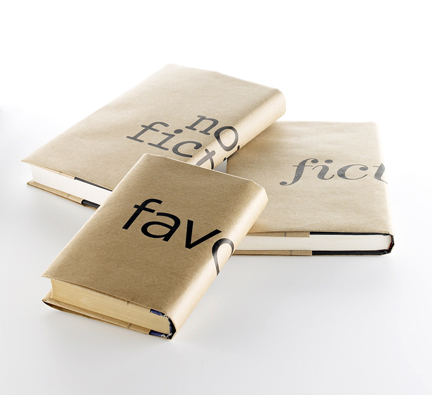
Book City Jackets— Printed at a small press in downtown New York, these lovely “updated versions of the classic paperbag bookcover” are made from recycled paper and sized to fit almost any book (pictured above). And they have a blog!  (via swissmiss & Design*Sponge).

Near Heretical — The inimitable Mike Shatkin on the story of DRM.

Don’t kill me, Robert BringhurstNic Boshart, BookNet Canada intern and coordinating editor at Invisible Publishing, offers another nice round-up of lessons for small presses from the BookNet Tech Forum.

Wish you were hereSeen Reading‘s collaborative Google map of independent bookstores.

That elusive viral componentWired on Random House, Simon & Schuster, Workman Publishing Co., Berrett-Koehler, Thomas Nelson, and Manning Publications making e-books and excerpts available on Scribd:

For book publishers, Scribd is not the only platform they are utilizing with the rising e-book hype, but the viral components are limited elsewhere… Along with navigation features like search and zoom, the books can be download (as a .pdf) and viewed on compatible e-book readers or shared across numerous social networks including Digg, Facebook and Twitter.

“The YouTube for print”PW has more on Scribd.

Sony e-book reader gets 500,000 books from Google, but Sara Nelson doesn’t think it will be enough in the LA Times:

Sony seems, instead, to be hitting hard on the theme that it’s giving options to publishers, who have not been shy about their complicated feelings toward Amazon and the power it wields.

Making public domain books more available is all to the good. But at the moment, Sony’s move appears to be too little, too late.

2 Comments

Midweek Miscellany Feb 18th, 2009


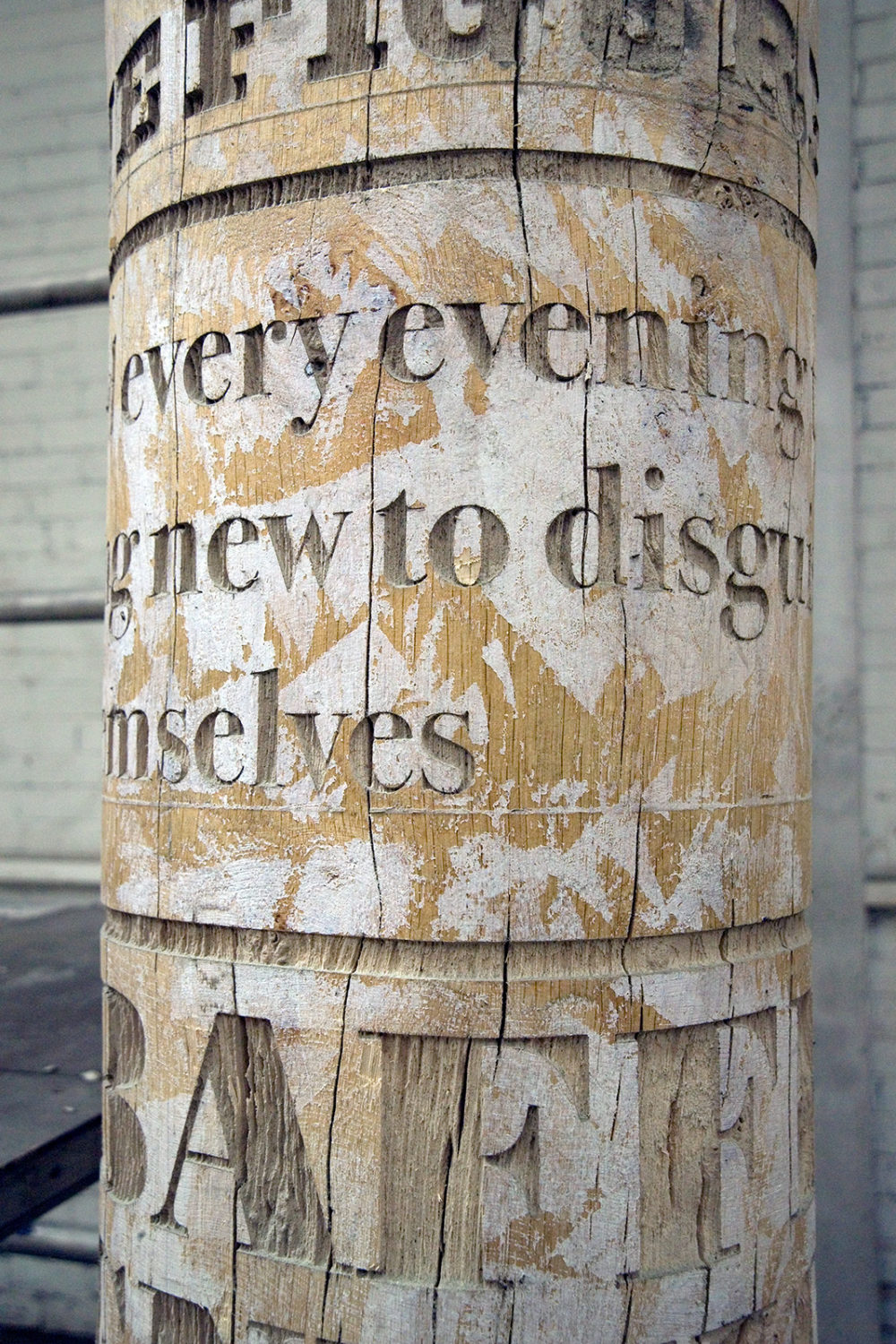
Typographic Trees — I saw pictures of the latest collaboration between artist Gordon Young and design studio why not associates a while back, but a mention in the latest issue of Creative Review is the perfect excuse to post a couple of images of these lovely sculptures for Crawley Library in West Sussex. It’s probably worth mentioning that (unsurprisingly) why not also do a nice line book design.

An interview with Allan Kornblum, publisher at nonprofit literary publisher Coffee House Press, is the latest installment in Scott Esposito’s How to Publish in a Recession series  at Conversational Reading:

Now with Borders on the brink, and former readers becoming would-be writers and self-publishing books instead of reading books, a major shake-up was inevitable… The recession isn’t the only factor driving changes in writing and publishing. Writers on the one hand, and book and magazine publishers on the other, are both trying to figure out what the changes in information technology will mean. Will books get shorter, so they can be read on a cell phone? Will nonfiction migrate to ebooks, while literature stays on the printed page? Will backlist titles become downloadable PDFs? Will future desktop printers include binding equipment?

Funeral in Berlin — Possibly the most badass cover ever (pictured above) and part of the amazing collection in the Penguin Paperback Spotters’ Guild Flickr pool (first seen at FFFFound). And funnily enough it is apparently Len Deighton’s 80th Birthday.

30 Novels Worth Buying for the Cover Alone — “A book must stand out on the bookstore bookshelf yet cover designers rarely receive the recognition that authors do.” And  in “appreciation of these unsung artists”, Beth Carswell chooses her 30 favourite fiction covers for AbeBooks.

MinuteMen — a retro-Nintendo-style-arcade-kung-fu-kick-punch-jump-game promoting the new Watchmen movie. Smartass viral marketing if you like that kind of thing. And if you listen closely, that sound you hear is Alan Moore’s teeth grinding away in Northampton. Buy the book.  (via GalleyCat).

How do you define good design? Gary Hustwit, director of Helvetica, interviewed about his new film Objectified at the Dwell Magazine blog:

If it didn’t exist, would anyone really miss it? Would it leave a hole in anyone’s life?

If we asked ourselves this question in publishing more often, how many books would actually get published? And would publishers be in the mess they’re in now? Answers on a postcard please.

And finally, Spy Vibe — a blog dedicated to 1960’s spy style! This is so cool I can’t even be bothered to find a tenuous link to books or publishing (although there surely is one)…

2 Comments

“A hint of optimism”

Publishers Weekly is reporting that following “one of publishing’s bleakest weeks” in living memory, there’s a reason for us to keep on living in the form of two recent digital announcements from Penguin and Random House.

Penguin have launched Penguin 2.0 which includes more online content, e-books and POD, as well as an app imaginatively called ‘Penguin Mobile’ which makes the features from Penguin’s website available on the iPhone.

In the meantime, Random House have announced a partnership with Stanza “the popular iPhone e-book reader from Lexcycle” that will make e-books by several RH authors available for free on the platform. According to the press release, the books available “will be drawn from each author’s backlist and will include excerpts for any new hardcovers coming in 2009.”

I have to say I was really surprised how much I like e-books on the iPhone. But what does this mean for single-purpose devices like Sony’s e-Reader and Amazon’s Kindle?

Comments closed

My Internet (or the importance of contact information)

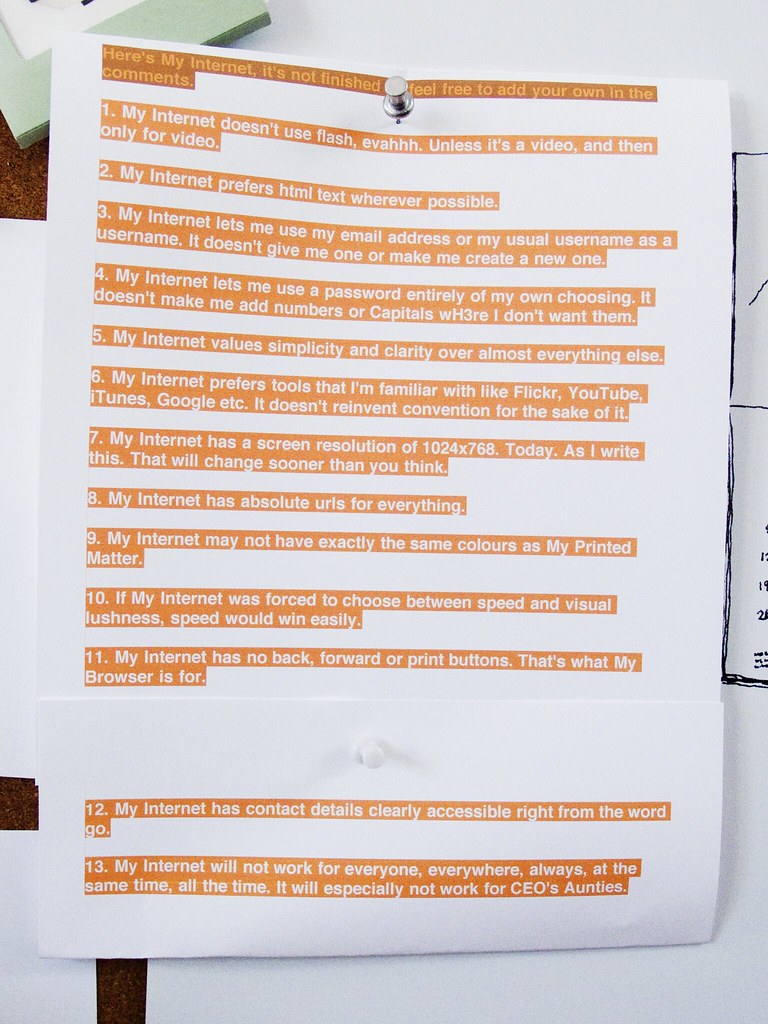
Ben Terrett’s My Internet (redesigned and posted by Michael at DesignNotes):

My internet also includes clearly accessible contact details from the word go. It’s amazing how often we (marketing monkeys, publishers, media types) get this wrong. My internet doesn’t include contact forms either. I would like to email a person please.

And don’t even get me started on Flash…

Link

3 Comments

Monday Miscellany Sept 29, 08

James Bridle of booktwo.org puts his money where his mouth is and launches the entirely print-on-demand, web-based publisher Bookkake: “Bookkake is a project born… of my desire to see publishing move with technology and survive as the guardian and helpmate of literature.

Faber Books’ on Flickr: “We’re gradually uploading some of our favourite covers, photos and various other ephemera from our archive. Our archivist uncovers new material every day – we hope you enjoy his discoveries as much as we do!

The 7 Sentence Online Marketing Plan and 4 Myths About Internet Marketing from Monique Trottier of So Misguided and Boxcar Marketing.

Five Ways Amazon Can Improve the Kindle from Gadget Lab on Wired.com: “The rumblings in the ground are pointing to an imminent Kindle 2.0, a successor to Amazon’s loved but flawed e-book reader.” Lots and lots of comments. (Is planned obsolescence going to be a problem for the e-book reader in the long-term? Anyone?)

The Muxtape story – or how the music industry is conspiring to alienate fans and kill itself? There’s almost certainly a lesson for the book industry in there somewhere…

Comments closed