Skip to content

Tag: oliver jeffers

ABCD Award Winners 2017

The winners of the annual Academy of British Cover Design (ABCD) Awards were announced at a glittering ceremony London in last night. The dashing Danny Arter has a posted a full report on the proceedings at The Bookseller. You can see all the winning covers below… 

Young Adult

The Memory Book by Lara Avery; design by Sinem Erkas (Quercus / January 2017)

Sci-fi/Fantasy

Radiance by Catherynne M. Valente; design & illustration by Nathan Burton (Corsair / August 2016)

Non-fiction

The Genius of Birds by Jennifer Ackerman; design by Jack Smyth (Little, Brown / April 2016)

Series Design

Vintage Virginia Woolf; design by Suzanne Dean; illustration by Aino-Maija Metsola (Vintage / October 2016)

Classics/Reissue

The Birds and Other Stories by Daphne du Maurier; design Jamie Keenan (Virago / October 2016)

Children’s

The Boy in the Striped Pyjamas by John Boyne & illustrated by Oliver Jeffers; design by Dominica Clements; illustration by Oliver Jeffers (Doubleday / October 2016)

Women’s Fiction

Vinegar Girl by Anne Tyler; design by Kris Potter (Hogarth / June 2016)

Literary Fiction

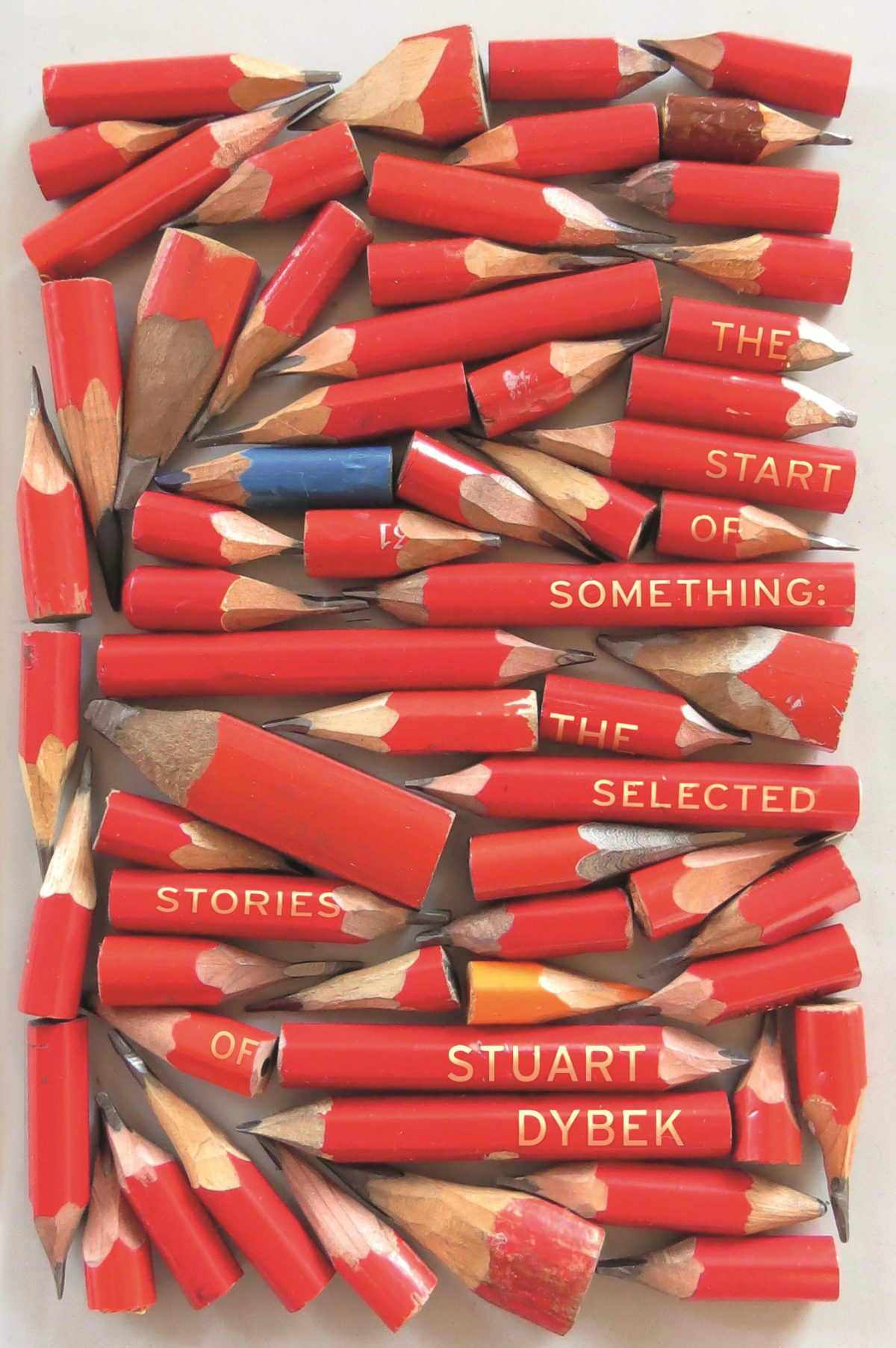
The Start of Something by Stuart Dybek; design Suzanne Dean; cover art by Marion de Man (Jonathan Cape / November 2016) 

Crime/Thriller

Maestra by L.S. Hilton; design by Blacksheep (Zaffre Publishing / March 2016)

Mass Market

Girls on Fire by Robin Wasserman; design by Jack Smyth (Little, Brown / May 2016)

All of this year’s shortlisted covers can be found on the ABCD website. Last year’s winning covers can be seen here; the 2015 winners here

Comments closed

Midweek Miscellany

The Creative Review interviews Richard Littler, the man behind the absolutely bloody terrifying Scarfolk:

For me, the desired effect can only be achieved if the images are visually authentic. The seriousness of presentation and form is absolutely crucial. It lulls the viewer into a false sense of security so that the gap between expectation and reality – the juxtaposition of staidness and absurdity – is as wide as it can be.

The fictional authors, designers and archivists of Scarfolk’s public information material must sincerely believe in the gravity of the message that the subject matter wants to convey and deserves, such as rabies. In addition, the whole concept of Scarfolk has to be internally consistent. There has to be a credible, believable identity.

Greatly Exaggerated — Salon’s Laura Miller on technology, self-publishing, and why publishers and bookstores are still matter:

If print could talk, it would surely be telling the world, Mark Twain-style, that reports of its demise have been greatly exaggerated… New self-publishing enterprises are a godsend for traditional publishers because they can take much of the uncertainty out of signing a new author. By the time a self-published author has made a success of his or her book, all the hard stuff is done, not just writing the manuscript but editing and the all-important marketing. Instead of investing their money in unknown authors, then collaborating to make their books better and find them an audience, publishers can swoop in and pluck the juiciest fruits at the moment of maximum ripeness…. [That’s] exactly what happened with erotica blockbuster E.L. James.

Epitaph — A smart take on the end of Google Reader by Paul Ford for The Financial Times:

This is the downside to apps: when everything is online your ability to labour along in familiar ways is contingent upon money coming to the app provider. This works when we remain consumers, for example of media objects such as paywalled newspapers, Netflix and Spotify. We lease access to the databases, own nothing, and the access makes it worthwhile. But when we work inside these systems we increase our levels of risk. When Google Reader goes away, it will not be like a television show being cancelled – much work is lost, and the ability to access that work is also lost.

The Exploded Mind — A big interview with artist, illustrator and picture book maker Oliver Jeffers at The Great Discontent:

Balancing integrity versus income is tricky; when I make decisions, sometimes I know that I might not be as well off the next year, but I’ll certainly be making the best work. I figured out early on that there are certain things I don’t want to do when it comes to how I’m perceived. I try to stay away from advertising, even though that’s where the big money is. In the visual arts, you are often only as good as your reputation and associations, so you have to think ahead and be smart. As far as commercial commissions, I’m not just a gun for hire; I actually have something I’m trying to accomplish and a way of making work that I want to continue and be known for. Although some lucrative offers came in for illustration work, I realized that taking them would be shortsighted and could possibly stunt other aspects of my practice.

See also: ‘Maurice Sendak’s Jumper and Me‘ by Jeffers at The Guardian:

Sendak was trying to satisfy himself. He was telling these stories, as much a way to make sense of the world around him as anything else. He was using them as a poet uses poetry and a painter uses paint. He was making art that ultimately transcended himself and neat classification. Perhaps as a result he was one of the first contemporary picture-book makers to discover the power of picture book as a way of storytelling for everyone. Perhaps this might go some way to explain why his books have won over so many, regardless of geography or decade – because he is putting himself, and the way he views the world on paper, darkness and all.

And finally…

Dr. Jazz — James Hughes on Stanley Kubrick’s unmade film about jazz in the Third Reich, at The Atlantic:

Kubrick’s interest in jazz-loving Nazis… represents his most fascinating unrealized war film. The book that Kubrick was handed, and one he considered adapting soon after wrapping Full Metal Jacket, was Swing Under the Nazis, published in 1985 and written by Mike Zwerin, a trombonist from Queens who had performed with Miles Davis and Eric Dolphy before turning to journalism. The officer in that Strangelovian snapshot was Dietrich Schulz-Koehn, a fanatic for “hot swing” and other variations of jazz outlawed as “jungle music” by his superiors. Schulz-Koehn published an illegal underground newsletter, euphemistically referred to as “travel letters,” which flaunted his unique ability to jaunt across Western Europe and report back on the jazz scenes in cities conquered by the Fatherland. Kubrick’s title for the project was derived from the pen name Schulz-Koehn published under: Dr. Jazz.

Comments closed

Monday Miscellany

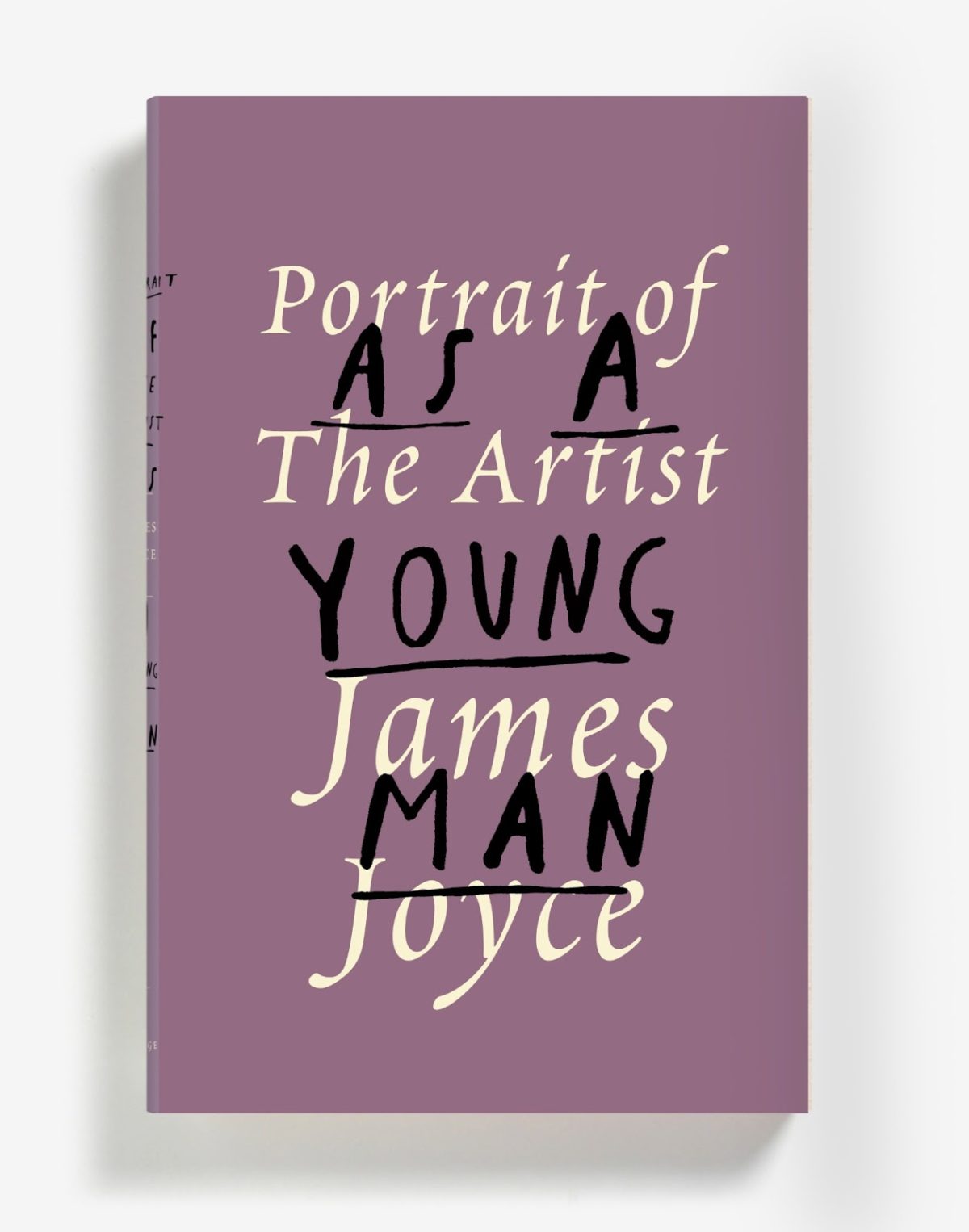
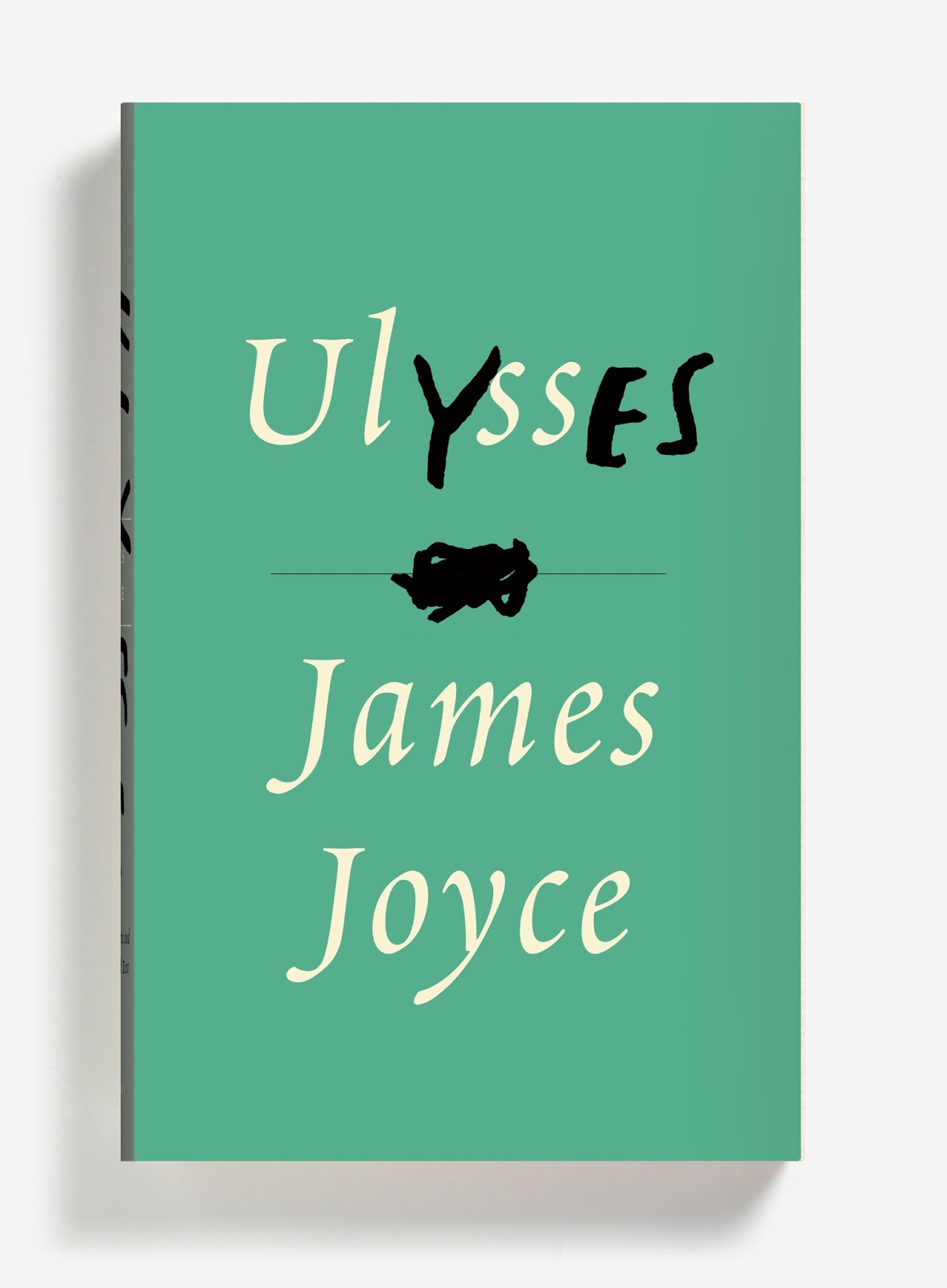
Three new James Joyce cover designs, and one extraordinary post by Peter Mendelsund.  Brilliant stuff…

The Box — Author Michael Chabon on the films of Wes Anderson at the NYRB Blog:

Anderson’s films have frequently been compared to the boxed assemblages of Joseph Cornell, and it’s a useful comparison, as long as one bears in mind that the crucial element, in a Cornell box, is neither the imagery and objects it deploys, nor the Romantic narratives it incorporates and undermines, nor the playfulness and precision with which its objects and narratives have been arranged. The important thing, in a Cornell box, is the box… All movies, of course, are equally artificial; it’s just that some are more honest about it than others. In this important sense, the hand-built, model-kit artifice on display behind the pane of an Anderson box is a guarantor of authenticity; indeed I would argue that artifice, openly expressed, is the only true “authenticity” an artist can lay claim to.

The Same Curious Brain — A profile of author and artist Oliver Jeffers, at the National Post:

Jeffers doesn’t just tell stories. He’s an artist — paintings, printmaking, collage — and a commercial and editorial illustrator, with clients ranging from Anthropologie and Weight Watchers to the Guardian and Newsweek. His monograph Neither Here Nor There, which was published last summer, is a collection of his non-children’s work — a bust of Darth Vader; a satellite crash-landed in a cornfield; a hammer nailed to a wall — though it still feels like part of the same universe. Jeffers prefers it this way.

“My books are all about telling stories, and a lot of my art is about asking questions,” he says. “But they’re equally extensions of the same curious brain.”

And finally…

The Spy Novelist Who Knows Too Much — a New York Times story about the decidedly nasty-sounding 83-year-old French pulp novelist Gérard de Villiers so implausibly bonkers it probably has to be at least partially true:

Last June, a pulp-fiction thriller was published in Paris under the title “Le Chemin de Damas.” Its lurid green-and-black cover featured a busty woman clutching a pistol, and its plot included the requisite car chases, explosions and sexual conquests. Unlike most paperbacks, though, this one attracted the attention of intelligence officers and diplomats on three continents… “It was prophetic,” I was told by one veteran Middle East analyst who knows Syria well and preferred to remain nameless. “It really gave you a sense of the atmosphere inside the regime, of the way these people operate, in a way I hadn’t seen before.”

And it gets better from there…

Comments closed

Oliver Jeffers: Picture Book Maker

A lovely new video about Oliver Jeffers and how he creates his picture books:

Comments closed

Oliver Jeffers: A Quantum of Physics

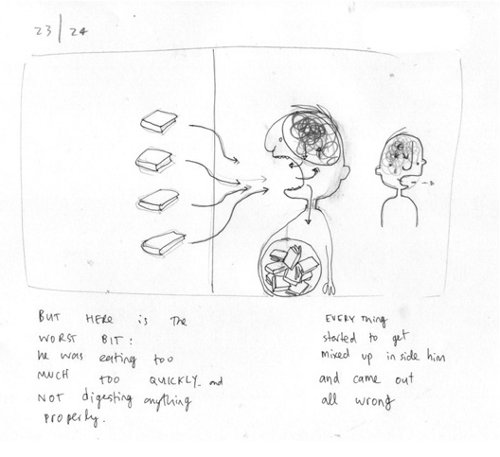
Gestalten.tv talks to Oliver Jeffers, award-winning author of picture books such as Lost and Found, The Incredible Book Eating Boy, and This Moose Belongs to Me,  about his paintings, collages, installations, and collaborative works, collected in his first monograph Neither Here Nor There:

2 Comments

Something for the Weekend

John Squire‘s 1980’s covers for the Penguin Decades Series at The Creative Review. The art direction was by Penguin’s Jim Stoddart, but yes, it is THAT John Squire (i.e. awesome).

Fine Independent Publishing — An interesting interview with Barbara Epler, Editor-in-Chief at literary publisher New Directions, at KCRW’s Bookworm (although I could do without the decline of literature being blamed squarely on sales and marketing people. Again):

Permanent Crisis — A post by Rebecca Smart, Managing Director of military history publisher Osprey Publishing, at Digital Book World:

If you perceive that your only environment is that encompassed by your current supply chain then you’re only going to adapt to changes in that environment – so the response to the digital challenge viewed in this way would be to create and sell e-books. If you put the consumer at the heart of your thinking you can consider instead each group of customers you serve and what they might want on top of what you already provide, how they might want you to serve them differently in the future. More to the point, you can ASK them, listen and respond.

Proletarian Erotica — Lorin Stein, former senior editor at Farrar, Straus and Giroux and new editor of the Paris Review, interviewed at The Economist‘s ‘More Intelligent Life’ blog. The National Post also ran a nice interview with Stern last month.

Going Deutsch — Tom McCarthy, whose new book “C” I’m reading right now,  interviewed at the New York Times ‘Paper Cuts’ blog:

One critic described “Remainder” as a French novel written in English; well, by that token, “C” is my German novel. What the next one will be is anyone’s guess. Swedish, maybe…

More from Tom on The Casual Optimist soon (if I can twist his arm)…

Print Junkies — An interview at The Second Pass with the publisher and editor of Stop Smiling magazine J. C. Gabel on the launch if the Stop Smiling book imprint:

We’re still operating with the same mentality… but have adopted a Less Is More mindset — and a production schedule to match. It does feel nice to know that what we spend months or years working on is now being released in a permanent format. We’re really trying to reinvent the DIY aesthetic of the magazine to apply it to editing, publishing, and promoting books. The book-making process itself, of course, is much slower and drawn out, which is refreshing as we all get older.

And finally, I give you Oliver Jeffers’ moustache (via Tragic Right Hip)…

3 Comments

Midweek Miscellany

How To Live Safely in a Science Fictional Universe

A new cover from John Gall, seen at Peter Mendelsund’s JACKET MECHANICAL. Am I the only one who wants to hear these two in conversation? Dear NPR, could you get on that please?

Soft in the Middle — James Surowiecki looks at how midrange companies are being pressured by both high-end products at one end and ‘just good enough’ products at the other in the New Yorker (via Kottke):

The products made by midrange companies are neither exceptional enough to justify premium prices nor cheap enough to win over value-conscious consumers. Furthermore, the squeeze is getting tighter every day… This doesn’t mean that companies are going to abandon the idea of being all things to all people. If you’re already in the middle of the market, it’s hard to shift focus—as G.M. has discovered. And the allure of a big market share is often hard to resist, even if it doesn’t translate into profits.

I think we going to see this more in publishing with the midlist losing out to quick, cheap and ‘just good enough’ e-books and expensive, beautifully packaged hardcovers.

Somewhere Between Skeptic and Proselytizer — John Williams founder of The Second Pass interviewed at The Virginia Quarterly Review blog:

I think the way books are written about has been opened up in healthy ways. I like that there are more amateur (and semi-pro and pro) voices on the Internet, in the sense that it’s not just the unimaginative circle wherein writers of a certain kind of book review another example of that kind of book written by someone else. I’m not the first (or even the hundredth) to think that can lead to a lot of back-scratching or dry summation rather than forcefully argued opinion. It’s also true that the Internet has been great for, say, literature in translation, where entire sites (like Three Percent) can be devoted to a subject that gets less attention than it should in mainstream outlets. But as for how literary careers are made, I don’t think that’s changed as much as the tech apostles would like to believe.

The Incredible Book-Making Boy — Super talented author and illustrator Oliver Jeffers, whose new book The Heart and the Bottle was published earlier this month, interviewed at Seven Impossible Things Before Breakfast:

I begin with a single idea… and then tease that out in my sketchbook with hundreds of other drawings and pieces of writing that explore how the narrative can grow and extend into something that is satisfying. Once I’ve got a basic plot, I work with my editor in streamlining everything down to fit the thirty-two-page format…  Getting the story to flow between those thirty-two pages is probably the most difficult part. It’s like directing a film, where the pace needs to be set and decisions made of what goes where. It’s at this point that many of the compositions get cut. There is a careful balance between what the pictures are showing and what the words are saying, and if something is shown, it often doesn’t need to be said.

And finally…

Contemporaries, He Yanming

Chinese Book Covers seen at the excellent Ephemera Assemblyman.

5 Comments