Skip to content

Tag: nikolaus pevsner

Something for the Weekend

Imprint talks to John Bertram about his Recovering Lolita project:

For obvious reasons, of course, [Lolita] remains as controversial a novel as it was a half century ago, if not more so. And, probably helped along by Kubrick’s breezy film, and many very terrible covers, the term “Lolita” has come to popularly mean something quite the opposite of the novel’s namesake, so a designer has that to contend with as well. On the one hand, then, designers face the very real challenge of communicating some of that complexity in a cover, which can easily become overwhelming… On the other hand, I think there are also important ethical considerations that require careful negotiation since, whatever people may think, we are talking about a novel which has child rape at its core.

There is more about  the project here (pictured above: Lolita designed by Rachel Berger).

The Bare Specificities — A really lovely profile of Portland-based book-scout Wayne Pernu at The New Yorker:

On the job, Pernu keeps a few principles in mind—first and foremost, the importance of condition. For example, with its original dust jacket, the value of a first-edition “The Great Gatsby” can multiply from two thousand five hundred dollars to more than two hundred thousand. “That little piece of paper on the book is often worth thousands and thousands of dollars, much more than the book itself,” Pernu says. “Specificity is really crucial as well. A book called ‘World History’ isn’t going to do well, but a book called ‘Peruvian Shovel Makers in the Seventeenth Century,’ that’s going to be worth a lot of money to someone. You always get excited when you see something that specific, no matter what it is.”

Also really nice: An interview with English letter carver Fergus Wessel for I Love Typography:

Eric Gill is my hero! His lettering, in my opinion, remains unsurpassed, partly because of its honesty. We are all striving for perfection, but there really is no such thing of course. If we try to control it and attempt to be too artistic, we are in danger of losing that honesty. One has to let the letters flow a little.

There are certainly strict rules of good layout and lettering, but rules are there to be broken. But in order to bend the rules, one has to know them in the first place, and attain that initial discipline. This requires years of experience and practice; it is something that evolves and it is during this evolution that you develop your own individual style and form.

And finally…

Alexandra Harris, author of Romantic Moderns, on Modernism at The Browser:

To an extent, yes. But take [Nikolaus] Pevsner for example, who was one of the great exponents of the Bauhaus version of modernism in England. Because there’s such a strong German tradition of minimal, pared down, internationalist architecture, for him it was a kind of nostalgia. It wasn’t our English tradition but a German tradition, so it seemed to us very brutal and modernist. But to him it was laden with associations and emotions, as it was for the other émigré artists like [Laszlo] Maholy-Nagy and Naum Gabo.

Again, what seems very new is actually attached to a tradition, and is so much more interesting that an absolute break with the past. A lot of these buildings that seem very modern are deeply entangled with a tradition of classical architecture using the same classical symmetries and the sense of elegance and refinement that comes straight down from Greece and Rome, and it doesn’t get more traditional than that. So there’s always a traditionalism in the modern.
Comments closed

Midweek Miscellany

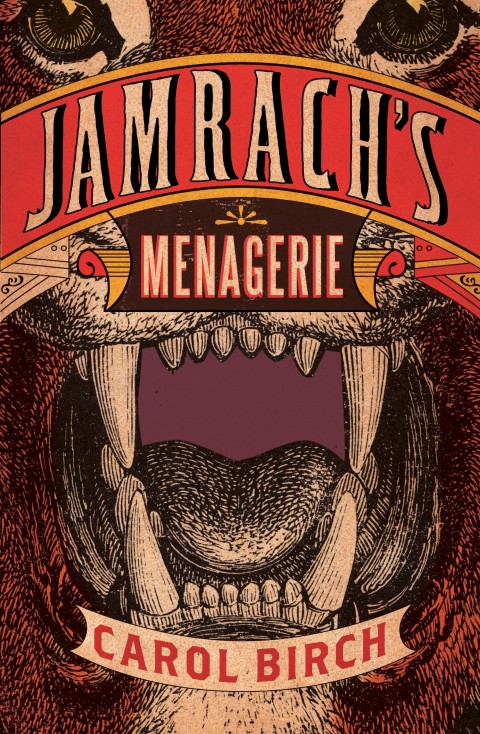
Creative Review takes  a look at the cover designs for the books shortlisted for the Booker Prize, including this beauty by the mighty Jon Gray for Jamrach’s Menagerie by Carol Birch.

Let’s Get Critical — Long-form cultural criticism, essays and reviews, curated by architecture and design critic Alexandra Lange.

Never Fashionable, Always in Style — Costume designer Jacqueline Durran on tailored suits worn by the spies in the film adaptation of Tinker, Tailor, Soldier, Spy, for The Guardian:

“I thought that lots of these middle-aged men had bought suits 10 or 15 years ago and stuck with them,” she says. “I would look at a character and try to work out where they had bought their suit.”

She decided that everything in the film could have been bought from shops within half a mile of Piccadilly in London: “Things from Savile Row, Jermyn Street, Fortnum & Mason, Burlington Arcade – one of those upper-middle-class shops that are never fashionable but always do a certain kind of clothing.”

(Related: The real-life spies of Tinker Tailor Soldier Spy)

Also in The Guardian… Michael Prodger reviews Nikolaus Pevsner: The Life by Susie Harries:

Whereas art history in Germany was a creditable discipline of long standing, in England it was a new subject – class-ridden, based on connoisseurship and, he thought, “at its worst, an activity a bit like stamp collecting”. It was this fustian world that Pevsner and other émigrés such as Ernst Gombrich, Rudolf Wittkower and Edgar Wind were to transform.

Pevsner had a hard time fitting in, not least because he was a modernist, something the British found temperamentally uncongenial. For Pevsner, though, it represented an antidote to art for art’s sake and he saw it as an appropriate expression of the spirit of the age. Art, he believed, should be functional and of service, and architecture was the most important of the arts because it was the most closely connected with human life.

And finally…

Pathos and Pantomime — Peter Ackroyd choose five books about London:

London has always had the reputation of being a city of contrast, where pathos and pantomime meet. That is true in the work of Charles Dickens and Charlie Chaplin, for example. And it is certainly true in the work of [William] Blake. So you can see patterns of the London imagination at work. It is a world of theatre. The grand theatre of the human spirit which London most readily represents, and there is scenic detail and movement and passion and the action of crowds. It is quite different from other cities.

Comments closed

Midweek Miscellany

A profile of calligrapher DeAnn Singh at The LA Times:

When the producers of “Mad Men” needed a note in cursive and a signature from Don Draper, they turned to Singh. “Something masculine and from the 1950s” was the request, though they eventually decided that the missive be typed…

Ask her about computers, and she’ll tell the story of Steve Jobs.

Before the founding of Apple and the development of the Macintosh, Jobs dropped out of Reed College and studied calligraphy with artist Lloyd Reynolds. If he hadn’t taken that class, he has said, personal computers might not have come with a variety of fonts.

Fantasy Modernism — Lev Grossman talks to the A.V. Club about The Magician King, the sequel to his 2009 novel The Magicians:

I have this theory about modernism and fantasy, which I’ll do in 30 seconds.

They came into being at the same time, which is very interesting. They were both reactions to the disasters of World War I and the electrification of cities, and urbanization, and the rise of the automobile, the end of that twilight world of the Victorians. They both are reactions to that in different ways. Modernism went very inside and delved into the interior lives of people. Fantasy externalized all that in these fantastical, magical, metaphorical landscapes. I thought, “Well, what if you did both the inside and the outside at once?” I tried to combine those foci of fantasy and modernism into one kind of writing. It sounds like I’m writing a dissertation on my own work, but, you know, you end up thinking about what you’re doing. That’s the kind of thing I thought.

See also: Alexander Chee reviews the book for NPR.

Prussian Pedantry — Susie Harries’ new biography of scholar Nikolaus Pevsner, best known for his 46-volume series The Buildings of England, reviewed by George Walden for The Observer:

For us at least the conflict of national intellectual styles he represented was hugely beneficial. The irony of a “Prussian pedant” lecturing the English on Englishness, for which he was mocked, resolves itself in the fact that, together with Gombrich in art history and Weidenfeld in publishing, Pevsner was one of a golden generation of German/Austrian Jewish refugees who did much to give their adopted country the bottom it prided itself on already possessing.

And for those of you not interested in a county-by-county guide to the wonders of English architecture (what’s wrong with you?), Pevsner also wrote the seminal Pioneers of Modern Design: From William Morris to Walter Gropius. First published in 1936, a revised and expanded edition will be available (in the UK at least) in September.

And finally…

Everyone is an AuteurGuardian correspondent Fiachra Gibbons meets Jean-Luc Godard:

“I am not an auteur, well, not now anyway,” he says as casually, as if it was like giving up smoking. “We once believed we were auteurs but we weren’t. We had no idea, really. Film is over. It’s sad nobody is really exploring it. But what to do? And anyway, with mobile phones and everything, everyone is now an auteur.”

Oh Jean-Luc…

Comments closed