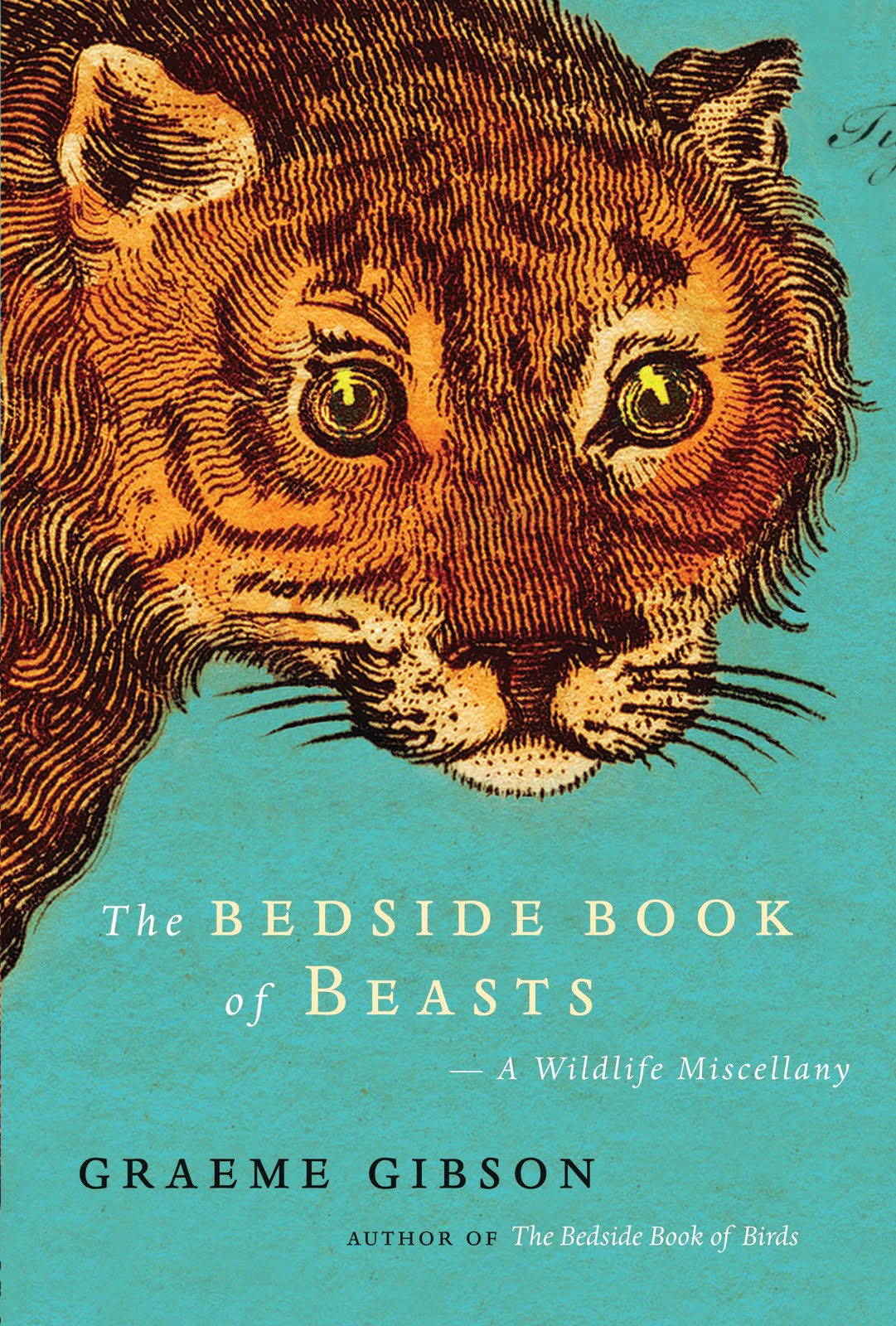
Michel Vrana, AKA Black Eye Design, has been on my radar since we first crossed paths on Twitter in the run up to Book Camp Toronto earlier this year.
I had hoped to run into the Montreal-based designer in person at Book Camp, but unfortunately, in the dehydrating hustle of the day, I didn’t get chance to introduce myself.
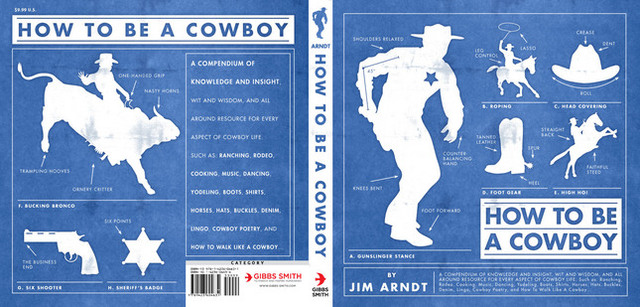
Nevertheless, a few weeks after the event, I came across a series of reissued cowboy books from publisher Gibbs Smith in a Raincoast sales meeting. The witty retro cover designs — with their pop culture references and knowing wink to the distinctive letterpress work of the Hatch Show Print studio — stood out among the more traditional covers in the catalogue.
It turned out that they were designed by Michel.
Small world, I thought.
A little later I found out that Michel also designed covers for Casual Optimist favourite Drawn & Quarterly (also distributed by Raincoast for the record).
And then it seemed Michel’s work was everywhere. Or perhaps it just seemed that way. My love of letterpress, comics, vintage magazines, typography, ephemera and stuff certainly make me notice his work, which often seems to draw on these elements.
Although we still haven’t met in person, we’ve stayed in touch through the electronic wonder of Twitter and email over the past couple of months, and despite some major changes at Black Eye Design during that time, Michel seemed a natural fit for this series of interviews.
You can see more Michel’s work at his design:related portfolio and, of course, follow him on Twitter @michelvrana.

Briefly, could you outline the history of Black Eye?
In 1993, I started Black Eye Productions as a comic book publishing company. Inspired by Drawn and Quarterly, I sought to do justice to all the hard work that the cartoonists put into the books I published by making sure they were well packaged and designed. Over the years, I did more and more graphic design, and less publishing, in order to pay the bills, and eventually decided to dedicate myself design full time in 1998.
From 1998 onward, Black Eye Design became a boutique design studio specializing in publication design. I spent much of my time running the studio and art directing and not as much time as I wanted doing what I enjoyed most: the hands-on design. Starting in 2006, I rolled up my sleeves and started doing book design again, though I was really splitting my time between running the company and doing hands on work. In 2009, I decided to shutter the studio and concentrate on book design full-time. It’s really what I’ve enjoyed the most over the years, from those first days as a comics publisher onward.

Do have a ‘house’ style? How would you describe it?
I’m sure anyone looking at my work would see a style more than I can. I’m sure the word ‘retro’ applies. Someone once described the work I do as ‘prop design’, where the design emulates something else but that is not always the case. My business card, for example, is set up like a vintage boxing ticket. Two of my most recent fiction covers have the titles incorporated into a matchbox and a postage stamp. So that’s probably a trend in my work.
I try to incorporate, whenever I can, a subtle ‘punchline’ into my covers. For example, the book that has the match box is called The Last Shot; it’s a collection of short stories where many of the characters are stuck at a dead end in their lives, and are looking for that one ‘last shot’ to change things. The cover has a few spent matches, and a matchbox with one last match sitting in it. I like to think a reader is going to look at the title, look at the visual and then it will click and they’ll get that little ‘Aha!’ in their head, and feel like they’re in on the joke.

The (English-speaking) Canadian book industry is largely focused in Toronto. What are the pros and cons of being a book designer based in Montreal?
It’s a pat answer, but in this day and age, you can be anywhere in the world and succeed as a graphic designer. As long as you get the word out there to the right people, you’ll find contracts. I’ve worked very hard in promoting my studio, and now myself. Not having lived/worked in Toronto, maybe it would be easier to find new projects if I lived there, but it’s hard to say for sure.
Could you describe your design process?
I front-load my process with questions, thinking and pencil sketching, rather than sitting down straightaway at the computer.
When I’m not sure I have enough info from my design brief, I’ll usually ask many questions of my publisher, editor, or art director for the project. I find that that really helps clarify things.
When possible, I also try to get a sample, or the whole manuscript to read. I use Stanza on my iPhone to read manuscripts and annotate them with ideas, as I read. When I don’t have a manuscript, I just start by writing out ideas and brainstorming.
I usually delay sitting down at the computer as long as I can. I sketch out rough thumbnails for myself, and sometimes even show these (very) rough sketches to the art director, editor or publisher I’m working with, to get the discussion going. I find that keeping everything loose and unpolished at the beginning frees me from getting too attached to any one idea, from it becoming too precious, and that keeps creativity flowing. It’s a valuable lesson I learned from designer Jan Wilker at the SVW 2008 workshop.
What are your favourite projects to work on?
I’m going to be a cliché and say that I love working on all book covers. To me, the fun in visual problem solving remains the same whether it’s a kids’ humour book about Gross Stuff, or a collection of short stories by a budding young talent. That being said, my absolute favourite ones are the ones that require me to push myself out of my comfort zone and try something new. Scary, but fun.
What are the most challenging?
The ones with a short design brief. I’ve come to realize that these seemingly ‘easy’ projects are deceptively so, and the covers often require the most revisions. Now when I get a quick design brief, I try to dig deeper with my art director, editor or publisher to find out more about their goals with the cover.
What are some of the common frustrations working with publishers?
My number one frustration would be that sometimes publishers underestimate their audience. As a culture, we’re a lot more savvy about visual communication than many people assume. We’re all continually exposed to clever ad campaigns, posters, book covers; so let’s not underestimate the intelligence and experience of the audience. For books this seems especially important, since you’re talking about a segment of the population that’s especially literate.

What do you think makes a good cover design?
Marketer Seth Godin hit the nail on the head for me, when he described the role of a cover as ‘to tee up the reader so the book has maximum impact’. The goal of a book cover is to engage the reader, and get them to pick it up, to interact with it (look at the back cover copy, maybe read a quick passage). That’s the stuff that sells the book. The cover is the invitation, and that invitation needs to be enticing.
Do you see any current trends in cover design?
Illustration and hand-drawn type are definitely a trend these days. And I think that Peter Mendelsund‘s design for Stieg Larsson’s The Girl with the Dragon Tattoo opened up the idea of type layered with the image. In fact, dimensional type, or maybe even ‘environmental type’ seems to be a meme in graphic design these days.
Where do look for inspiration?
I’m a big fan of ephemera: retro packaging, book design, comics. I love that stuff. I also try more and more to keep up to date with what other ‘big’ designers are doing, hopefully without finding myself overly influenced by their work. There are so many talented designers, photographers and illustrators online that it’s hard not to be inspired! Of course, if I ever get ‘stuck’ on a design, I find that tuning out for a while is the best way to go for me, knowing that somewhere in the back of my head, the ideas are still percolating.

Who are some of your design heroes?
The first designer I was ever aware of was Art Spiegelman. The work he did on Raw magazine, and on Maus has always been influential (right down to my love of the font Metro, which Spiegelman often uses). David Mazzucchelli would also be another cartoonist/designer that’s always impressed me: from his work on Batman Year One to his self-published Rubber Blanket, to his newest Asterios Polyp.
In 1992 I picked up a copy of Jeanette Winterson’s The Passion in London, and it was part of an edition of tiny hardcovers published as Bloomsbury Classics. The design of that first book, and the series, has always stuck with me [see pictures pf the Bloomsbury Classics here and here]. Jeffrey Fisher is the amazingly talented illustrator who worked on the series.
I’m also a big fan of Paul Sahre: I bought Rick Moody’s Demonology completely based on the elegant Paul’s cover: a photo of the multi-coloured ‘Rocket’ candy. I thought the design was brilliant at conveying the idea of the book being a collection of short stories.
Amy King is great, her work shows such variety, but it’s all so well executed. John Gall‘s paperback covers for Haruki Murakami are lovely. Of course, Henry Yee‘s work always blows me away – his cover for The Adventures of Kavalier and Klay is a favourite. And let me not forget fellow Canadian designers Peter Cocking and David Drummond. Not to mention the work of my colleagues on twitter Ingrid Paulson, Christopher Tobias, David Gee.

What do you think e-books mean for book designers?
It’s going to be interesting to see how new e-book readers shape the reading experience. I’m keeping my fingers crossed that fine typography and graphic design will continue to be important. What I can see in the future is the incorporation of more rich media into book design – childrens’ books with motion graphics, novels with musical cues, or even embedded video. Who knows, maybe we’ll even see book covers with motion graphics on the e-book front? Ultimately, I think it means that books are going to evolve. Down which path I’m not sure, but book designers will have to evolve along with them. Whether we end up with books that act like the publications in the Harry Potter world, or if they’re something completely different.
Thanks Michel!
Next Week: Alex Camlin, Creative Director at Da Capo Press.
Like this:
Like Loading...