Skip to content

Tag: michael cho

Midweek Miscellany

Michael Cho‘s cover for the Best American Comics annual 2010 published by Houghton Mifflin Harcourt. Fantastic.

Undefined — The Caustic Cover Critic interviews illustrator and designer Alice Smith:

After sketching ideas, I make compositions using inks and pens to bring collages together, the pen marks might have disappeared in the finished composition, but it’s the pen marks and the rough sketch that helps bring it together. I use old imagery for ethereal effect, playing with visual alchemy and nostalgia. And the quality of printing pre 1950s, photoengravre and proper litho is so much nicer than the pixel fuzz and dots of newer digital printing.

Alice’s portfolio is here.

Scraps of Paper — An interview with superstar designer Rodrigo Corral in Metropolis magazine:

[T]he parts of the process that are unique and special really come from the individual designer’s experience. I think about the people who might read this article, and assuming some will be design students or younger people just getting into book design, I have to say that in order to come up with ideas—which, aside from a solid understanding of typography and typographical context is the most important part of all of this—you have to have an understanding of what has come before and what is current. I’ve spent years in used bookstores and magazine shops looking, admiring, and collecting, and this is all a part of the “design process.” The things I have stored in my brain and all that is still out there to see and learn are all part of the process.

Bought and Discarded — Simon Akam explores the sidewalk booksellers of New York for More Intelligent Life:

What wasn’t clear was what it meant to have a big presence on secondhand stalls. Was it an honour for a book, or a slur on its author’s reputation? Which was more significant—the fact that so many copies had been bought by someone, or the fact that they had since been offloaded again? To add insult to injury, were the titles I encountered in droves lying on the stalls because today’s reading public chose not to pick them up, even at a much reduced price? I needed to find out whether the champions of my survey were much loved, or doubly scorned.

And finally…

The Road: Scenes From the Post-Print Apocalypse by Peter Kuper for the New York Times (via The Ephemerist).

2 Comments

Monday Miscellany

Kitsune Noir Poster Club — Artists Frank Chimero, Mark Weaver, Jez Burrows, Cody Hoyt and Garrett Vander Leun reinterpret their favourite books as prints for Kitsune Noir . (Frank Chimero’s Slaughterhouse Five is pictured above).

And on the subject of posters…

Penguin US have made the jacket art from Graphic Classic Editions of Moby Dick and White Noise, designed by Tony Millionaire and Michael Cho respectively, available as posters.

From Trolls to Truth — Author Ursula K Le Guin reviews Tove Jansson’s The True Deceivers (available in the US from NYRB Books) for The Guardian:

On the patronising assumption that books for children are nice, ie morally bland and stylistically infantile, critics, reviewers and prize juries often dismiss those who write them as incapable of writing seriously for adults… Anyone familiar with Jansson knows it would be unwise to dismiss her or patronise her work on any grounds. Her books for children are complex, subtle, psychologically tricky, funny and unnerving; their morality, though never compromised, is never simple. Thus her transition to adult fiction involved no great change. Her everyday Swedes are quite as strange as trolls…

Quote/Unquote Bookends designed by Eric Janssen (via SwissMiss).

And lastly…

In my total blogging tardiness, Bookslut (inevitably) beat to the punch on this, but Simon Reynolds column on the music of the decade for The Guardian has so much resonance for books and the book industry:

“The fragmentation of rock/pop has been going on as long as I can remember, but it seemed to cross a threshold this decade. There was just so much music to be into and check out. No genres faded away, they all just carried on, pumping out product, proliferating offshoot sounds. Nor did musicians, seemingly, cease and desist as they grew older; those that didn’t die kept churning stuff out, jostling alongside younger artists thrusting forward to the light. It’s tempting to compare noughties music to a garden choked with weeds. Except it’s more like a flower bed choked with too many flowers, because so much of the output was good. The problem wasn’t just quantity, it was quantity x quality. Then there was the past too, available like never before, competing for our attention and affection. The cheapness of home studio and digital audio workstation recording, combined with the wealth of history that musicians can draw on and recombine, fuelled a mushrooming of quality music-making. But the result of all this overproduction was that “we” were spread thin across a vast terrain of sound.”

(Update: links to Tove Jansson’s The True Deceiver added)

Comments closed

Missed Things: Friday

Floating — Toronto illustrator Michael Cho on his cover art and interior illustrations for The Amazing Absorbing Boy by Rabindranath Maharaj (published by Random House Canada).

The Ideal Studio Library — It’s Nice That interviews designer Jason Godfrey about his beautiful new book Bibiographic: 100 Classic Graphic Design Books, published by Laurence King,  (and yes, full disclosure, LK are distributed in Canada by my employer Raincoast Books):

My aim was to create the ideal studio library of graphic design books and put this into a book format. I had always felt that there was a need for a visual reference to that could give flesh to many reading lists that have been published… The really tricky choices were the more recent books as it is difficult to know whether they will become classic points of reference, time will tell if I made the right choices on these books.

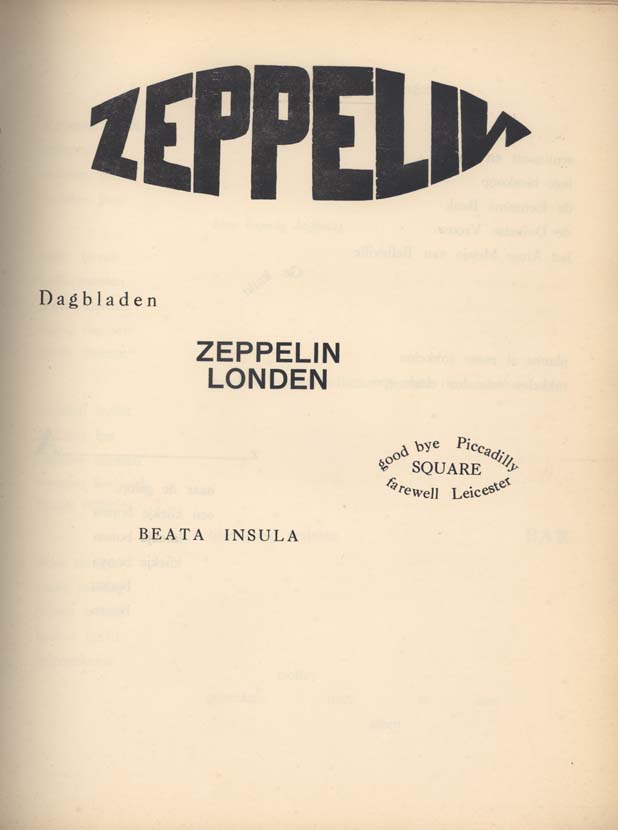
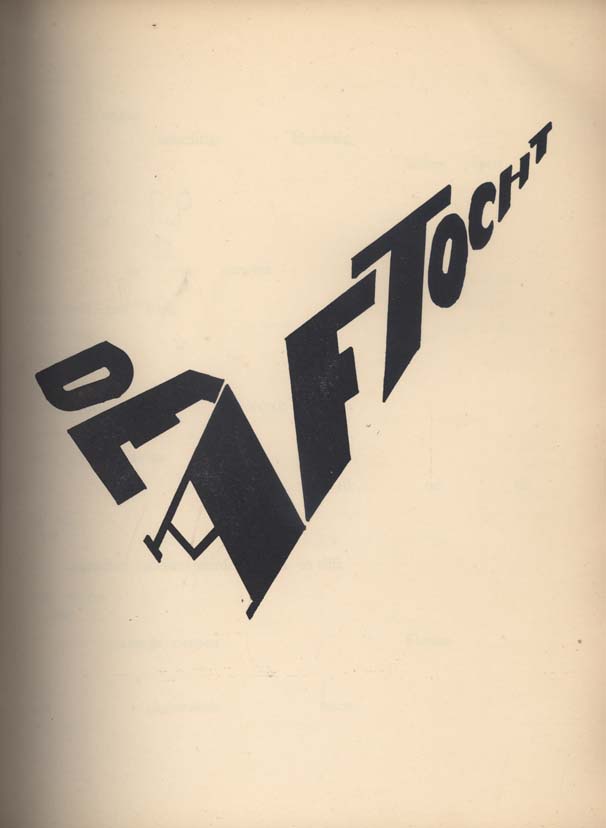
Bezette Stad —  A book of poems by Paul van Ostaijen, illustrated with woodcuts by Oskar Jespers, available in full at the University of Iowa Libraries’ astonishing International Dada Archive (via the lovely Aqua-Velvet).

And finally…

ENOUGH! — The hilariously on the money Editorial Anonymous:

I REALLY NEED A FRICKING BREAK FROM THE “FUTURE OF PUBLISHING” TALK… I don’t need to read any more of these articles, and neither do you.

A quick overview:

1. Publishing is a somewhat crappy business. Which makes it PRETTY MUCH LIKE EVERY OTHER BUSINESS.
2. Publishing has a future. NO ONE KNOWS WHAT IT WILL BE.

So everyone can stop
a. COMPLAINING
and
b. COMPLAINING.

Thank you.

No, no, Thank YOU.

3 Comments

Something for the Weekend, September 18th, 2009


Bring the Noise — Toronto illustrator Michael Cho (known locally for his much-loved signage for the now defunct Pages Books & Magazines on Queen Street) discusses his jacket art for the Penguin Graphic Classics edition of Don Delillo’s White Noise.

I ‘m very happy to hear that D+Q are publishing a ‘petit livre’, Backalley Drawings, by Michael next year.

And watch this space for an awesome Q & A with Paul Buckley, the art director of the Penguin Graphic Classics series (coming soon!)…

But Is It Type? — Design educator Ellen Lupton on the difference between lettering and typography for Print Magazine:

I subscribe to the rather rigid theory that typography is about readymade, reproducible families of letterforms. Vernacular hot-dog signs, handwritten wedding invitations, and space-age logos aren’t typography…

Perhaps my quibble is an old one: you just can’t view real typography online. Beautifully printed books and magazines are still the best resource for designers who want to know what’s happening in their field. Yet the design discourse is unfolding in real time on the web, and this is where students and young designers go to participate and be inspired.

And while were on the subject of typography, I thought — as a bungling amateur — that Brian Hoff’s post 10 Common Typography Mistakes was useful. Although I like to think I was surprising good at Cheese or Font (for what it’s worth).

Publish Local — An interesting list from The Task Newsletter (via REFERENCE LIBRARY). Would this work for book publishing?:

  1. Find what’s missing
  2. Work in the gaps
  3. Figure it out together
  4. Make it visible
  5. Make it viable
  6. Research and plan
  7. Expand existing systems
  8. Plan transparently
  9. Start small
  10. Commit to it
  11. Learn about your local flora
  12. Don’t get permission
  13. Print what you’ve got
  14. Make positive spaces.
  15. Find funding

And lastly, I just had to post this…

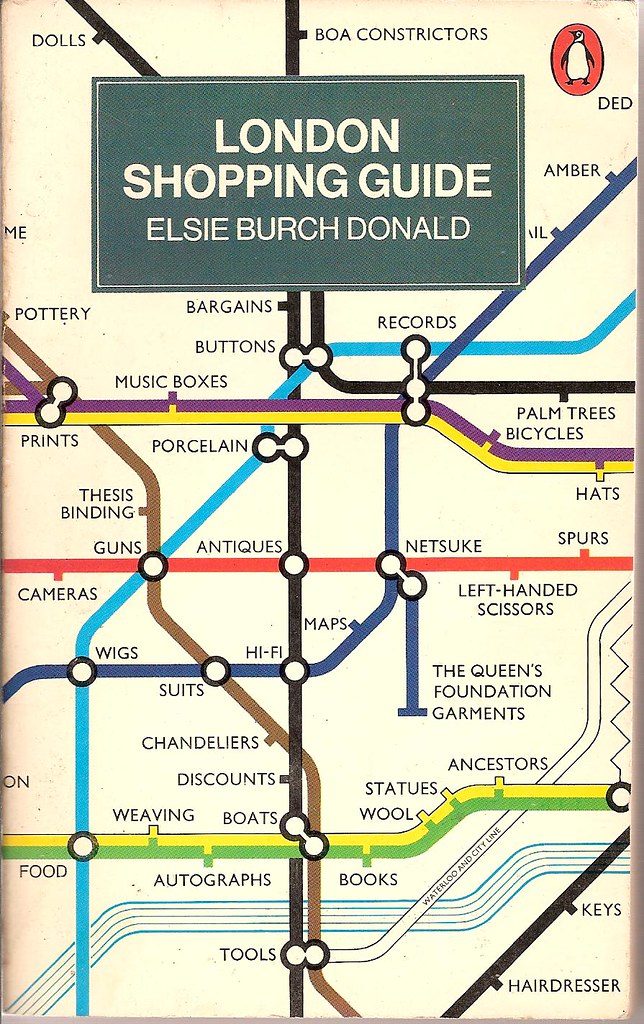
London Shopping Guide — Revised second edition from 1977, cover design by John Carrod, seen at Covers etc on Flickr.

Two design classics in one: Penguin paperbacks and Harry Beck’s tube map. What more could you ask for?

Comments closed