David Byrne talks about music, technology and his recent book How Music Works(now out in paperback), at Salon:
I’m not saying that the artist doesn’t put their feelings into it, or any part of their biography, but that there’s a lot of constraints and considerations and templates that they work with – unconscious decisions or constraints put upon them that guide what they’re going to do… Our imaginations are constrained by all these other things — which is a good thing. There’s kind of a process of evolution that goes on where the creative part of you adapts to whatever circumstances are available to you. And if you decide you want to make pop songs, or whatever, there’s a format. You can push the boundaries pretty far, but it’s still a recognized thing. And if you’re going to do something at Lincoln Center, there’s a pretty prescribed set of things you are going to do. You can push that form, but kind of from inside the genre. So I guess I’m saying that a lot of creative decisions are kind of made for us, and the trick is then working creatively within those constraints.
Beautiful children’s book and magazine covers from Korea in the 1950’s and 1960’s at the amazing 50 Watts.
Not a Pretty Scene — Tess Thackara on design and the future of printed books at Guernica magazine:
Amy Martin’s illustrations for Symphony City [published by McSweeney’s McMullens imprint 2011] create a layered multidimensional and richly textural world, which often appears like original paper collages. In some places the visual environment of an urban landscape full of music she creates is so absorbing that I wondered what an e-book or iPad app could offer that print couldn’t… McSweeney’s art director and editor Brian McMullen, who developed and gave his name to the imprint, offered a more practical reason for keeping to printed matter for kids: “Those of us who are parents aren’t convinced that kids need to be encouraged to spend more time than they already do in front of screens… Have you ever tried to tell a three-year-old it’s time to stop looking at one of these devices and hand it back to Daddy? It’s not a pretty scene. These devices are just not compatible with bedtime, in my experience, whereas a printed picture book, for whatever reason, is.”
There’s no question that the internet offers all sorts of benefits – that is the reason why we use it so much. It is an incredibly powerful and useful technology that makes all sorts of information immediately available to us. Things that used to be impossible, hard or expensive to find are now right there. And we all know how to improve our ability to make decisions with it. But accompanying that, incredibly, is the fact that we become so intent on gathering information that we never slow down and think deeply about the information we find. We gain the ability to harvest huge amounts of data but we lose the ability to engage in contemplation, reflexion and other modes of thinking that require a large amount of attentiveness and the ability to filter out distractions and disruptions.
A History of Print Culture — Assistant Professor of Media Culture, C.W. Anderson, provides his annotated syllabus for a print history course at CUNY in The Atlantic (thx Jamie):
The primary goal of this class is to teach students about the culture of “print media” in an era when that culture is being joined (and in some cases, overtaken) by a culture that we might variously call digital culture, online culture, or the culture of the web. What does “print” mean in our digital age? And what does “culture,” mean, for that matter? By culture I mean something that is not reducible to “economics,” “technology,” “politics,” or “organizations” — although culture emerges out of the nexus of these different factors, and others. In other words, I want to disabuse my students of the notion that new technologies or new economic arrangements can create digital or print culture in the same way that a cue ball hits a billiard ball on a pool table.
Great design does not come from great processes; it comes from great designers… The critical thing about the design process is to identify your scarcest resource. Despite what you may think, that very often is not money.
At the heart of McSweeney’s success is the huge amount of care and attention which goes into producing each book, ensuring that the jacket design and layout complement the words inside the covers. Though Horowitz believes there is a McSweeney’s aesthetic he is struggling to put into words what it is. “There’s a notion of old-fashioned story-telling and a compelling plot combined with an innovative literary impulse – when we’ve had those ingredients that’s when we’ve done our best works.”
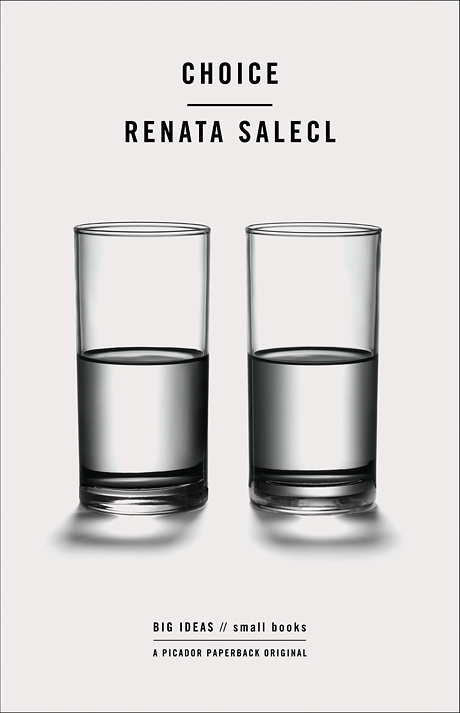
Two stunningly beautiful, and sadly unused, designs by Henry Sene Yene with photographs by Jon Shireman for Picador’s BIG IDEAS // small books series. Picador decided not to publish the book. You can see Henry’s other designs for the series here.
While the series hasn’t published a bestseller, and is unlikely to do so, readers care about NYRB Classics and are loyal to it. This is a monumental accomplishment at a moment when cultural loyalty is extremely fickle. Frank and Kramer did it using a frills-free, deceptively simple editorial strategy: give readers good books consistently, respect them, engage them, and they’ll stick with you.
The Ultimate Online Bookclub — A little late to the party, but Viv Groskop discovers Twitter is the place to share book opinions and gossip (and stalk authors apparently) in The Telegraph (via Source Books publisher Dominique Raccah on Twitter of course!):
Twitter allows you to discuss books and authors with other fans online without having to set up a blog or invent some dodgy chat room identity. If you “follow” the right people… you soon discover that Twitter brings you compelling snippets from publicists, book fanatics, bloggers and authors themselves. With reading recommendations galore, it is the book addict’s paradise.
The New Narrative — Creative Nonfiction magazine is seeking interesting stand-alone narrative nonfiction blog posts (2000 words or less) to reprint in their next issue. Nominate something from your own blog, or from a friend’s. Closing date is this Monday (April 26, 2010).
And finally…
A Fan of the Form — Author and publisher Dave Eggers talks to On The Media about the McSweeney’s newspaper Panorama:
I like the curatorial, the calmness, the authority of a daily paper. But I do think that it’s a time to make the paper form more robust and more surprising and beautiful and expansive. People still want to read long form literary journals and nonfiction, etc., and so why can’t the print medium do that and be that home and leave the Internet to do the more quick thinking and quick reacting things?
The idea that book publishers are failing to act in their own interests because they somehow do not want to serve their customers, or because they do not “get” electronic distribution ignores the business reality they face… In any case, why is it illogical for publishers to defend their own business interests against those of Amazon, which is a public company trying to extend leverage over them to benefit its own shareholders?
My colleague Jennifer from Publishers Group Canada just handed me a copy of the new Dave Eggers book Zeitounand, as with all new McSweeney’s first edition hardcovers, it is a thing of beauty.
Unfortunately the image above does not really do the (jacketless) cover justice (and I’m so low-tech that I don’t have a camera here in the office to take a snap for you).
On the finished book, the buildings, paddle, and skin (and the reflections) in Rachell Sumpter‘s lovely (front and back) cover illustrations are accentuated in a bold yellow ochre (which I think you can just make out in the image above).
The front cover is embellished with silver lettering and highlights, and — to finish it all off — the illustrations are offset by a lovely dark red spine that wraps about ¾ of an inch onto the front and back of the book.
No doubt a designer would be able to tell you all the wonderful specs and technical terms for all of this, but I hope — if nothing else — I’ve persuaded you to seek out Zeitoun in your local bookstore and look for yourself.
(Full disclosure: PGC are part of Raincoast Books — the folks I work for — just not the part I work for, if that makes sense).


 Jardin de la Connaissance