Skip to content

Tag: maurice sendak

Something for the Weekend

It Will All Be Over Before You Know It… — A six-page, six-chapter comic by the brilliant Richard Sala (a must for fans of Edward Gorey, I’d say).

Something Lost — Edmund de Waal, ceramicist and author of The Hare with Amber Eyes, on inspiration for writing and art at The Browser:

[T]here is still something extraordinary about art which comes out of an encounter between a person and a material. The further you get away from that, the more you get into something which is commodified and reduced to a series of other people’s interactions with it. There is something extraordinary which is lost.

Talking Covers — A new blog, edited by writer Sean Manning, where authors, designers, and artists discuss book covers. The cover to Sean’s own book, The Things That Need Doing is discussed here.

The Solitary World — Ellen Handler Spitz, author of Illuminating Childhood, on the late Maurice Sendak:

Sendak knew from within the profound sense in which every child, from time to time, perceives himself or herself to be alone—an outsider—and feels the need to retreat into some private space, some nook or secret hiding place. Sendak’s books are themselves such places; they can so function even when being read aloud by an adult. Sendak’s supreme gift, as visual artist as well as author, was to discover pictorial as well as verbal and narrative means to portray the existential separateness of childhood.

And finally…

Championship Hoarding — Steven Heller on “stuff”:

It is one thing to have stuff and another to collect it. It is one thing to accumulate stuff and another to exhibit it. What’s the point in just keeping stuff in drawers, out of view? Stuff is/are trophies, evidence of championship hoarding — finding the perfect rarity that no one else has found. Collecting stuff can be competitive, even if only in the mind. Therefore, showing one’s bounty is essential to having stuff. So the vehicle for display is just as essential as the objects themselves.

Have a great weekend.

Comments closed
Midweek Miscellany

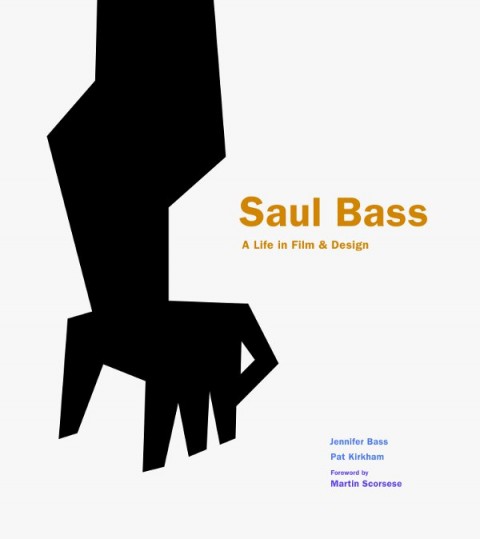
Lyra Kilston reviews Saul Bass: A Life in Film and Design for the LA Review of Books.

The Well-Made Book — An interesting article by Michael Agresta on how printed books, and their design, are changing in the digital age:

Now, as we move into the digital age, the well-made copy has come to occupy a familiar, almost nostalgic middle ground between the aura of an original and the ghostly quality of a computer file. A mass-produced paper book, though bulkier and more expensive, may continue to be more desirable because it carries with it this material presence. And presence means something—or it can, at least, in the hands of a good book designer.

Innards and Interiors — The Bauhaus: Art as Life exhibition at the Barbican reviewed at The Financial Times:

Paul Klee favoured risotto with steamed calf’s heart, sour liver and lung ragout: in the kitchen, as in his paintings, he was obsessed with innards, interiors, reconfiguring essential forms. Wassily Kandinsky lived in a streamlined white apartment but, incongruously, cooked on a “kamin” – a Russian wood-burning stove made from heavily ornamented black iron. Josef Albers claimed “I paint the way I spread butter on pumpernickel” – robustly and straightforwardly; he called the colour mixes in his “Homage to the Square” series his “recipes”. And Swiss painter and vegetarian zealot Johannes Itten was driven out of Weimar because he hijacked the Bauhaus kitchen and alienated director Walter Gropius by producing only “uncooked mush smothered in garlic”. The Barbican’s new exhibition… gives a whole new flavour to the story of the art school long seen to embody sober, purist German modernism.

Weird Comics — Local small press publisher Annie Koyama profiled in the Quill & Quire:

Koyama says her strategy for the year ahead is “to throw everything against the wall and see what sticks,” but she acknowledges her biggest business challenge is twofold: increasing print runs to improve margins and lining up reliable distribution for the fledgling firm. After working around the clock for nearly four years… she says her goal now is to create a sustainable enterprise that can continue to fulfill its artist-centric mandate… She’s also considering expanding into children’s books. But not in the way you’d expect. “While there are a million good kids’ books out there, there aren’t a million good kids’ comics I can see – especially not weird ones,” she says.

And finally…

Maurice Sendak, “author of splendid nightmares” has passed away aged 83. The New Yorker has made a short Art Spiegelman comic about meeting Sendak available online. And here is a wonderful interview with author from December last year:

Comments closed

Midweek Miscellany

Comic Book Commodities — Cartoonist and illustrator Dave Gibbons, best known for his work on Watchmen with Alan Moore, interviewed at The Huffington Post:

[E]conomically comics are in a really difficult place because the monthly American comic books which are maybe 22 pages of story, now can cost $4, which is £3, and that is a lot of money for really such a small amount of entertainment when you think what you can get on the app store or you know the several hours of entertainment you can get at the movies or whatever for not dissimilar sums of money.

So, I think what happens nowadays is actually people ‘as they say,’ wait for the trade collection. But the way I can see it polarising even more is that you’ll then want is something that is more than just the reading experience, you’ll want something that is a beautiful object in it’s own right that has extras, that has maybe artist notes or writers’ notes, backup material, is really nicely bound, is beautifully printed, so you know I can see those two kind of commodities diverging even further in the future.

Gibbons discusses his contribution to Watchmen in the nicely bound, beautifully printed book Watching the Watchmen.

Let the Medium Do the Work — Screenwriter Charlie Kaufman (Being John Malkovich) on storytelling:

[I]t’s very important that what you do is specific to the medium in which you’re doing it, and that you utilise what is specific about that medium to do the work. And if you can’t think about why it should be done this way, then it doesn’t need to be done.

CRAZY – A wonderful interview with Maurice Sendak, author of Where the Wild Things Are and In the Night Kitchen, in The Guardian:

“I’m totally crazy, I know that. I don’t say that to be a smartass, but I know that that’s the very essence of what makes my work good. And I know my work is good. Not everybody likes it, that’s fine. I don’t do it for everybody. Or anybody. I do it because I can’t not do it.” You can’t be that crazy, I say: you managed to stay in one relationship for half a century. “Yes! And he was – well. He was a man who loved music and reading. He never smoked and he died of lung cancer, utterly ridiculous. I had that friendship for a long, long time.”

And finally…

One Step Ahead of the Scrap DealersThe Globe and Mail obituary for typographer and book designer Glenn Goluska who died of lung cancer on Aug. 13 in Montreal at the age of 64:

In the mid-1970s, Glenn Goluska was usually one step ahead of the scrap dealers.

The typographer and his buddies would be on the prowl in Toronto for cast-aside printing equipment. Specifically, they were picking up letterpress, its type made from carved wood or cast metal that left unique marks when smashed on to paper. The technique had stopped being economical for large printing outfits and had been on a 20-year decline, replaced by offset printing, which used a photographic process. This left all kinds of wood and metal cuts, linotype and letterpress machines available for a song.

For Goluska and his friends, here were historic pieces of art-making tools and all they needed to do was gather a few guys and find a truck with reliable suspension.

R. I. P.

Comments closed

Missed Things: Wednesday

Henry Sene Yee, Creative Director of Picador, discusses the elegantly understated cover design for Time by Eva Hoffman, the latest addition to Picador’s BIG IDEAS // small books series.

And I’ve mentioned this before but it bears repeating: Picador are putting their catalogues — and, therefore, their outstanding cover designs — on their Facebook page.

Logicomix by Apostolos Doxiadis and Christos H. Papadimitriou reviewed in The New York TimesThe Guardian, and FT. It sounds kind of awesome. The book also has a nice website with lots of content.

The Inevitable Frontier — Jennifer de Guzman, editor-in-chief at the independent comics publisher SLG Publishing, on digital comics in PW:

Right now, sales from digital comics aren’t going to mean we can pack up print publishing. Not even close. But despite being in the midst of it rather than a wide-eyed observer, I can see that in the near future digital comics are going to be playing a bigger role for all publishers than they do now. And it’s better to be so integrated in the change that you don’t notice that it’s happening than to find yourself left behind and marveling at “the things they can do now.”

“Issues” — A less than warm reception for the Kindle in Australia:

Jeremy Fisher, executive director of the Australian Society of Authors, said he was advising his 3000 members to resist publishing through the Kindle.

“As I understand at this point in time, Amazon asks for a very, very big discount from publishers for their works to be included in Kindle so that the return coming back to the publisher is smaller and the return coming back to the author is smaller,” he said.

“The person making the most money is Amazon.”

Hmm… Yes, well, moving swiftly on…

Jacket Whys — A really nice blog about children’s and YA book covers.

And on the subject of kids books…

Who The Wild Things Are –Artist Roger White looks at the inspiration Maurice Sendak’s Wild Things for the Boston Globe:

The Wild Things looked like nothing ever seen in a children’s book. Rendered in simple ink-hatch over watercolor sketches, they evoked a perfect mixture of proto-adult dread and anarchic, childlike glee – an eternal, platonic form of the kindly monster. From the moment they appeared in 1964, they seemed bracingly and completely original. But in fact Sendak’s monsters had a long series of ancestors and descendants…

But according to Bruce Handy, deputy editor at Vanity Fair, (and his children) kids don’t actually like Where the Wild Things Are… Umm… What?

Comments closed