Skip to content

Tag: longreads

Gerhard Steidl is Making Books an Art Form

Photograph by Mark Peckmezian for The New Yorker

Rebecca Mead’s long profile of publisher Gerhard Steidl for The New Yorker is a wonderful, fascinating read:

Each Steidl title is unique, printed with a bespoke combination of inks and papers. But to the informed eye, and the informed hand, a Steidl book is as distinctive as an Eggleston photograph. Unlike another German art publisher, Taschen—which is known for reproducing risqué images by the likes of Helmut Newton in enormous formats that would crush most coffee tables to splinters—Steidl produces books that invite holding and reading. Steidl dislikes the shiny paper that is often found in photography books, and prefers to use uncoated paper, even though it takes longer to dry and thus makes a printing cycle more expensive. He opts for understatement even with projects that would tempt other publishers to be ostentatious. “Exposed,” a collection of portraits of famous people by Bryan Adams, the rock star turned photographer, has no image on its cover. Bound in blue cloth, the book looks as if it might be found on a shelf in an academic library. Steidl wants his creations to satisfy all the senses. When he first opens a book, he holds it up close to his nose and smells it, like a sommelier assessing a glass of wine. High-quality papers and inks smell organic, he says, not chemical. To the uninitiated, a Steidl book smells rather like a just-opened box of children’s crayons.

I love this part about the attention to the detail:

Designing a book’s packaging is a process Steidl particularly relishes. “He wants to pick the cover, he wants to pick the endpapers,” [Robert] Polidori told me. “He treasures this limited one-on-one time with the artist. It’s almost a love act.” Sometimes Steidl indulges in a brightly colored ribbon for a bookmark, like statement socks worn with a formal suit. He pays attention to elements that barely register with most readers, such as the head and tail bands—colored silk placed where the pages attach to the spine. “It’s a tiny bit of fashion,” Steidl said. “With Karl [Lagerfeld], it is the buttons. With me, it is the head and tail bands.” For Gossage, he chose black bands and black endpaper, to contrast with the colored ink on the pages. The endpaper was made from cotton, and would cost thirty cents per book, as opposed to the seven cents it would cost if he used offset paper. “Using the cheaper one saves significant money for the shareholders,” he said. “But I am the only shareholder.”

Comments closed

The Rise of Roxane Gay

At Brooklyn magazineMolly McArdle profiles Roxane Gay, author of An Untamed State, Bad Feminist and, most recently, Difficult Women

“What more could I say that I haven’t already said?” Gay asks in an conversation about publishing and diversity we had via email last year. Though the industry-wide dialogue has in many ways gotten stuck (as a lot of things that benefit white people do)—mired by a lack of willingness to do the work, commit the resources—Gay’s own efforts changed the terms of the discussion.

“She’s given us a wonderful model,” Saeed Jones says over the phone. “She could just be a great writer, that would be more than enough, but she’s gone beyond that,” he explains. “She’s showing us how to navigate difficult online spaces. She’s editing and championing people.”

He knows from experience. In 2012 Gay edited Jones’s essay “How Men Fight for Their Lives” for The Rumpus, which became the germ (and the title) for the memoir he’s now working on. “When people read that essay and feel surprised or moved by the candor or the vulnerability, it’s because Roxane made me feel safe,” Jones explains. She went on to invite him to contribute to a special issue of Guernicaa piece that became part of his award-winning debut collection of poetry, Prelude to Bruise. They’ve since shared the stage several times, most recently in front of a sold out audience at the 92nd Street Y this February. “Roxane is the kind of editor who says, ‘You are doing something important. Keep doing it.’ For writers particularly interested in examining gender, the body, power, race, identity—that is an essential and all too rare experience. There are not too many people out there you can trust. With Roxane,” he says, “people feel like themselves.”

Comments closed

From Thomas Mann to Amazon — The Art of Literary Publishing in New York

The Millions has a long, but very interesting (and, at times, surprisingly blunt) essay by veteran Doubleday editor Gerald Howard on editing and literary publishing in New York:

At the simplest, most basic level, I’ve been reading for a living for 37 years. I arrived at New American Library with a literary and intellectual sensibility formed by the unruly rebellions of the ’60s and the spiritual deflations of the ’70s, with a taste for the novelists and thinkers who had either helped to cause or best reflected and interpreted those rebellions and deflations. I’ve read thousands of books and proposals since then, and I believe I am a better reader than I was at age 27 — I know more because I’ve read more and my judgments are (I sure hope) better informed and more mature. But at the primal level where reader meets text and experiences emotions ranging from boredom and impatience to I-love-this-and-have-to-have-to-publish-it excitement, I think I am still that young man in the hunt and on the make, always searching for the big wow. This process takes place in the private arena of the mind and is entirely unrelated to the corporate arrangements of my employer. It is, quite literally, where I live, where I feel I am most myself.

As for the editing of those books that wow me when happy circumstances dictate that I get to acquire them, that process too takes place in a private arena. When I encounter a sentence that is inelegant or ungrammatical or inefficient or ambiguous in meaning, or a scene in a novel that is implausible or overdone or superfluous, or a plot that drags or goes off course or beggars credulity, or a line of exposition that falls short of the necessary clarity, or feel that some subject is missing and requires coverage, I point those things out to the author and with a carefully calculated mixture of firmness and solicitude suggest ways they might be remedied. I do this usually at nights and on weekends, sometimes on my bus ride to and from work, very occasionally in my office on slow days with my door closed (yes, I have an office with a door that closes), with a complete absence of business calculation beyond the largest context — that a book that is bad or just not good enough is a book that will embarrass me and my employer and be poorly received and will not sell.

But as I read those submissions and edit those manuscripts, on another cognitive plane I am reality testing what I am reading. What other books — the fabled and often tiresome “comp titles” — are like this one, and how did those books sell? (We are always fighting the last war.) Is it too similar to something we published recently or are publishing in the near future, or to a book some other house has or shortly will publish? Are there visual images in the book that might be utilized on the cover? What writers of note can I bug for prepublication blurbs? Is there something about the author, some intriguing or unusual backstory, some charisma radiating off the page (and maybe the author photo? Don’t act so shocked) that suggests that he or she will be a publicity asset? What might a reasonable advance be, given the amounts that have been paid recently for similar books, or might reason for some reason be thrown out the window? (A friend and colleague of mine refers to this feeling as “Let’s get stupid.” More on this matter shortly.) What colleagues in the company, in the editorial department, in marketing, publicity, and sales, could I ask to read the book to drum up support for it? What is my “handle” going to be — the phrases or brief sentences that briskly encapsulate a book’s subject matter and commercial appeal? These and all sorts of other questions will be popping up in my brain, and inevitably there is some crosstalk and bleed-through between the two cognitive spheres. If you want total purity in these matters, go join an Irish monastery and work on illuminated manuscripts, not a New York publishing house. Or at the very least a quiet and scholarly and well-endowed university press.

Well worth reading from beginning to end, the essay is an excerpt from the forthcoming Literary Publishing in the Twenty-First Century edited by Travis Kurowski, Wayne Miller, and Kevin Prufer (to be published by Milkweed Editions in April 2016), which on this evidence of this alone will be essential reading for publishing folks1.

Comments closed

Where Pilgrims Arrive in Bewilderment

let us compare

In a long profile for the Globe and Mail, book review editor Mark Medley visits Nicky Drumbolis owner of the singular Letters Bookshop in Thunder Bay:

Walking through the store is an overwhelming experience. Everywhere I look I spot something I’ve never seen before and will probably never see again. I could have picked a single shelf of a single bookcase and spent my entire visit studying its contents. Not that Mr. Drumbolis would have let me do that. As we amble up and down the aisles, he is constantly narrating, constantly picking out items at random and telling their story – how he acquired it, or who published it, or whatever happened to its author – which often leads into another, entirely different story, and another book, and so on, until I can’t remember which book started the conversation in the first place.

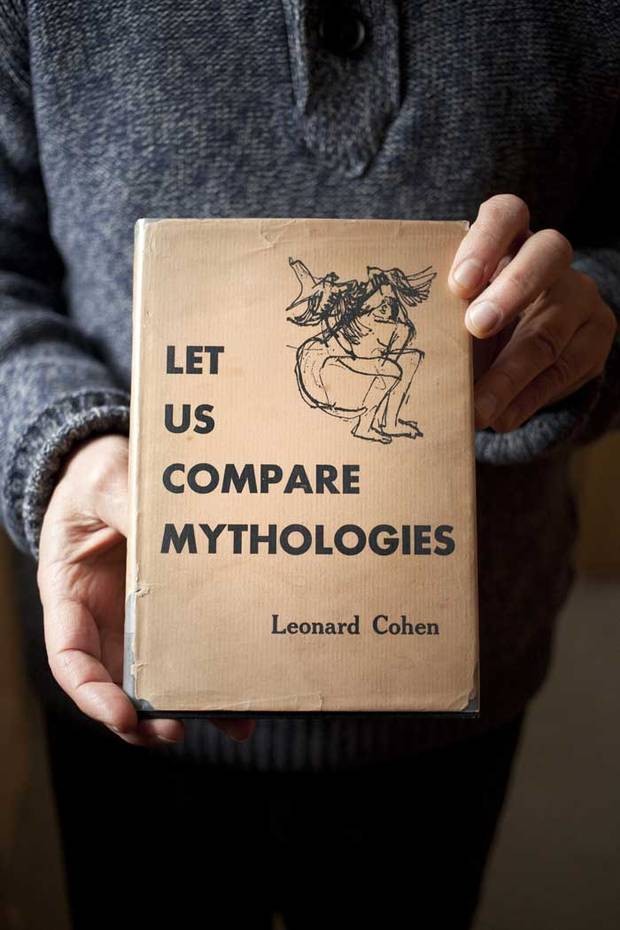
He throws around words like “shit kicker” or “heavyweight” to describe books he particularly loves, his voice growing progressively louder and more animated, the longer he talks. He pulls out a first edition of Leonard Cohen’s 1956 debut Let Us Compare Mythologies, part of what is probably the most extensive sampling in existence of Montreal’s legendary Contact Press, which helped to launch Margaret Atwood, Irving Layton, Raymond Souster and others. Now here’s his Franz Kafka collection, and over here Ezra Pound, and Charles Bukowski, and a few remaining titles from his collection of William S. Burroughs, most of which he sold years ago to David Cronenberg around the time the director was adapting the Burroughs novel, Naked Lunch.

“Henry James,” he says, tapping a shelf filled with first editions of the American master. “The guy I wanted to read cover to cover before I died. I don’t think I’ll get to it now.”

Comments closed

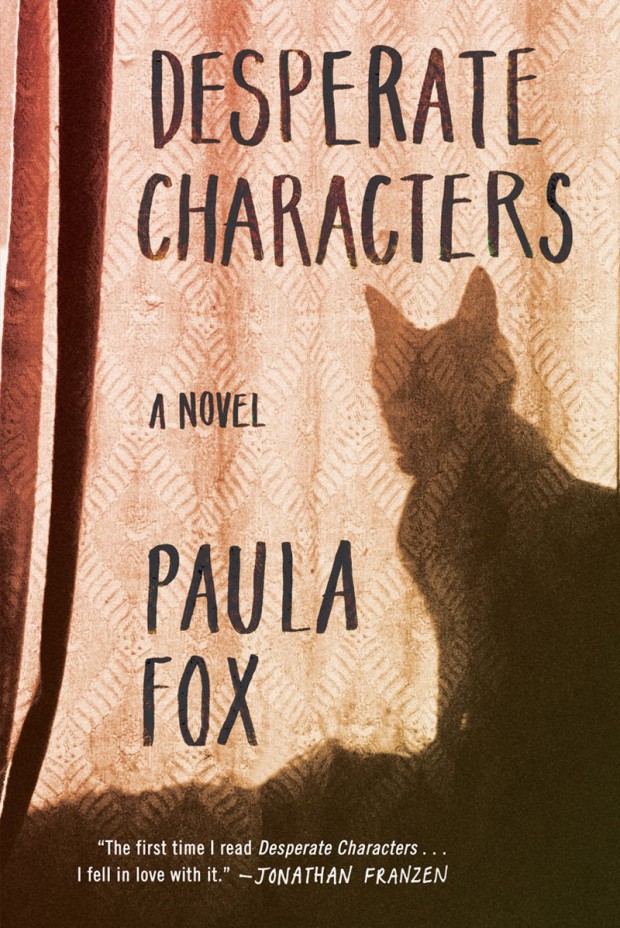
The Truth of Life: Paula Fox on Desperate Characters

desperate characters

At Longreads, Sari Botton talks to author Paula Fox talks about the latest reissue of her 1970 novel Desperate Characters:

It’s for all kinds of tension, not just racial, but class—the poor, who don’t have money or success, against the well-to-do. There are all these antagonisms… We live by pressing our palms against the skulls of the people whom we climb over. The sense of that is very strong in human society. Sometimes it’s based on possessions, or looks, or color, or experience, or history, and all these various things that we make judgments out of.

If you haven’t read Desperate Characters — and it’s a pretty perfect read if you’re stuck in the city this summer — Longreads also has an excerpt.

The cover of the W. W. Norton’s new edition (pictured above) was designed by Yang Kim.

1 Comment

The Sprawling, Obsessive Career of Fritz Lang

As part of the The Dissolve’s ‘Career View‘ series,  Noel Murray surveys the work of German-American film director Fritz Lang:

Over his first two decades as a movie director, Lang was responsible for some of the most memorable images in cinema’s early history, but he’d never filmed anything as shocking as one shot at the start of his 1941 thriller Man Hunt. As renowned hunter Alan Thorndike (Walter Pidgeon) settles into a shooting position on a brushy hill, he looks through his telescopic sight at his target: Adolf Hitler. Given that the United States wasn’t yet involved in World War II when Man Hunt was made (or even when it was released), even the implication that a movie hero might assassinate Hitler was a major provocation, which put Lang in a bit of hot water with the U.S. government and the gatekeepers of the industry’s production code. But Lang held firm, and Man Hunt set the tone for all the war movies he’d make in the 1940s. Even after America entered the war—and even after the war was over—Lang made action movies where the enemy wasn’t some vague antagonist in a different-colored uniform. In Lang’s war films, the villains frequently looked and talked a lot like the heroes, and posed a real, specific threat to ordinary citizens, not just soldiers.

It’s a long post — it spans a 40-year career! — but a really great read if you are interested in film history. I really hope The Dissolve publish more of these.

Comments closed