Skip to content

Tag: london

Teju Cole Artangel Books Podcast

Just to quickly follow up from this post last week, here’s Teju Cole talking to The Guardian about his stay in A Room for London and reading his essay about V.S. Naipaul and Joseph Conrad’s Heart of Darkness:

Guardian Artangel Books Podcast Teju Cole mp3

You can see some of Teju Cole’s photographs (mentioned in the interview) on his Flickr photostream.

Comments closed

Something for the Weekend

Saw this in person for the first time at a bookstore  last night… Gray318’s cover really is outstanding.

Natives on the Boat — Teju Cole, author of Open City, on his stay in the Roi des Belges in London, and an encounter with V.S. Naipaul:

This boat of which I am temporary captain is named the Roi des Belges. In 1890, Joseph Conrad piloted a steamship down the Congo on a boat with the same name. That journey became his inspiration for “Heart of Darkness,” a puzzling novella with nested narrators who unfolded a shadowed, strangled, brutal tale. He wrote it in the last year of the nineteenth century and published it at the beginning of the twentieth. So, this perch on which I sit above the Thames—the sky is blue now, the hundred-and-eighty-degree view of it full of long stratus clouds—this perch in which the city is exposed to me but I am not to it, is an homage to Conrad’s bitter vision. What might it mean when the native pilots the ship? What happens when the ones on the shore, numerous, unindividuated, are white?

See also: Teju Cole’s diary in the Financial Times and an interview with Cole at 3:AM Magazine. (Thanks Peter)

SciFi Now picks 10 of the best Judge Dredd story arcs.

Wood For Our Coffins — Adam Kirsch on the modern rival of fairy tales for Prospect magazine:

fairy tales have a double relationship to poverty. They are poor themselves—in motivation, imagery, description, ambiguity, complexity, everything that makes for literary interest—and they are the products of poverty. This is clear enough from their social and economic premises: they are frequently  tales of hunger and neglect and child abuse. What we remember about Hansel and Gretel is the gingerbread house and the witch in the oven, but it starts out as a portrait of starvation and infanticide: “If we don’t get rid of them, all four of us will starve,” the children’s mother says to their father. “You may as well start planing the wood for our coffins.”

And finally…

Imprint reviews The Lustigs: A Cover Story, 1933-1961, an exhibition of covers designed and illustrated by Alvin and Elaine Lustig opening at the CVA in Saint Paul, Minnesota, next week.

You can see more of the Lustig’s astonishing body of work at the Alvin and Elaine Lustig Flickr Pool

Comments closed

Midweek Miscellany

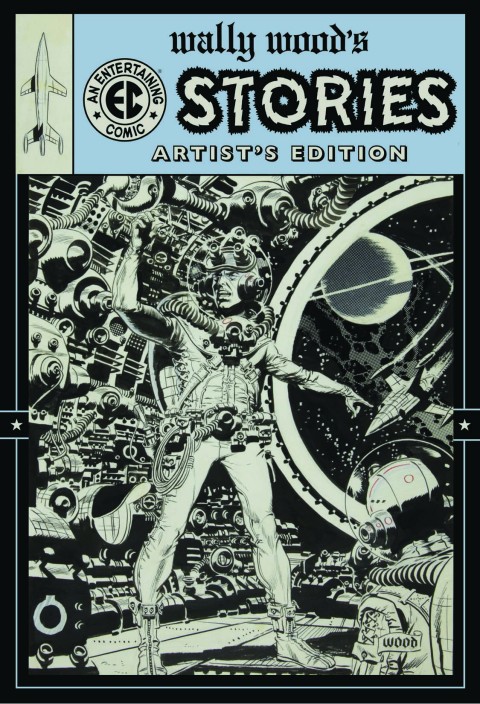
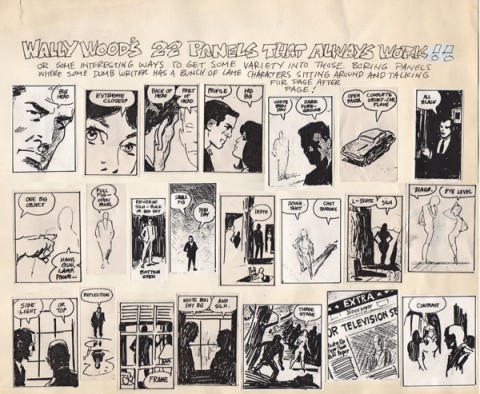
J. David Spurlock on the great Wally Wood at Imprint:

In nearly all of his work – no matter how overworked he was – even when he did risque material, there was always a charm, and he imbued the work with a purity of love for the medium.

And he was a master of every genre. That is one of the things that make him unique. Whether horror for EC, humor for Mad or Plop, war comics for DC or Gold Key, science fiction magazine illustrations, his Wizard King trilogy of fantasy graphic novels, superheroes for Marvel, cheesecake, romance, or westerns, whatever genre one picks, Wood’s contribution is among the finest ever.

Meditations — Dana Stevens on reading Zona, Geoff Dyer’s book about Andrei Tarkovsky’s 1979 film Stalker, while watching the movie:

[If] Zona goes off in a few too many directions, most of them are fascinating enough that we’re happy to zigzag along in the author’s wake. In addition to being a real-time explication of a single movie, Zona is a meditation on movies and time: the way movies change us, and change for us, as we return to them through our lives. Dyer reminisces about seeing Stalker in different decades, in different cities, with different girlfriends, as a young and then a middle-aged man… As he makes his way through Stalker scene by scene, Dyer’s account of what’s happening on screen is constantly being interrupted and informed by associations with the past as well as the present.

See also: Zona reviewed in the New York Times.

Also in the New York Times, author China Miéville on “Apocalyptic London“:

It used to be startling to see a fox in London — impossible not to feel that the city had slipped into a fable. Now you spot them on any late-night jog. In 2011, one of these agents of animal chaos infiltrated the Shard — at 32 London Bridge, the city’s unfinished tallest building — and climbed a thousand feet above the streets to live on builders’ scraps.

At dusk and dawn, green bolts shoot low, as flocks of feral parakeets set about bird business. Walking at dawn in the mud of Wormwood Scrubs, a rough, wild common next to the prison of the same name, we approach a screaming copse. Incredible flocks of these nonnatives preen and screechingly bicker, overlooking the glow of waking London.

And finally… A lovely piece the in The Daily Telegraph on Word on the Water, a Dutch barge selling second-hand books in London:

“We live in times where young people have Debussy moustaches, and listen to Sixties and Seventies music. They are interested in the past. I don’t remember there being a youth cult before where the past was so fascinating. There’s a hunger for authenticity … Younger people are becoming interested in things that machines can’t do: talent.”

1 Comment

Midweek Miscellany

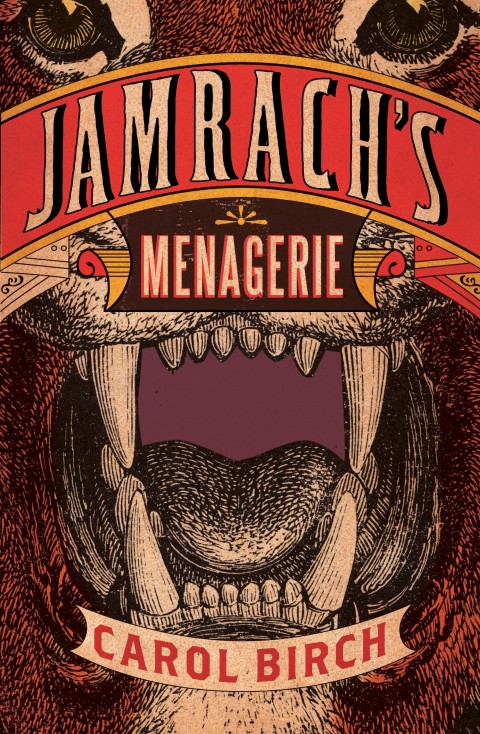
Creative Review takes  a look at the cover designs for the books shortlisted for the Booker Prize, including this beauty by the mighty Jon Gray for Jamrach’s Menagerie by Carol Birch.

Let’s Get Critical — Long-form cultural criticism, essays and reviews, curated by architecture and design critic Alexandra Lange.

Never Fashionable, Always in Style — Costume designer Jacqueline Durran on tailored suits worn by the spies in the film adaptation of Tinker, Tailor, Soldier, Spy, for The Guardian:

“I thought that lots of these middle-aged men had bought suits 10 or 15 years ago and stuck with them,” she says. “I would look at a character and try to work out where they had bought their suit.”

She decided that everything in the film could have been bought from shops within half a mile of Piccadilly in London: “Things from Savile Row, Jermyn Street, Fortnum & Mason, Burlington Arcade – one of those upper-middle-class shops that are never fashionable but always do a certain kind of clothing.”

(Related: The real-life spies of Tinker Tailor Soldier Spy)

Also in The Guardian… Michael Prodger reviews Nikolaus Pevsner: The Life by Susie Harries:

Whereas art history in Germany was a creditable discipline of long standing, in England it was a new subject – class-ridden, based on connoisseurship and, he thought, “at its worst, an activity a bit like stamp collecting”. It was this fustian world that Pevsner and other émigrés such as Ernst Gombrich, Rudolf Wittkower and Edgar Wind were to transform.

Pevsner had a hard time fitting in, not least because he was a modernist, something the British found temperamentally uncongenial. For Pevsner, though, it represented an antidote to art for art’s sake and he saw it as an appropriate expression of the spirit of the age. Art, he believed, should be functional and of service, and architecture was the most important of the arts because it was the most closely connected with human life.

And finally…

Pathos and Pantomime — Peter Ackroyd choose five books about London:

London has always had the reputation of being a city of contrast, where pathos and pantomime meet. That is true in the work of Charles Dickens and Charlie Chaplin, for example. And it is certainly true in the work of [William] Blake. So you can see patterns of the London imagination at work. It is a world of theatre. The grand theatre of the human spirit which London most readily represents, and there is scenic detail and movement and passion and the action of crowds. It is quite different from other cities.

Comments closed

Midweek Miscellany

Juggling — The multi-tasking Charlotte Strick,  art editor of The Paris Review, art director at Faber & Faber and Farrar, Straus & Giroux, and book designer,  interviewed at From The Desk Of…

Genre — China Miéville, on his new book Embassytown and genre fiction in The Guardian:

“I love genres; I think they are fascinating. My issue with litfic is not that it is a genre but that (a) it doesn’t think it is and (b) it thinks it’s ipso facto better than all the ones that are genres. Literary fiction of that ilk – insular, socially and psychologically hermetic, neurotically backslapping and self-congratulatory about a certain milieu, disaggregated from any estrangement or rubbing of aesthetics against the grain – is in poor shape.”

Invasion by the Virtual — Iain Sinclair discusses London and five novels that capture the spirit and history of city:

When the railways were first put in, there was devastation, because there were so many competing companies who just ripped up houses right, left, and centre. In the name of catching the spirit of the age and indulging in this technological process (and the idea of progress through science), London was savagely remade. It took a long time to absorb, recover and discover itself through that. At the moment, we’re in this sort of management age — an age of the virtual — in which you can change reality by looking at digitised, computer-generated images and projecting a fantastic city of the future, like a science fiction. People have come to believe that this is reality, even though they are contradicted by observation, which shows you devastated fields, radioactive materials buried in the ground that have been ripped up fast, and absolute destruction… So it is a devastating moment for the city, which I don’t think has ever been under such a prolonged form of invasion by the virtual.

Franzen’s Ugly Americans — Tim Parks on reading Jonathan Franzen’s Freedom in Europe (and, incidentally, the work Swiss novelist Peter Stamm, author of Seven Years, which sounds great) (via Bookslut):

Freedom’s failings are interesting in so far as they deepen the mystery of the book’s international success. It’s one thing for the Americans to hype and canonize one of their favorite authors, but why do the Europeans buy into it? Ever anxious that they need to understand America, fascinated by its glamor and power, Europeans are perhaps attracted to those American novels that explain everything: Roth’s American Pastoral, DeLillo’s Underworld. More than a novel by an American they want The Great American Novel. But of course Europeans also resent American world hegemony and feel (still and no doubt wrongly) superior culturally.

And finally…

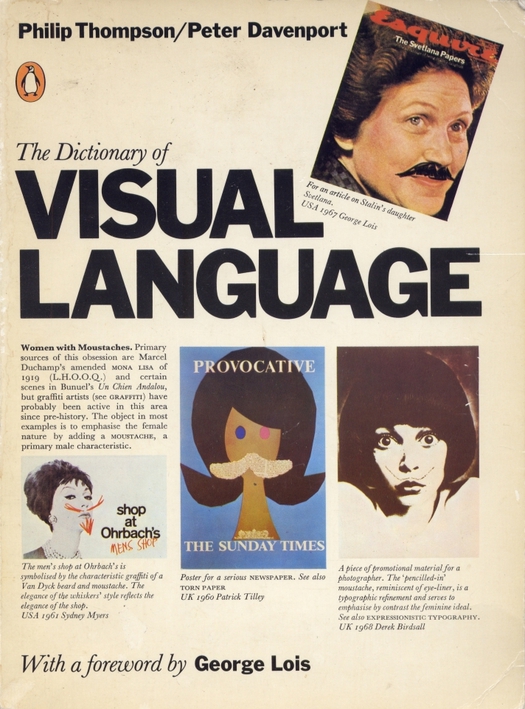
20 Books Every Graphic Designer Should Read and an interview with Rick Poynor, founding editor of Eye and a co-founder of Design Observer, who compiled the list, at Designers and Books:

Books always point to other books. A bookshop, like a library, is a fantastic, spatially organized, easily navigable source of vast quantities of interconnected information about what exists for you to discover and know. If someone devised an online virtual space that allowed you to do this kind of rapid, effortless, multifocal, visual, and spatial browsing—perhaps someone has, though it certainly isn’t Amazon or the iPad App Store—we’d applaud them for a brilliant new concept. But these marvelous spaces already exist, at least for the time being, right there in your local shopping street.

art editor of The Paris Review and an award-winning designer known for creating the jackets for books by Roberto Bolaño, Lydia Davis, and Jonathan Franzen, among many others. She is also art director of Faber & Faber, Inc. and of the paperback line at Farrar, Straus and Giroux.art editor of The Paris Review, art director of Faber & Faber and at Farrar, Straus & Giroux,
Comments closed