Skip to content

Tag: lettering

Something for the Weekend

Fabulous Fury — Evie Nagy reviews Tarpé Mills & Miss Fury: Sensational Sundays 1944–1949 for The LA Review of Books:

Though Mills ostensibly hid her gender and wrote a high-adventure comic rife with guy stuff like smuggling, espionage, mad science, and gruesome murders, Miss Fury has much in it that seems designed to appeal to women as well. For one thing, the outfits are fabulous. As Robbins suggests, Mills clearly took great pleasure in dressing Marla, scheming villainess Erica Von Kampf, and other characters in elaborate gowns, lingerie, and smart but finely detailed sportswear. Modern superhero comics tend to focus on the intricacies of high-tech costumes at the expense of civilian clothes; Miss Fury, by contrast, is midcentury clothes porn.

Fucking Great — British film director Beeban Kidron remembers Magnum photographer Eve Arnold who died recently aged 99:

She was an early adopter of colour – favouring a thick negative with rich hues and simple compositions – and she ruthlessly edited her own work with a wicked sense of humour. “It’s not that we’re so great, it’s that the others are so fucking mediocre.”

See also:

A slide show of Eve Arnold’s work at The Guardian.

Eve Arnold remembered in The Guardian, The Telegraph, The Financial Times, The New York Times and The Economist.

The best Typefaces of 2011 from FontShop and the most popular fonts of the year from MyFonts.

Forward! — Stephen Page, chief executive of Faber & Faber, writing for The Guardian on the way ahead in publishing:

[T]he men and women engaged in publishing need to be bold and exuberant. This is an extraordinary age for writing and reading, and it seems to me that this endeavour will go better if it’s done with a sense of purpose and pleasure, rather than defensively. It won’t turn out well for everyone currently in the business, but so what? If publishing is useful and creates value then it will be of value, whoever is doing it.

And finally…

A lovely profile of  Peter Hardwicke, one of the last traditional signwriters in London’s East End, in Spitalfields Life:

I am an old school signwriter that likes to talk directly to the client to select the fonts and the colours. I’ve found it a rewarding way to work, dealing with independent shopkeepers. I like to look at the built environment and choose fonts that are sympathetic to the architecture and the surrounding cityscape. I look at the other shops and I do research…I think people are bored with computer generated artwork…even my younger clients, they’d rather have it  done professionally than use stick on letters – it shows they’ve got taste.

You can find an earlier profile of Peter here and see an archive of his work on Flickr. (Thx Monique)


Comments closed
Ken Barber, House Industries

In this fascinating interview, Gestalten.tv talks to Ken Barber, lead letterer at the amazing House Industries, about lettering, typography, and font design:

1 Comment

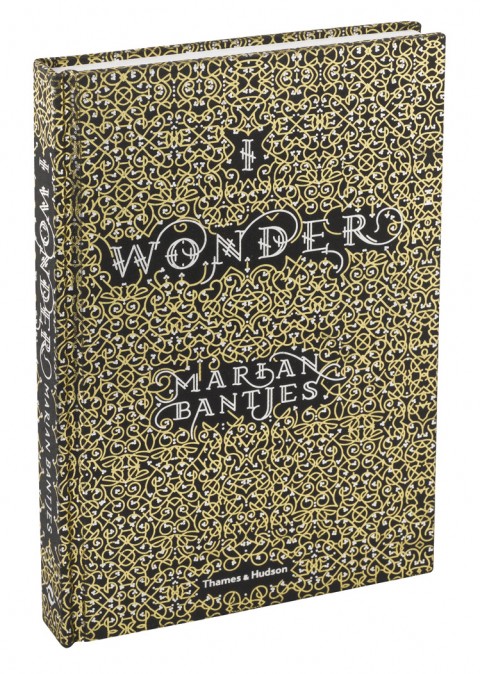
Marian Bantjes | Creative Inspirations

Lynda.com have made a full-length documentary about graphic artist Marian Bantjes. Currently it’s only available to members, but here is a short trailer for the film:

2 Comments

A History of the Title Sequence

A History of the Title Sequence is a short film by Jurjen Versteeg. It charts the development of film title sequences by displaying the names of influential title designers in the style of their own work. In other words, it is a film about title sequences that looks like a title sequence. How great is that?

The film references the following designers and their titles:

Georges Méliès, Un Voyage Dans La Lune; Saul Bass, Psycho; Maurice Binder, Dr. No; Stephen Frankfurt, To Kill A Mockingbird; Pablo Ferro, Dr. Strangelove; Richard Greenberg, Alien; Kyle Cooper, Seven; Danny Yount, Kiss Kiss Bang Bang and Sherlock Holmes.

Comments closed

Something for the Weekend

An interview with Toronto based lettering designer Ian Brignell at The Case and Point:

I’m influenced by just about everything, but I especially like the work that was done on packages from the 19th and early 20th century. I also enjoy amateur hand-lettered signs, since they often contain very quirky and original details that I would never think of. I have to mention that during college I saw a book with some examples of Herb Lubalin’s lettering work, and this was one of the moments that really made me want to pursue lettering for a living.

All Things Considered — An interview with Nate Burgos about his Rare Book Feast video project:

I enjoy writing about anyone and anything which interest me on my design-related blog, an all-people-and-things-considered destination. Then there’s tweeting, lots of it. Twitter is newsprint. Designer Lorraine Wild said, “You have to be interested in culture to design for it.”

Dull But DurableThe Guardian‘s Justin McGuirk on Soviet design and a new book on the subject called Made in Russia by Michael Idov:

There were some genuinely classic designs… The Lomo camera, with its super-saturated film, is still hugely popular in an otherwise digital world. The avos shopping bag, essentially a string vest with handles, was ubiquitous and remains far preferable to plastic bags, just as the collapsible portable cup is preferable to millions of plastic and polystyrene ones. The ribbed drinking glass, meanwhile, and the Saturna and Raketa vacuum cleaners, simply lasted for ever. We may mock Soviet design, but there are lessons to heed from it. Durability, for one. In our disposable culture, rapid replacement cycles have almost inured us to the idea that nothing lasts. Such is the price, apparently, of free enterprise and consumer choice.

Secretly Young — John le Carré’s keynote speech at the Think German Conference earlier this month (via Bookslut):

I was young when I started writing about George Smiley — twenty-eight — and Smiley was already old, a proxy father. But Smiley’s journey through the novel, despite his age, is the journey of a young man’s self-discovery. Underneath his inconspicuous exterior, he is a sensitive man still growing up, still looking for answers, and for the experience that delivers them.

In short: he is secretly young.

And Smiley’s private journey — from this first novel, right through to his last — for me at least, with the advantage of hindsight and no longer the responsibility of writing about him — is a single Bildungsroman that leads him through disappointments, mistaken loves, failures and occasional successes, to some kind of ultimate maturity: that is to say, to the point when he discovers that the object of his life’s search is neither the absolute enemy of his imagination, nor the absolute answer to his quest.

See also: Tom McCarthy, talks about his novels Remainder and C, and his life in Prague and Berlin before becoming a published writer, at The Days of Yore:

Your book is being held up as, you know, avant-garde, or as an anti-novel, or as anti-realist… None of these seem quite right. My understanding of the avant-garde is as a historical thing, it had a moment and it has an implication for now, but it’s almost like saying, “Are you leading the French revolution?” “No!” [Laughs.] If you pay too much attention, then when you sit down to write you’ve been primed to think: “Okay, so I’m being avant-garde; how do I be avant-garde?”

I don’t know exactly where I’m going next, but I don’t think it’ll be anything that blatantly looks either avant-garde or not avant-garde or realist or not realist.

And finally, seeing as it’s Friday…

A Pixaresque animated homage to the late Dave Stevens to mark the 20th anniversary of the film adaptation of his comic The Rocketeer:

(via Robot 6)

Comments closed

Midweek Miscellany

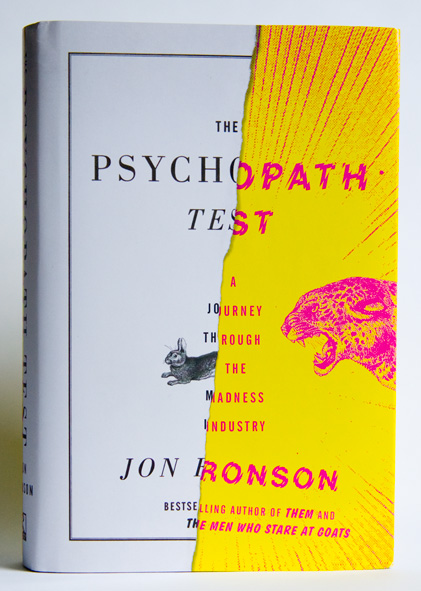
Half Crazy — Matt Dorfman on his great book cover design for The Psychopath Test by Jon Ronson, published by Riverhead Books:

Riverhead did not skimp on the production touches for this one. They sprung for a combination gritty matte finish (which covers the white paper portions of the jacket) and a shiny gloss for the yellow/magenta “crazy” half, thereby giving your sense of touch a noticeable edge if you find yourself blindly scanning your shelf for this book in a dark room (which I have done).

The Intimate Orwell — Simon Leys reviews Diaries by George Orwell, edited by Peter Davison, and George Orwell: A Life in Letters also edited and annotated by Davison, for the NYRB:

From the very start, literature was always Orwell’s first concern. This is constantly reflected in his correspondence: since early childhood “I always knew I wanted to write.” This statement is repeated in various forms, all through the years, till the end. But it took him a long time (and incredibly hard work) to discover what to write and how to write it. (His first literary attempt was a long poem, eventually discarded.) Writing novels became his dominant passion—and an accursed ordeal: “writing a novel is agony.” He finally concluded (some would say accurately), “I am not a real novelist.” And yet shortly before he died he was still excitedly announcing to his friend and publisher Fredric Warburg, “I have a stunning idea for a very short novel.”

Investigative Self-Repair — Author James Lasdun (It’s Beginning to Hurt) reviews Edward St. Aubyn’s latest semi-autobiographical Patrick Melrose novel At Last for The Guardian:

This act of investigative self-repair has all along been the underlying project of these extraordinary novels. It is the source of their urgent emotional intensity, and the determining principle of their construction. Not much gets into these books that doesn’t bear directly on Patrick’s predicament. Exposition is kept to a minimum; there are few descriptive passages, no digressions. For all their brilliant social satire, they are closer to the tight, ritualistic poetic drama of another era than the expansive comic fiction of our own.

And finally…

The General Specialist — Designer, illustrator, and letterer Jessica Hische talks to Method & Craft:

I love learning about new things whether or not they directly connect to how I earn a living and I think that this desire to pay attention to related industries is one of the reasons why I’m a figure in the design community. It’s by learning about many things that you’re able to understand specialization—that design is broken into countless micro-industries. If you don’t understand the differences between them (or acknowledge that they exist), there is no way for you to find your own specialized niche with in it.

Comments closed

Going Solo: Starting Your Own Design Studio

Going Solo is a neat (not entirely safe for work) stop frame animation by South African design boutique Studio Botes sharing advice from a range of international designers on starting your own business:

(via Quipsologies)

Comments closed