Skip to content

Tag: league of dans

Something for the Weekend

A lovely new cover design by Dan Mogford for All Over the Map by Michael Sorkin (Verso Books).

In an epic two part interview for Bomb Magazine, George Saunders, author of Pastoralia, talks about writing with Patrick Dacey.

From part one:

[O]ne of the challenges of the writing life is to find new things to say and/or new ways to say them. And this is a paradox, because when you write your first book, you actually carve out a great deal of what you’ll end up working with for the rest of your life… [T]hat’s genuinely exciting. But then there’s the next 60 years to get through (!).

From part two:

Sometimes when I read new fiction, I feel that the writers of it, myself included, have a somewhat dysfunctional relationship with our own culture. I don’t mean we disapprove of it. I mean that we have absorbed so much habitual disapproval of it that we are no longer able to see it, and therefore are unable to disapprove of it properly. How can you disapprove (or approve) of something you no longer see? If your palette of possible modes of representation has been habitually narrowed and restricted (to the edgy, the snarky, the hip, etc., etc.), if that palette has been shorn of, say, the spiritual, the ineffable, the earnest, the mysterious—of awe, wonder, humility, the truly unanswerable questions—then there isn’t much hope of any real newness there.

Just as an aside, I love this cover for Pastoralia (I’m not sure who the designer is though. Anyone?):

Mom — A short interview with Gene Hackman in GQ. I’ve always been a fan of Hackman’s acting, what I didn’t realise is that he is also a novelist:

Yeah, they tell you not to write about your mom in books, but I don’t know how you keep from doing that.

Fantastic. Hackman’s most recent novel is Payback at Morning Creek.

And finally…

A gallery of vintage Irish book covers from the 1920’s to 1970’s curated by Niall McCormack, a graphic designer based in Dublin. Pictured above: Cuir Síos Air, Fallons. Cover design by Cor Klaasen. (Via The Donut Project).

Comments closed
Something for the Weekend

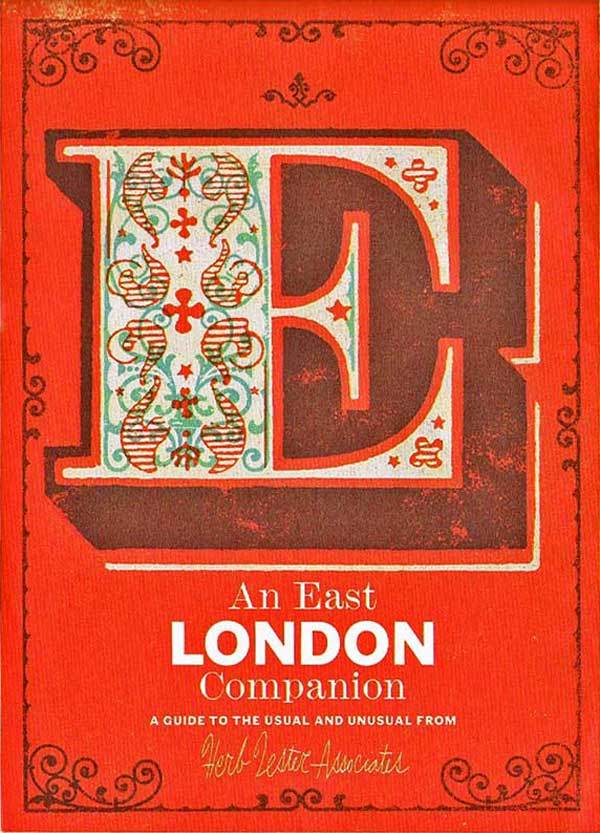
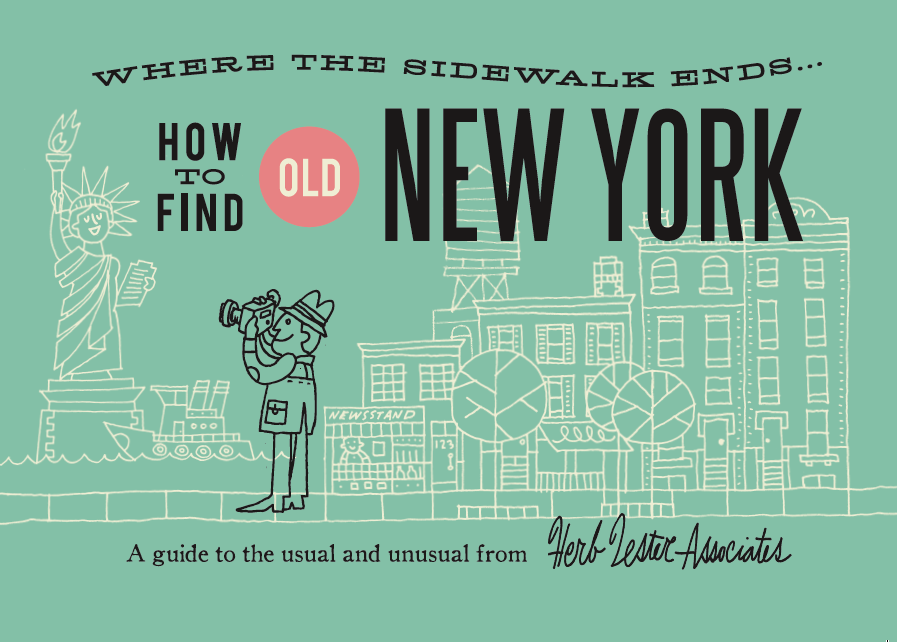
Old Fashioned, Foldy, Inky Things — Daniel Gray (fellow member of the fictional League of Daniels) interviews Ben Olins and Jane Smillie about creating the wonderful Herb Lester city maps:

Old fashioned, foldy, inky things have personality, something which Google maps and web guides lack. But the limitations of the format also force you to be selective, to only recommend things you genuinely believe to be good. It’s a fallacy that comprehensive listings are useful, when really they’re just confusing – it’s so much easier when someone makes a decision for you.

Collecting / Organizing / Cataloging — Steven Heller interviews Greg D’Onofrio and Patricia Belen of Kind Company about DISPLAY, their wonderful a collection of mid-century modern graphic design books and journals:

For us, one of the primary responsibilities of owning a collection is conducting research about the objects we acquire and finding out how they can far exceed their role as inspirational “eye candy”. The combination of collecting / organizing / cataloging has helped us see new, unique perspectives and discover a greater understanding of many of the principles, ideas and theories we so often admire.

See also: Steven Heller (who is apparently waging a one man occupation of the internet) on graphic designers and hoarding:

Design stuff finds refuge in drawers, on shelves, in boxes; we store it in offices, apartments, dens, living rooms, garages and attics (basements are too easily flooded). Along with lint balls, design stuff is often hiding under the bed. Design stuff is mostly paper, but can also be packaging or points-of-purchase displays—it may be small, medium or large. We hang it on walls and pay considerable amounts to have it framed. Uncontrollably, we hunger and devour it in stores, markets, shows and eBay (damn you, eBay!!). Ravenously, we hunger for and devour bargains, but when they don’t materialize, we pay sizable sums to own the more rare and costly stuff (sometimes realizing we owned it when we were children). In fact, knowing that years ago Mom might have thrown out some potential treasure, we are even more conditioned to hoard anything that could be construed as potentially valuable in the future.

Dead End — Cartoonist Joe Sacco on his most recent book, Footnotes in Gaza, in The Believer:

I think, for me, the book ends up being—this is going to sound strange—a dead end. Because I don’t know where to go from here, except to delve into human psychology. I think I understand how history works. I understand why one people are battling another people. I understand that they both want land. But ultimately there’s a level that I haven’t really got to yet. I’m touching on motive in places, like what makes someone pull a trigger? What makes one person beat another one to death? I know we can dehumanize people. Obviously, that’s the main thing. And I know we can fear them enough that we’d kill them before we think they’re going to kill us. There’s all that going on. But I think I need to go in another direction after this book. What am I going to do after this? Keep detailing massacres? For me, personally, I think I’m not going to get anything out of it anymore. I’ve come to the end of that.

And finally…

Simon Reynolds on his new book Retromania: Pop Culture’s Addiction to its Own Past in The Guardian:

The deeper you venture into the underground, the more music involves pilfering from the past. This is one of the central mysteries that propelled me through the writing of Retromania: how come the very kind of people who would have once been in the vanguard of creating new music (bohemian early adopter types) have switched roles to become antiquarians and curators? In the underground, creativity has become recreativity. The techniques involved are salvage and citation; the sensibility mixes hyper-referential irony with reverent nostalgia.

2 Comments