Skip to content

Tag: laurence king

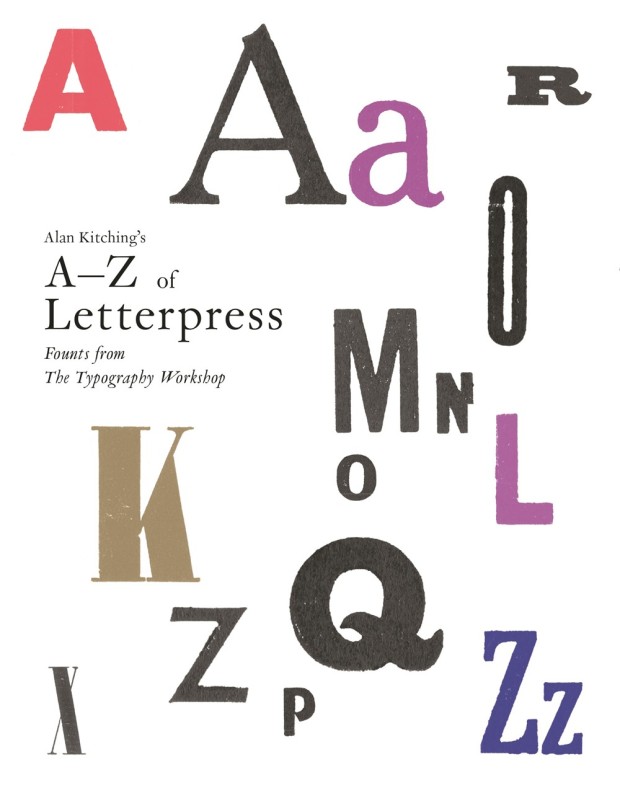
Alan Kitching’s A-Z of Letterpress

9781780674810

I just received an advance copy of Alan Kitching’s A-Z of Letterpress from UK publisher Laurence King, and it really is a lovely little book for type and letterpress enthusiasts.1

The accordion-playing Kitching has featured on the blog before of course, but over the course of his career he has worked as a compositor, typographer, graphic designer, teacher, and poster artist. He founded the Typography Workshop in 1989 and, according to designer Derek Birdsall (renowned for his cover designs at Penguin amongst other things), Kitching single-handedly “breathed new life into the dying embers of letterpress” by teaching a new generation of designers how to compose type by hand.

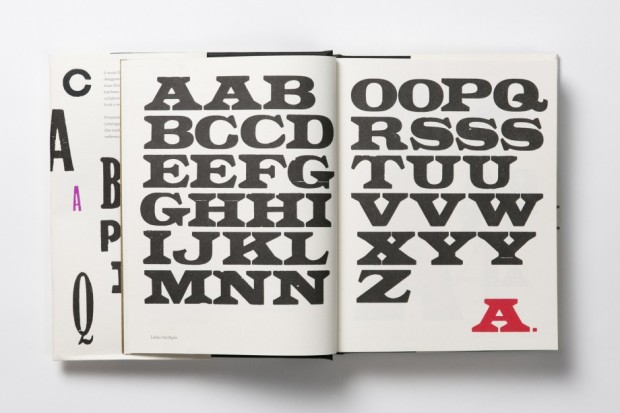
a-z_of_letterpress_spread_01

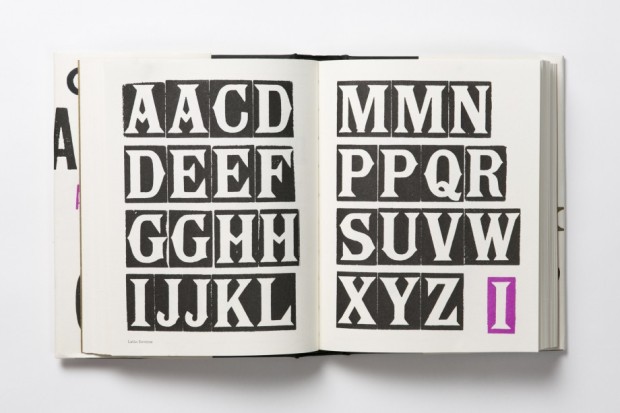
A collaboration with Pentagram partner Angus Hyland, and designed in-house by Alexandre Coco, the book itself contains 39 alphabets shown letter by letter, presented from A to Z. All the founts are wood letter founts from Kitching’s collection, and every image in the book was printed by hand on a Vandercook no. 3 proof press.

a-z_of_letterpress_spread_03

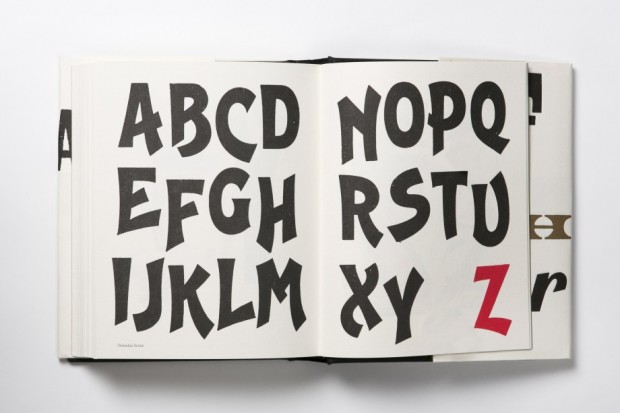
It really is a thing of beauty. Printed on thick, creamy paper, the letter forms and page layouts are quirky and charming. The colours and metallic ink are vibrant and surprising. Even better, it is also a teaser of sort — Laurence King recently announced it will be publishing a monograph of Kitching’s work in 2016. Can’t wait.

a-z_of_letterpress_spread_08

Comments closed

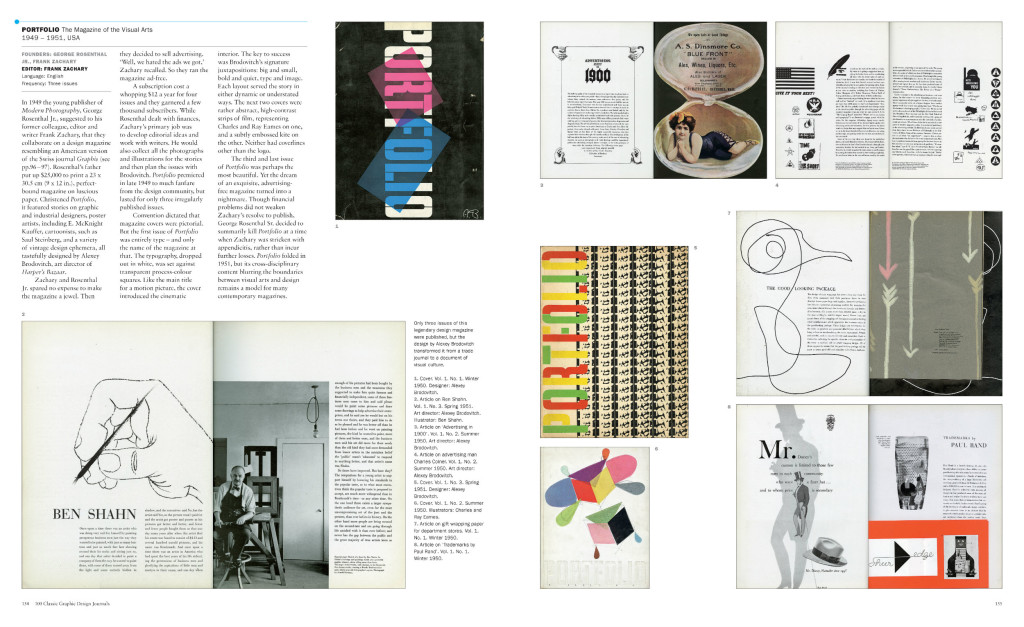
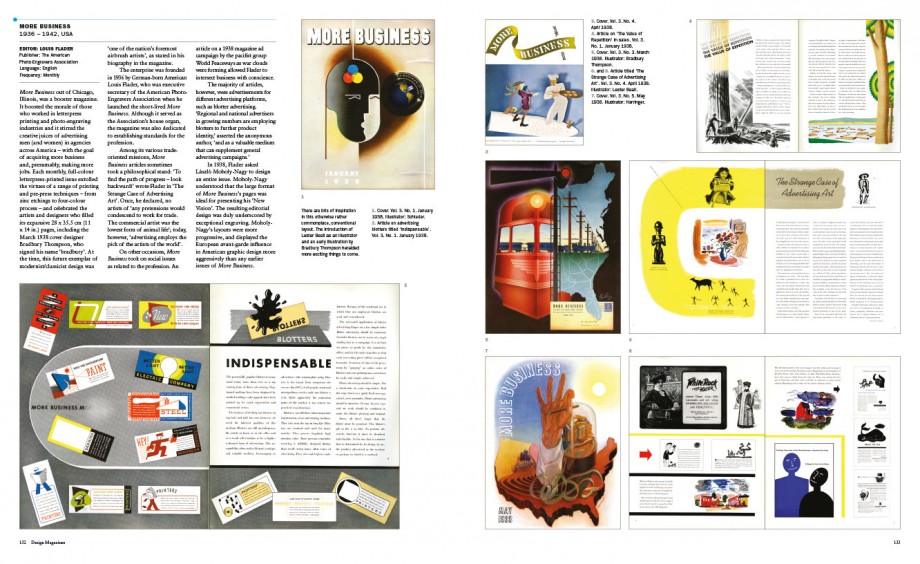
Steven Heller and 100 Classic Graphic Design Journals on Design Matters


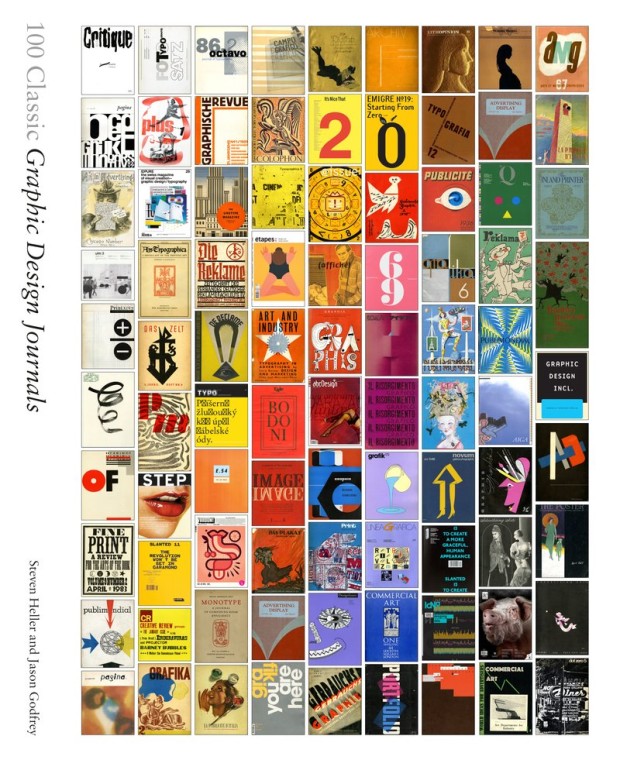
In his annual visit to Design Matters, Steven Heller talks to Debbie Millman about design journals, his new book 100 Classic Graphic Design Journals (co-authored with Jason Godfrey), and the future of design magazines in print:

Portfolio_100DesignMagazines2

You can also read a short interview with Heller about the book at publisher Laurence King’s website.

Comments closed

100 Classic Graphic Design Journals

9781780673363
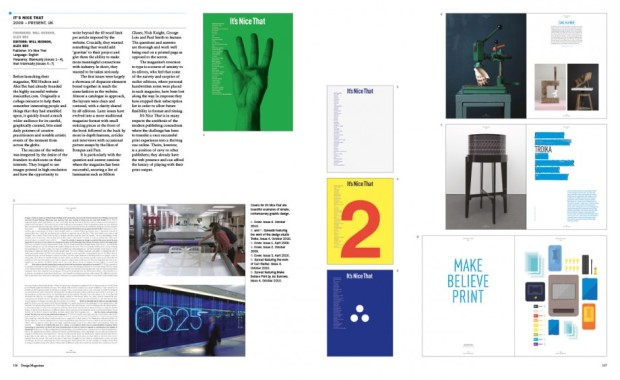
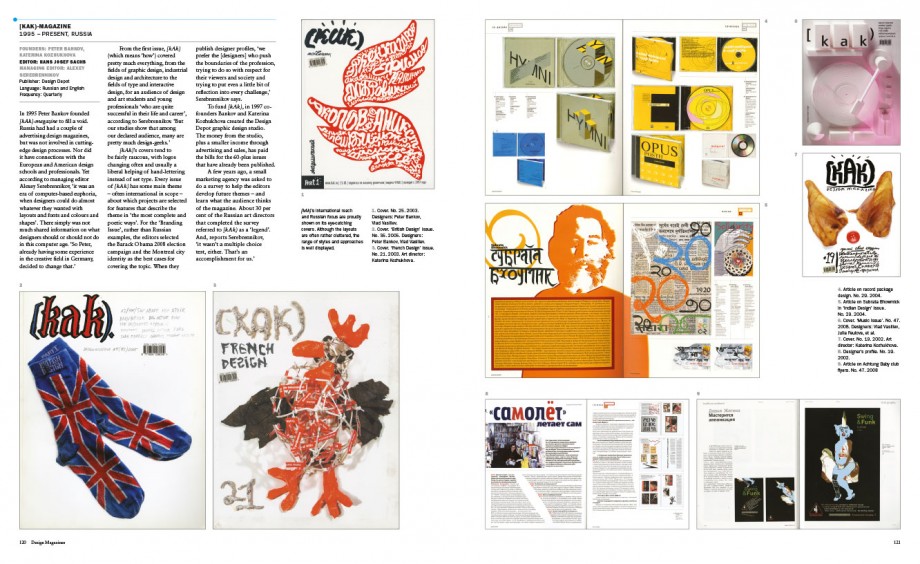
A copy of 100 Classic Graphic Design Journals by Steven Heller and Jason Godfrey just landed on my desk. The book will be in stores in the US and Canada later this month, and it looks fantastic:

9781780673363.in07

9781780673363.in08

9781780673363.in010

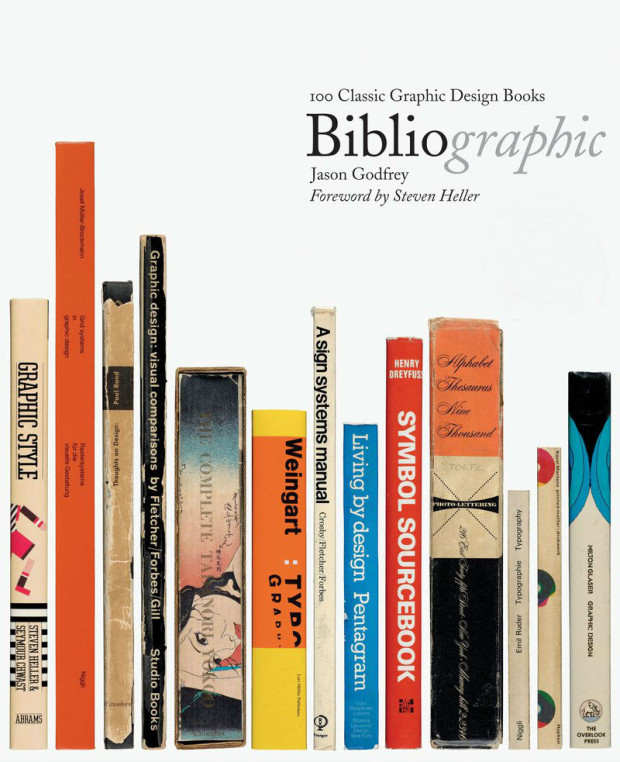
It doesn’t seem that long since I talked to Jason Godfrey about his previous book Bibliographic: 100 Classic Graphic Design Books, but apparently it was four years ago!

9781856697651

(100 Classic Graphic Design Journals and Bibliographic are published by Laurence King whose books are distributed in Canada by my employer Raincoast Books)

Comments closed

Airline: Style at 30,000 Feet


In this short film, designer Keith Lovegrove discusses his book Airline: Style at 30,000 Feet and how the culture of air travel has developed from the 1920s:


(disclosure: Airline: Style at 30,000 Feet is published by Laurence King and distributed in Canada by my employer Raincoast Books)

Comments closed

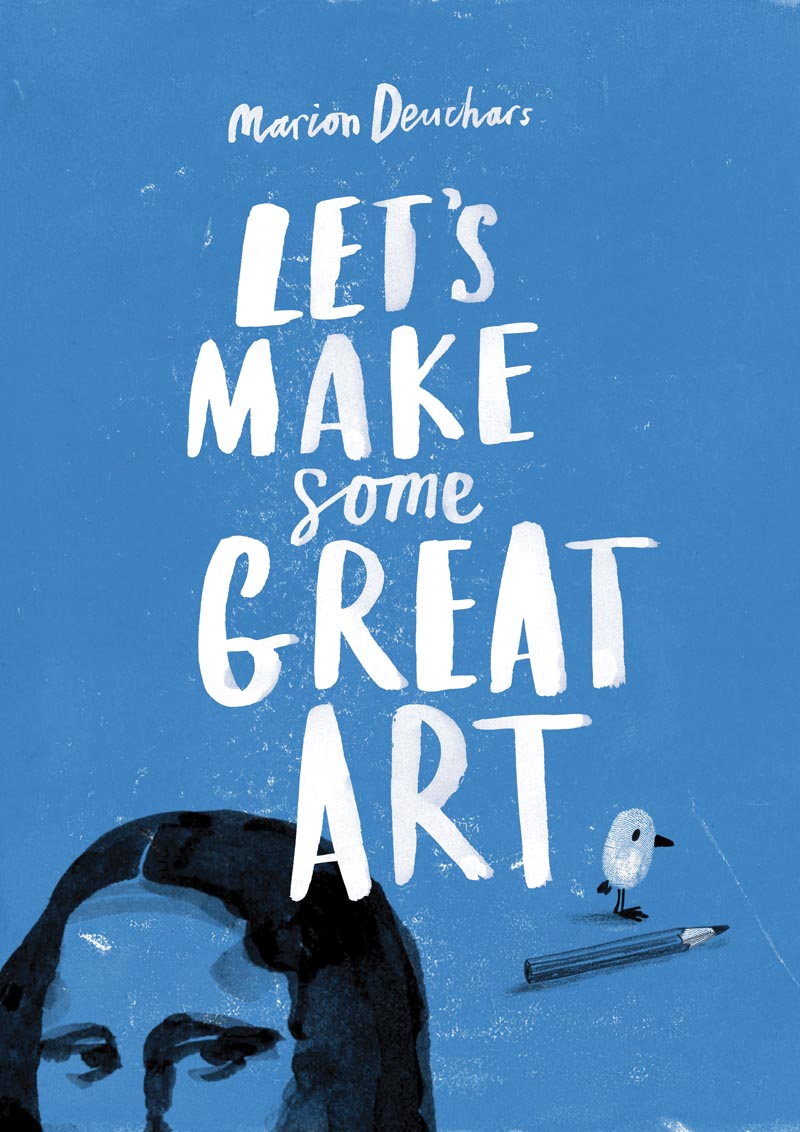
Marion Deuchars, who has created books for Laurence King as well as book covers for the likes of Canongate, Orion and Penguin, talks about working in illustration in this short film by Chris Thomas:

Comments closed

The Title Design of Saul Bass (A Brief Visual History)

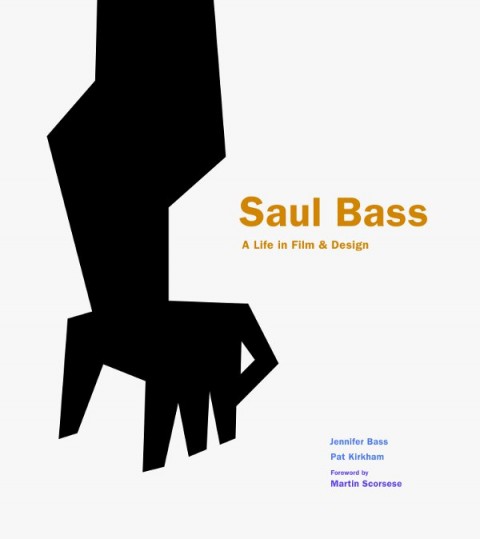
I’ve been waiting for a book about Saul Bass since I was bookseller. Now Saul Bass: A Life In Film & Design is finally in bookstores, Ian Albinson of the brilliant Art of the Title has put together a brief visual history of some of Bass’s most celebrated work:

(For the record: Saul Bass: A Life in Film & Design is published by Laurence King and distributed in Canada by my employer Raincoast Books)

Comments closed

Laurence King on the Future of Design Publishing

In a great interview for Design Observer, UK publisher Laurence King discusses the future of design publishing with Mark Lamster:

Illustrated book publishers, and in particular art publishers, need bookshops to survive, especially the increasingly rare specialist ones where there are discerning buyers who understand art, architecture and design. I think that these need to be treated with a great deal of care by publishers because all too often they serve as shop windows for Amazon. They are more important to us than sales through them indicate. It would be great if they could use their reputations and expert knowledge to become competitive with Amazon on-line. But I dread the day when art publishers have to set up loss-making showrooms to exhibit our books, just because we went on being tough with the specialist booksellers. At the same time, booksellers need to reinvent themselves quite fast, which is obviously difficult.

Laurence King published Bibliographic: 100 Classic Graphic Design Books — one of my favourite visual books from the last couple of years — in 2009, and later this fall, they’re publishing a huge, long-awaited, monograph on designer Saul Bass. Can’t wait.

Full disclosure: Laurence King is distributed in Canada by my employer Raincoast Books. 

Comments closed

Design Matters with Angus Hyland

Pentagram partner Angus Hyland has designed book covers for CanongatePenguin and others. On the latest Design Matters podcast, Hyland discusses childhood brand recognition, Tintin, music, dyslexia, book design and his new book Symbol, co-authored with Steven Bateman, with host Debbie Millman:

DESIGN MATTERS: Angus Hyland

Disclosure: Symbol is published by Laurence King and distributed in Canada by my employer Raincoast Books. 

Comments closed

Something for the Weekend

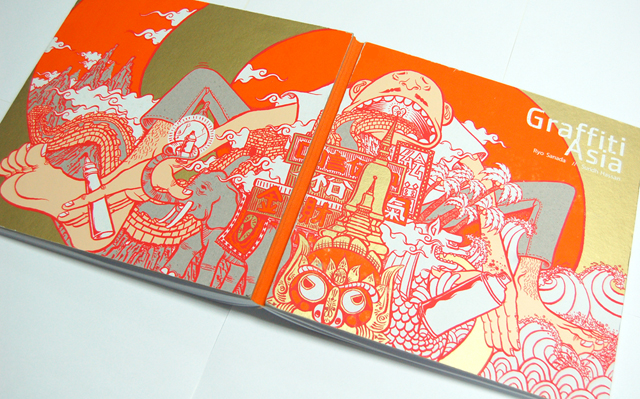
The stunning cover of Graffiti Asia by The SRK‘s Ryo Sanada and Suridh Hassan.  The image doesn’t entirely do it justice as the ‘brown’ is actually spot metallic gold (I think it’s ink, but correct me if I am wrong):

(FULL DISCLOSURE: Graffiti Asia is published by Laurence King, who are distributed in Canada by my employer Raincoast Books).

The Best Film Books chosen by 51 critics for Sight & Sound magazine. The somewhat esoteric Top 5 is here.

The Death and Life of the Book Review — Despite being a well-ploughed furrow (and the predictable nostalgia for print reviews/skepticism about the web) this essay by John Paletta in The Nation is an interesting read, not least because he recognises that the culture of newspapers has downgraded book review sections:

The book beat has been gutted primarily by cultural forces, not economic ones, and the most implacable of those forces lies within rather than outside the newsroom. It is not iPads or the Internet but the anti-intellectual ethos of newspapers themselves… In a news context, “anti-intellectual” does not necessarily mean an antipathy to ideas, though it can be that too. I use the word “anti-intellectual” to describe a suspicion of ideas not gleaned from reporting and a lack of interest in ideas that are not utterly topical.

The Host — KCRW’s Bookworm Michael Silverblatt interviewed in The Believer:

I’ve read all of the work, or in some cases as much of the work as is humanly possible. We all have time and deadlines, accidents, emergencies, but I read as much of it as I can. I’m very against interviewers who do not have time to read the work, who accept jobs knowing that they don’t have time to do the preparation. And that is almost everyone who has a daily interview program. How could you read, or see, or watch, or hear as much as you need to? So, you wing it. And it’s not going to stop. Winging it is going to be the American way.

And speaking of Bookworm, Michael talks to David Shields (Reality Hunger: A Manifesto) and Anders Monson (Vanishing Point: Not a Memoir) about the “New Prose” on this week’s show (NB: I am posting this mostly because Anders Monson references my favourite scene from the TV show Futurama in the first five minutes of the interview):

The Death and Life of the Book Review

Comments closed

Q & A with Jason Godfrey, Bibliographic

Jason Godfrey’s Bibliographic: 100 Classic Graphic Design Books was one of my favourite books last year.

Published by Laurence King in the UK, the book is distributed by Raincoast in Canada (Chronicle Books in the US) and so I was fortunate enough to have the opportunity to ask Jason a few questions about the book and get some lovely spreads from the publisher.

My original plan was to run the interview on the (recently redesigned) Raincoast website, but ultimately the interview was a little too long for our blog there, so I’ve decided to republish the whole unexpurgated monster here.

As I mentioned on in my original Raincoast blog post, Bibliographic is not history of graphic design or even a definitive list of 100 books on the subject — it’s more of an essential design book shopping list — and basically I really wanted to know why Jason decided to make the book, how he decided on the  final selections, and what exactly was informing his decisions.

We corresponded by email…

What was the inspiration for Bibliographic?

There was a need for a illustrated resource of graphic design publishing. Many books and articles contained very good reading lists but I had always found them rather detached without the visual reference. The best graphic design books are important artefacts in the history of graphic design and many of the books are becoming difficult to find and access.
004-103_1

What criteria did you use to select the books?

The only rule that was applied throughout was that the books had to be visually interesting, there seemed little point in photographing books that would not look appealing on the page. That the books were designed by some of the cream of graphic design this turned out not to be a big problem but it did mean that some important critical analyses had to be put to one side.

Did you ask other designers for their recommendations?

Whilst mentioning to other designers that I was working on Biblographic I found that they were very keen to promote their own favourite titles and it did help extend the list and also confirm the importance of books that had already been chosen. As part of the book I asked about 20 designers to give me a list of 10 books from their own library, this was an idea borrowed from the designer Tony Brook at Spin who had earlier published a newspaper Spin 2 with reading lists from 50 designers.
Was it difficult to decide which recent books to include?

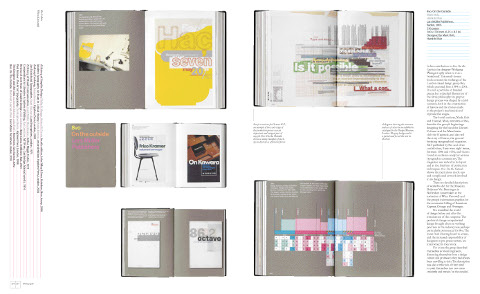
To gauge which newly published titles will come to be seen part of the canon of graphic design books is not the easiest of tasks. Looking back from a distance helps to establish the relevant trends and lends more perspective to any choices. Regardless the best books all seem to be those that can tell a good story. One recent book, Mark Holt and Hamish Muir’s 8vo: On the Outside (Lars Müller Publishers, 2005) did just this, exploring the process of the studio’s work and the effect of technological on this process and output in a thoroughly engaging book.

There are photographs of every book included in Bibliographic. Were any of the books difficult to locate?

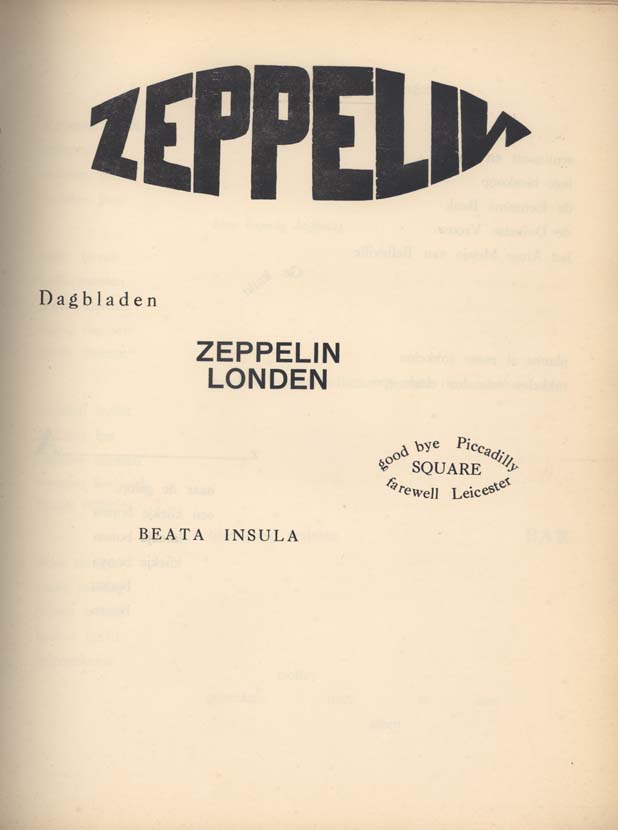
A number of the books are from my own collection others I borrowed from friends and colleagues. Some were so precious I had to send the photographer Nick Turner over to where the their owner could keep them in sight at all times. A handful of books I could only locate at the St Bride Printing Library who were kind enough to facilitate their shooting.

Were there any books you wanted to include but couldn’t access?

Early in the process of compiling my list of 100 books I decided that many of the early examples of early 20th Century graphic design books particularly those of the typographic revolutions of the 1920s and 1930s would be too difficult to access as they are now the preserve of museums. It would all have taken me too far from my premise that Bibliographic could be representative of a working studio library.

Which books came close to being in the 100, but didn’t quite make the final cut?

Tough choices had to made particularly where an author or series of books were successful. Alan Fletcher is very well represented in the book and I couldn’t justify putting in the excellent Identity Kits: A Pictorial Survey of Visual Signals (Studio Vista, 1971) a book he co-authored with Germano Facetti the then art director at Penguin Books. Another book that came very close was Robert Bringhurst’s The Elements of Typographical Style (Hartley & Marks, 1992) which I felt lacked the visual punch necessary for Bibliographic.

Of the books you don’t own in Bibliographic, is there one that you particularly covet?

The 1926 Deberny & Peignot, Specimen Général would be a welcome addition to my library. There was copy in a studio I worked for and I was forever using it as a point of reference or just to admire the elegant section dividers designed by Maximilien Vox.

When did you start collecting design books?

There are a few books that I have from when I was a student but I didn’t seriously start collecting until I had been working professionally for a few years and made a decision to stop buying records in favour of what I found to be the more fulfilling occupation of acquiring books.

What is on your ‘to buy’ list?

New Graphic Design in Revolutionary Russia (Lund Humphries, 1972) by Szymon Bojko is a book I am trying to locate. I have yet to see a copy but it was designed by Herbert Spencer the author and designer of Pioneers of Modern Typography (Lund Humphries, 1969) and so I am expecting an interesting book.

In the introduction to Bibliographic, Steven Heller says he has a separate apartment for his books! How extensive is your library?

Mine is not as nearly extensive as Steven’s although it does take up a large part of my studio and I am in need of extra shelving at the moment. It also needs saying that in common with most designers my collection also contains many books on the arts, photography and others of general interest.

What is your own design background?

I graduated from the Royal College of Art in London and worked for a number of years at Pentagram Design, then moved to New York and Austin, Texas before returning to London and setting up my own studio.

What were the challenges of designing a book about design books?

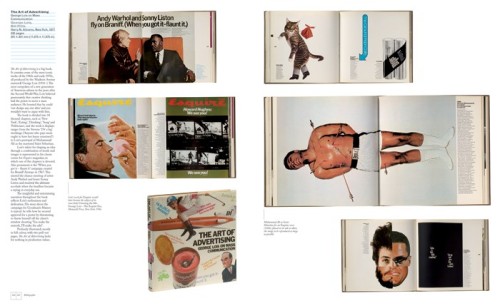
After the efforts of writing Bibliographic the actual design was very enjoyable. Because each spread contains only one book the challenge was in arranging the images to create an enjoyable flow throughout the book. The spreads from the photographed books are so rich with graphic imagery that I was worried that the pages would look like graphic wallpaper if all the images were kept in pro, but changing the scale of the spreads helped to create changing areas of white space and focus the readers attention on one spread at a time.

Could you describe your process for designing books?

Knowing the amount of copy and image count for an average page is the start for any book design project. From this point I can begin to form a grid (invariably using the guides in Derek Birdsall’s excellent Notes on Book Design (Yale University Press, 2004), chose the typefaces, text and headline styles, treatment of imagery and other pagination. This will go to form sample spreads that are approved by the publisher before advancing on the book proper.

What does the future hold for book design?

The evolution of book design seems to move at a glacial pace, its foundations are based on a template centuries old with some 20th Century tweaks by the likes of Lászlo Moholy-Nagy and Gyorgy Kepes. Advances in printing technology have and will allow for more flexibility in how pages are laid out and inevitably there will be new fashions and styles to accommodate but little wholesale change.

Thanks Jason!

6 Comments

Missed Things: Friday

Floating — Toronto illustrator Michael Cho on his cover art and interior illustrations for The Amazing Absorbing Boy by Rabindranath Maharaj (published by Random House Canada).

The Ideal Studio Library — It’s Nice That interviews designer Jason Godfrey about his beautiful new book Bibiographic: 100 Classic Graphic Design Books, published by Laurence King,  (and yes, full disclosure, LK are distributed in Canada by my employer Raincoast Books):

My aim was to create the ideal studio library of graphic design books and put this into a book format. I had always felt that there was a need for a visual reference to that could give flesh to many reading lists that have been published… The really tricky choices were the more recent books as it is difficult to know whether they will become classic points of reference, time will tell if I made the right choices on these books.

Bezette Stad —  A book of poems by Paul van Ostaijen, illustrated with woodcuts by Oskar Jespers, available in full at the University of Iowa Libraries’ astonishing International Dada Archive (via the lovely Aqua-Velvet).

And finally…

ENOUGH! — The hilariously on the money Editorial Anonymous:

I REALLY NEED A FRICKING BREAK FROM THE “FUTURE OF PUBLISHING” TALK… I don’t need to read any more of these articles, and neither do you.

A quick overview:

1. Publishing is a somewhat crappy business. Which makes it PRETTY MUCH LIKE EVERY OTHER BUSINESS.
2. Publishing has a future. NO ONE KNOWS WHAT IT WILL BE.

So everyone can stop
a. COMPLAINING
and
b. COMPLAINING.

Thank you.

No, no, Thank YOU.

3 Comments