Skip to content

Tag: Kids Books

Something for the Weekend, July 3rd, 2009

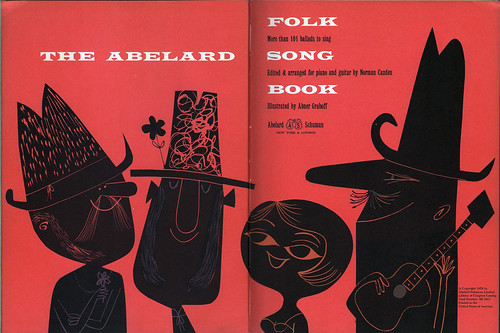
Who Was Abner Graboff? —  Frustrated with the lack information available online about artist, designer and illustrator Abner Graboff, Ward “Ward-O-Matic” Jenkins decided to do some digging himself. His research — now available in a three part series —  includes a host of great images of Graboff’s children’s books and book cover designs, as well as a nice interview with Graboff’s son Jon:

Throughout my father’s career, he did hundreds of book jacket designs and I once asked him, in a slightly condescending way, if he enjoyed that kind of work? He said he loved it because he had to nail the vibe of the book in a single illustration and when he got it right, that it was very satisfying. There was a long period of time when I could walk into a bookstore, look around, pick up a book and look at the jacket design credit… and more often than not, find his name. Later on, I started to get fooled. Other designers were either copying or being heavily influenced by his style.

Calling Bullshit on Social Media — Scott Berkun, O’Reilly author of The Myths of Innovation and Making Things Happen (via — irony alert — Mark Bertils on Twitter):

TV forced radio to change and in some ways improve. The web forced TV, newspapers and magazines to change, and they will likely survive forever in some form, focusing on things the web can not do well.  Its unusual for new thing to completely replace the old ones and when they do it takes years. Anyone who claims social media will eliminate standard PR or mass media is engaging in hype, as odds are better those things will change and learn, but never die. It’s wise to ask what each kind of media / marketing is good and bad for and work from there.

Berkun’s definitely onto something here and it probably deserves a whole post (maybe later!)… Certainly, he’s right to point out (earlier in the essay) that there have always been social networks. But he doesn’t note that for many city dwellers traditional social and familial networks have been breaking down in the post-war period, which I suspect is part of the seductive appeal of connecting online for us slightly older urban types whose use Twitter and Facebook a lot… Anyway, it’s interesting that some of Berkun’s points about technology probably also apply to e-books.

Berkun’s essay also reminded me of an article I read in Fast Company earlier in the week, Our Kids Aren’t Web-Addicted… Are We?:

It’s only we adults that are at PC workstations all day, looking for ways to avoid doing work or trolling the boundaries of our IT-installed browser filters. And we’re the only ones who have social networks big enough to require a tool like Twitter. Imagine how absurd Twitter seems when you only have 10 or 12 friends, not a network of 300+ coworkers, college buddies and colleagues?

And finally…

Krazy — Bill Watterson, creator of Calvin & Hobbes, on George Herriman’s seminal comic strip Krazy Kat, reproduced at This Recording (via Bookslut):

Krazy Kat gains its momentum less from the personalities of its characters than from their obsessions. Ignatz Mouse demonstrates his contempt for Krazy by throwing bricks at her; Krazy reinterprets the bricks as signs of love; and Offissa Pupp is obliged by duty (and regard for Krazy) to thwart and punish Ignatz’s “sin,” thereby interefering with a process that’s satisfying to everyone for all the wrong reasons. Some 30 years of strips were wrung out of that amalgam of cross-purposes. The action can be read as a metaphor for love or politics, or just enjoyed for its lunatic inner logic and physical comedy.

Comments closed

Midweek Miscellany, June 10th, 2009

#BCTO09BookCamp Toronto organiser Mark Bertils’ stream of links about the event at his blog Index//mb. There is also a  list of related press at the BookCamp wiki. I will try and organise my jumble of thoughts about BookCamp sometime… soon… (ish).

The Book Seer — A nice little web project from James Bridle and the chaps at Apt Studio. Tell it what you’ve read and it will suggest what to read next based (currently) on LibraryThing and Amazon recommendations. James has more about the project at Times Emit.

Cultural Life — An interview with Granta magazine’s newly appointed acting editor John Freeman:

We need to expand how we define what it means to publish great writing. This means reaching readers in the way that they want to hear from us. Such as having a print edition for people who treasure the beauty of text and the photo essays on the page; having a dynamic website for those who want to read us online; having a Kindle or iPhone-compatible edition for people who want to read stories in the palm of their hand; sending out links by twitter to readers who want to know the moment new stories appear; hosting events and conversations and parties for people who want to interact with the magazine in person. The challenge is to make sure that none of these respective endeavors cheapens or reduces the complexity and integrity of the work we publish.

Passion and Daring — Ben Myers at The Guardian is heartened by  Canongate winning  publisher of the year.

Frightening But Cute — Illustrator Axel Scheffler,  talks about drawing the much-loved Gruffalo in a video interview also for The Guardian. Which reminds me — I’ve been meaning to link to Terrible Yellow Eyes for a while. It’s a collection of artwork inspired by Where the Wild Things Are (Robert van Raffe‘s contribution to the project pictured below).


Plastic Banality — Author Warren Ellis’ unique take on the “dubious virtues” of  e-books in Wired. Not for the sensitive or the faint of heart:

[W]hen print was king, we would speak of “reaching an audience”. We would talk of doing these things via advertising, or appearances – which were when you’d show up somewhere in the real world, deface books with ink and communicate using small mouth noises… This has changed in fairly savage ways. The complex net of processes designed to take your money and give it to me is kind of ragged, what with newspapers collapsing and the concept of authority being passed… to, in 2009, a Twitter post from the sainted Stephen Fry. It was great to get a review in a music paper (remember those?) and it was amusing to see Oprah recommending Cormac McCarthy’s The Road to housewives, but here’s the new audience mediation: Stephen Fry popping up on your bloody iPhone to tell you he’s enjoying reading The Watchmen graphic novel.

And finally…

I’m rather charmed by The Mandate Press’ customizable letterpress calling cards. I have always wanted a business card set in blackletter… But what literary theme should they add to their list I wonder?

You can see more of The Mandate Press’ lovely work on Flickr (via The Strange Attractor)

Comments closed

Something for the Weekend, Dec. 12th, 2008

The 10 Commandments of Book Giving by Michael Dirda, Pulitzer Prize-winning critic and Senior Editor of the Washington Post‘s Book World (via Right-Reading):

Over the years I’ve gone through all kinds of Christmas presents, and nearly all of them quickly broke or have been long forgotten. Not so the gift books, whether Edgar Rice Burroughs’s Tarzan and the Golden Lion, a paperback copy of Ovid’s Metamorphoses or the Pléiade edition of Stendhal’s Oeuvres Intimes. Given to me by relatives, teachers and friends, they helped to make the season bright — and they also helped to make me who I am.

“Book apps for the iPhone keep getting better” according to Maud Newton (via DesignNotes)

Lying Liars: “Nearly half of all men and one-third of women have lied about what they have read to try to impress friends or potential partners”, the BBC reports.

Nintendo launches ‘great books’ package:

The creator of Donkey Kong and Super Mario is hoping that Austen and Dickens will prove as great a pull to computer game fanatics. It has worked with HarperCollins to select 100 titles – from 20,000 Leagues Under the Sea to Gulliver’s Travels, Pride and Prejudice, A Tale of Two Cities and Treasure Island – which will be available in a single software package for the Nintendo DS

Mwa ha ha! Chip Kidd discusses Bat-Manga! (via Books Covered)

The Age of Mass Intelligence — Are we actually smarter than we think we are? John Parker thinks so (via kottke):

One of the commonest complaints by cultural doomsayers is that nobody reads good books any more. Yet in the past two years, the Oprah Book Club in America recommended Tolstoy’s “Anna Karenina” and three novels by William Faulkner–good by any standard, and they all made the bestseller lists. This year, Waterstone’s, which owns over 300 bookshops in Britain, asked two celebrated novelists, Sebastian Faulks and Philip Pullman, each to choose 40 titles and write a few words of recommendation. The chain then piled copies of the books on tables next to the entrances of its main shops and waited to see what would happen. Faulks and Pullman hardly dumbed down their choices: they included Fernando Pessoa’s “Book of Disquiet”, Rudyard Kipling’s “Kim”, and Raymond Queneau’s “Exercises in Style”. The sales increases for these books over the same period the year before were, respectively, 1,350%, 1,420% and 1,800%–clear evidence of latent demand. If you offer it, they will come.

In this brief interview at inFrame.tv, award-winning Australian artist and author Shaun Tan discusses his work and the adaptation of his book The Lost Thing into an animated movie (via drawn):

And on a similar note, stills of the 25 minute animated adaptation of Oliver Jeffers’ book Lost and Found (to be broadcast on Channel 4 in the UK on Christmas Eve) can be seen on the STUDIOaka website. Looks lovely.

And this is probably my last regular post for the next couple of weeks. In the extremely unlikely instance you get withdrawal symptoms, you can always check out the links in the sidebar and/or send me an email!

See you in the New Year!

1 Comment

Book Design Links, Dec. 1st, 2008

It is very cold, wet and wintry in Toronto today, so here’s some book design related eye-candy to cheer you (me!) up…

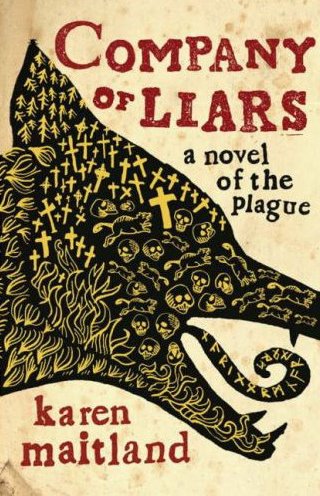
Company of Liars by Karen Maitland

Favourite Book Covers of 2008: Joseph Sullivan has published his annual list at the excellent The Book Design Review (BDR). If your new to the BDR make sure you also check out his archived favourites for 2007, 2006, and 2005!

Funnily enough, Fwis’ Covers website has just posted The Microscope and the Eye (pictured) designed by Isaac Tobin who also did the amazing cover for Obsession which is in the BDR list for 2008.

Jacket Mechanical: A nice design blog featuring great book cover designs. Lots of super-cool modernism if you like that sort of thing (which I do).

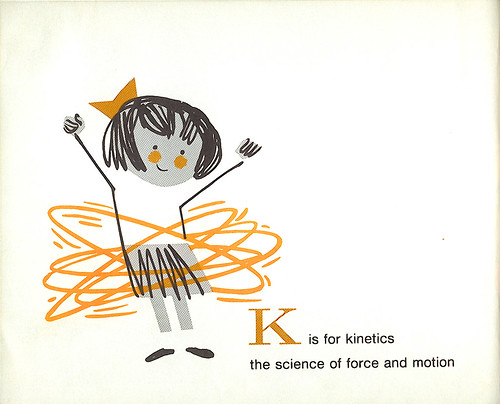
Speaking of modernism, take a look at Mid-Century Children’s Books a gorgeous retro Flickr set by The Ward-O-Matic (AKA Ward Jenkins).

1 Comment

Midweek Miscellany, Nov 19th, 2008

“We’re from Kodak, Apple, Google, Yahoo”: The Guardian profiles Blurb — a publishing company with nobody from mainstream publishing — that specialises in high-quality, print-on-demand, photography books. Very, very, cool.

Good news and bad news for online retailers: Statcan found that more Canadians are shopping on the internet, placing almost $12.8 billion worth of orders in 2007, up 61% from 2005. ComScore, on the other hand, have just released their monthly retail e-commerce sales estimates, showing that online spending in October 2008 grew by only 1 percent over October 2007–the lowest monthly growth rate since they began tracking e-commerce in 2001.

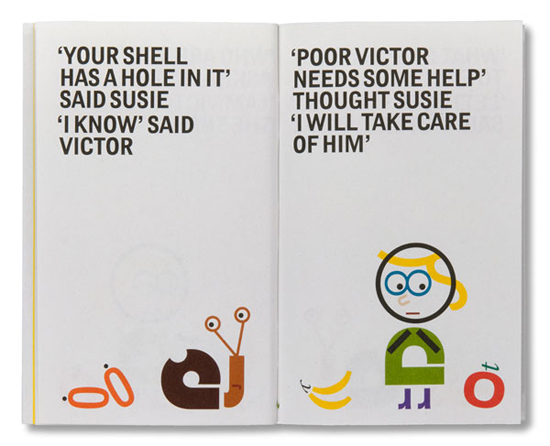
Victor & Susie: A brightly coloured “children’s book for adults” about Susie and Victor the snail, all drawn with letters and punctuation marks, published by Brighten The Corners (pictured). (via drawn)

“A kind of slow-motion suicide”: David Carr’s column for the New York Times looks at why firing their the most talented, experienced employees to cut costs backfired for Circuit City and will do the same for newspapers too:

“Right now, the consumer has all manner of text to choose from on platforms that range from a cellphone to broadsheet. The critical point of difference journalism offers is that it can reduce the signal-to-noise ratio and provide trusted, branded information. That will be a business into the future, perhaps less paper-bound and smaller, but a very real business.”

My take on this for book publishers (as it normally is): Publish less, publish better — quality matters. (via reveries)

Comments closed

Monday Miscellany, Nov 10th, 2008

Think, study, then post: David D. Perlmutter, author of Blogwars, discusses slow blogging on the Oxford University Press blog:

“many of the bloggers I interviewed talked about the need to feed the blog that is, if you don’t put up 2 to 3 new posts a day you lose your audience. But fast anything, unless you’re competing in the Olympics, is not necessarily the road either to author or audience fulfillment.”

I love this idea, I’m just not very good at it or, perhaps, just a bit too good judging by the number of posts in my ‘drafts’ folder! Must try harder… (via the excellent ReadySteadyBlog by the way)

The business elite still love print according to a Folio magazine survey:

“Top American business executives spend a lot of time worrying about the volatile economic climate—and a lot of time consuming media, with a vast majority of them clinging to print.”

Ghosts in the House! Written and illustrated by Kazuno Kohara.

The Best Illustrated Children’s Books 2008:  a slide show of the New York Times picks (pictured).  The NYT‘s Children’s Books Special Issue is here.

A bitter-sweet love: writer Ellen Jordan discusses her coffee addiction in a essay in The Age:

“I wonder whether I’m afraid to write without coffee, afraid that every good sentence I’ve ever written came out of some mysterious alchemy of coffee and my mind. If I write with nothing, or with some pallid juice or herbal tea or decaf, will I discover that alone I have no talent?”

Comments closed

Midweek Miscellany Oct 15th, 2008

Are New York publishers going through some kind of existential crisis?

A chill wind is blowing through publishing according to Leon Neyfakh in the New York Observer. He’s marginally less apocalyptic than some, but he’s still pretty gloomy:

“A frost is coming to publishing. And while the much ballyhooed death of the industry this is not, the ecosystem to which our book makers are accustomed is about to be unmistakably disrupted. At hand is the twilight of an era most did not expect to miss, but will.”

On the other hand…

Old-fashioned publishing is booming for Marvel according to Fortune Magazine:

“There’s a few interesting messages in this, not least of which is the reminder that new formats of media don’t necessarily replace old, and that some habits don’t change as quickly as people think.”

Former CEO Peter Olson  discusses his exit from Random House in Portfolio magazine:

“I think concerns about the book business dying are overdone. Storytelling—the generating of content for all kinds of media—is essential. Books play a key role.”

On a more cheery note…

Children’s Books That Designers Love: Kids books with “insanely cool typography” by  Bruni Munari and Cas. Opt. favourite Paul Rand (pictured).

Liz Thomson and Nicholas Clee, former editors of Publishing News and The Bookseller respectively, have launched BookBrunch an “information site and daily news service for the book industry.” (via Me And My Big Mouth)

Designer Stephen Bayley interviewed by his son Bruno for Vice Magazine. I rather liked this line:

“Heritage is important but you must also build the heritage of the future. The best idea ever on history was in an Italian novel The Leopard by Giuseppe Tomasi di Lampedusa, which was published posthumously. It had this line about the decline of a Sicilian dynasty: “If you want things to stay the same, they are going to have to change”. That is entirely my view. Without change everything is stultified.”

2 Comments