Skip to content

Tag: keith ridgway

Book Covers of Note, June 2021

A little bit rushed again this month for various reasons (will I ever catch up? No. No I won’t…), but here are my cover picks for June…

Animal by Lisa Taddeo; design by Greg Heinimann (Bloomsbury / June 2021)

The cover of the US edition of Animal, published by Simon & Schuster, was designed by Alison Forner and Zak Tebbal:

Fear and Trembling by Søren Kierkegaard; design Richard Ljoenes (Liveright / June 2021)

Folklorn by Angela Mi Young Hur; design by Helen Crawford-White (Erewhon Books / April 2021)

The Great Mistake by Jonathan Lee; design by Nathan Burton (Granta / June 2021)

The cover of the US edition, published by Knopf, was designed by none other than John Gall:

(The Knopf cover actually reminds me of this Lauren Peters-Collaer silhouette cover from a couple of years ago for Verso)

How the Word is Passed by Clint Smith; design by Lucy Kim (Little Brown and Company / June 2021)

Island by Siri Ranva Hjelm Jacobsen; design by Anna Morrison (Pushkin Press / June 2021)

July by Kathleen Ossip; design by Alban Fischer (Sarabande Books / June 2021)

The Ones We’re Meant To Find by Joan He; design Aurora Parlagreco; illustration Aykut Aydogdu (Roaring Brook Press / May 2021)

Pure Flame by Michelle Orange; design by Na Kim (Farrar, Straus and Giroux / June 2021)

In the ongoing game of books I think look alike but actually don’t when you put them side by side, the cover of Pure Flame brought to mind Peter Mendelsund‘s design for Civil Wars by David Armitage from a few years ago. Of course they don’t really look anything alike, but that’s how this game works…

A Shock by Keith Ridgway; design by Nathan Burton (Picador / June 2021)

A read an ARC of A Shock earlier this month and thought it was extraordinary. A recent review in the Observer described it a collection voyeuristic vignettes, which I suppose is accurate. The book is made up of interconnected and intimate stories, often about loneliness and confinement of one kind or another (particularly resonant during the pandemic). They are prying and unsettling… stories about seeing and been seen (or not). But in a wider sense, A Shock is about the telling and retelling stories (myths even!), and the way that is revealed in the novel itself is what elevates it above and beyond the usual fare. Anyway… I liked it. It won’t be for everyone.


The cover of the US edition, available from New Directions next month, was designed by the one and only Mr. Keenan:

Tokyo Redux by David Peace; design by Luke Bird (Faber & Faber / June 2021)

The War Against the BBC by Patrick Barwise and Peter York; design by Richard Green (Penguin / March 2021)

Who doesn’t love a really long subtitle and an all text cover?
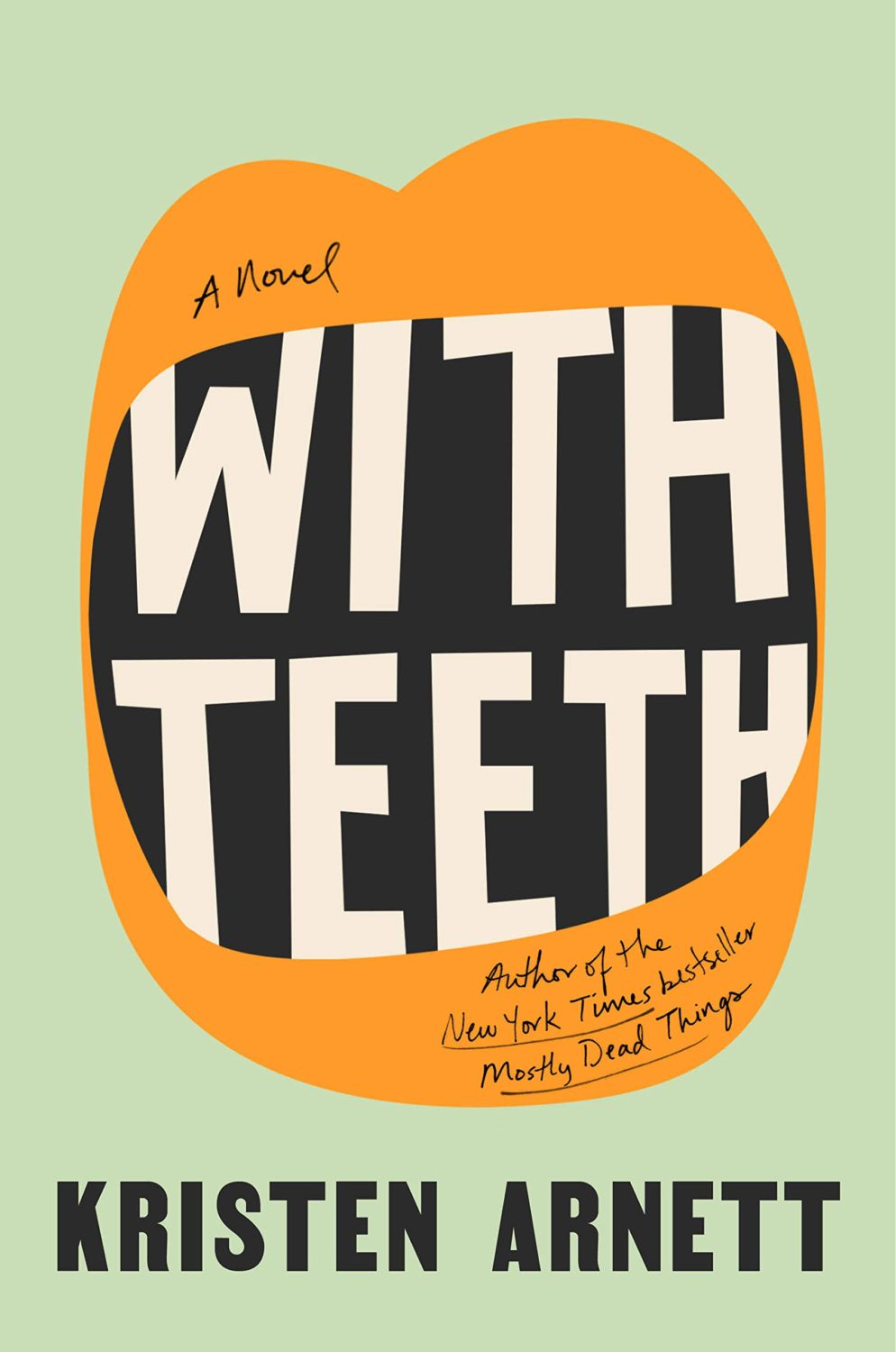
With Teeth by Kristen Arnett; design by Lauren Peters-Collaer (Riverhead / June 2021)

A Year Without a Name by Cyrus Dunham; design by Alex Merto (Back Bay Books / June 2021)

The hardcover of A Year Without a Name, released in 2019, was designed by Lucy Kim.

Comments closed

Something for the Weekend

No Idea What I’m Doing — Keith Ridgway, author most recently of Hawthorn & Child, on writing fiction:

I have no idea what I’m doing. All the decisions I appear to have made—about plots and characters and where to start and when to stop—are not decisions at all. They are compromises. A book is whittled down from hope, and when I start to cut my fingers I push it away from me to see what others make of it. And I wait in terror for the judgements of those others—judgements that seem, whether positive or negative, unjust, because they are about something that I didn’t really do. They are about something that happened to me. It’s a little like crawling from a car crash to be greeted by a panel of strangers holding up score cards.

A Dog’s Cock — The history of the exclamation mark:

no one really knows the history of the punctuation mark. The current running theory is that it comes from Latin. In Latin, the exclamation of joy was io, where the i was written above the o. And, since all their letters were written as capitals, an I with an o below it looks a lot like an exclamation point.

But it wasn’t until 1970 that the exclamation point had its own key on the keyboard. Before that, you had to type a period, and then use the backspace to go back and stick an apostrophe above it. When people dictated things to secretaries they would say “bang” to mark the exclamation point. Hence the interobang (?!) – a combination of a question (?) and an exclamation point (!). In the printing world, the exclamation point is called “a screamer, a gasper, a startler or a dog’s cock.”

One more on the late Robert Hughes at The Economist:

As our lives grow increasingly distracted and overstimulated, the critic has become both more and less relevant in the service of cultural sieve, filtering out the good from the bad. Mr Hughes didn’t subscribe to such categorical certainties. In turn he placed as much emphasis on the context of a work as he did on its content. To Mr Hughes, experiencing art wasn’t about passing a few hours in some museum, but what made those few hours meaningful to be alive.

And finally…

Larry Tye talks about his new book Superman: The High-Flying History of America’s Most Enduring Hero, on CBC Radio’s The Current:

CBC RADIO THE CURRENT: Superman: The High-Flying History of America’s Most Enduring Hero mp3

Comments closed

Something for the Weekend

Do It Yourself — John Self, of the excellent Asylum blog, on the power of independent readers, at The Guardian:

if publishers and authors are limited in what they can do for a book online, who is left? They want to harness word of mouth, and power lies collectively in the independent readers – you and me. Can we make a difference when the bookselling world is full of outlets, online and off, which primarily sell what already sells, or can be related to a proven success (“It’s Fifty Shades of Grey meets Harry Potter!”)? If social media has inspired a new age of grassroots political activism, why not literary activism, too?

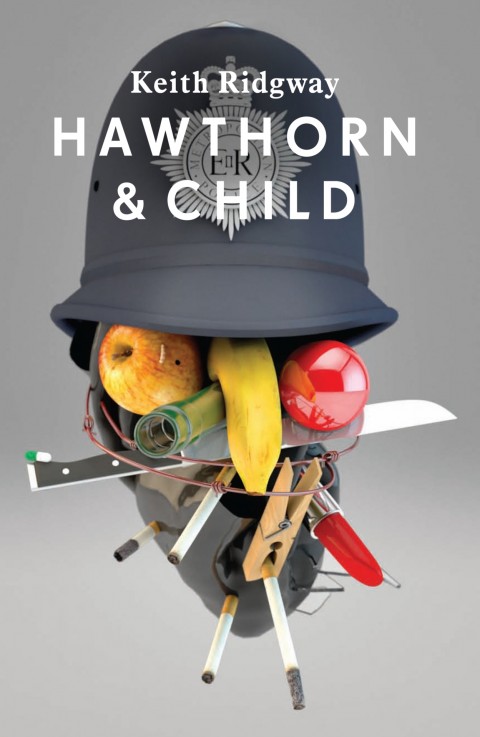
I picked up Keith Ridgway’s new book Hawthorn & Child almost entirely on the basis of John’s recommendation (I also read Colony by Hugo Wilcken, one of my favourite books of recent years, as a result of John’s review). The astonishing cover (pictured above) is by Tom Darracott by the way.

(Semi) Colonoscopy — Mary Norris on how to use the semicolon, at The New Yorker:

So the semicolon is exactly what it looks like: a subtle hybrid of colon and comma. Actually, in ancient Greek, the same symbol was used to indicate a question.

And it still seems to have a vestigial interrogative quality to it, a cue to the reader that the writer is not finished yet; she is holding her breath.

And finally…

Imaginary Buildings — Jimmy Stamp on the locations of 221B Baker Street, for The Smithsonian:

The mystery of 221B Baker Street is not one of secret passages or hidden symbols. Rather, it could be described as a sort of existential spatial riddle: how can a space that is not a space be where it is not? According to Arthur Conan Doyle’s stories, Sherlock Holmes and John Watson lived at 221B Baker Street from 1881 to 1904. But 221B Baker street did not exist in 1881, nor did it exist in 1887 when A Study in Scarlet was published and Baker Street house numbers only extended into the 100s. It was a purely fictional address – emphasis on was. Time marches on, Baker Streets are renumbered, and 221Bs are revealed…

Comments closed