Skip to content

Tag: jonathan franzen

Jonathan Franzen Says No

So good, Tom… So, so good.

4 Comments

Midweek Miscellany

Everybody Thinks Their an Auteur” — Film director and critic Peter Bogdanovich at New York Daily News book blog Page Views:

Auteurism today? Well, everybody thinks they’re an auteur. But nobody seems to understand what the whole auteur thing was. It wasn’t a theory as far as the French were concerned. It was a political statement called la politique des auteurs. Truffaut and Godard were attacking the old-fashioned, well-made film, Franch or American. They thought Howard Hawks was an infinitely better director than Fred Zinnemann. They thought Alfred Hitchcock was a greater director than David Lean. They were against Marcel Carné  and for Jean Renoir. Personal films were what they looking for, where a director’s personality dominated despite who wrote it or who was in it or who photographed it.

Nothing But a Number — An interview with Gary Shteyngart, author of Super Sad True Love Story, at CultureMap Austin:

“There’s a kind of anxiety, I think. When you’re ranked you sort of know who you are and where you stand, and people become obsessed in their rankings. The quantitative takes the place of qualitative.”

Does this mean we are starting to reject the belief that we will never be just a number? “That’s the big generational shift from the ’60s of ‘I am not a number’ to 2012, where ‘I am a number but hopefully I’m a good number. I’m a high number,’” he laughs.

A Slow Books Manifesto: “Read books. As often as you can. Mostly classics.”

Not Your Conventional Hell — British horror writer Ramsey Campbell (The Darkest Part of the Woods) on the mighty H. P. Lovecraft for the BBC:

Lovecraft developed his own invented mythology, at least as influential on fantastic fiction as Tolkien’s work. Most of it is set in a New England steeped in history and in hidden occult influences, although the monstrous creatures glimpsed by his characters are frequently from outer space rather than from any conventional hell.

And finally…

Do We Need Stories? — Tim Parks continues his one-man argument with everything Jonathan Franzen has ever said ever:

Of course as a novelist it is convenient to think that by the nature of the job one is on the side of the good, supplying an urgent and general need. I can also imagine readers drawing comfort from the idea that their fiction habit is essential sustenance and not a luxury. But what is the nature of this need? What would happen if it wasn’t met? We might also ask: why does Franzen refer to complex stories? And why is it important not to be interrupted by Twitter and Facebook? Are such interruptions any worse than an old land line phone call, or simply friends and family buzzing around your writing table? Jane Austen, we recall, loved to write in domestic spaces where she was open to constant interruption.

Comments closed

Midweek Miscellany

Juggling — The multi-tasking Charlotte Strick,  art editor of The Paris Review, art director at Faber & Faber and Farrar, Straus & Giroux, and book designer,  interviewed at From The Desk Of…

Genre — China Miéville, on his new book Embassytown and genre fiction in The Guardian:

“I love genres; I think they are fascinating. My issue with litfic is not that it is a genre but that (a) it doesn’t think it is and (b) it thinks it’s ipso facto better than all the ones that are genres. Literary fiction of that ilk – insular, socially and psychologically hermetic, neurotically backslapping and self-congratulatory about a certain milieu, disaggregated from any estrangement or rubbing of aesthetics against the grain – is in poor shape.”

Invasion by the Virtual — Iain Sinclair discusses London and five novels that capture the spirit and history of city:

When the railways were first put in, there was devastation, because there were so many competing companies who just ripped up houses right, left, and centre. In the name of catching the spirit of the age and indulging in this technological process (and the idea of progress through science), London was savagely remade. It took a long time to absorb, recover and discover itself through that. At the moment, we’re in this sort of management age — an age of the virtual — in which you can change reality by looking at digitised, computer-generated images and projecting a fantastic city of the future, like a science fiction. People have come to believe that this is reality, even though they are contradicted by observation, which shows you devastated fields, radioactive materials buried in the ground that have been ripped up fast, and absolute destruction… So it is a devastating moment for the city, which I don’t think has ever been under such a prolonged form of invasion by the virtual.

Franzen’s Ugly Americans — Tim Parks on reading Jonathan Franzen’s Freedom in Europe (and, incidentally, the work Swiss novelist Peter Stamm, author of Seven Years, which sounds great) (via Bookslut):

Freedom’s failings are interesting in so far as they deepen the mystery of the book’s international success. It’s one thing for the Americans to hype and canonize one of their favorite authors, but why do the Europeans buy into it? Ever anxious that they need to understand America, fascinated by its glamor and power, Europeans are perhaps attracted to those American novels that explain everything: Roth’s American Pastoral, DeLillo’s Underworld. More than a novel by an American they want The Great American Novel. But of course Europeans also resent American world hegemony and feel (still and no doubt wrongly) superior culturally.

And finally…

20 Books Every Graphic Designer Should Read and an interview with Rick Poynor, founding editor of Eye and a co-founder of Design Observer, who compiled the list, at Designers and Books:

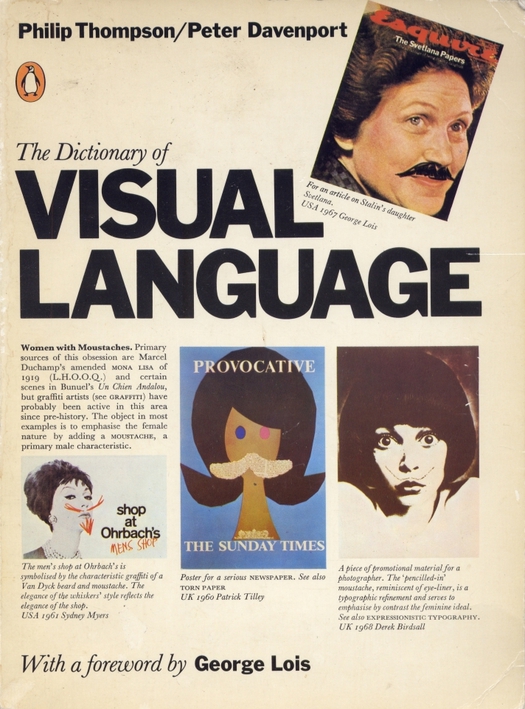
Books always point to other books. A bookshop, like a library, is a fantastic, spatially organized, easily navigable source of vast quantities of interconnected information about what exists for you to discover and know. If someone devised an online virtual space that allowed you to do this kind of rapid, effortless, multifocal, visual, and spatial browsing—perhaps someone has, though it certainly isn’t Amazon or the iPad App Store—we’d applaud them for a brilliant new concept. But these marvelous spaces already exist, at least for the time being, right there in your local shopping street.

art editor of The Paris Review and an award-winning designer known for creating the jackets for books by Roberto Bolaño, Lydia Davis, and Jonathan Franzen, among many others. She is also art director of Faber & Faber, Inc. and of the paperback line at Farrar, Straus and Giroux.art editor of The Paris Review, art director of Faber & Faber and at Farrar, Straus & Giroux,
Comments closed

Grossman on Franzen Redux

Literary editor Lev Grossman (author of The Magicians) discusses why Time put Jonathan Franzen on the front cover the magazine of with Ramona Koval on ABC Radio National’s The Book Show:

ABC RADIO NATIONAL THE BOOK SHOW: LEV GROSSMAN

Comments closed

A Year in Reading 2010

2010 was a year of losing battles and one of the first casualties was time for personal reading. The moments I did have were snatched on the subway and, if I could keep my eyes open, last thing at night. I often found myself unwittingly rereading chapters I had read the previous day, or worse, that very morning. The difficulty this week of compiling a list of my favourite books of the year — and the predictability of that list (to be posted soon) — made it very clear that not only did I read less than previous years, I rarely strayed off the beaten path.

The year was thus defined, for better or worse, by two big novels that were in some senses polar opposites: C by Tom McCarthy and Freedom by Jonathan Franzen. If C was modern experimental novel masquerading as an early 20th century bildungsroman, Freedom was a Victorian drama in modern dress. It felt like “Two Paths for the Novel” all over again.

Someone cleverer than me observed C “was surrounded by the sort of buzz and static which it contained and described.” But while the buzz amplified C to the Booker shortlist, the hype around Freedom and Franzen seemed to diminish the book. It was so ludicrously overpraised, and subsequently criticized and shunned, that it was almost impossible to evaluate fairly.

OTHER FICTION

Like just about everyone else, I started 2010 reading Stieg Larsson, but now, with 2011 just around the corner, The Girl Who Kicked the Hornet’s Nest remains unfinished, my bookmark at Chapter 6.

I loved the architecture and weird psycho-geography at the heart of the mysterious The City and the City (published in paperback this year) and went on to read China Miéville’s earlier, equally architectural, novel Perdido Street Station.

I was also happy to belatedly discover that Phillip Kerr had resurrected his Bernie Gunther Berlin Noir detective series. Better late than never…

Sadly neither The Imperfectionists by Tom Rachman nor Zero History by William Gibson really added up to more than the sum of their (occasionally really quite good) parts.

I simply abandoned Justin Cronin’s clunker The Passage.

Better was Canal, Lee Rourke’s L’Étranger in London. I wasn’t entirely convinced by it, but an off-beat novel about urban ennui and existential violence was a welcome change of pace. Rourke is no doubt an author to watch.

Canal had the added virtue of being short, something of  a rare and undervalued quality these days. In fact almost all of the fiction I enjoyed the most this year — the icily beautiful The True Deceiver by Tove Jansson, the bonkers Memories of the Future by Sigizmund Krzhizhanovsky, and the lyrical The Blue Fox by Sjon — were short. And not actually published in 2010.

Colony by Hugo Wilcken, also short and published in 2007, was unquestionably my favourite novel of the year. Drawing its title from Kafka’s The Penal Colony (and, in turn, Joy Division’s song Colony), the book seemed to me more like a post-modern Conrad, or perhaps Camus trying his hand at a Boy’s Own Adventure. Needless to say, I’m looking forward to Wilcken’s next novel…

NONFICTION

I waited too long to read Patti Smith’s wistful and self-depreciating memoir Just Kids, but I was charmed by it nonetheless. I was less enthralled with Bob Dylan in America by Sean Wilentz. I was not, I suspect, the target audience however…

Jared Lanier’s You Are Not a Gadget: A Manifesto and Nicholas Carr’s The Shallows both raised intelligent concerns about development of the internet. I was less convinced by Lanier’s polemic than Carr’s tweedier defense of long-form reading, but neither were as reactionary as they were sometimes characterized, and both offered interesting insights whether one agreed with them or not.

The subjective magazine-style reportage of War by Sebastian Junger and the gossipy Game Change by John Heilemann and Mark Halperin were both signals of what we can expect from nonfiction in future.  But both were troubling, especially War, which felt both narcissistic and yet, at the same time, voyeuristic and exploitative. Neither book properly addressed the complications of embedded insider journalism.

Both War and Game Change were, at least, entertaining. That cannot be said of Bob Woodward’s less than electrifying Obama’s Wars. There is something to be said for detailing events in chronological order, but that doesn’t make it any more readable. Worse, perhaps, I didn’t gain any greater insight into what had happened.

COMICS

Even though Dan Clowes is the godfather of the miserable asshole, it is now such a common trope in indie comics that despite his undeniable virtuosity I was somewhat disappointed by the uncompromising Wilson. It was, however, unfair of me to expect Clowes to be anyone other than Clowes, and just about everyone whose opinion I respect tells me I am wrong about this book, so don’t take my word for it.

KENK took up a lot of my professional time this year so I was glad to see it get such a positive critical response and I’m hopeful that it will finally see a US release in 2011.

Having a short attention span, I enjoyed the latest installment of Hellboy, and its gothic spin off Sir Edward Grey Witchfinder, but continued to be underwhelmed by Mignola’s plodding BPRD series.

Like just about every other nerd in Toronto I read the 6th and final installment of Bryan Lee O’Malley’s Scott Pilgrim series (now handily available as a box set). I also finally read Jeff Smith’s epic Bone from cover to cover and revisited The Rocketeer stories by the late Dave Stevens, which were collected, at long last, in a slim hardcover edition at the end of last year.

I loved The Outfit, the latest installment of Darwyn Cooke’s adaptations of Richard Stark’s Parker stories (my Advent Book Blog recommendation this year), and Jason’s strange and delightful Werewolves of Montpelier.

Footnotes In Gaza (published late in 2009) left me depressed, but thoroughly in awe of Joe Sacco.

THE ONES I DIDN’T GET TO (BUT MEANT TO)

The list of new books that I had every intention of reading this year but didn’t is far, far, too long. Here, however, are a few of the books (in no particular order) that I intend to get to sooner rather than later: Matterhorn by Karl Marlantes, Our Tragic Universe by Scarlett Thomas, Super Sad True Love Story by Gary Sheyngart, A Visit From the Goon Squad by Jennifer Egan, Every Man Dies Alone by Hans Fallada,  Boxer, Beetle by Ned Beauman, Kraken by China Miéville, What Ever Happened to Modernism? by Gabriel Josipovici, The Hare With Amber Eyes by Edmund Dewaal, A History of the World in 100 Objects by Neil MacGregor, Just My Type: A Book About Fonts by Simon Garfield, Set to Sea by Drew Weing and H.P. Lovecraft’s At the Mountains of Madness adapted by Ian Culbard. There are no doubt many, many more… I would love to hear what you read and enjoyed this year and what I should add to the list of books for 2011…

2 Comments

Something for the Weekend

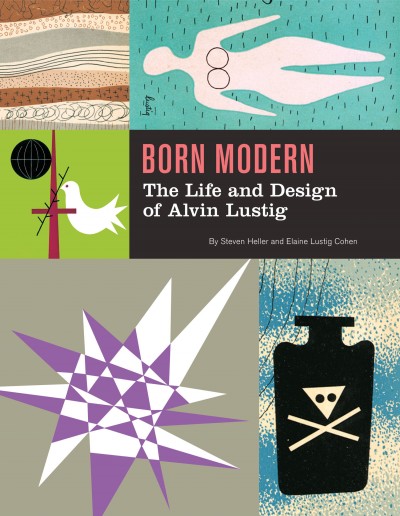
Past and Present — An excerpt from Born Modern: The Life and Design of Alvin Lustig by Steve Heller and Elaine Lustig Cohen at Design Observer*:

Lustig’s designs fluidly shift from past to present. For his early “experimental” work he built upon an armature of old technologies… and techniques…, which evolved through new technologies… into unprecedented styles… Toward the end of his life, his typography turned into a playful amalgam of vintage letters composed in contemporary layouts with vibrant colors. In “Personal Notes,” he wrote, “As we become more mature we will learn to master the interplay between past and present and not be so self-conscious of our rejection or acceptance of tradition. We will not make the mistake that both rigid modernists and conservatives make, of confusing the quality of form with the specific forms themselves.”

The AuthenticChuck Klosterman, author most recently of Eating the Dinosaur, profiles Jonathan F., author of Freedom, for GQ Magazine:

It’s a present-day problem: There’s just no escaping the larger, omnipresent puzzle of “reality.” Even when people read fiction, they want to know what’s real. But this, it seems, is not Franzen’s concern. He disintegrates the issue with one sentence.

“Here’s the thing about inauthentic people,” he says on the train, speaking in the abstract. “Inauthentic people are obsessed with authenticity.”

Telling Stories — Nicholas Carr, author of The Shallows, on interactive storytelling:

The ability to write communally and interactively with computers is nothing new… Digital tools for collaborative writing date back twenty or thirty years. And yet interactive storytelling has never taken off. The hypertext novel in particular turned out to be a total flop. When we read stories, we still read ones written by authors. The reason for the failure of interactive storytelling has nothing to do with technology and everything to do with stories.

Footnotes — Part one of a long interview with journalist and cartoonist Joe Sacco, author most recently of the remarkable Footnotes in Gaza, at Art Threat (via Drawn):

[T]he biggest influence on me journalistically speaking has been George Orwell. I don’t know if you’re familiar with the book Road to Wigan Pier, but Orwell spent time in the industrial areas of Britain during the depression and took a room with a miner, lived with miners. He went down into the mine shaft with the miners. His ability to go to these places and really look at things from a ground level, that was impressive to me. And for other reasons too: because he was so dedicated to his work, and he felt that his work was sort of bigger than himself as a human being. I appreciated that dedication.

Part two will run on Monday apparently…

And finally… Superhero WikiLeaks:

(Thanks Shawn)

*Born Modern is published by Chronicle Books and is distributed in Canada by my employer Raincoast Books.

Comments closed

Jonathan Franzen, Writers & Co.

The J-Franz, author of Freedom, talks to Eleanor Wachtel for CBC Radio’s Writers & Company:

Writers & Co Jonathan Franzen Mp3

Comments closed

Midweek Miscellany

Killing Her Softly — Joseph O’Neil reviews Martin Stannard’s biography of Muriel Spark for The Atlantic (thx Ben):

In one of her memoirs, [Doris] Lessing suggests: “Writers, and particularly female writers, have to fight for the conditions they need to work.” This sounds like an understatement, particularly in relation to the last pre-feminist generation, to which she belonged. Dipping into it, we see that Penelope Fitzgerald, a mother of three, did not publish until the age of 58, that Iris Murdoch and Flannery O’Connor and Patricia Highsmith were childless. Spark may not have been alone in associating motherhood with artistic and personal annihilation. (Other patterns emerge. Highsmith, Lessing, and Spark all loved cats, and in fact Spark received a cat from Highsmith, with whom she also shared itinerancy and a gleefully vicious imagination. If you took scoops of the temperaments of Doris Lessing and Patricia Highsmith and added a dollop of Flannery O’Connor—for the cold Catholicism—the resulting gelato would taste a lot like Muriel Spark.)

Sensory Deprivation — The ubiquitous Jonathan Franzen, author of Freedom,  interviewed at the A.V. Club:

Where does this stuff come from? It comes from sensory deprivation. It comes from turning down all the volume knobs to the one setting—or somewhere between zero and one—on everything, so I can actually hear myself think and I can actually poke around inside myself. We’re all so used to cultural noise being played at full volume. It can come as a surprise, even to myself, how much you can know about what’s going on by listening to almost nothing. It’s important, because if you have it up at full volume, you can’t hear yourself think, and all you want to do is chase after the stuff that’s going on.

And if you think Mr Franzen might have got a little too big for his boots, then following Emperor Franzen on Twitter might be for you (“I was on the cover of TIME. That’s TIME magazine, bitches…”).

Fighting the Last War — John Le Carré talks to the BBC Radio 4 Today Programme about his new novel Our Kind of Traitor (released next month):

“I was laughed at, in a way, when the Cold War ended and the wall came down… ‘Poor old Le Carre, what will become of him? Nobody’s spying anymore.’ The reality is, the budgets have never been bigger, the recruitment has never been more wholesale.”

Boredom — Lee Rourke, author of The Canal, interviewed for 100th issue Bookslut:

We’re in constant thrall, either waiting to be used by technology or desperately trying to catch up with it. Boredom is the realization of an acute emptiness caused by this widening void… There’s nowhere for us to go now. We are stranded. We have been marooned. My novel, The Canal, is a summation of this sense of dread: this slow realization that things, everything, is speeding up and moving away from us. We have been left with the inability to deal with what this distance creates within us…

And finally…

Living in Conservative Times — Tom McCarthy reviews What Ever Happened to Modernism? by Gabriel Josipovici for The Guardian:

In cultural terms, we live in deeply conservative times… We shouldn’t imagine, though, that things were that different in the golden age of modernism. Ulysses was printed, in 1922, on a small, private press in Paris, in a run of 1,000; Kafka’s Metamorphosis, on its small-press publication in 1915, sold 11 copies – of which 10 were bought by Kafka. Yet can anyone, now, name the successful middlebrow writers of 1922 or 1915? Of course not.

(And, as this is a blog for people who like to live under rocks, Tom’s novel C was shortlisted for the 2010 Man Booker Prize yesterday.)

3 Comments